

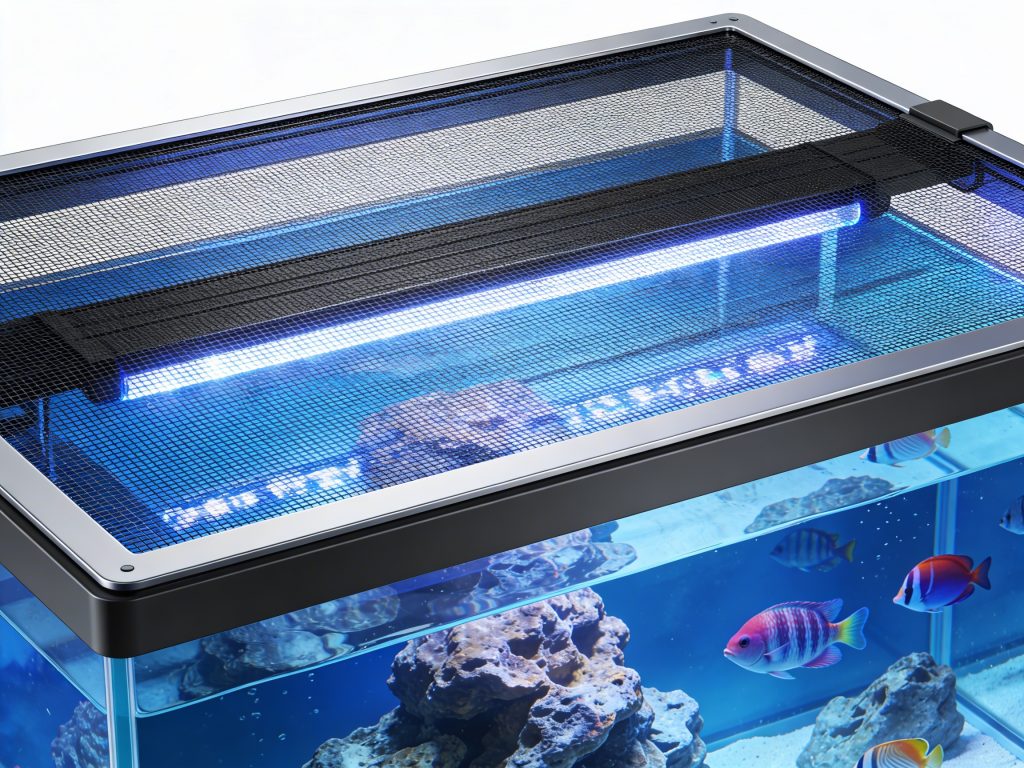
Aquarium lids and mesh screens protect reef tanks in two important ways. They stop fish from jumping. They also reduce daily stress for the aquarist. The best option depends on your livestock, lighting, evaporation goals, and gas exchange needs.
Many reef keepers start without a lid. That often works for a while. Then a wrasse, goby, firefish, or blenny ends up on the floor. A good lid prevents that loss. It also helps keep dust, pets, and household sprays away from the water. In this guide, you will learn when to use a solid lid, when to choose a mesh screen, how each option affects reef tank performance, and how to pick the right setup for your system.
Quick Reference Table
| Feature | Mesh Screen Lid | Solid Glass or Acrylic Lid |
|---|---|---|
| Jump prevention | Excellent | Excellent |
| Gas exchange | Excellent | Reduced |
| Evaporation control | Low | High |
| Light penetration | Very good | Can drop if dirty |
| Heat retention | Low | High |
| Condensation buildup | None | Common |
| Best for reef tanks | Usually best choice | Limited use cases |
| Maintenance | Low | Moderate to high |
For most reef aquariums, a mesh screen lid is the better choice. It keeps fish safe without trapping heat and humidity. Solid lids still have a place. They can help with evaporation, room humidity, and certain fish rooms. Still, they need more cleaning and close monitoring.
Why Reef Tanks Need a Lid
Fish jump for many reasons. Some species are natural jumpers. Others bolt when startled. Aggression also causes sudden leaps. Bright light changes, loud noises, and nighttime chasing can trigger it too. In open-top reef tanks, this risk is always present.
Wrasses are famous for jumping. Firefish are another common example. Dartfish, gobies, jawfish, and some tangs can also launch through small openings. Even calm fish may jump during feeding or maintenance. Many hobbyists lose fish through tiny rear gaps around plumbing.
A lid adds more than fish protection. It blocks cat paws and curious children. It helps keep foreign objects out of the tank. It also reduces salt spray around lights and walls. If you use expensive lighting and prized fish, a lid is cheap insurance.
Mesh Screens vs Solid Lids
Mesh screen lids are now the standard for modern reef tanks. They allow strong gas exchange. They let heat escape. They avoid the heavy condensation seen with glass tops. They also preserve stable pH better in many homes, especially sealed houses.
Solid glass or acrylic lids reduce evaporation. That sounds helpful at first. Yet reef tanks need oxygen exchange. Corals, fish, and bacteria all depend on it. A solid lid can trap carbon dioxide above the water. That may contribute to lower pH. It can also hold in heat from pumps and lights.
Light transmission matters too. A clean glass lid passes light well. A dirty lid does not. Salt creep and condensation scatter light quickly. That reduces PAR reaching corals. Mesh screens block very little light when built with clear or thin netting. For SPS systems, that advantage matters.
In most reef setups, mesh offers the best balance. It protects fish without hurting tank performance. Solid lids work better on some fish-only systems, quarantine tanks, or tanks in dry homes where evaporation is extreme.
Aquarium Setup Considerations
Your tank design affects the best lid choice. Rimless tanks often pair well with custom mesh screens. They keep the clean look while adding safety. Braced tanks may need cutouts for returns, overflows, and cords. Measure carefully before buying or building anything.
Open rear sections are the biggest weak point. Fish often find these gaps first. Cover every opening around overflow boxes, return nozzles, auto feeder mounts, and light brackets. A lid is only effective when the entire top is secure. One small gap can defeat the whole system.
Feeding access matters as well. Some hobbyists prefer a hinged feeding door. Others remove a small section for maintenance. Keep convenience in mind. If a lid is annoying to use, it may stay off too often. A simple design usually gets used consistently.
If you run a sump, evaporation is less of a problem. An auto top off system handles daily loss well. That makes mesh even more attractive. If you do not have an ATO, a solid lid may seem tempting. Still, the tradeoffs are real. Reef stability usually benefits more from airflow than reduced evaporation.
Lighting Requirements and Lid Impact
Lighting performance changes with the lid type. This is important for coral growth. Mesh screens have minimal impact when made from reef-safe netting. Most tanks see only a small PAR reduction. That loss is often negligible in practical use.
Glass and acrylic lids can reduce light more over time. The issue is not just the material. The real problem is buildup. Salt spray, mineral spots, and condensation form a film fast. That film blocks and diffuses light. Corals below may receive less energy than expected.
Heat under the lid can also affect lighting. LEDs run cooler than older fixtures, but enclosed tops still trap warm air. That may raise water temperature during summer. T5 and metal halide systems feel this even more. If your tank already runs warm, avoid solid covers.
After adding any lid, recheck coral response. Watch polyp extension, coloration, and growth. If needed, adjust intensity slowly. A PAR meter gives the best answer. If you do not have one, make changes gradually and observe over two to three weeks.
Water Flow, Gas Exchange, and pH
Reef tanks need strong oxygen exchange. Surface agitation helps. So does open airflow above the water. Mesh screens let both happen naturally. They do not trap humid, carbon dioxide-rich air over the tank. This supports healthier pH and better respiration.
Solid lids can reduce evaporation, but that comes at a cost. The air under the lid becomes warm and moist. Gas exchange slows. In homes with high indoor CO2, pH may stay lower than desired. This matters most in tightly sealed homes and winter months.
Water flow itself is not changed much by a lid. Surface conditions are. If a solid top causes less agitation or more film buildup, oxygen transfer suffers. You may need stronger surface movement, a skimmer air line to fresh air, or even a room ventilation fix.
For coral-heavy systems, stable pH is valuable. Better gas exchange usually means fewer headaches. That is one reason many experienced reef keepers prefer mesh over glass. It supports the biology of the tank, not just the appearance.
How to Choose the Right Lid
Start with your livestock. If you keep wrasses, firefish, dartfish, gobies, or jawfish, use a lid. Do not wait for a jump. If your tank houses expensive or rare fish, a lid should be considered essential. Risk is simply too high.
Next, look at your tank environment. Dry homes increase evaporation. Humid rooms reduce it. Tanks in offices or family rooms may need more protection from dust and accidents. Tanks in fish rooms may need maximum airflow. Match the lid to the room, not just the tank.
Then consider maintenance style. A mesh screen is easy to rinse and reinstall. A glass top needs regular wiping. Acrylic scratches easily and can warp near heat. If you want low effort, mesh wins. If you need evaporation control above all else, solid lids may still fit.
Finally, think about equipment access. Can you feed easily. Can you remove the skimmer cup. Can you service the overflow. A good lid works with your routine. The best design is one you will actually keep in place every day.
Step-by-Step Guide to Building a Mesh Screen Lid
Building a mesh lid is simple. Many hobbyists do it in one afternoon. A custom fit usually works better than generic tops. It also looks cleaner on rimless systems.
- Measure the tank opening carefully. Measure inside edges and all cutout areas.
- Plan around overflow boxes, return pipes, cords, and feeder mounts.
- Buy an aluminum screen frame kit or reef-specific lid kit.
- Choose reef-safe mesh with small openings. Quarter-inch mesh is common.
- Cut the frame pieces to size. Dry fit them before assembly.
- Install corners and center braces if the lid is large.
- Lay the mesh flat and roll it into the frame spline groove.
- Trim excess mesh with a sharp blade.
- Test fit the lid on the tank. Check every edge and rear gap.
- Add small clips, tabs, or handles if needed.
A tight fit matters more than looks. Fish exploit gaps quickly. If your overflow area is complex, make templates from cardboard first. That saves time and wasted material. For large tanks, use multiple panels. They are easier to remove and less likely to sag.
Common Problems
Fish still jumped with a lid on
The most likely cause is an uncovered gap. Check the back corners first. Then inspect around return plumbing, overflow teeth, and feeder openings. Small fish can pass through surprisingly narrow spaces. Close every opening completely.
Condensation under the lid
This is common with glass and acrylic tops. It reduces light and looks messy. Clean the lid often. Increase room ventilation if possible. If the issue persists, switch to a mesh screen. That usually solves it immediately.
pH dropped after adding a lid
A solid lid may be limiting gas exchange. Check pH trends over several days. Increase surface agitation. Open the canopy more often. Route skimmer air from outside if needed. In many cases, changing to mesh restores better pH stability.
Water temperature increased
Trapped heat is the usual cause. This happens more with glass tops and enclosed canopies. Raise or ventilate the lights. Improve room cooling. Use fans over the sump. If practical, change to a mesh lid.
Salt creep around the screen frame
Strong surface turbulence or splashing often causes this. Aim pumps slightly lower. Clean the frame weekly with fresh water. Salt creep is usually minor on mesh tops. It is still easier to manage than a full glass film.
Maintenance Tips for Long-Term Use
Inspect lids during weekly maintenance. Look for loose mesh, bent frames, and widening gaps. Salt buildup can slowly distort fit. Clean mesh with fresh water and a soft brush. Avoid soap or household cleaners near the aquarium.
Glass tops need more work. Wipe both sides often. Mineral deposits can become stubborn if ignored. Acrylic needs gentle cleaning to avoid scratches. Replace cracked or warped panels quickly. A damaged lid is not reliable.
Review your lid after equipment changes. New lights, feeders, and return nozzles often create fresh openings. Many jump incidents happen right after upgrades. Always reassess the top whenever the tank layout changes.
If you travel often, a secure lid becomes even more important. Tank sitters may miss subtle fish behavior. A proper cover lowers risk while you are away. It is one of the simplest ways to make a reef tank safer and more forgiving.
Frequently Asked Questions
Are mesh lids safe for reef tanks?
Yes. They are usually the best choice for reef tanks. They prevent jumping while preserving airflow, light, and gas exchange.
Do aquarium lids reduce evaporation?
Solid lids reduce evaporation significantly. Mesh lids do not reduce it much. Most reef keepers manage evaporation with an auto top off system.
Will a lid lower coral growth?
A mesh lid usually has little effect on coral growth. A dirty glass lid can reduce PAR and may affect light-demanding corals.
What fish need a lid the most?
Wrasses, firefish, gobies, dartfish, and jawfish are top jump risks. Many other reef fish can jump too, especially when startled.
Can I keep a reef tank open top?
You can, but it carries real risk. Many hobbyists eventually add a lid after losing fish. A mesh screen keeps the open-top benefits with much better safety.
Final Thoughts
For most reef aquariums, mesh screens are the clear winner. They protect fish without sacrificing gas exchange, cooling, or light. Solid lids still help in some situations, but they require more attention. If you want the safest and most reef-friendly option, choose a well-fitted mesh top and cover every gap.
Related reading: reef tank evaporation, auto top off guide, reef tank pH guide, best fish for reef tanks, reef tank lighting basics
Was this helpful?
Related Posts
Half Black Angelfish (Centropyge Vrolikii)
Half Black Angelfish care is straightforward in mature tanks, but reef safety is never guaranteed. Learn feeding, tank…
 By
By
Kenya Tree Corals
Kenya Tree corals are hardy soft corals with easy care, moderate light needs, and fast growth. Learn placement,…
[favorite_button]
My Bookmarks:
To see full list click here
[user_favorites user_id="" include_links="true" site_id="" post_types="" include_thumbnails="true" thumbnail_size="thumbnail" include_excerpt="false"]