
Advanced coral fragging techniques help reef keepers make cleaner cuts, reduce losses, and grow healthier frags. The key is matching the method to the coral, using sterile tools, and stabilizing water quality before and after every cut.
Fragging is more than cutting coral into pieces. It is controlled propagation. Done well, it preserves prized colonies, creates backups, and speeds up reef growth. Done poorly, it can trigger tissue loss, infection, or full colony crashes. In this guide, you will learn how experienced hobbyists frag SPS, LPS, soft corals, and encrusters with better survival rates. We will cover tools, preparation, species-specific methods, healing, mounting, and common mistakes. If you already know the basics, these advanced steps will help you get cleaner results and more consistent growth.
Quick Reference Table
| Coral Type | Best Tool | Ideal Cut Point | Main Risk | Healing Tip |
|---|---|---|---|---|
| Branching SPS | Bone cutters | Between growth nodes | Branch splitting | High flow and stable alkalinity |
| Encrusting SPS | Rotary tool or chisel | Rock beneath edge | Tissue peel | Cut extra plug or rock with it |
| Acanthastrea and similar LPS | Diamond band saw | Between mouths | Skeleton shock | Low light for several days |
| Euphyllia | Bone cutters or saw | Bare skeleton below tissue | Polyp damage | Moderate flow and iodine dip |
| Mushrooms | Scalpel | Through oral disc if needed | Floating away | Use rubble cup or mesh box |
| Zoanthids | Scalpel and tweezers | Mat between polyps | Palytoxin exposure | Use full PPE and good ventilation |
This table gives a fast overview. The details below matter more. Coral response can vary by species, health, and tank stability.
Why Advanced Fragging Matters
Basic fragging works for hardy corals. Advanced fragging improves outcomes with sensitive or expensive colonies. It focuses on precision, stress reduction, and faster healing. That means fewer infections and less wasted tissue.
Many coral losses happen after the cut. Hobbyists often blame the tool. The real problem is usually stress stacking. A coral was recently shipped. Alkalinity was drifting. Flow was weak. Then it was cut and glued. The coral had no margin for recovery.
Advanced techniques solve this by planning the whole process. You prepare the colony first. You choose the right cut line. You control slime, heat, and air exposure. You also set up a healing zone before you start. This is especially important for acropora, euphyllia, chalices, scolies, acans, and high-end zoanthids. Cleaner methods also produce better-looking frags. That matters if you trade, sell, or build grow-out systems.
Preparation Before You Cut
Preparation determines success. Never frag a coral that already looks stressed. Skip fragging if tissue is receding, color is fading fast, or pests are present. Wait until the colony shows strong extension and normal feeding response.
Test your water first. Keep salinity stable at 1.025 to 1.026. Keep temperature near 77 to 79 degrees Fahrenheit. Avoid alkalinity swings. Calcium and magnesium should be in normal reef range. Nitrate and phosphate should be stable, not bottomed out.
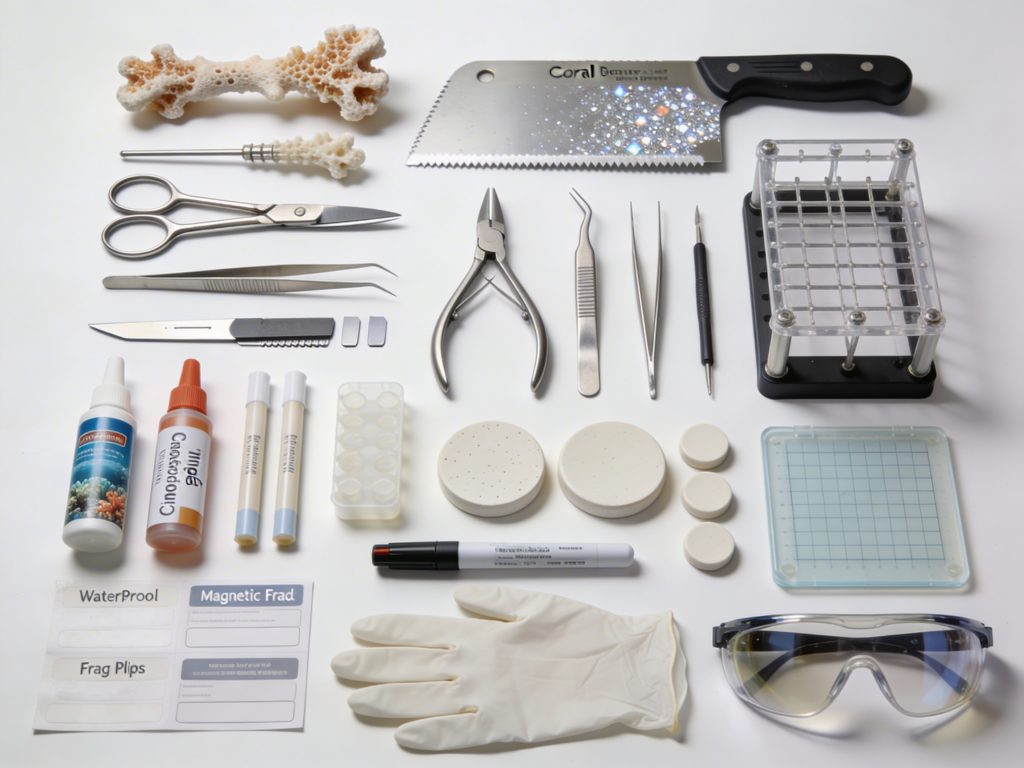
Set up a clean workspace. Use separate containers for tank water, dips, and rinsing. Sterilize tools between colonies. This reduces bacterial transfer and pest spread. Have frag plugs, rubble, glue gel, epoxy, towels, eye protection, gloves, and a waste cup ready. For toxic soft corals and zoanthids, wear full eye protection and a mask. Good ventilation is essential. If you use a saw, keep the blade wet. Heat damages tissue fast.
Helpful reading: reef tank parameter guide, coral dipping guide.
Natural Habitat and Growth Form
Understanding natural habitat helps you choose the best fragging method. Corals grow in forms shaped by current, light, and wave action. Branching acropora grow upward and outward in high-energy zones. Their branch joints often snap cleanly. That makes them easier to frag than many encrusters.
Encrusting montipora and chalices spread over hard surfaces. In nature, they expand as thin sheets over rock. Cutting only tissue often causes peeling. Taking a small piece of rock with the frag usually works better. LPS corals like acans and favias build heavy skeletons. Their fleshy tissue can hide where one polyp ends. That is why saw cuts must follow the skeleton and avoid mouths.
Soft corals and mushrooms rely less on rigid skeleton. They tear and slime easily. They also detach and drift if not secured. Knowing how a coral grows tells you where it can be divided with the least damage. It also helps you predict how fast the frag will encrust and recover.
Tools and Sterile Technique
Advanced fragging needs more than one cutter. Bone cutters work for branching SPS and some euphyllia skeletons. A diamond band saw is best for many LPS. Scalpels are useful for mushrooms, leathers, and zoanthids. Coral shears help with softer branches. A rotary tool can free encrusting corals from rock.
Sterility matters. Rinse tools after each colony. Use hot water and reef-safe disinfecting practices outside the tank. Dry tools well before reuse. Cross contamination can spread brown jelly, bacterial film, flatworms, and nudibranch eggs. Keep coral from sitting in air too long. Brief exposure is usually fine. Long exposure adds stress and can trap slime on tissue.
Organize your station in order. Cut container first. Dip container second. Rinse container third. Mounting tray last. This simple flow reduces mistakes. It also speeds up the process. Faster handling usually means less stress on the coral.
Step-by-Step Advanced Fragging Process
- Choose a healthy donor colony with strong color and extension.
- Inspect for pests, eggs, flatworms, nudibranchs, and tissue recession.
- Stabilize water parameters for several days before cutting.
- Prepare tools, plugs, glue, dips, and labeled holding containers.
- Study the coral and mark cut lines mentally before touching it.
- Make the fewest cuts possible. Clean cuts heal faster.
- Rinse slime away with tank water after cutting.
- Dip if appropriate for the species and your protocol.
- Mount the frag securely without smothering living tissue.
- Place new frags in lower light and stable flow for recovery.
The main goal is controlled stress. You want one clean event, not repeated handling. Avoid trimming the same frag several times. Every extra touch increases slime, infection risk, and tissue damage. Once mounted, leave the frag alone unless it clearly fails.
Aquarium Setup for Healing Frags
A dedicated frag system is ideal. It gives you stable access, easy observation, and lower competition. Still, many hobbyists heal frags in the display. If you use the display, choose a low-stress zone away from aggressive neighbors and sand blasts.
Use frag racks or shallow shelves. Keep spacing between frags. This improves flow and reduces chemical warfare. New cuts should not touch. Freshly cut LPS can inflate unpredictably. Give them room. SPS frags need stable mounting and clean water. Soft corals need containment so they do not float away.
Aquascaping for grow-out should favor access. You need room to inspect bases, remove algae, and check for pests. Strong biological filtration helps. So does a reliable auto top-off. Stability matters more than chasing perfect numbers. If your tank is prone to swings, delay fragging until that is solved.
Related guides: best frag rack placement, reef aquascaping basics.
Lighting Requirements After Fragging
Fresh cuts need a gentler light transition. Many hobbyists place frags back under full intensity too soon. That can worsen bleaching and tissue recession. Start lower than the parent colony received. Then move upward over several days or weeks.
Branching SPS often tolerate moderate light soon after cutting if the tank is stable. Sensitive pieces still benefit from a short reduction. LPS usually need more caution. Their tissue can swell after cutting. High light at that stage adds stress. Mushrooms and soft corals often prefer lower light while they reattach.
Use your coral’s response as the guide. Good signs include normal extension, feeding response, and no fresh recession at the cut edge. Bad signs include pale tissue, excessive slime, gaping mouths, or shrinking polyps. If needed, reduce intensity and extend acclimation. Recovery speed varies by genus and by colony health.
Water Flow and Post-Cut Recovery
Flow is one of the most overlooked healing tools. It removes mucus, brings oxygen, and limits dead spots where bacteria thrive. Fresh frags should receive enough flow to keep surfaces clean. They should not be blasted so hard that tissue tears.
SPS generally prefer stronger, chaotic flow. This helps the cut edge stay clean. Euphyllia prefer moderate, indirect flow. Their flesh should sway, not whip. Chalices and fleshy LPS like gentler movement. Too much flow can peel tissue from sharp skeleton edges. Mushrooms need very light flow until attached.
Watch the coral, not just the pump setting. Slime collecting on the wound means flow may be too low. Tissue pulling away means flow may be too high. Small adjustments matter. A well-placed powerhead often improves healing more than any additive.
Feeding and Nutritional Support
Freshly fragged corals heal faster when nutrition is steady. Do not overfeed the tank. Do provide consistent input. LPS often benefit from target feeding once they reopen. Offer small meaty foods like mysis, finely chopped seafood, or quality coral pellets.
SPS rely more on light and dissolved nutrients, but they still benefit from stable nitrate and phosphate. Ultra-low nutrient systems can slow recovery. Soft corals and zoanthids usually recover without direct feeding, though amino acid and plankton feeding may help overall growth in some systems.
Feed only after the coral shows normal behavior. Do not force food into stressed tissue. For cut LPS, wait until mouths close normally and inflation returns. Good feeding supports tissue repair. Poorly timed feeding can foul the wound and attract pests.
Compatibility and Chemical Warfare
Frag healing is harder in crowded mixed reefs. Nearby corals can sting, shade, or release chemicals. This is common with leathers, mushrooms, euphyllia, and some LPS. Fresh cuts are more vulnerable than established colonies.
Keep new frags away from sweepers. Avoid placing them near aggressive chalices, galaxea, or torch corals. Soft corals can release compounds that irritate SPS. Activated carbon helps in mixed systems. Good skimming also helps remove dissolved organics.
Fish and invertebrates matter too. Some angelfish and butterflyfish nip fresh tissue. Crabs may disturb unsecured frags. Urchins can bulldoze plugs overnight. If you lose frags repeatedly, check for mechanical disturbance. The problem may not be the cut at all.
Propagation and Fragging Methods by Coral Type
Branching SPS
Cut at natural branch junctions when possible. Support both sides before squeezing with bone cutters. This prevents long cracks. Mount upright with a small glue base. Do not bury living tissue in glue. Many acropora heal quickly if alkalinity stays stable.
Encrusting SPS and Chalices
Take a thin layer of rock or plug with the coral. Avoid lifting tissue from the base. A rotary tool or saw works best. Leave a margin around the living edge. Tiny chips often survive better than tissue-only peels.
LPS With Heavy Skeletons
Use a band saw for clean division. Identify mouths first. Cut between them whenever possible. Keep the blade wet and slow. Rinse away skeleton dust. Place pieces in lower light and moderate flow until inflation returns.
Soft Corals, Mushrooms, and Zoanthids
Use a sharp scalpel. Make one clean slice. For mushrooms, place cut pieces in a rubble cup with mesh until attached. For zoanthids, cut the mat between polyps. Always use gloves and eye protection. Palytoxin risk is real.
Common Problems
Why is my coral frag melting after cutting?
Melting usually means severe stress or infection. Common causes include unstable salinity, poor flow, dirty cuts, or cutting an unhealthy colony. Remove decaying tissue if possible. Improve flow. Check parameters. Consider an iodine-based dip if appropriate for the species.
Why did my frag detach from the plug?
Glue may have been applied to wet slime instead of clean skeleton or base. Dry the mounting point briefly with a towel. Use a larger glue mound. Press firmly for several seconds. For mushrooms and soft corals, use mesh or a cup until they attach naturally.
Why is tissue receding from the cut edge?
This often points to excess light, poor flow, alkalinity swings, or bacterial irritation. Lower light slightly. Increase indirect flow. Test alkalinity daily for a few days. Inspect for pests. Recutting can help only if dead skeleton is clearly advancing.
Why won’t my frag grow?
Many frags spend energy healing before growing. If healing is complete but growth stalls, check nutrients, light, and trace stability. Frags also need time to encrust. A stable tank often beats a heavily dosed one.
More help: why corals stop growing.
Frequently Asked Questions
When is the best time to frag a coral?
Frag when the colony is growing well and your parameters are stable. Avoid cutting right after shipping, dipping, or major tank changes.
Should I dip corals after fragging?
Often yes, but match the dip to the coral and your goal. Some dips help reduce bacterial load or pests. Follow product directions carefully.
How long do frags take to heal?
Simple SPS cuts may seal in days. LPS often need one to three weeks. Mushrooms and soft corals can attach within days or take longer.
Can I frag a stressed coral to save it?
Sometimes. Emergency fragging can save healthy sections from rapid tissue loss. It works best when the cause is localized and the remaining tissue looks strong.
What is the safest coral to practice on?
Hardy branching corals and common soft corals are good practice choices. Avoid expensive fleshy LPS until your process is consistent.
Final Tips for Better Frag Survival
The best advanced coral fragging techniques are simple in practice. Cut healthy corals only. Use the right tool. Keep everything clean. Reduce handling. Heal frags in stable water with proper flow and moderate light. Most importantly, respect the biology of each coral type. A method that works for acropora may fail badly on a chalice or mushroom. With patience and consistency, your frags will heal faster, look better, and grow into stronger colonies.
Was this helpful?
Related Posts
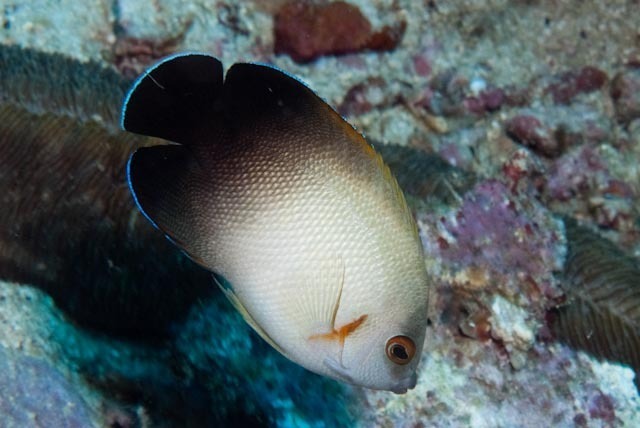
Half Black Angelfish (Centropyge Vrolikii)
Half Black Angelfish care is straightforward in mature tanks, but reef safety is never guaranteed. Learn feeding, tank…
 By
By
Kenya Tree Corals
Kenya Tree corals are hardy soft corals with easy care, moderate light needs, and fast growth. Learn placement,…
[favorite_button]
My Bookmarks:
To see full list click here
[user_favorites user_id="" include_links="true" site_id="" post_types="" include_thumbnails="true" thumbnail_size="thumbnail" include_excerpt="false"]