

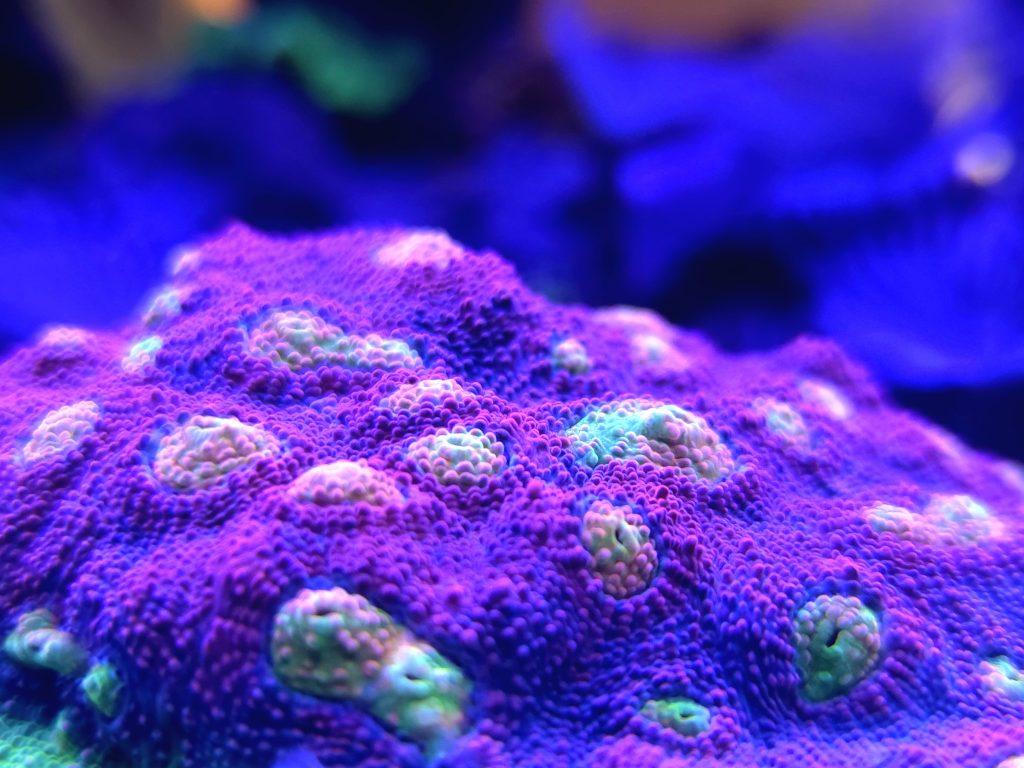
Chalice corals are colorful LPS corals that do well in stable reef tanks. They prefer moderate light, gentle to moderate flow, and careful placement because many have strong sweeper tentacles and can sting nearby corals.
These corals are popular for their bright eyes, glowing rims, and layered growth forms. Beginners often ask if chalices are easy. The answer is yes, with a few caveats. They dislike sudden change. They can bleach under intense light. They also need space from neighbors. In this guide, you will learn how to choose a healthy specimen, place it correctly, feed it, frag it, and solve common chalice coral problems before they become serious.
Quick Reference Table
| Common name | Chalice coral |
| Type | LPS coral |
| Care level | Moderate |
| Lighting | Low to moderate |
| Flow | Low to moderate, indirect |
| Placement | Lower to middle rockwork, with space |
| Feeding | Optional but beneficial |
| Aggression | Moderate to high at night |
| Growth rate | Slow to moderate |
| Ideal temperature | 76 to 78°F |
| Salinity | 1.025 to 1.026 |
| Alkalinity | 8 to 9 dKH |
| Calcium | 420 to 450 ppm |
| Magnesium | 1280 to 1400 ppm |
| Nitrate | 2 to 15 ppm |
| Phosphate | 0.03 to 0.1 ppm |
Use these numbers as a starting point. Stability matters more than chasing perfect values. A chalice kept in steady conditions usually does better than one exposed to constant swings.
What Are Chalice Corals?
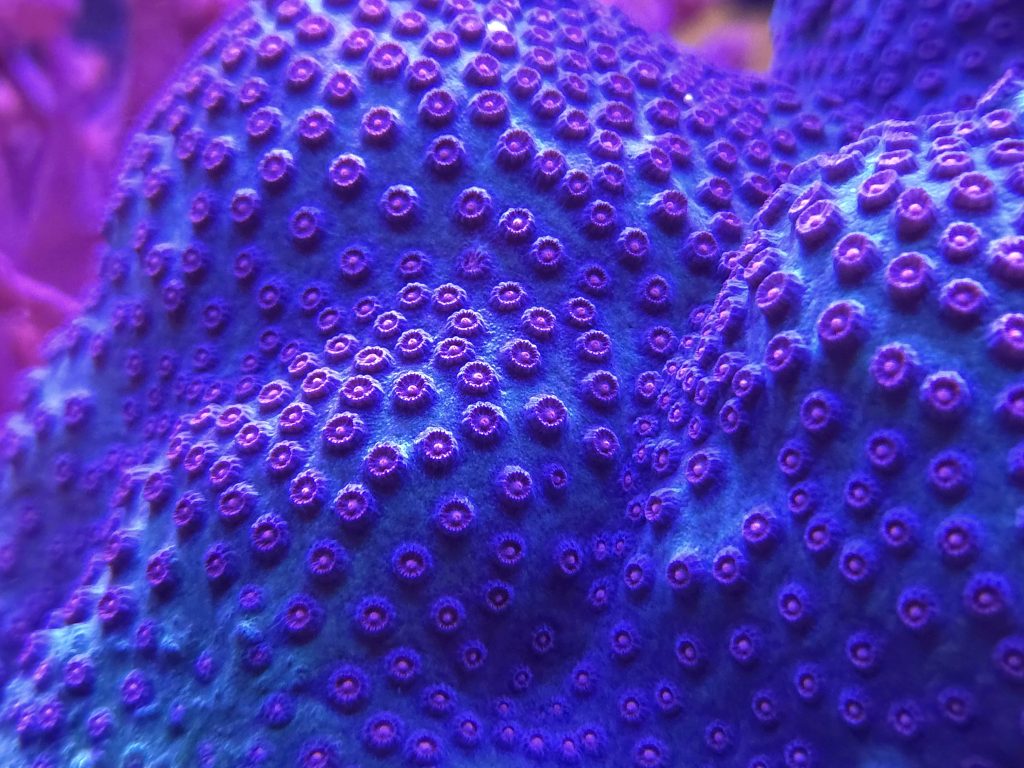
Chalice coral is a hobby term, not a single species. Many corals sold as chalices belong to Echinophyllia, Oxypora, Mycedium, and related genera. They usually form plates, cups, folds, or encrusting sheets. Many have bright mouths called eyes. Others show strong contrast between the base and the rim.
Most chalices are photosynthetic. They host zooxanthellae and use light for energy. They also benefit from dissolved nutrients and occasional direct feeding. Their tissue can be thin, so rough handling causes damage fast. This is why acclimation and placement matter so much.
Collectors love chalices for color and pattern. Reef keepers value them because they can thrive in lower light areas where some SPS corals struggle. They are excellent feature corals in mixed reefs. Just remember that many chalices look peaceful during the day and become aggressive after lights out.
Natural Habitat
Chalice-type corals occur across the Indo-Pacific. They are found on reef slopes, protected lagoons, and deeper reef zones. Many live in areas with lower light than shallow acropora reefs. Water movement is often steady but not blasting.
In nature, these corals settle on hard substrate where they can spread outward. Some grow in shaded areas under ledges. Others occupy open surfaces with filtered light. This habitat explains their aquarium needs. They often prefer gentler conditions than many small polyp stony corals.
Natural reefs also provide stable chemistry. Daily swings are small compared with many home aquariums. This is another reason chalices can decline in tanks with unstable alkalinity, salinity, or temperature. When you match their natural stability, they usually color up and grow well.
Aquarium Setup
Chalice corals do not need a huge tank, but they do need a mature one. A stable nano reef can work for a small frag. Larger tanks make stability easier. Aim for at least 20 gallons for a single chalice frag, though 40 gallons or more gives you more room for safe placement.
Place chalices on the sand bed, a frag rack, or lower rockwork during acclimation. This reduces light shock. Many reef keepers keep them on isolated islands. That makes it easier to control aggression and monitor growth. Leave several inches around the colony. Some species extend long sweepers at night.
Secure frags well. Loose chalices can fall, crack, or get buried. Avoid placing them where detritus collects heavily. A little movement helps keep the surface clean. Too much direct flow can peel tissue from the skeleton. Good placement solves many chalice care issues before they start.
Lighting Requirements
Most chalice corals prefer low to moderate light. A PAR range of roughly 50 to 150 works for many varieties. Some tolerate more, but sudden exposure to strong light often causes bleaching. Start low and increase slowly if needed.
Signs of too much light include faded color, receding tissue on exposed edges, and a washed-out look. Signs of too little light include dull color and weak growth. However, low nutrients can mimic light stress. Always look at the full picture before making changes.
Use a light acclimation mode if your fixture has one. You can also reduce intensity or use shading mesh. Move the coral up only after two to three weeks of stability. Many prized chalices show their best color under blue-heavy reef lighting, but they still need balanced spectrum and stable photoperiods.
Water Flow
Chalice corals prefer low to moderate, indirect flow. The goal is gentle movement across the tissue. This helps remove waste and deliver oxygen without blasting the coral. Their thin tissue does not appreciate direct pump output.
If flow is too strong, the coral may stay retracted and show tissue wear along ridges. If flow is too low, detritus can settle on the surface and irritate the tissue. Cyanobacteria and algae may then gain a foothold. Watch how food and fine particles move around the colony. That gives useful clues.
A random, alternating pattern works best. Aim powerheads above or past the coral, not directly into it. In mixed reefs, chalices often do well in calmer zones near the bottom where euphyllia and acans also thrive.
Water Chemistry and Stability
Stable chemistry is the foundation of chalice coral care. Keep salinity at 1.025 to 1.026. Hold temperature near 76 to 78°F. Maintain alkalinity around 8 to 9 dKH. Calcium should stay between 420 and 450 ppm. Magnesium should remain near 1280 to 1400 ppm.
Do not run nutrients at zero. Chalices usually appreciate some nitrate and phosphate. A practical target is 2 to 15 ppm nitrate and 0.03 to 0.1 ppm phosphate. Ultra-low nutrient systems can produce pale tissue and poor feeding response.
Test alkalinity often, especially in smaller tanks. Sudden drops can trigger recession. Match new saltwater closely during water changes. Big swings in salinity or temperature can damage chalices fast. If you dose, dose consistently. Small daily corrections are safer than large weekly ones.
Feeding
Chalice corals can survive without direct feeding, but many grow faster when fed. Offer small meaty foods once or twice each week. Good options include mysis, finely chopped seafood, reef roids, and other coral foods designed for LPS corals.
Feed after lights dim if possible. Many chalices extend feeder tentacles at night. Turn off strong flow for a few minutes. Gently place food near the mouths. Avoid overfeeding. Excess food can rot, raise nutrients, and irritate the coral if it sits on the tissue too long.
If fish or shrimp steal food, use a feeding dome or cut bottle top. Spot feeding is optional, not mandatory. In many healthy tanks, a chalice will do well from light, dissolved nutrients, and occasional broadcast feeding alone.
Compatibility
Chalice corals are generally reef safe, but they are not passive. Many send out sweeper tentacles after dark. These can sting nearby corals and cause tissue loss. Keep space between chalices and neighbors. This is especially important near acans, favias, zoanthids, and euphyllia.
Most reef fish ignore chalices. Some angelfish, butterflyfish, and larger filefish may nip them. Certain shrimp and crabs can irritate freshly fed chalices. Urchins and snails may knock loose frags over. Secure placement helps prevent damage.
In mixed reefs, chalices pair well with mushrooms, leathers, and other lower-light corals when given room. Avoid crowding them under fast-growing SPS colonies that can shade them out over time. Plan for future growth, not just current size.
Step-by-Step Placement and Acclimation
Start by inspecting the coral before it enters your display. Look for full tissue, clean edges, and no brown jelly or exposed skeleton. Dip the frag if appropriate for your system and the product instructions. Then place it in lower light.
For the first week, give it low to moderate indirect flow. Watch for inflation, feeding response, and tissue stability. Do not move it every day. Constant changes create stress. If color stays strong and tissue looks healthy, leave it alone for another week.
After two to three weeks, decide if it needs more light. Move it gradually. Small changes work best. A few inches at a time is enough. Keep notes on PAR, placement, and response. This simple habit makes coral care easier and more repeatable.
Propagation and Fragging
When to Frag a Chalice
Frag only healthy, established colonies. The coral should have strong color, active growth margins, and no recent tissue recession. Avoid fragging a stressed or newly imported specimen. Give it time to settle first.
How to Frag Safely
Use a band saw, rotary tool, or coral cutters depending on skeleton thickness. Plan cuts between eyes when possible. This reduces damage to each frag. Wear eye protection. Coral skeleton dust is irritating. Keep the coral wet during the process.
Aftercare for Fresh Frags
Place fresh frags in low light and gentle flow. Stable parameters are critical. Some reef keepers use an iodine-based dip after cutting, if suitable for the coral and product directions. Watch cut edges for infection. Do not feed heavily until the tissue seals well.
Common Problems
Why Is My Chalice Coral Bleaching?
Bleaching usually points to excess light, sudden parameter swings, or heat stress. Check PAR first. Then review alkalinity, salinity, and temperature logs. Move the coral to lower light and avoid more changes. Recovery takes time. Do not chase color with constant adjustments.
Why Is the Tissue Receding?
Tissue recession often follows alkalinity swings, strong flow, pest damage, or aggression from nearby corals. Inspect at night for sweepers. Check for exposed skeleton along the rim. Improve stability and flow direction. Fragging healthy sections may save the colony if recession spreads.
Why Won’t My Chalice Open or Feed?
Some chalices show little daytime extension. That can be normal. Test feeding after lights dim. If there is still no response, review flow, recent handling, and nutrient levels. Fish harassment can also keep polyps withdrawn.
Why Is Algae Growing on the Skeleton?
Algae on exposed skeleton means the tissue already pulled back. Fix the cause first. Then improve flow, remove nuisance algae gently, and stabilize chemistry. If the dead area is large, the coral may not regrow over it quickly.
Frequently Asked Questions
Are chalice corals good for beginners?
They can be, if the tank is stable. They are less forgiving of sudden swings than many soft corals.
How fast do chalice corals grow?
Growth is usually slow to moderate. Feeding, stable alkalinity, and proper placement improve growth.
Can chalice corals live on the sand bed?
Yes, many do well there if light and flow are suitable. Keep sand from settling on the tissue.
How much space does a chalice need?
Leave several inches around it. More space is safer if you do not know its nighttime reach.
Should I dip a new chalice coral?
Many hobbyists do. Coral dips can reduce hitchhikers, but always follow product directions and observe the coral closely after dipping.
Final Tips for Long-Term Success
Keep things stable. That is the main rule with chalice corals. Avoid sudden lighting changes. Do not let alkalinity swing. Give the coral room from neighbors. Feed lightly if you want faster growth. Observe it at night from time to time. That is when its true behavior appears.
If you are building a mixed reef, chalices are excellent for lower-light zones and colorful shelves. They reward patience. Once settled, many become durable showpieces with amazing fluorescence and texture.
For more help, read our guides on reef tank parameters, LPS coral care, coral dipping guide, and reef lighting basics.
Was this helpful?
Related Posts
Palytoxin in the Marine Aquarium
Palytoxin in the marine aquarium is a real risk during coral handling. Learn safe practices, warning signs, and…
 By
By
Reef Tank Water Chemistry Basics
Learn reef tank water chemistry basics, including ideal parameters, testing routines, and simple ways to keep corals healthy…
[favorite_button]
My Bookmarks:
To see full list click here
[user_favorites user_id="" include_links="true" site_id="" post_types="" include_thumbnails="true" thumbnail_size="thumbnail" include_excerpt="false"]