

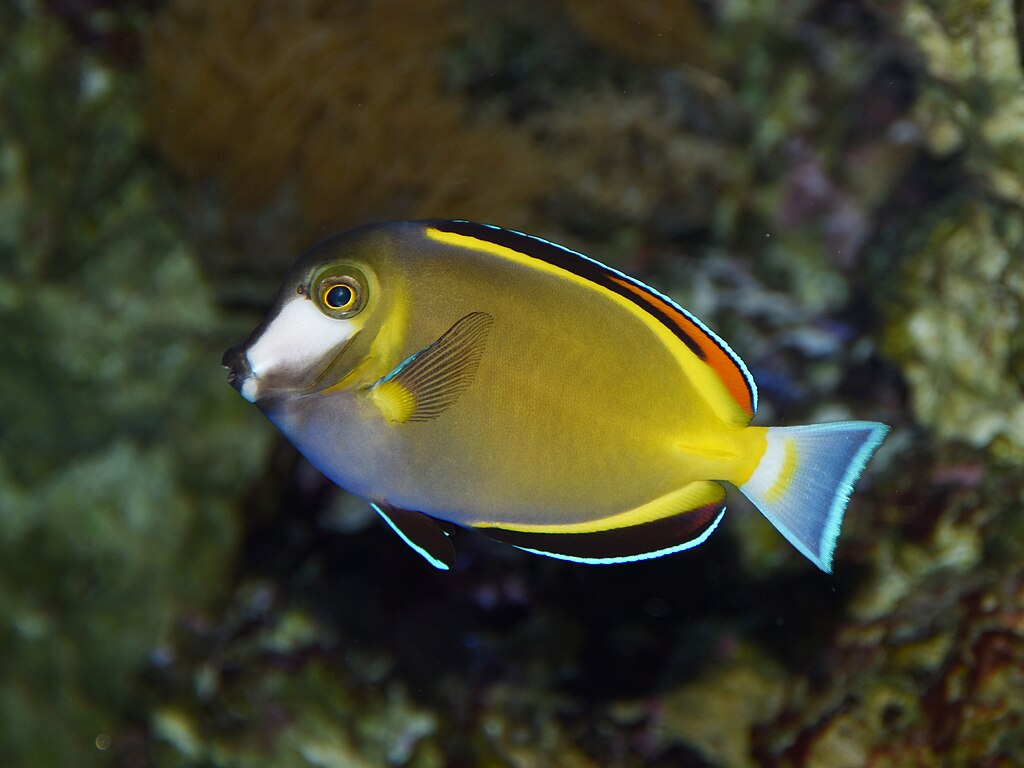
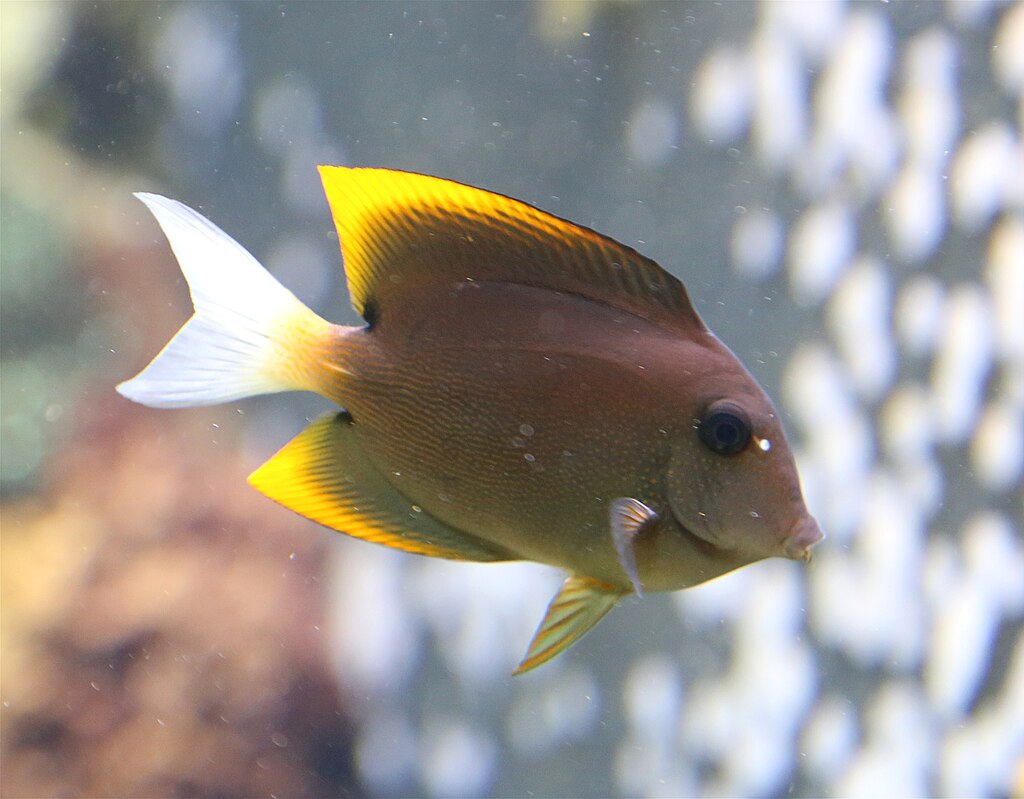
The Powder Brown Tang is a striking reef fish with a sharp white face, dark body, and bright orange shoulder patch. It is also one of the more demanding tangs in the hobby. Success depends on quarantine, stable water quality, strong flow, and a mature tank with constant grazing opportunities.
This species, Acanthurus japonicus, is often confused with the Powder Blue Tang. Both are beautiful. Both are active swimmers. Both can be sensitive during acclimation. The Powder Brown Tang is usually considered slightly more manageable, but it still needs excellent husbandry. In this guide, you will learn how to choose a healthy specimen, set up the right aquarium, feed for long-term health, manage aggression, and prevent the common problems that cause losses with this fish.
Quick Reference Care Table
| Common name | Powder Brown Tang |
| Scientific name | Acanthurus japonicus |
| Care level | Moderate to difficult |
| Temperament | Semi-aggressive |
| Adult size | Up to 8 inches |
| Minimum tank size | 125 gallons |
| Diet | Herbivore with some omnivore needs |
| Reef safe | Yes |
| Temperature | 75–79°F |
| Salinity | 1.025–1.026 specific gravity |
| pH | 8.1–8.4 |
| Nitrate | Preferably under 15 ppm |
| Flow | Moderate to strong |
| Lighting | No special need beyond reef lighting |
Natural Habitat
The Powder Brown Tang comes from the Indo-Pacific. It is found around Japan, Taiwan, the Philippines, Indonesia, and nearby reef regions. In nature, it lives on outer reef slopes and surge zones. These areas have high oxygen, clear water, and steady water movement. The fish spends much of its day cruising over rockwork and grazing on algae films.
This natural behavior matters in captivity. Powder Brown Tangs do not thrive in cramped tanks or stagnant water. They want room to swim and surfaces to pick at all day. They also do best in established systems that already grow natural biofilm and microalgae. A sterile new tank often leaves them stressed and underfed. Their habitat also explains why they react poorly to poor oxygen levels and sudden swings in water chemistry. Mimic the reef by keeping water clean, flow strong, and the aquascape open.
Aquarium Setup
A 125-gallon tank is the practical minimum for an adult Powder Brown Tang. Larger is better. A 5- to 6-foot tank gives this fish the swimming length it needs. Avoid narrow rock walls that block movement. Build two or three open rock islands instead. Leave long channels in front and through the aquascape.
Use mature live rock or well-seeded dry rock. This helps provide grazing surfaces and biological stability. Strong gas exchange is essential. A quality skimmer helps a lot. Surface agitation should be obvious. Keep the tank covered if fish are easily startled. This tang is fast and may dash during aggression or maintenance.
Stability matters more than chasing perfect numbers. Keep salinity steady. Keep temperature swings small. Avoid sudden changes in alkalinity and pH. This fish often struggles first when a system is unstable. If you are still building your reef skills, review reef tank setup basics and marine aquarium water parameters before adding one.
Lighting Requirements
The Powder Brown Tang has no special lighting demand of its own. It adapts well to normal reef lighting. What matters more is how lighting affects the tank environment. Moderate to strong lighting supports algae films on rock and helps the reef look natural. In coral systems, your lighting plan should match the needs of the corals first.
Avoid making abrupt lighting changes right after introduction. New tangs are often shy and stressed. Intense lighting on day one can make them hide or pace. Start with a calm acclimation period. Provide shaded areas and caves, but do not overpack the rockwork. If the fish is eating and swimming normally, it usually adapts quickly. In tanks with very bright LED programs, a reduced schedule for the first few days can help new arrivals settle in.
Water Flow
Strong, turbulent flow is ideal. This species comes from oxygen-rich reefs with constant movement. Good flow keeps detritus suspended, improves gas exchange, and supports fish health. It also helps prevent dead zones where waste can build up. Powder Brown Tangs often look more comfortable in tanks with active circulation.
Use multiple pumps rather than one harsh jet. The goal is broad, random movement. The fish should be able to cruise, turn, and rest without being pinned in one spot. Aim for visible surface movement at all times. If your tank runs warm or heavily stocked, strong flow becomes even more important. Low oxygen is a hidden stressor in many marine tanks. This tang is not forgiving of it.
Feeding
The Powder Brown Tang is mainly an herbivore. It should eat often. Offer dried nori every day. Use a clip in an area with moderate flow. Replace sheets before they break apart and foul the water. Also feed quality herbivore pellets, spirulina foods, and frozen blends that include marine algae.
Do not rely on one food. Variety improves health and color. Many hobbyists also offer mysis or brine occasionally. That is fine in small amounts. The main diet should still be algae-based. Frequent feeding helps reduce aggression and supports the immune system. Thin tangs decline quickly. A healthy specimen should have a full body line, not a pinched stomach.
Feed at least twice daily. Three smaller feedings are even better. Newly imported fish may only pick at live rock at first. Keep nori available and avoid competition from aggressive feeders. For more detail, see best food for tangs and how to feed reef fish.
Compatibility
Powder Brown Tangs are reef safe with corals and most invertebrates. They do not usually bother sessile inverts. Their main compatibility issue is aggression toward other fish, especially other tangs. They can be territorial. They also defend feeding areas once settled.
Tank mates should be chosen carefully. Peaceful reef fish usually work well if the tank is large enough. Avoid adding this tang to a small system with several established algae grazers. Conflicts often occur with surgeonfish of similar shape or color. Zebrasoma tangs, other Acanthurus tangs, and sometimes rabbitfish can trigger disputes. If you want multiple tangs, use a large tank, add them with a plan, and expect some chasing.
In many mixed reefs, the best approach is one Powder Brown Tang as the main grazer. Add it after timid fish are established, but before highly aggressive species claim the whole tank. If aggression becomes serious, use an acclimation box or mirror distraction technique.
How to Introduce a Powder Brown Tang
This fish should never be rushed into a display tank. It is highly prone to stress and external parasites. A careful introduction process gives you the best chance of success.
- Choose a specimen with a full body and clear eyes.
- Watch it eat before purchase if possible.
- Quarantine the fish in a stable, cycled tank.
- Observe closely for ich, velvet, fin damage, and bacterial issues.
- Provide PVC shelters and strong aeration during quarantine.
- Feed algae-based foods several times daily.
- Acclimate salinity slowly if there is a difference.
- Use an acclimation box in the display if tank mates are pushy.
- Add the fish with lights dimmed.
- Offer nori immediately after release.
Quarantine is especially important with this species. Tangs are famous for showing marine ich quickly after stress. A healthy-looking fish can still break with disease after shipping and transfer. Prevention is easier than trying to catch a sick tang in a reef display later.
Common Problems
Powder Brown Tang not eating
New fish often refuse prepared food for a few days. Stress is the usual cause. Offer nori first. Clip it near the fish’s preferred hiding area. Try red, green, and brown algae sheets. Add herbivore pellets once the fish starts grazing. Check for bullying. Also check oxygen and ammonia if the fish is in quarantine. A fish that refuses all food and breathes heavily may be ill.
White spots or scratching
This species is very prone to marine ich. White spots, flashing, and rapid breathing are warning signs. Stress often triggers outbreaks. Poor quarantine is the usual root problem. Move quickly if symptoms appear. Confirm whether it is ich or velvet, since velvet progresses faster. The display tank may need to remain fishless if disease is confirmed. Review marine ich treatment if you need a full response plan.
Aggression toward other tangs
Territorial behavior is common. Rearranging some rockwork can help. So can adding more nori stations. In severe cases, isolate one fish in an acclimation box. Long term, tank size is often the true issue. Too many grazers in too little space creates constant conflict.
Faded color or weight loss
Look at diet first. This fish needs frequent algae-rich meals. Then check for harassment. Finally, review water quality and possible parasites. Weight loss can be slow and easy to miss. Take weekly photos if needed. A healthy Powder Brown Tang should remain active, alert, and full-bodied.
Propagation or Breeding
Powder Brown Tangs are not realistically bred by home hobbyists at this time. Like many surgeonfish, they are pelagic spawners in nature. Eggs and larvae drift in open water. The larval stage is complex and difficult to rear. Commercial breakthroughs with some tang species have happened, but this fish is still not a practical breeding project for most aquarists.
For hobbyists, the focus should be on long-term care rather than breeding. Buy responsibly sourced fish when possible. Support vendors that handle tangs well and encourage quarantine. Good purchasing choices reduce losses and improve animal welfare across the hobby.
Frequently Asked Questions
Is the Powder Brown Tang reef safe?
Yes. It is generally safe with corals and most invertebrates. Its main issue is aggression toward similar fish.
How big does a Powder Brown Tang get?
Most reach around 8 inches in captivity. They need swimming room well before that size.
What is the minimum tank size for a Powder Brown Tang?
A 125-gallon tank is the minimum most hobbyists should consider. Larger tanks are better.
Are Powder Brown Tangs hard to keep?
They are not the best beginner tang. They are sensitive to stress and disease. Good quarantine and stable conditions are essential.
Powder Brown Tang vs Powder Blue Tang: which is easier?
The Powder Brown Tang is often considered slightly easier. Still, both need excellent care and disease prevention.
Final Thoughts
The Powder Brown Tang is one of the most elegant surgeonfish in the reef hobby. It is also a fish that exposes weak husbandry fast. Give it a mature tank, heavy oxygenation, strong flow, and constant algae-based feeding. Quarantine every specimen. Manage aggression before it becomes a crisis. If you meet its needs, this tang can become a stunning, active centerpiece in a large reef aquarium.
Was this helpful?
Related Posts
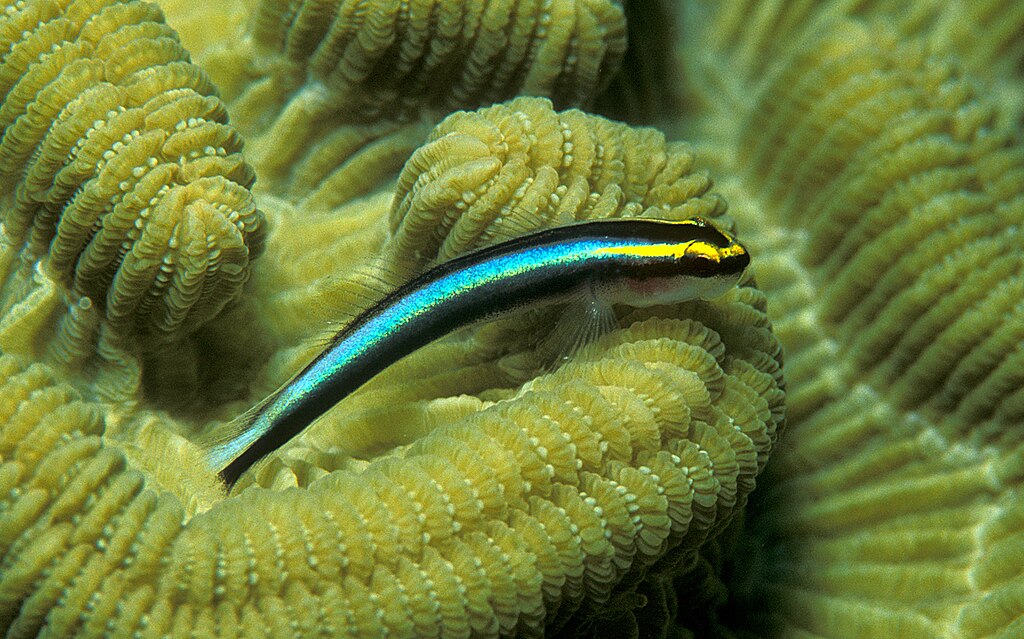
Sharknose Goby (Elacatinus evelynae)
Sharknose Goby care is simple in stable reef tanks. Learn feeding, tank setup, compatibility, and common problems for…
 By
By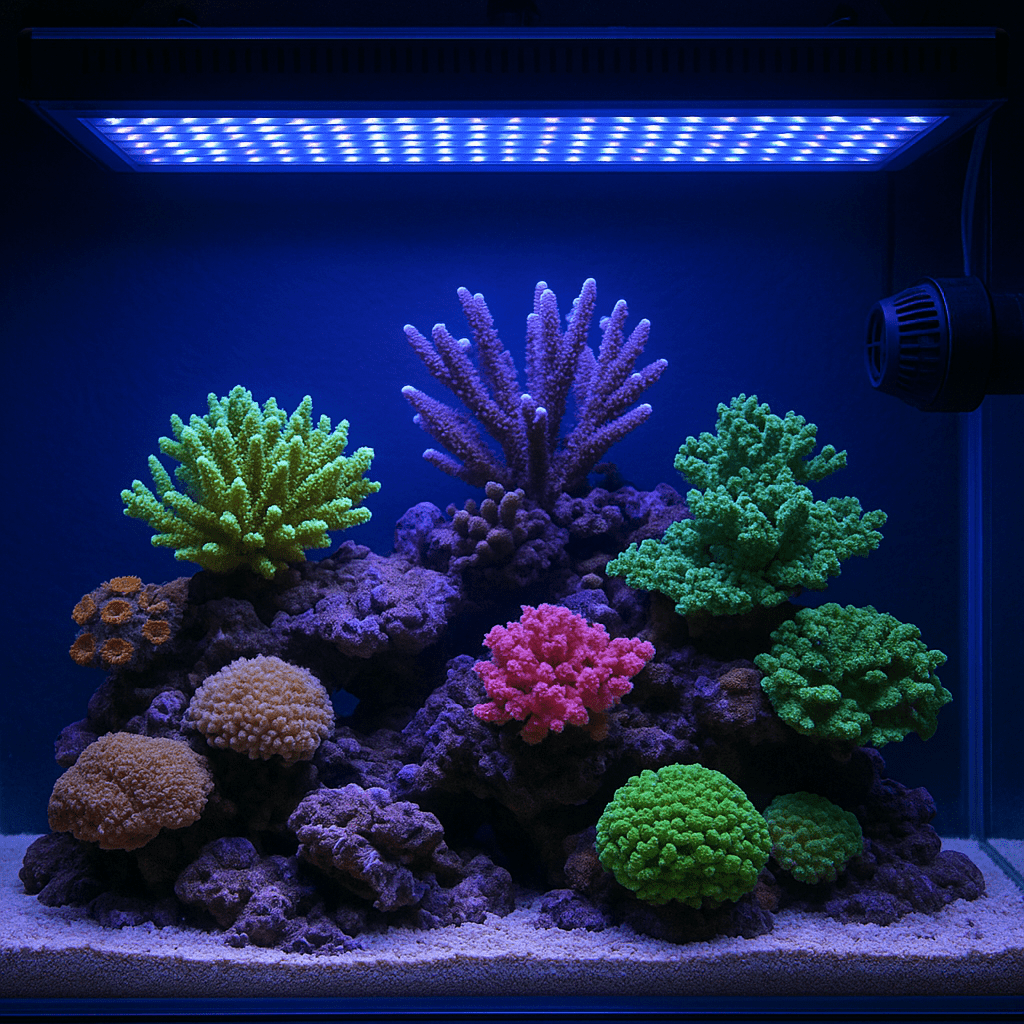
Coral Care Tips
These coral care tips cover lighting, flow, feeding, and water chemistry so your reef corals stay healthy, colorful,…
[favorite_button]
My Bookmarks:
To see full list click here
[user_favorites user_id="" include_links="true" site_id="" post_types="" include_thumbnails="true" thumbnail_size="thumbnail" include_excerpt="false"]