

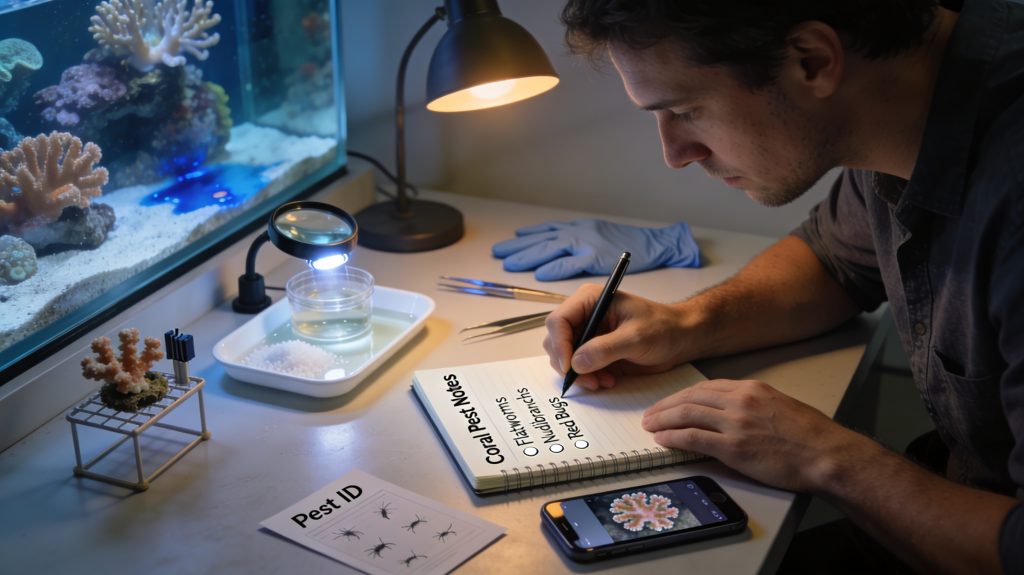
Coral pests can damage tissue, block polyp extension, and spread fast through a reef tank. The best defense is careful inspection, coral quarantine, and quick treatment. Most outbreaks become manageable when you identify the pest early and match the treatment to the coral type.
Many reef keepers first notice a problem when a coral stops opening. Color fades. Tissue recedes. Small bite marks appear. At that point, the pest may already be established. This guide covers the most common coral pests found in home reef aquariums. You will learn how to spot them, which corals they target, how they spread, and how to remove them safely. You will also learn when dips help, when manual removal works best, and why quarantine remains the most reliable prevention tool.
Quick Reference Table
| Pest | Common Targets | Typical Signs | Best First Response |
|---|---|---|---|
| Acropora Eating Flatworms | Acropora | Faded patches, bite marks, poor polyp extension | Dip, inspect, remove eggs, quarantine |
| Montipora Nudibranchs | Montipora | White tissue loss, missing polyps, egg spirals | Manual removal, repeated dips, isolate colony |
| Red Bugs | Acropora | Poor extension, dull color, irritation | Confirm under magnification, treat whole system if needed |
| Zoanthid Eating Nudibranchs | Zoanthids, palythoas | Closed polyps, missing heads, egg clusters | Dip and inspect every frag plug |
| Vermetid Snails | Many corals nearby | Mucus nets, irritation, reduced extension | Break tubes, glue openings, reduce spread |
| Asterina Starfish | Usually harmless, some irritate corals | Coral irritation, grazing damage | Manual removal and observation |
Use this table as a fast starting point. Proper identification still matters. Different pests need different responses.
Why Coral Pests Become a Serious Reef Tank Problem
Coral pests usually enter on new frags, colonies, frag plugs, or hidden eggs. Many are tiny. Some are nearly invisible without magnification. Others only come out at night. That makes them easy to miss during a quick acclimation.
Once inside the tank, pests gain protection from rockwork and coral branches. Fish may not eat them. Dips may kill adults but miss eggs. This is why hobbyists often think the problem is gone, only to see it return a week later.
Pests also create secondary problems. Damaged tissue invites bacterial infection. Stressed corals lose color. Growth slows. Algae may colonize dead spots. Water chemistry can stay perfect while the coral still declines. That confuses many beginners.
If a healthy coral suddenly declines while nearby corals look fine, inspect for pests first. Look for bite patterns, eggs, mucus, or unusual movement on the coral surface. A flashlight and magnifying lens often reveal the real cause.
Most Common Coral Pests in Reef Aquariums
Acropora Eating Flatworms
Acropora Eating Flatworms, often called AEFW, are among the most feared SPS pests. They target Acropora species. Adults blend into the coral well. Their color often matches the host. That makes visual detection difficult.
Common signs include pale patches, reduced polyp extension, slow tissue loss, and bite marks on branches. Many hobbyists first notice damage on the underside of colonies. Eggs are usually laid on dead skeleton, frag plugs, or coral bases.
Dips can knock off adults. They do not reliably kill eggs. You must inspect the coral closely after dipping. Use a turkey baster to blast tissue and dislodge hidden worms. Scrape or cut away egg-covered areas when possible.
AEFW control usually requires quarantine and repeated treatment. In-tank eradication is very hard. If you keep many Acropora, prevention is far easier than cure. Read more in our Acropora coral care guide.
Montipora Eating Nudibranchs
Montipora nudibranchs specialize in Montipora corals. They often hit plating and encrusting species first. These pests are small, white, and often gather near damaged edges or shaded areas. Their egg spirals are a key clue.
Signs include white patches of missing tissue, poor extension, and rapid decline in a once healthy colony. Look under plates, along the rim, and around the frag plug. Adults often hide where flow is lower.
Treatment requires persistence. Dip the coral. Remove visible adults by hand. Scrape egg masses carefully. Repeat every few days during quarantine. If even a few eggs remain, the outbreak can restart.
Many hobbyists frag away healthy sections and discard heavily infested bases. That can work well if done early. Keep the replacement frags isolated until no new nudibranchs appear for several weeks.
Red Bugs
Red bugs are tiny crustacean pests that irritate Acropora. They are easier to miss than flatworms. Under magnification, they appear as tiny yellow to red dots moving on coral tissue. They often gather around smooth-skinned Acropora.
The coral may look dull, irritated, and withdrawn. Polyp extension drops. Growth slows. Colors become muddy. Heavy infestations can affect multiple colonies over time.
Because red bugs spread between Acropora, many reef keepers treat all affected colonies together. Whole-system treatment has been used by advanced hobbyists, but it can affect crustaceans. Research any medication carefully before use.
If you suspect red bugs, confirm with a macro photo or magnifier. Do not assume every irritated Acropora has them. Flow issues, light stress, and unstable alkalinity can look similar.
Zoanthid Eating Nudibranchs and Spiders
Zoanthids attract several pests. The most common are zoanthid eating nudibranchs, sundial snails, and zoa spiders. These pests often arrive on small frags. They hide around the plug, under polyps, and in crevices.
Typical signs include closed polyps, melting heads, missing polyps, and egg clusters on the stalk or plug. Nudibranchs sometimes match the zoa color because they consume the tissue. That camouflage fools many hobbyists.
Dips work well as a first step. Manual inspection is still essential. Remove the frag from the plug if needed. Scrub or cut away suspicious areas. Repeat dips because eggs often survive the first treatment.
Always handle zoanthids with care. Some species can contain palytoxin. Wear gloves and eye protection. Learn more in our zoanthid coral care guide.
Vermetid Snails
Vermetid snails are not classic tissue-eating pests, but they can still harm coral health. These snails live in hard tubes. They cast sticky mucus nets into the water to catch food. Nearby corals often hate this constant irritation.
You may see poor extension, tissue recession near the tube, or repeated mucus strands landing on coral flesh. SPS and LPS can both react badly. Small frags are especially vulnerable.
The best control is manual. Break the tube at the base if possible. Seal the opening with reef-safe glue if the base remains in the rock. Reducing excess nutrients and suspended food may slow new spread.
Do not ignore vermetids just because they are common. A few may be tolerable. A large population can become a real husbandry issue in a growing reef.
Asterina Starfish
Most Asterina starfish are harmless scavengers. A few types may irritate zoanthids, SPS, or coralline-covered surfaces. The challenge is that hobbyists often blame every Asterina they see, even when another cause is responsible.
If you repeatedly find the same stars on closed or damaged corals, remove them and monitor the coral’s response. Manual removal is simple. Harlequin shrimp can eat them, but that is a specialized choice with long-term feeding needs.
Use caution before declaring them pests. Observe patterns. If coral health improves after removal, they were likely contributing. If not, keep searching for the real issue.
Step-by-Step: How to Inspect New Corals for Pests
Start with a clean workspace. Use white containers. Good lighting helps a lot. Prepare dip water with tank water and follow the product directions exactly.
- Inspect the coral bag before opening. Look for loose pests or egg masses.
- Remove the coral and examine the plug, base, and underside.
- Use a magnifying glass or phone macro lens for close inspection.
- Dip the coral for the recommended time. Keep water moving gently.
- Blast the coral with a turkey baster during the dip.
- Transfer the coral to a second white container for inspection.
- Check the dip water for flatworms, nudibranchs, pods, or snails.
- Scrape eggs from plugs and dead skeleton whenever possible.
- Consider removing the coral from the original frag plug entirely.
- Place the coral in quarantine, not the display tank.
This process takes extra time. It saves far more time later. One rushed frag can infect an entire SPS collection.
Coral Quarantine Setup
A coral quarantine tank does not need to be fancy. It needs stability and visibility. A small tank with heater, light, flow pump, and simple rack works well. Bare bottom tanks make pests easier to spot.
Match salinity, temperature, and alkalinity to your display. Sudden parameter swings stress corals and hide the true problem. Moderate lighting is safer at first. Increase intensity slowly based on coral type.
Quarantine gives you time to watch for eggs hatching. It also lets you repeat dips without dosing the display. Four to six weeks is a practical goal for many corals. High-risk SPS may deserve even longer observation.
If you want a full system plan, see our reef tank setup guide and reef tank parameters guide.
Common Problems
My coral stays closed after a dip
This can be normal for a day or two. Dips are stressful. Check temperature, salinity, and flow first. If the coral remains closed longer, inspect again for surviving pests or eggs. Some corals need repeated treatment.
I dipped the coral, but the pests came back
Eggs are the usual reason. Many dips kill adults but not eggs. Repeat the dip schedule and physically remove eggs. Quarantine is critical here. Returning the coral to the display too early often restarts the problem.
My coral has tissue loss, but I cannot see pests
Inspect at night with a flashlight. Use magnification. Check shaded areas and the coral base. If no pests appear, test alkalinity stability, phosphate, nitrate, flow, and light intensity. Not all tissue loss is caused by pests.
Should I dip every coral?
Yes, in most cases. Even trusted sources can miss eggs or tiny hitchhikers. Sensitive species may need gentler methods, but skipping inspection creates risk. A routine process is safer than guessing.
Propagation and Fragging After a Pest Outbreak
When fragging helps
Fragging can save healthy tissue when the base is infested or dying. This works well with Montipora and some Acropora. Cut above damaged areas. Mount clean sections on new plugs. Then quarantine the frags and inspect them often.
When fragging makes things worse
Fragging stressed corals can increase damage if water quality is poor or pests remain hidden. Do not frag blindly. First identify the pest. Then decide if removal, dipping, or discarding the colony is the better option.
Frequently Asked Questions
What is the most common coral pest in reef tanks?
Zoanthid pests, vermetid snails, and Montipora nudibranchs are very common. Acropora systems often struggle most with AEFW and red bugs.
Do coral dips kill eggs?
Usually not. Most dips target mobile pests. Eggs often need manual removal and repeated follow-up dips after hatching.
Can fish eat coral pests?
Some fish may pick at certain pests, but they are not reliable control. Do not depend on fish alone to solve an outbreak.
How long should I quarantine corals?
Four to six weeks is a solid minimum for many corals. Longer is safer for high-value SPS and any coral with a suspicious history.
Can coral pests spread on frag plugs and rubble?
Yes. Eggs and tiny pests often hide on plugs, dead skeleton, and rubble. That is why many hobbyists remount new frags on clean plugs.
Final Thoughts
Common coral pests are frustrating, but they are manageable. Good reef keeping habits make the biggest difference. Inspect every coral. Dip with purpose. Quarantine whenever possible. Remove eggs by hand. Do not rush new additions into the display.
Most major outbreaks start with one missed frag. Most successful reef tanks avoid disaster through routine, not luck. Build a pest prevention process now, and your corals will reward you with better growth, color, and long-term stability.
Was this helpful?
Related Posts
Reef Tank Basics
Learn reef tank basics, from setup and cycling to lighting, flow, and water chemistry, so your first reef…
 By
By
Juvenile Orange Shoulder (acanthurus Olivaceus)
Juvenile orange shoulder tangs are bright, hardy, and reef safe, but they grow large and need a spacious…
[favorite_button]
My Bookmarks:
To see full list click here
[user_favorites user_id="" include_links="true" site_id="" post_types="" include_thumbnails="true" thumbnail_size="thumbnail" include_excerpt="false"]