Understanding Coral Lighting Basics
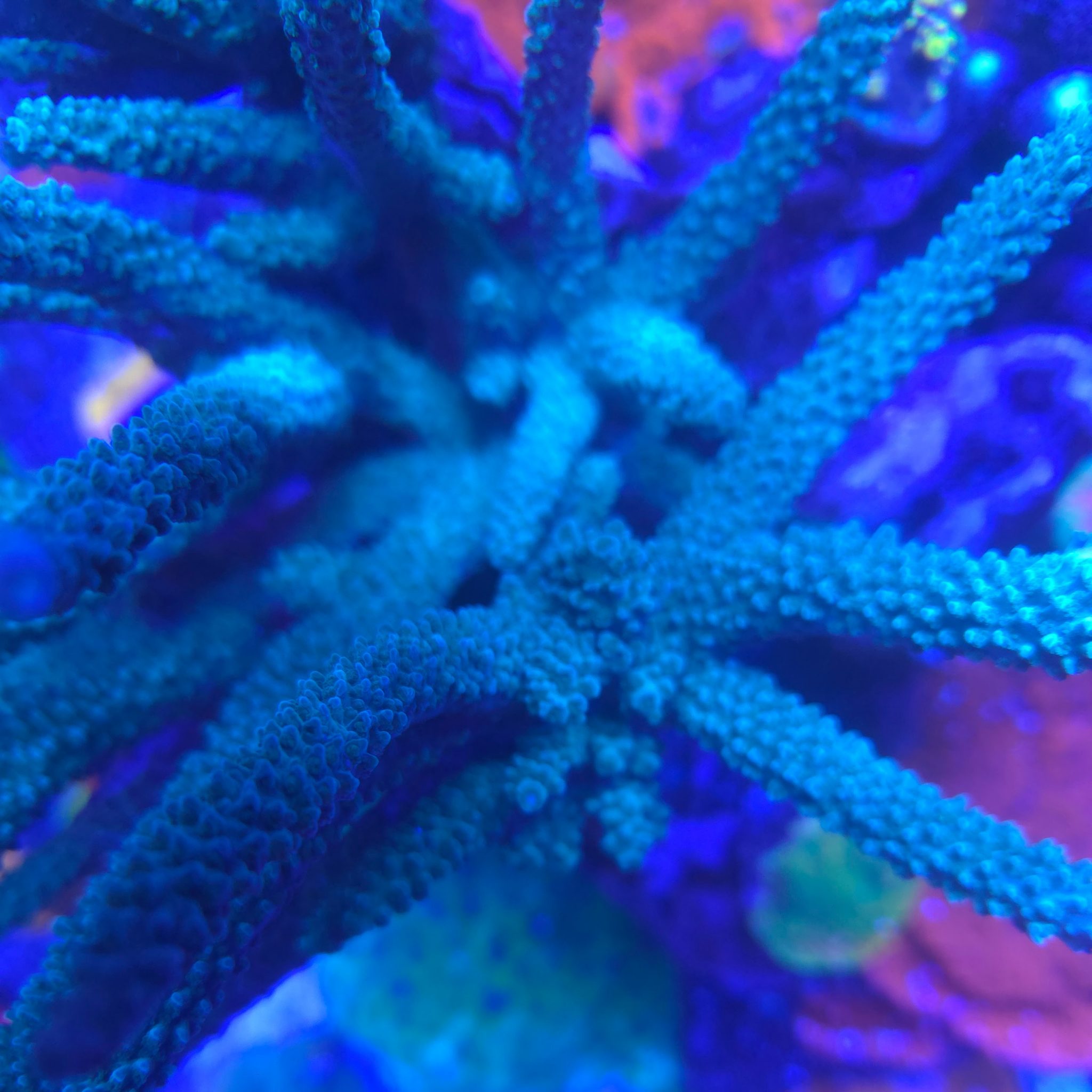
Lighting is one of the most important parts of a successful reef tank. Corals don’t just “like” light – they depend on it. The symbiotic algae (zooxanthellae) inside their tissue use light to photosynthesize, which in turn fuels coral growth, color, and overall health. Getting the basics right will help you avoid common problems like bleaching, browned-out corals, or slow growth.
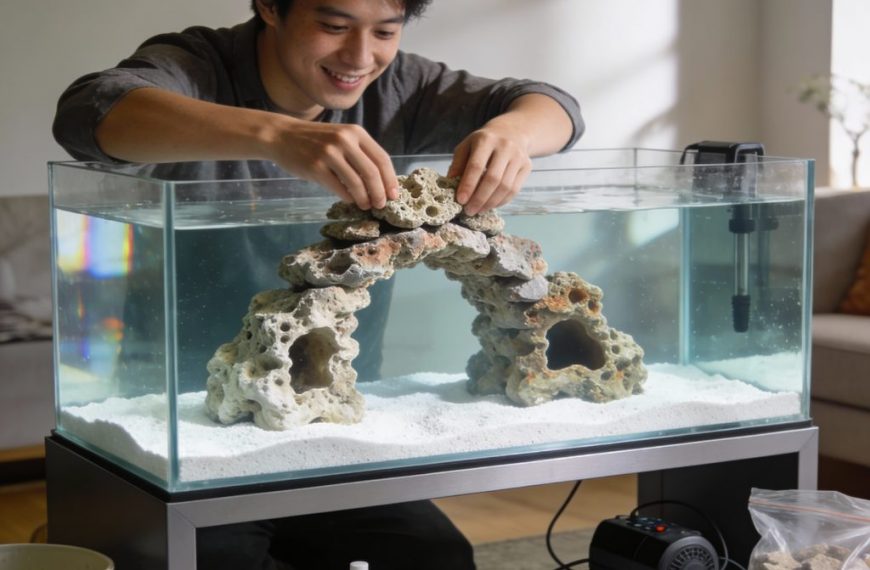
If you’re brand new to reefing, you may also want to read our overview on setting up a saltwater aquarium for beginners so your lighting plan fits into your overall system design.
Key Lighting Concepts for Coral Health
PAR: How Much Light Your Corals Receive
PAR (Photosynthetically Active Radiation) measures the intensity of usable light for photosynthesis. For most common reef corals:
- Soft corals & many LPS: ~50–150 PAR
- LPS & easier SPS: ~100–250 PAR
- Demanding SPS (Acropora, etc.): ~200–350+ PAR
You don’t need to chase exact numbers, but you should aim for a consistent range appropriate for the types of coral you keep. A PAR meter (or a rental from your local club) is extremely helpful to verify that what you think your corals are getting matches reality.
Spectrum: Why Blue Light Matters
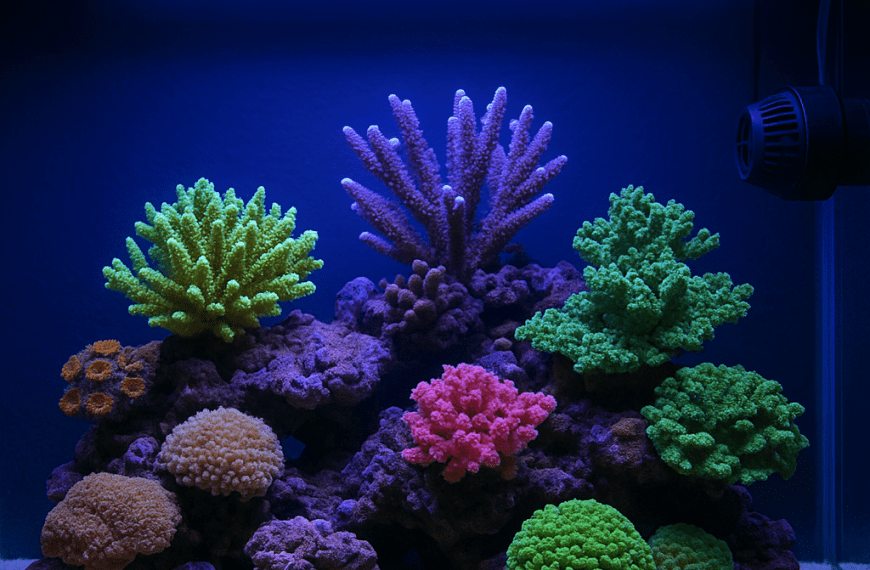
Corals use a broad range of wavelengths, but most reef lighting focuses on the blue spectrum (around 400–500 nm). Blue light penetrates seawater more effectively and drives photosynthesis while also bringing out fluorescent colors. White light is still useful, but it’s mainly a blend of blue plus red/green that makes the tank look more natural to our eyes.
For a coral-focused tank:
- Prioritize strong blue channels.
- Use white channels moderately for color balance.
- Avoid running red/green at very high levels, which can fuel nuisance algae.
If you’re choosing fixtures, our guide on the best LED lights for reef tanks explains how different brands handle spectrum and control.
Photoperiod: How Long the Lights Should Be On
Most reef tanks do well with 8–10 hours of full-intensity “daylight” plus some ramp-up and ramp-down time for sunrise and sunset effects. A simple schedule might look like:
- 1–2 hours: ramp up from dim blue to full intensity
- 8 hours: stable daytime program
- 1–2 hours: ramp down to dim blue evening
Tip: Corals care more about consistency than fancy effects. Pick a schedule and stick to it every day.
Practical Tips for Dialing In Your Reef Lighting
Once you understand PAR, spectrum, and photoperiod, the next step is applying them safely to your tank.
- Start lower and increase slowly: When installing new lights or bringing home new corals, begin with reduced intensity and increase over 2–4 weeks. This helps prevent light shock and bleaching.
- Match light levels to coral placement: Put high-light SPS near the top, LPS in the middle, and softies or low-light species near the bottom or shaded areas.
- Watch your corals, not just the numbers: Extended, full polyp extension, good color, and steady growth usually mean your lighting is in the right range. Bleaching, receding tissue, or very dark/browned-out corals suggest either too much or too little light.
- Combine lighting with good flow and nutrients: Strong light without adequate flow and stable nutrients can still lead to stressed corals. Think of lighting as one leg of a three-legged stool along with water quality and circulation.
For more on balancing these factors, see our article on common beginner reef tank mistakes and how to avoid them.
In the end, coral lighting basics come down to providing the right amount of blue-heavy light, for the right length of time, with consistent settings. Use guidelines for PAR and spectrum as a starting point, then fine-tune based on how your specific corals respond. With patience and small adjustments, your reef can grow into a colorful, thriving display.
Sources
- Delbeek, J. C., & Sprung, J. (1994–2005). The Reef Aquarium (Vols. 1–3). Ricordea Publishing.
- Borneman, E. H. (2001). Aquarium Corals: Selection, Husbandry, and Natural History. TFH Publications.
- Dana Riddle, “Lighting the Reef Aquarium” series, Advanced Aquarist & Reefkeeping Magazine.
 By
By