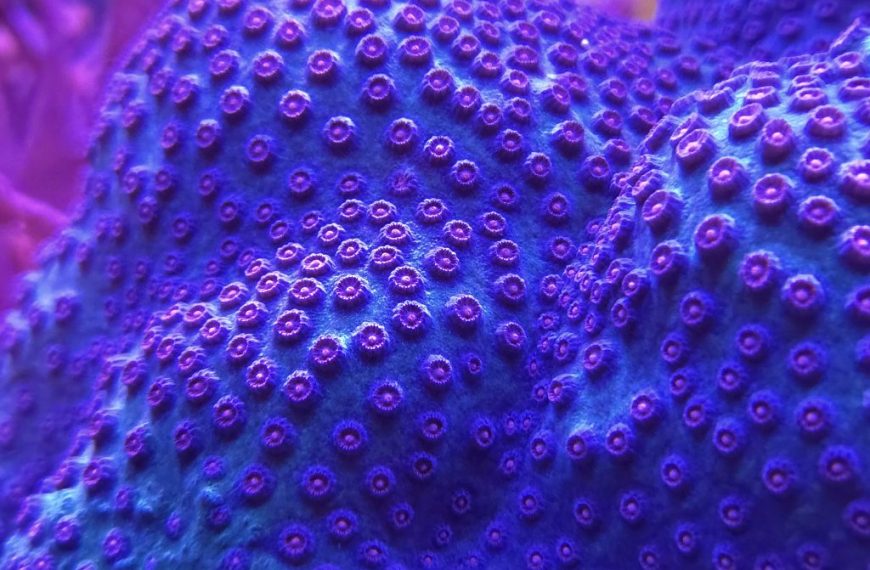
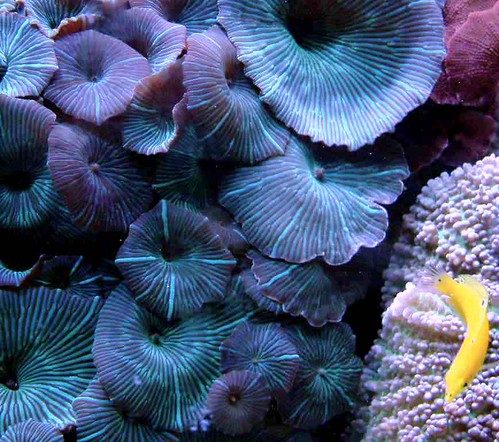
Discosoma mushrooms are hardy corallimorphs with big payoff. They add color fast and tolerate small mistakes. Good care still matters if you want steady growth and clean, full expansion.
Tank setup and water parameters
Start with a stable reef tank that is at least 10 gallons. Bigger tanks swing less each day. Use live rock or ceramic rock for attachment. Give mushrooms a shaded ledge or lower rock face.
Aim for reef-safe stability, not chasing perfect numbers. Keep salinity at 1.025 to 1.026 specific gravity. Hold temperature at 76 to 79°F. Keep pH near 8.1 to 8.3 with steady alkalinity.
Use these target ranges for best results. Alkalinity: 8 to 9 dKH. Calcium: 400 to 450 ppm. Magnesium: 1250 to 1350 ppm. Nitrate: 2 to 15 ppm. Phosphate: 0.03 to 0.10 ppm.
- Test salinity weekly with a calibrated refractometer.
- Do 10% water changes every 1 to 2 weeks.
- Run carbon if the tank smells “chemical” after fragging.
Quarantine is optional but helpful for pests and algae. A simple 5-gallon box works well. Use a small heater and powerhead. Inspect for vermetid snails, bubble algae, and flatworms.
If you need a refresher on stability, review our reef tank water parameters guide. If you are building a nano, see our nano reef setup checklist.
Lighting, flow, and placement
Discosoma prefer low to moderate light. Many do well at 50 to 120 PAR. Start new frags at 40 to 60 PAR. Increase by 10 to 15 PAR per week if needed.
Signs of too much light are clear. The mushroom stays tight and shrinks. Colors can fade or bleach. Move it lower or add shade from rock overhangs.
Flow should be low to moderate and indirect. Aim for gentle sway, not flapping. Strong jets can cause detachment. They can also lead to torn tissue on sharp rock edges.
Leave space around each mushroom. They can spread and sting neighbors. Keep 2 to 3 inches from LPS and soft corals. Use an “island rock” to limit their takeover.
- Acclimate light with a 7 to 14 day ramp plan.
- Use a random flow mode, not a constant blast.
- Place on rubble first if you plan to move later.
Feeding, growth, and troubleshooting
Discosoma get most energy from light and dissolved nutrients. Feeding can speed growth in lean systems. Offer small foods 1 to 2 times per week. Try mysis pieces, reef roids, or finely chopped shrimp.
Target feed with pumps off for 10 minutes. Use a pipette and place food on the oral disc. Do not overfeed in small tanks. Extra food can raise nitrate and fuel algae.
Mushrooms reproduce by splitting and by leaving “feet” behind. A healthy colony can double in a few months. If you want controlled propagation, place them on small rubble. Later, trade or relocate the rubble.
Common issues are usually simple. If the mushroom detaches, reduce direct flow and give a cup method. Place it in a specimen cup with rubble and mesh. In 7 to 14 days it often reattaches.
- Closed for days: check alkalinity swings and salinity drift.
- Melting edges: improve water quality and reduce light intensity.
- Brown slime: siphon, add carbon, and increase aeration.
Allelopathy can irritate mushrooms in mixed reefs. Soft corals and leathers can release chemicals. Run fresh carbon and change it every 2 to 4 weeks. For more, see our activated carbon in reef tanks article.
Use caution when handling. Mushrooms can release mucus when stressed. Wear gloves and rinse tools. Keep frags away from high-value acros during recovery.
Discosoma mushrooms reward patience and stable basics. Start them low, keep flow gentle, and avoid big parameter swings. With simple feeding and smart placement, they can become a colorful, spreading centerpiece.
Sources: Borneman, E. “Aquarium Corals” (TFH); Delbeek & Sprung, “The Reef Aquarium” Vol. 1–3; Fenner, R. “The Conscientious Marine Aquarist.”
Was this helpful?
Related Posts
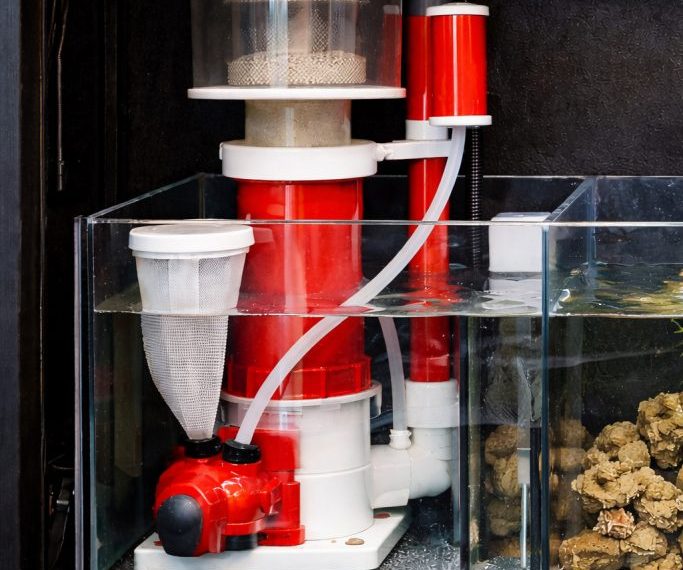
Protein Skimmer Reef Tank Guide
Learn how a protein skimmer works, how to size one, and how to tune it for a cleaner,…
 By
By
Reef Aquarium Water Parameters
Learn the ideal reef aquarium water parameters, safe ranges, and how to keep salinity, alkalinity, nutrients, and pH…