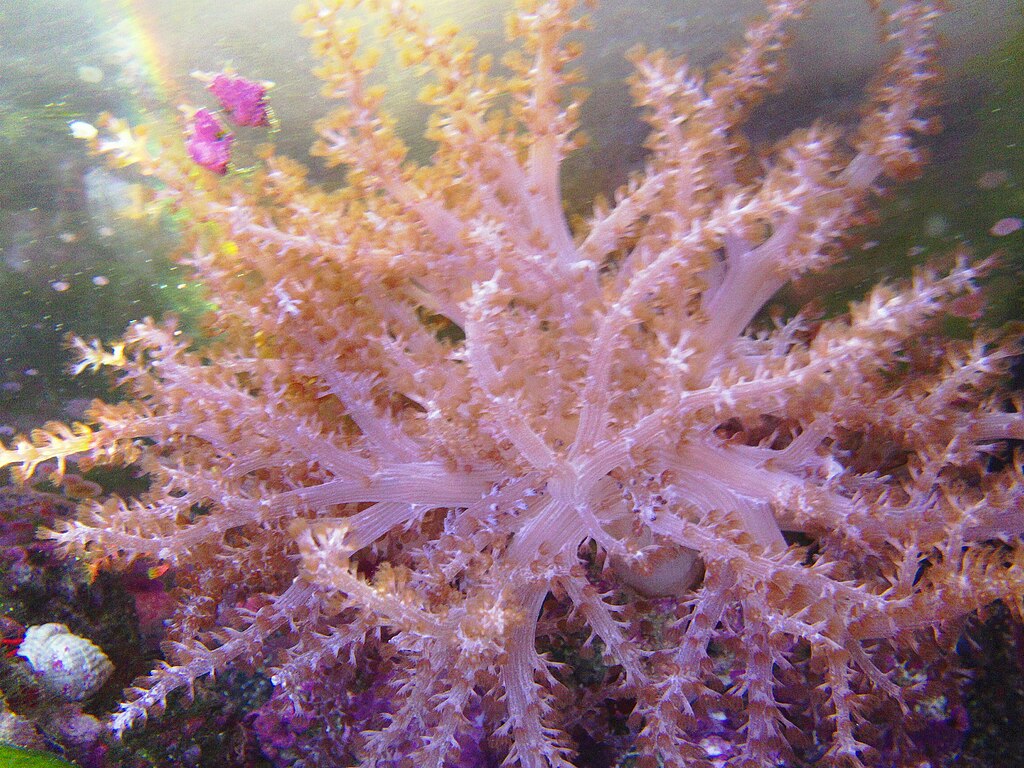
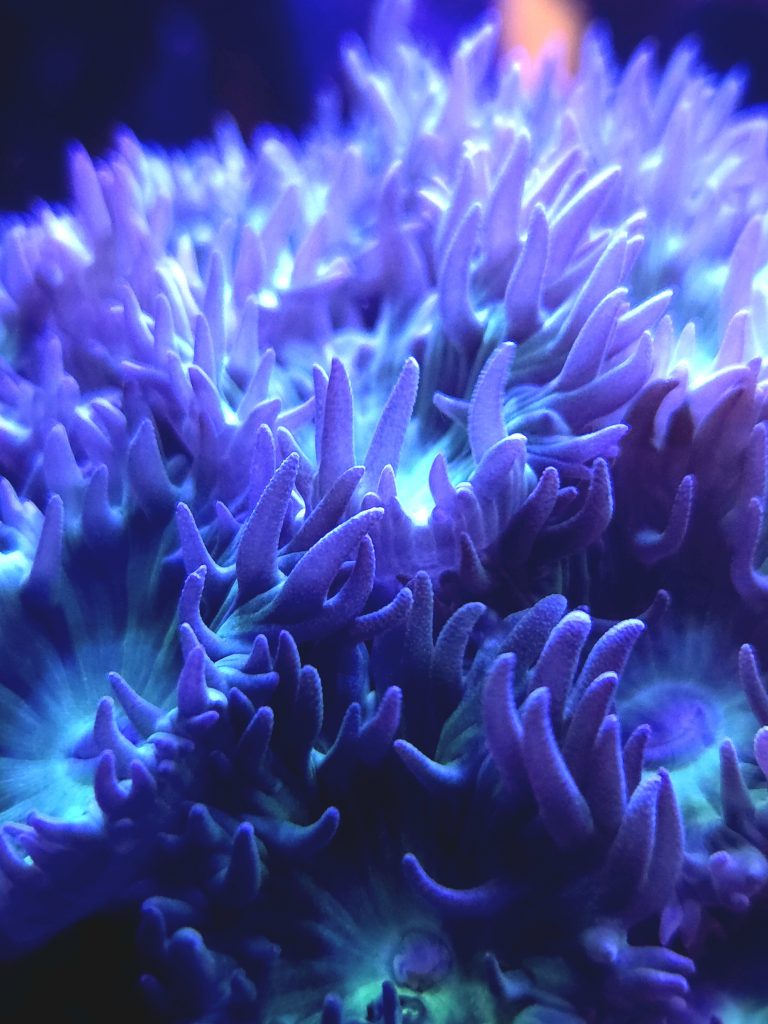
Duncan corals are hardy, friendly LPS corals with big, waving polyps. They reward steady care with fast growth and easy feeding responses.
This guide covers placement, lighting, flow, feeding, and common problems. Use it to keep your colony open, colorful, and multiplying.
Tank setup, placement, and stability
Duncan corals (Duncanopsammia) like stable reef conditions. Aim for 24–26°C (75–79°F) and salinity 1.025–1.026. Keep pH 8.1–8.4 and alkalinity 8–9 dKH.
Maintain calcium 400–450 ppm and magnesium 1250–1400 ppm. Keep nitrate 5–15 ppm and phosphate 0.03–0.10 ppm. Zero nutrients often leads to pale tissue and slow growth.
Place Duncans on rock or a stable frag plug. Give them space from stinging neighbors. Leave 7–10 cm (3–4 inches) around the colony for nighttime sweepers.
Acclimate slowly when moving between tanks. Match temperature and salinity first. Then adjust light over 7–14 days. Use a lower rack position at the start.
- Test alkalinity twice weekly in new systems.
- Use an auto top-off to prevent salinity swings.
- Mount frags where you can target feed easily.
For more on stable chemistry, see our reef tank water parameters guide. If your tank is young, read cycling a saltwater aquarium before adding LPS.
Lighting and flow that keep polyps extended
Duncans prefer moderate light. A practical target is 80–150 PAR at the coral. Many thrive closer to 100 PAR. Too much light can cause tight polyps and fading tips.
Start at the lower end if you run strong LEDs. Increase intensity by 5–10% each week. Watch for signs like tissue recession at the base. That often means light or flow is too harsh.
Flow should be moderate and varied. Aim for a gentle sway, not a blast. Direct jets can stop feeding and tear tissue. Random flow helps remove waste and brings food.
A common real-world setup is a Duncan on the lower third of the rockwork. Place it 20–30 cm from a wavemaker. Angle the pump so the current breaks off rock.
- Use a 9–10 hour main photoperiod for consistency.
- Move the coral before changing light settings.
- Re-check PAR after cleaning lenses and covers.
Feeding, growth, and troubleshooting
Duncans can live on light and nutrients, but they grow faster with feeding. Feed 2–3 times per week for steady budding. Target feed when polyps are open and sticky.
Use small meaty foods like mysis, brine, or chopped krill. Pellets made for LPS also work. Keep pieces under 5 mm to prevent spitting. Turn off pumps for 10 minutes.
Expect new heads to form at the base and along branches. Stable alkalinity drives skeletal growth. If alkalinity swings more than 0.5 dKH per day, growth often stalls.
If polyps stay closed, check the basics first. Test salinity with a calibrated refractometer. Look for pests and irritation. Vermetid snails can slime the coral and cause retraction.
- Closed polyps: reduce flow and confirm 80–150 PAR.
- Receding tissue: check alkalinity stability and stop blasting light.
- Brown jelly risk: siphon debris, increase flow, and isolate the frag.
Fish and inverts can also cause issues. Some clownfish may host and irritate small colonies. Peppermint shrimp may steal food during target feeding. Use a feeding dome if needed.
For a deeper look at nutrient balance, read our nitrate and phosphate in reef tanks article. It helps prevent both starvation and algae blooms.
Sources: Borneman, E. “Aquarium Corals” (TFH); Delbeek & Sprung, “The Reef Aquarium” Vol. 1–3; Julian Sprung, “Corals: A Quick Reference Guide.”
Was this helpful?
Related Posts
Reef Safe Fish for Beginners
Discover the best reef safe fish for beginners, plus tank size, feeding, and compatibility tips for a peaceful…
 By
By
Dragonets Fish Care
Dragonets are beautiful reef fish, but they need mature tanks and steady food sources. Learn how to keep…