
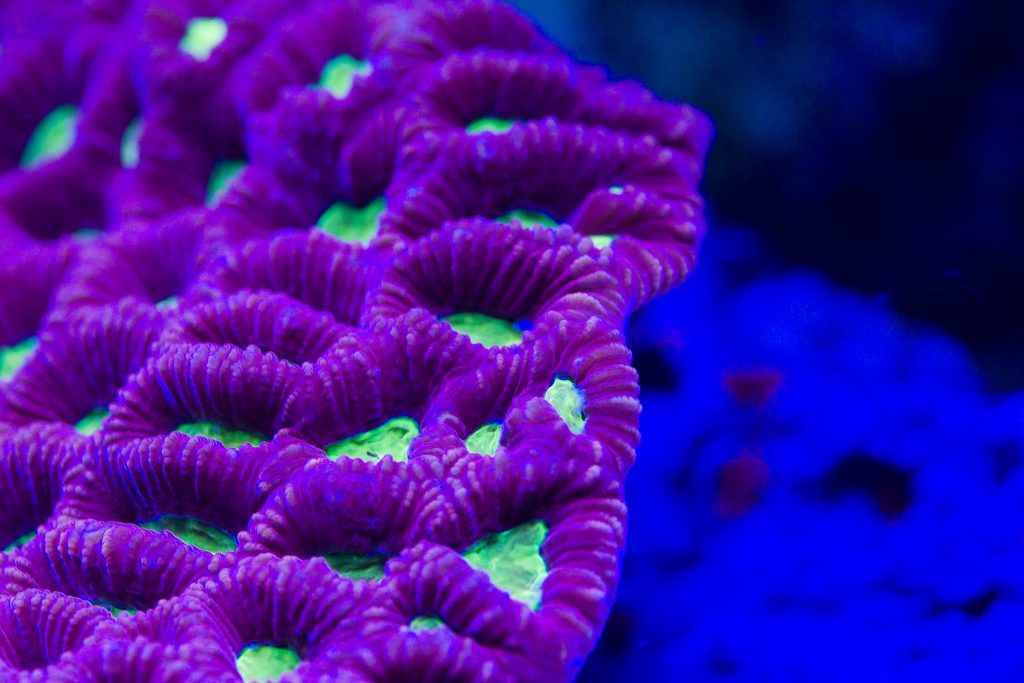
Favia and Favites corals are hardy LPS favorites. They offer bold colors and thick, stony texture. They also forgive small mistakes if you keep basics stable.
Tank placement, light, and flow
Favia and Favites do best in moderate light. Aim for 80 to 150 PAR at the coral. Start lower if the coral looks pale. Increase PAR by 10 to 15 weekly.
Place them on rock ledges or the sand bed. Keep the base stable and level. Avoid spots where detritus piles up. A small rubble ring can stop shifting.
Use low to moderate, indirect flow. You want the tissue to gently ripple. Strong jets can peel tissue from sharp skeleton edges. Dead zones can trap film and cause recession.
Give them space from neighbors. Many extend sweepers at night. Plan for 3 to 6 inches of clearance. In mixed reefs, read our coral placement guide for safer layouts.
- Start new frags at 60 to 80 PAR for 7 to 10 days.
- Increase light slowly after full daytime polyp extension returns.
- Use alternating flow modes to prevent debris buildup.
Water parameters and stability targets
Stability matters more than chasing perfect numbers. Keep salinity at 1.025 to 1.026. Hold temperature at 77 to 79°F. Limit daily swings to under 1°F.
Maintain alkalinity at 8 to 9.5 dKH. Keep calcium at 420 to 460 ppm. Keep magnesium at 1300 to 1400 ppm. Test alkalinity twice weekly in growing systems.
Keep nutrients present but controlled. Aim nitrate at 5 to 15 ppm. Aim phosphate at 0.03 to 0.10 ppm. Ultra-low nutrients can cause dull color and slow growth.
Use consistent dosing and water changes. A 10% weekly change works well for many tanks. If you dose two-part, match alk and calcium consumption. See our alkalinity stability guide for a simple schedule.
- Calibrate your refractometer monthly with 35 ppt fluid.
- Mix saltwater for 12 to 24 hours before use.
- Log alk readings to spot trends before problems show.
Feeding, aggression, and troubleshooting
Favia and Favites can photosynthesize and still benefit from feeding. Target feed 1 to 2 times weekly. Use small foods like mysis, brine, or reef roids. Feed after lights dim for better response.
Turn pumps off for 10 to 15 minutes. Use a pipette to place food on each mouth. Watch for food stealing by shrimp and wrasses. A cut plastic bottle can act as a feeding dome.
Expect nighttime aggression. Sweepers can sting nearby LPS and soft corals. If you see white burn marks, increase spacing fast. Frag or relocate the weaker coral within 24 hours.
Common issues include tissue recession and brown jelly. Recession often follows alk swings or debris on the rim. Gently turkey baste daily for a week. If brown jelly appears, siphon it out and dip the coral. Use an iodine dip at label strength for 5 to 10 minutes. Quarantine helps prevent repeats. Learn a simple setup in our coral quarantine basics.
- Recession at the base often means low flow or trapped detritus.
- Bleaching often means too much light or rapid PAR increases.
- Poor inflation can signal pests, low nutrients, or alkalinity swings.
Favia and Favites reward patience and steady maintenance. Keep moderate light, gentle flow, and stable chemistry. Feed lightly and give them space, and they will grow for years.
Sources: Veron, J.E.N. (2000) Corals of the World; Borneman, E.H. (2001) Aquarium Corals; Sprung, J. (2002) The Reef Aquarium Vol. 3
Was this helpful?
Related Posts
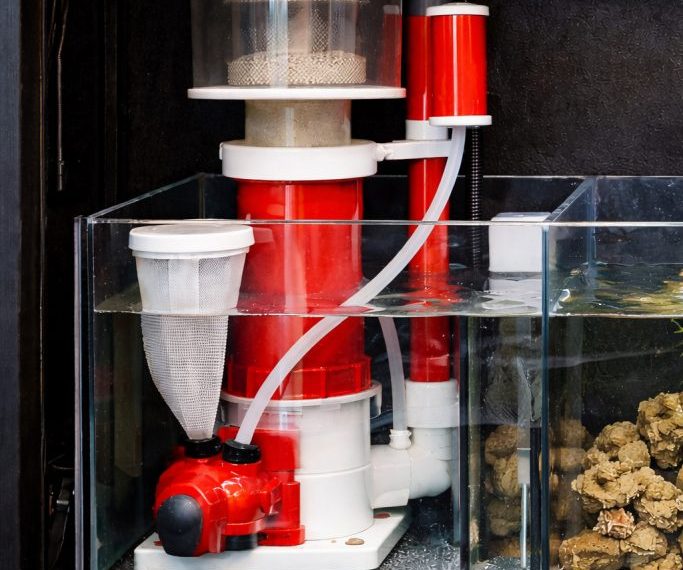
Protein Skimmer Reef Tank Guide
Learn how a protein skimmer works, how to size one, and how to tune it for a cleaner,…
 By
By
Best Reef Safe Cleanup Crew
The best reef safe cleanup crew includes hardy snails, selective scavengers, and a few specialty invertebrates matched to…