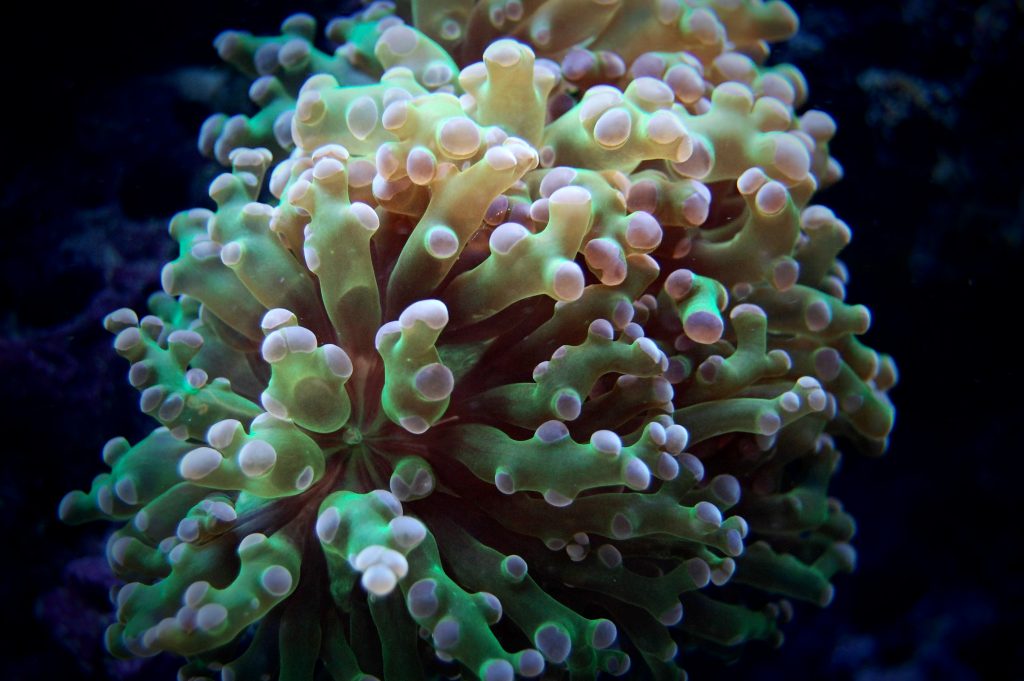
Frogspawn coral is a classic LPS that adds movement and color. It can thrive in mixed reefs when you match its needs. Stable parameters and gentle placement make the biggest difference.
Choosing placement and flow
Place frogspawn in low to moderate flow. Aim for a soft, back-and-forth sway. Avoid strong jets that whip the tentacles. Too much flow can cause tissue recession at the skeleton edge.
Start with moderate light and adjust slowly. Many frogspawn do well at 80–150 PAR. Put it on the sand bed first if unsure. Move it up only after two weeks of steady extension.
Give it space from neighbors. Frogspawn can send out sweepers at night. Plan for 6–8 inches of clearance. Keep more space near torches and galaxea corals.
Use a stable base to prevent falls. A toppled colony can tear its tissue. Secure loose frags with reef-safe putty. For more on layout, see reef aquarium aquascaping basics.
- Target a gentle “sway,” not a hard bend in the tentacles.
- Acclimate to light over 10–14 days with small moves.
- Leave 6–8 inches around it for nighttime aggression.
Water parameters that keep frogspawn happy
Frogspawn rewards stability more than perfect numbers. Keep salinity at 1.025–1.026 SG. Hold temperature at 77–79°F. Avoid daily swings of more than 1°F.
Maintain alkalinity at 8–9 dKH for most mixed reefs. Keep calcium at 420–450 ppm. Keep magnesium at 1300–1400 ppm. Test alkalinity at least twice weekly in newer tanks.
Nutrients should be present but controlled. Aim for nitrate at 5–15 ppm. Keep phosphate at 0.03–0.10 ppm. Ultra-low nutrients can cause pale tissue and poor inflation.
Use consistent dosing and water changes. A 10% weekly change works well for many systems. If you dose two-part, dose daily in small amounts. For dosing basics, read alkalinity, calcium, and magnesium in reef tanks.
- Alk: 8–9 dKH, Ca: 420–450 ppm, Mg: 1300–1400 ppm.
- NO3: 5–15 ppm, PO4: 0.03–0.10 ppm for steady color.
- Keep salinity stable with an ATO and calibrated refractometer.
Feeding, growth, and troubleshooting
Frogspawn gets energy from light and feeding. Feed 1–2 times per week for faster growth. Offer small meaty foods like mysis, brine, or reef roids. Turn off pumps for 10 minutes during target feeding.
Watch for signs of stress early. Tight, shrunken polyps can mean too much light or flow. Brown jelly disease can appear as brown slime and rapid tissue loss. If you see it, siphon the slime and isolate the coral.
Common mistakes include sudden parameter changes and rough handling. Never expose the fleshy head to air for long. Move it in a container underwater when possible. If a head splits, keep parameters steady and avoid extra flow.
Pests can also cause poor extension. Look for flatworms, nudibranchs, or vermetid snails nearby. Dip new frags and quarantine when you can. Our coral dip and quarantine guide can help you build a routine.
- Feed small portions. A piece should fit inside one tentacle cluster.
- If brown jelly appears, isolate and increase aeration immediately.
- Check for stinging neighbors if one side stays retracted.
Frogspawn coral care is simple when you prioritize stability, spacing, and gentle flow. Start low, acclimate slowly, and keep your chemistry consistent. With steady nutrients and occasional feeding, frogspawn can grow and split for years.
Sources: Borneman, Eric H. “Aquarium Corals”; Delbeek, J.C. & Sprung, J. “The Reef Aquarium” (Vol. 1–3); Fenner, Robert. “The Conscientious Marine Aquarist”.
Was this helpful?
Related Posts
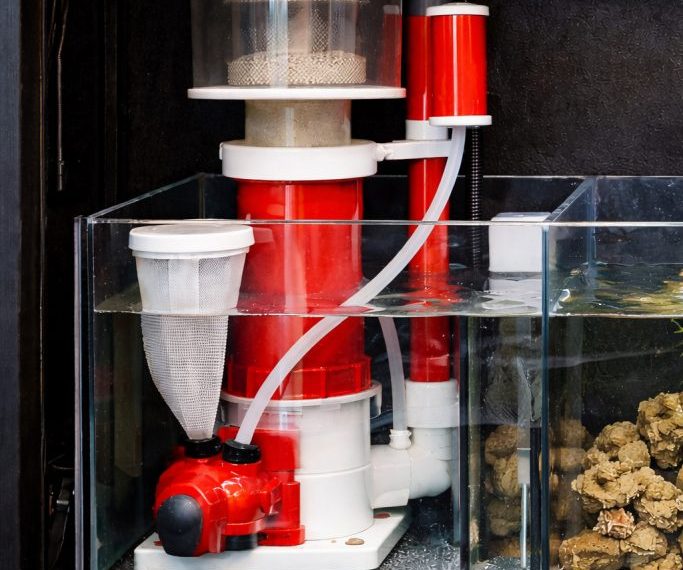
Protein Skimmer Reef Tank Guide
Learn how a protein skimmer works, how to size one, and how to tune it for a cleaner,…
 By
By
Best Reef Safe Cleanup Crew
The best reef safe cleanup crew includes hardy snails, selective scavengers, and a few specialty invertebrates matched to…