
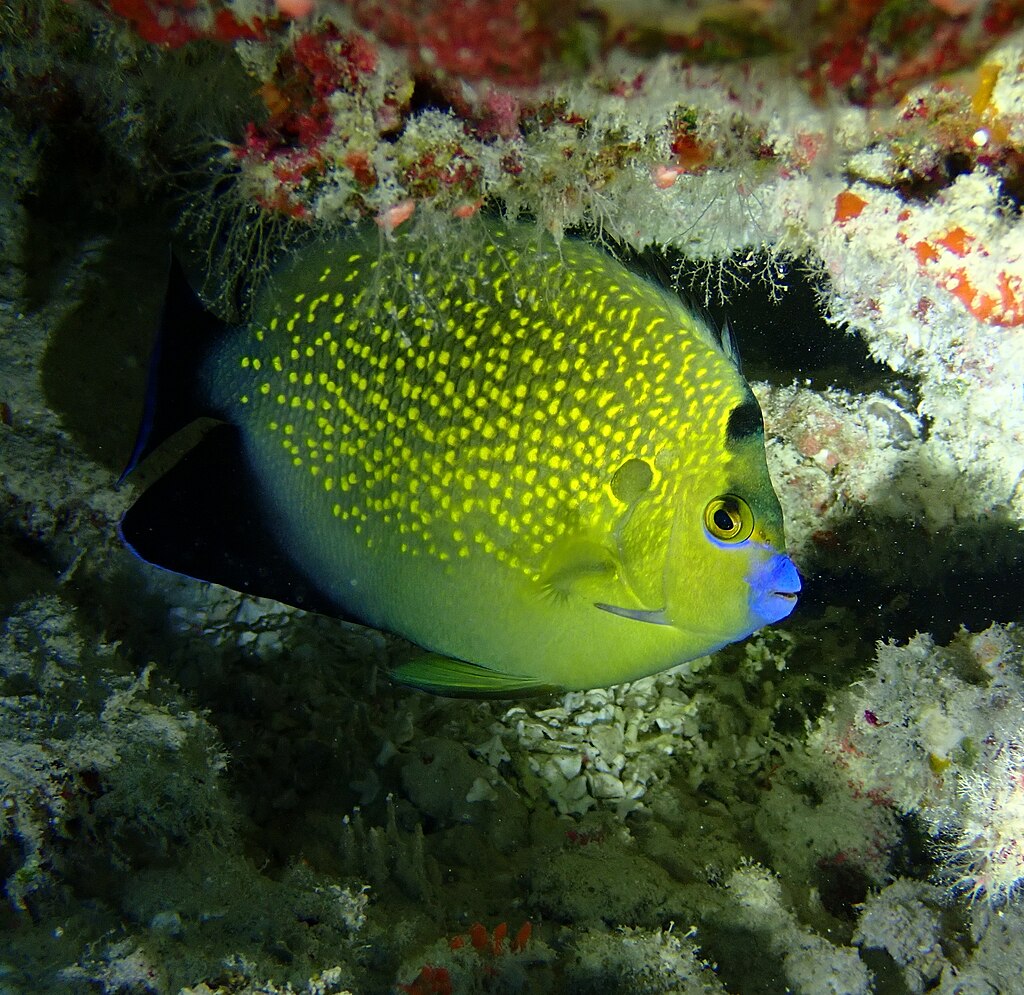
The Goldflake Angelfish is one of the most striking large marine angelfish in the hobby. It combines bold yellow speckling, a dark body, and a bright facial mask. This species is hardy once established, but it needs a mature tank, careful feeding, and close attention to coral compatibility. Most reef keepers do best with a fish-only system or a mixed reef built around lower-risk coral choices.
If you are considering Apolemichthys xanthopunctatus, this guide covers size, temperament, tank setup, diet, reef safety, and common problems. You will also learn how to acclimate this fish properly and what to expect as it settles in. Goldflake Angelfish are not beginner fish in the strictest sense, but they can thrive with stable water, a calm introduction, and a thoughtful stocking plan.
Goldflake Angelfish Quick Care Facts
| Common name | Goldflake Angelfish |
| Scientific name | Apolemichthys xanthopunctatus |
| Adult size | Up to 10 inches |
| Minimum tank size | 125 gallons |
| Temperament | Semi-aggressive |
| Diet | Omnivore with sponge-based foods |
| Reef safe | With caution |
| Care level | Moderate |
| Best temperature | 75-78°F |
| Salinity | 1.025-1.026 |
| Ideal pH | 8.1-8.4 |
| Water flow | Moderate to strong |
| Lighting | No special need for the fish |
This fish often becomes a centerpiece. It has a calm, deliberate swimming style. It also develops a strong feeding response over time. That said, success depends on buying a healthy specimen and placing it in a stable aquarium with mature live rock.
Natural Habitat
The Goldflake Angelfish comes from the central Pacific. It is strongly associated with the Hawaiian region and nearby island groups. In the wild, it lives on outer reef slopes and deep reef areas. Adults are often found around caves, ledges, and rocky coral structures.
This natural habitat tells us a lot about care. Goldflakes prefer established rockwork with shaded zones and secure retreats. They are not open-water fish. They like structure and visual barriers. Wild fish spend much of the day picking at rock surfaces, algae films, and encrusting organisms. Sponges are also an important part of their natural diet.
Because many specimens come from deeper or dimmer reef zones, sudden exposure to intense light can stress them. A slow acclimation to bright reef lighting helps. A mature tank also gives them natural grazing opportunities between feedings. This reduces stress and often improves long-term health.
Aquarium Setup
A 125-gallon tank is the practical minimum for a small adult. Larger is better. A 150-gallon or 180-gallon system gives more swimming room and helps with territorial behavior. This matters if you keep other angelfish, tangs, or assertive tank mates.
Build the aquascape with caves, arches, and broken sight lines. Leave open swimming space in the front and center. Keep stable rock structures because large angels are powerful fish. They can wedge themselves into crevices at night or when startled. Secure every major rock piece before the fish is introduced.
Mature live rock is a major advantage. It provides constant foraging and helps nervous fish settle faster. Avoid adding a Goldflake to a sterile new setup. These fish do best in tanks that have been running for several months. Strong biological filtration is also important because they are heavy feeders. Use an efficient skimmer, regular water changes, and good nutrient export. If you need a refresher on system planning, see: reef tank setup guide, marine aquarium filtration basics, quarantine for saltwater fish.
Lighting Requirements
The Goldflake Angelfish has no strict lighting requirement of its own. It does not need high PAR like a coral. Still, light affects its comfort and behavior. Many specimens settle better under moderate lighting during the first weeks. Bright lighting is fine later if the fish has caves and shaded overhangs.
In mixed reefs, your coral lighting plan will usually drive the setup. That is acceptable as long as the fish can retreat from direct intensity. If you run strong LED lighting, use your acclimation mode when adding the fish. Reduced intensity for several days can help lower stress. This is especially useful after shipping.
Do not judge health by color alone during the first week. A stressed Goldflake may look washed out under bright lights. Focus on respiration, swimming, and feeding response. Once comfortable, the yellow spotting usually looks richer and more defined. A stable day-night cycle also helps the fish establish a routine and reduces skittish behavior.
Water Flow
Moderate to strong flow works best. The key is variety, not constant blasting current. Goldflake Angelfish come from reef areas with active water movement, but they still need calm zones to rest. Create alternating flow patterns across the rockwork. This keeps detritus suspended and supports oxygenation.
Avoid directing a pump straight at the fish’s favorite cave. Constant pressure can keep it hidden and reduce feeding confidence. Instead, use broad flow from gyres, return outlets, or wide-angle powerheads. Good circulation also benefits the fish indirectly by improving water quality and reducing dead spots in a large aquascape.
If the fish spends all day pinned behind rocks, review the flow pattern. It may also be reacting to aggression, but harsh current is an easy thing to check first. During feeding, temporarily reduced flow can help slower fish compete. Goldflakes are usually bold eaters once settled, but newly imported specimens often need a calmer feeding window.
Feeding
Feeding is one of the most important parts of Goldflake Angelfish care. This species is an omnivore, but sponge material should be part of the diet. Offer a varied menu at least two to three times daily. Frequent feeding helps maintain body weight and reduces the chance of coral picking in some tanks.
Good staple foods include frozen angelfish formulas, mysis shrimp, finely chopped clam, high-quality pellets, and nori. Choose prepared foods that contain sponge. That ingredient matters for long-term success with many large angels. Soak foods in vitamins several times each week. This can help support recovery after shipping and improve fin and skin condition.
New arrivals may refuse dry food at first. Start with frozen foods and sheets of algae clipped near the fish’s hiding area. Feed small portions and watch closely. A healthy fish should show interest within a reasonable settling period. If it ignores all food for several days, investigate stress, disease, bullying, or poor acclimation. For more nutrition tips, see: best foods for marine angelfish.
Compatibility
Goldflake Angelfish are semi-aggressive. They are usually manageable in large systems, but they can become territorial as they mature. They often do well with tangs, wrasses, larger clownfish, foxfaces, and peaceful triggers in roomy aquariums. Introduce them carefully around other angelfish. Similar body shapes often trigger disputes.
Reef compatibility is the main concern. This species is not fully reef safe. Some individuals ignore many corals. Others nip fleshy LPS, zoanthids, clam mantles, and soft corals. Even a well-fed fish may sample coral tissue. There is always risk. SPS systems with fewer fleshy targets sometimes fare better, but no outcome is guaranteed.
Invertebrates are usually safe, though feather dusters and similar sessile animals may be picked at. If your display centers on prized acans, fleshy brains, open brains, or clams, this fish is a gamble. If your tank is more fish-focused, the risk is easier to accept. Always have a backup plan in case removal becomes necessary.
Step-by-Step Acclimation Guide
Large angelfish often arrive stressed. A careful introduction improves survival and feeding response. Follow a simple process and avoid rushing.
- Prepare a quarantine tank before purchase. Use stable salinity, heat, and hiding places.
- Dim the lights before opening the shipping bag.
- Float the bag to equalize temperature.
- Match salinity slowly if there is a large difference.
- Transfer the fish gently without adding shipping water.
- Provide PVC elbows or rock-like shelters in quarantine.
- Offer frozen food within the first day.
- Observe breathing, fins, and skin daily.
- Treat parasites only when needed and with species-appropriate caution.
- Move the fish to the display after it is feeding strongly and behaving normally.
Quarantine is strongly recommended. Goldflake Angelfish are valuable fish. They should not go straight into a display. A proper observation period protects the new fish and every fish already in the tank. If you need help building a protocol, review: quarantine for saltwater fish.
Propagation or Breeding
Captive breeding of Goldflake Angelfish is not common in home aquariums. Like many marine angelfish, they are pelagic spawners in nature. They release eggs into the water column, usually in pairs or harem structures. The larval stage is difficult to raise. It requires specialized live feeds and expert rearing systems.
For hobbyists, there is no practical fragging or propagation method like there is for corals. The best focus is long-term care and responsible sourcing. Buy from reputable vendors that handle large angels well. Healthy collection and transport matter a great deal with this species. A well-conditioned specimen adapts much faster than a thin or heavily stressed fish.
Common Problems
Goldflake Angelfish Not Eating
This is the most common early issue. Shipping stress is the usual cause. Bright lighting, aggressive tank mates, and a bare quarantine tank can make it worse. Offer frozen mysis, clam, angelfish formulas, and nori. Add shelter and reduce traffic around the tank. Check ammonia and salinity first. If the fish still refuses food, inspect for external parasites or rapid breathing.
Coral Nipping
Some Goldflakes become model citizens. Others do not. Nipping often targets fleshy LPS, zoanthids, or clam mantles. Increase feeding frequency and dietary variety first. This sometimes helps, but it does not always solve the problem. If damage continues, the fish may need to be rehomed to a fish-only system.
Faded Color or Weight Loss
Poor diet, internal parasites, and chronic stress are common causes. Review food quality and feeding frequency. Add vitamin enrichment and sponge-based foods. Watch for bullying at mealtime. A fish that eats slowly may lose weight in a busy community. Quarantine treatment may be needed if the body continues to thin.
Aggression Toward Tank Mates
This usually appears after the fish settles in. Rearranging rockwork can reduce territorial behavior. Adding the Goldflake after more peaceful fish also helps. In severe cases, an acclimation box can ease introductions. Tank size remains a major factor. Crowded systems magnify every compatibility issue.
Frequently Asked Questions
Is the Goldflake Angelfish reef safe?
It is reef safe with caution. Some individuals behave well. Others nip corals and clam mantles. There is always risk.
How big does a Goldflake Angelfish get?
Adults can reach about 10 inches. Most need a large aquarium with open swimming room and stable rockwork.
What is the minimum tank size for a Goldflake Angelfish?
125 gallons is the minimum for long-term care. Larger tanks are strongly preferred, especially in community systems.
What does a Goldflake Angelfish eat?
Feed frozen angelfish formulas, mysis, clam, pellets, nori, and foods that contain sponge. Offer food two to three times daily.
Are Goldflake Angelfish hard to keep?
They are moderate in difficulty. They are hardy once established, but they need a mature tank, quarantine, and careful feeding.
Final Thoughts
The Goldflake Angelfish is a premium show fish with real presence. It can thrive for years in a stable, mature marine aquarium. Success comes down to three things. Buy a healthy specimen. Feed a varied diet with sponge content. Accept the real possibility of coral nipping before adding it to a reef. If you can meet those conditions, Apolemichthys xanthopunctatus can become one of the most impressive fish in your collection.
Was this helpful?
Related Posts
Palytoxin in the Marine Aquarium
Palytoxin in the marine aquarium is a real risk during coral handling. Learn safe practices, warning signs, and…
 By
By
Reef Tank Water Chemistry Basics
Learn reef tank water chemistry basics, including ideal parameters, testing routines, and simple ways to keep corals healthy…
[favorite_button]
My Bookmarks:
To see full list click here
[user_favorites user_id="" include_links="true" site_id="" post_types="" include_thumbnails="true" thumbnail_size="thumbnail" include_excerpt="false"]