

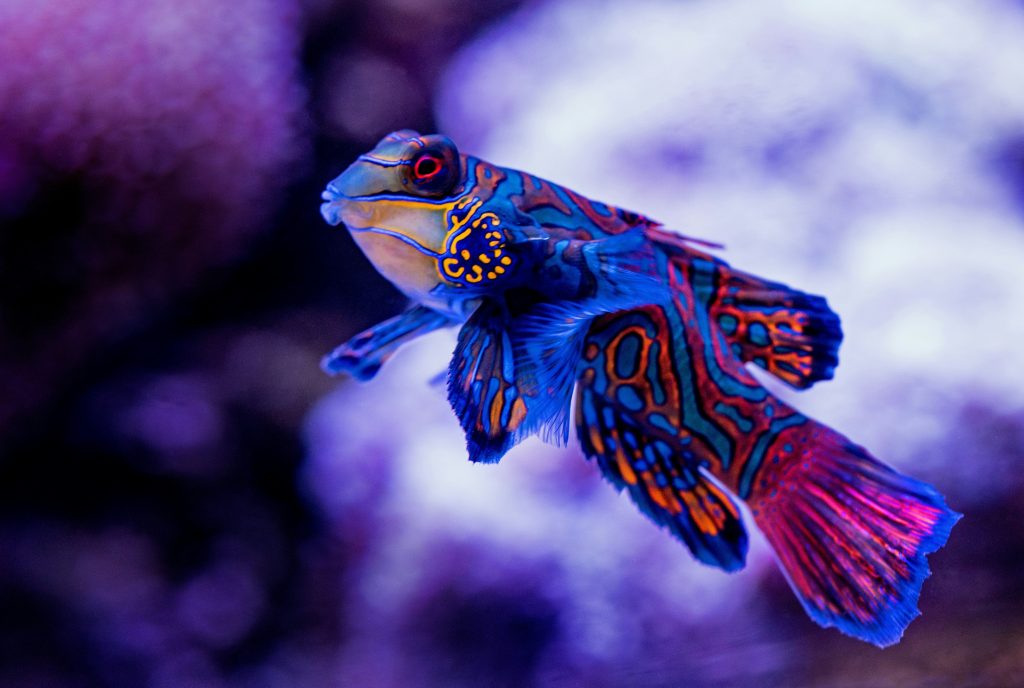
The Green Mandarin is one of the most beautiful reef fish in the hobby. It is also one of the most misunderstood. This species needs a mature aquarium, a constant supply of live pods, and stable reef conditions. When those needs are met, mandarins can thrive for years and become a calm, fascinating centerpiece fish.
Many beginners buy a mandarin for its color alone. That often ends badly. Synchiropus splendidus is not usually difficult because of aggression or disease. It is difficult because of feeding. In this guide, you will learn how to keep a Green Mandarin successfully, how to set up the right tank, how to judge pod availability, and how to solve the common problems that cause slow starvation.
Quick Reference Care Table
| Common Name | Green Mandarin |
| Scientific Name | Synchiropus splendidus |
| Care Level | Moderate to difficult |
| Temperament | Peaceful |
| Adult Size | About 3 inches |
| Minimum Tank Size | 30 gallons for trained eaters, 50+ gallons preferred |
| Diet | Copepods, amphipods, live microfauna, some accept frozen foods |
| Reef Safe | Yes |
| Temperature | 76–80°F |
| Salinity | 1.025–1.026 |
| pH | 8.1–8.4 |
| Flow | Low to moderate around resting areas |
| Lighting | Not demanding directly; matched to reef setup |
The table gives the short version. The real key is food density. A Green Mandarin spends all day hunting tiny prey from rock, sand, and glass. If your tank cannot support that behavior, the fish slowly loses weight. A healthy mandarin should look rounded behind the head and along the belly.
Natural Habitat
Green Mandarins come from the Indo-Pacific. They are found around sheltered lagoons, reef slopes, and rubble zones. In nature, they stay close to the bottom. They move slowly over rock and substrate while picking at tiny crustaceans. This constant grazing behavior explains almost every care requirement in captivity.
These fish are not built for chasing large foods in open water. They have small mouths and a deliberate feeding style. They rely on hunting many tiny meals every day. That is why a new tank is usually a poor choice. A sterile aquarium does not have enough established microfauna. In the wild, mandarins also use rockwork and crevices for shelter. They prefer calm zones where they can rest without heavy competition from fast feeders.
Their slime coat is another interesting trait. Mandarins have a thick protective mucus layer. It may help reduce parasites and skin irritation. Still, they are not immune to stress. Poor acclimation, bullying, and starvation remain major risks in home aquariums.
Aquarium Setup
A mature reef tank is the best setup for a Green Mandarin. Age matters more than many hobbyists realize. A system that is six to twelve months old is far safer than a newly cycled tank. The tank should have porous live rock, protected feeding surfaces, and enough biodiversity to support pod reproduction.
Tank size depends on feeding method. A mandarin that eats frozen food reliably can live in a smaller reef. A pod-dependent fish needs more space and more rock. In most cases, 50 gallons or larger is the safer target. Larger tanks hold pod populations better. They also provide more stable water chemistry.
Aquascape with caves, overhangs, and rubble pockets. Leave open sand areas too. The fish will inspect every surface. A refugium is a major advantage. It can grow copepod populations away from predators. Many successful keepers seed pods regularly and culture them outside the display tank. If you want help building a stable system, see: reef tank setup guide, refugium benefits for reef tanks, and live rock for reef aquariums.
Lighting Requirements
Green Mandarins do not have special lighting needs. They are not photosynthetic animals. Your lighting should be chosen for the reef tank as a whole, especially for corals. That said, lighting still affects the fish indirectly. Strong reef lighting supports algae films and microfauna habitats on rock surfaces. Those surfaces become feeding zones.
Mandarins usually adapt well to normal reef lighting schedules. They are often most active during the day, especially once settled. Avoid sudden light changes. Use a ramping schedule if possible. This reduces stress and helps the tank feel more natural. If your fish seems shy, check whether the aquascape offers enough shaded areas. Overly exposed rockwork can make them hide more often.
At dusk, mandarins may become more active and social. Pairs sometimes perform courtship rises near lights out. This is normal in healthy, established systems. If your tank uses intense LEDs, provide sheltered lower-flow areas where the fish can forage comfortably.
Water Flow
Moderate water flow works best. The display can have strong circulation overall, but the mandarin needs calm feeding lanes. This fish hunts by hovering, perching, and pecking. Constant blasting flow makes that difficult. If food is swept away too quickly, the fish wastes energy and misses meals.
Design your flow with varied zones. SPS reefs can still keep mandarins, but the rockwork should create sheltered pockets. Watch the fish during feeding and foraging. If it struggles to stay on the rock or gets pushed off sand beds, flow is too direct in that area. Redirect pumps or create barriers with rock placement.
Surface agitation should remain strong for oxygen exchange. The goal is not weak flow. The goal is smart flow. Bottom dwellers need places to rest and hunt. This matters even more if the fish is recovering from shipping stress or learning to eat prepared foods.
Feeding
Feeding is the most important part of Green Mandarin care. In many tanks, this fish eats copepods all day long. It may also consume amphipods, tiny worms, and other microfauna. A healthy mandarin does not usually eat one large meal. It takes hundreds of tiny bites across the day.
The best outcome is buying a captive-bred or trained specimen. Many captive-bred mandarins accept frozen foods, pellets, or enriched baby brine more readily. Even then, do not assume success. Watch the fish eat with your own eyes. Good starter foods include enriched live baby brine, frozen Cyclops, finely chopped mysis, and small sinking pellets if the fish recognizes them.
Use a target feeding station or small dish. This limits competition from wrasses, clownfish, and gobies. Feed several small times each day if the fish is on prepared foods. If it is pod-reliant, seed the tank regularly and avoid adding pod-hunting competitors. For more help, see: how to culture copepods and reef fish feeding mistakes.
Body condition tells the truth. A pinched belly means the fish is losing the feeding battle. A rounded belly and active hunting behavior usually mean the system is supporting it well.
Compatibility
Green Mandarins are peaceful and reef safe. They do not bother corals, clams, or most invertebrates. Their main compatibility issue is food competition. Fast, aggressive feeders can outcompete them every day. Sixline wrasses, some leopard wrasses, scooter dragonets, and other pod hunters can reduce available prey quickly.
Choose tank mates carefully. Calm community fish are best. Clownfish, firefish, royal grammas, and many gobies can work well if feeding is managed. Avoid bullies that harass bottom-dwellers. Dottybacks, larger hawkfish, and aggressive wrasses may stress a mandarin into hiding. Stress reduces feeding time, which leads to weight loss.
Keeping more than one mandarin is possible, but space matters. A bonded male and female pair can work in a mature tank. Two males often fight, especially in smaller systems. Males have a taller first dorsal spine. Females lack that long sail-like extension. If you want a pair, add them to a large, pod-rich aquarium and monitor behavior closely.
Step-by-Step Guide to Keeping a Green Mandarin
- Start with a mature reef tank. Aim for at least six months of stability.
- Build pod habitat with live rock, rubble, and low-disturbance zones.
- Add a refugium or culture pods separately if possible.
- Choose a captive-bred or confirmed prepared-food eater when available.
- Quarantine carefully if needed, but make sure food access remains constant.
- Observe feeding before purchase. Never guess.
- Acclimate slowly and release near rockwork with shelter.
- Feed small foods often. Use a dish or target station.
- Check body shape weekly. Look for a full belly and smooth head profile.
- Avoid adding strong pod competitors unless the tank is very productive.
This simple sequence prevents most failures. The biggest mistake is buying first and planning later. Mandarins reward preparation more than impulse.
Propagation and Breeding
Spawning Behavior
Healthy pairs may spawn in captivity. Courtship often happens near dusk. The male displays his dorsal fin and approaches the female. If receptive, the pair rises into the water column together and releases eggs and sperm. This behavior is a good sign that the fish are well fed and settled.
Breeding Challenges
Raising larvae is difficult. The larvae are tiny and need specialized live foods at the correct sizes. Most hobbyists do not attempt full rearing at home. Still, captive breeding has improved greatly. That is excellent news for reef keepers because captive-bred mandarins often adapt to aquarium foods better than wild imports.
Common Problems
Why is my Green Mandarin getting skinny?
The most likely cause is insufficient food. The tank may not have enough pods. The fish may also be losing food to faster tank mates. Check the belly shape. Review feeding behavior at different times of day. Add pod cultures, increase feeding frequency, and isolate feeding if needed. In severe cases, move the fish to a pod-rich recovery tank.
Why does my mandarin ignore frozen food?
Many wild fish never learned to recognize non-living foods. Start with moving live foods like enriched baby brine. Then mix in frozen items gradually. Feed in a quiet area. Use the same dish each time. Consistency helps. Some individuals never convert fully, so always maintain pod support as backup.
Why is my mandarin hiding all day?
New arrivals often hide at first. Persistent hiding suggests stress. Common causes include bullying, excessive flow, sparse rock cover, or unstable water quality. Test salinity, temperature, and pH. Watch for aggressive tank mates. Rearrange rock if needed to create safer foraging routes.
Can Green Mandarins get ich?
They are often considered less prone to ich because of their slime coat. Less prone does not mean immune. Stress still weakens them. Use careful quarantine practices for all tank additions. Keep water quality stable. Avoid sudden swings. A starving fish is always more vulnerable.
Frequently Asked Questions
Is a Green Mandarin good for beginners?
Usually no. It is best for beginners only if the tank is mature and the fish already eats prepared foods. Most failures come from food shortages, not from water chemistry alone.
How many copepods does a mandarin need?
There is no exact number, but the supply must be continuous. If you rarely see pods at night on the glass, your tank may not support a pod-dependent mandarin well.
Can I keep a Green Mandarin in a nano reef?
Only with caution. A trained eater may work in some nano systems. A pod-dependent fish usually does poorly in small tanks because food reserves crash quickly.
Do Green Mandarins eat flatworms?
Some may pick at small pests, but they should never be bought as pest control. Their primary value is beauty and behavior, not cleanup duty.
How long do Green Mandarins live?
With proper care, they can live several years in captivity. Long life depends on stable feeding success, low stress, and a mature reef environment.
The Green Mandarin is not impossible to keep. It just demands the right system. If you respect its feeding style and plan ahead, this fish can become one of the most rewarding species in a reef tank. Its slow hunting behavior, bright pattern, and peaceful nature make it unforgettable. Success comes from patience, pod management, and honest observation.
Was this helpful?
Related Posts
Best Filtration Systems
Best Filtration Systems for a Healthy Saltwater Aquarium Choosing the best filtration system for your saltwater aquarium is…
 By
By
Clown Triggerfish (Balistoides Conspicillum)
Clown triggerfish are stunning but aggressive marine fish that need very large tanks, strong filtration, and careful tankmate…
[favorite_button]
My Bookmarks:
To see full list click here
[user_favorites user_id="" include_links="true" site_id="" post_types="" include_thumbnails="true" thumbnail_size="thumbnail" include_excerpt="false"]