![[food] Seaweed Snacks](https://fancyreef.com/wp-content/uploads/49758399738-7b109775d3-b.jpg)
Nori is one of the easiest and best foods for herbivorous reef fish. It gives tangs, rabbitfish, blennies, and some angelfish a natural grazing option. Feed small amounts, secure it well, and remove leftovers before they foul the water.
Many reef keepers buy nori but feel unsure about using it correctly. They wonder how much to feed, where to place it, and how often to offer it. This guide explains how to feed nori in a reef tank without creating a mess. You will learn which fish benefit most, how to choose the right nori, how to clip it in place, and how to avoid common feeding mistakes. Good nori feeding improves fish health, reduces aggression, and supports strong color and body weight. It also gives active grazers something useful to do during the day.
Quick Reference Table
| Topic | Recommendation |
|---|---|
| Best fish for nori | Tangs, rabbitfish, blennies, some angelfish |
| Best type | Plain dried nori with no oils, salt, or seasoning |
| How to offer it | Use a veggie clip, feeding ring, or rubber band to rock |
| Portion size | Small sheet section fish can finish in a few hours |
| Feeding frequency | Daily for heavy grazers, several times weekly for others |
| Remove leftovers | Usually after 2 to 4 hours |
| Main risk | Uneaten nori breaking apart and polluting water |
Use this table as a quick starting point. The details below will help you fine tune the process for your tank.
Why Nori Matters in a Reef Tank
Many popular reef fish are constant grazers in nature. They spend much of the day picking at algae films and plant matter. In aquariums, that food source is often limited. Clean tanks look great, but they do not always provide enough natural grazing. Nori helps fill that gap.
Nori is dried seaweed. It is simple, affordable, and easy to store. It provides fiber and useful nutrients for algae-eating fish. Tangs especially benefit from regular vegetable matter. Without enough plant-based food, they can lose weight, become aggressive, or show dull color.
Nori also reduces boredom. A sheet clipped to the glass gives fish a feeding station they can visit throughout the day. This often lowers chasing and food competition. In tanks with multiple tangs or rabbitfish, that can make a big difference. It is not a complete diet by itself, but it is an excellent staple alongside frozen foods, pellets, and varied prepared diets.
Which Reef Fish Eat Nori
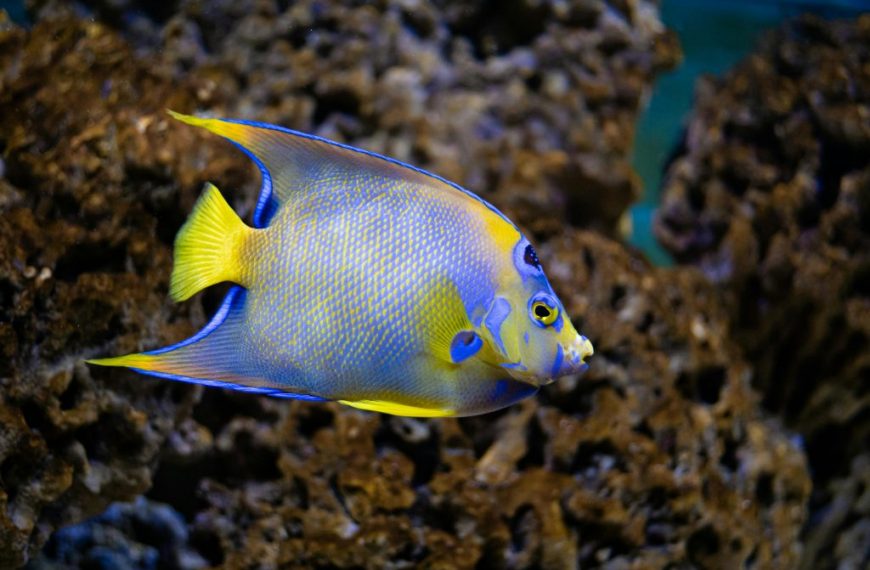
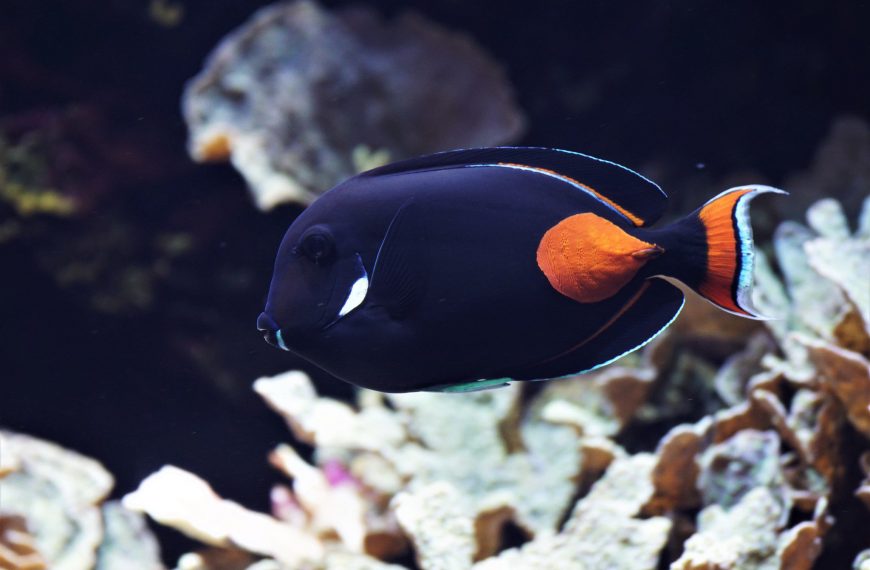
The most eager nori eaters are tangs. Yellow tangs, kole tangs, scopas tangs, sailfin tangs, and hippo tangs usually learn fast. Rabbitfish also love it. Lawnmower blennies may pick at it, though some prefer natural film algae on rocks. Many dwarf angelfish will nibble too.
Some omnivores also join in. Clownfish, wrasses, and certain gobies may take occasional bites. That is normal. Still, nori is mainly meant for herbivores and omnivores with a strong algae component in their diet.
If your fish ignore nori at first, do not panic. New fish often need time to recognize it as food. Tangs that came from stores with poor feeding routines may be slow to respond. Offer small amounts consistently. Try placing it near their favorite swimming path. You can also fold it into a thicker strip so it moves less in the current. Many fish learn by watching other fish feed first.
How to Choose the Right Nori
Choose plain dried nori only. Read the label carefully. Avoid anything with salt, oil, spices, garlic seasoning, teriyaki flavor, or other additives. Human sushi nori can work well if it is plain and unseasoned. Many reef keepers use it successfully because it is cheap and easy to find.
You can also buy aquarium-branded seaweed sheets. These are convenient and often marketed for marine fish. They may come in green, red, or purple varieties. Different colors can provide variety, and some fish show clear preferences. There is no need to overcomplicate this. The best option is the one your fish eat eagerly and that contains no harmful extras.
Store nori in a dry, sealed container. Moisture ruins it fast. Keep it away from humidity and tank splashes. If it gets soft or stale, fish may show less interest. Fresh, crisp sheets are easier to handle and clip into place.
Step by Step: How to Feed Nori in a Reef Tank
Feeding nori is simple when you follow a clean routine.
- Start with a small piece. For one tang, a section about 2 by 3 inches is often enough.
- Fold the sheet once or twice. This makes it thicker and less likely to shred.
- Secure it with a veggie clip, magnetic seaweed holder, or rubber band on a small rock.
- Place it in an easy grazing spot. Use moderate flow, not a blasting pump outlet.
- Watch the fish for a few minutes. Make sure shy fish can approach safely.
- Leave it in for a limited time. Two to four hours works for most tanks.
- Remove leftovers before they break apart. This helps maintain water quality.
That basic routine works in most reef systems. If your fish devour it in minutes, you can feed a little more next time. If the sheet sits untouched, reduce the amount and try a different placement. Some fish prefer the clip near rockwork. Others like it on open glass where they feel secure.
Best Ways to Secure Nori
The classic method is a veggie clip on the glass. It is cheap and effective. Fish quickly learn where the food appears. Magnetic feeders are even easier because they hold better and are simple to move. They work well in tanks with thicker glass.
Another good method is rubber banding nori to a small piece of rubble rock. This looks more natural and encourages grazing behavior. It also helps shy fish that dislike feeding in open water. Be sure the rubber band is secure and reef safe for short use. Remove both the rock and leftover nori later.
Avoid just dropping a loose sheet into the tank. It will blow around, clog overflows, and break into small pieces. Those pieces can settle behind rockwork and decay. That creates nutrient issues and unnecessary maintenance.
How Much Nori to Feed
This depends on fish size, fish count, and how much algae is already available in the tank. A lightly stocked reef with one small tang needs far less than a large tank with several active herbivores. Start small. You can always increase later.
A good rule is to offer only what your fish can mostly finish within a few hours. If a large sheet remains half untouched, you fed too much. If your tang strips the clip bare in ten minutes and still searches for food, you may need a bigger portion or a second feeding.
Do not use nori as an excuse to overfeed the whole tank. Extra food still becomes waste. Balance matters. Herbivores need regular plant matter, but your filtration has limits. Watch nitrate and phosphate trends. Healthy fish should look full-bodied, active, and alert, not pinched behind the head.
How Often to Feed Nori
For tangs and rabbitfish, daily nori feeding is often ideal. These fish are built to graze often. A single large feeding every few days is less natural than smaller, frequent offerings. Daily access supports better weight and calmer behavior.
For tanks with fewer herbivores, three to five times weekly may be enough. If your tank grows a lot of natural algae, your fish may need less supplemental seaweed. If your tank is very clean and your fish are active grazers, they may need more.
Also consider the rest of the diet. Nori should be part of a varied feeding plan. Use quality pellets, frozen mysis, brine, spirulina blends, and herbivore formulas too. Variety helps cover nutritional gaps and keeps fish in stronger condition.
Compatibility With Corals, Invertebrates, and Other Fish
Nori itself is reef safe, but feeding behavior can affect tankmates. Fast fish may dominate the clip and stress shy species. Tangs can become territorial around feeding stations. In tanks with multiple grazers, adding two clips on opposite sides can reduce conflict.
Corals usually ignore nori, though loose fragments can land on colonies and irritate tissue if left too long. Clean up scraps during routine checks. Snails, hermits, and some shrimp may pick at fallen pieces. That is not harmful in small amounts, but it should not replace proper cleanup.
If you keep delicate fish that feed slowly, place the nori where aggressive fish will not trap them. Good placement improves peace in the tank. Observe the social dynamic each time you introduce a new feeding method.
Common Problems
Fish Will Not Eat Nori
This is common with new fish. Try a smaller piece and a calmer location. Fold the sheet so it looks thicker and more natural to bite. Offer it at the same time each day. You can also soak it briefly in tank water to soften it. Some fish accept red or purple seaweed faster than green.
Nori Breaks Apart in the Flow
This usually means the sheet is too thin, too dry, or placed in strong current. Fold it before clipping. Move it away from direct pump output. Use a better clip or magnetic holder. Remove any floating pieces quickly.
Water Quality Gets Worse After Feeding
You are likely feeding too much or leaving it in too long. Reduce the portion. Remove leftovers after two to four hours. Check your mechanical filtration and skimmer performance. Test nitrate and phosphate weekly until the issue stabilizes.
One Fish Guards the Clip
This happens often with tangs. Use two feeding points. Place them far apart. Add the second clip before the dominant fish claims the first one. In severe cases, distract aggressive fish with another food on the opposite side.
Helpful Feeding Tips From Reef Keepers
Consistency matters more than fancy methods. Feed at a similar time each day. Fish learn the routine quickly. Keep a dedicated clip for seaweed only. Rinse it often so biofilm does not build up. If you use your hands in the tank, wash them well first.
Watch body condition closely. A healthy tang should not look hollow near the forehead or behind the gills. If it does, increase feeding frequency and review the entire diet. Also check for bullying, parasites, or poor acclimation. Nori helps, but it cannot fix every issue by itself.
For more feeding and husbandry help, see best food for tangs, reef tank water parameters, how to quarantine marine fish, and clean up crew for reef tank.
Frequently Asked Questions
Can I use grocery store nori for reef fish?
Yes, if it is plain and unseasoned. Avoid added salt, oil, spices, and flavorings.
How long should nori stay in the tank?
Usually two to four hours is enough. Remove leftovers before they soften and drift apart.
Should I soak nori in vitamins?
You can, especially for thin or stressed fish. It is optional, not required for every feeding.
Is nori enough for tangs by itself?
No. It is a great staple, but tangs need a varied diet with other prepared foods too.
Why does my tang only eat nori and ignore other foods?
Some tangs strongly prefer seaweed. Offer nori regularly, but keep introducing quality frozen and pellet foods in small amounts.
Was this helpful?
Related Posts
What is a Chaeto Reactor, and How Does it Help Control Nutrients?
A chaeto reactor grows macroalgae in a sealed chamber to remove nitrate and phosphate, helping reef tanks control…
 By
By
What is a Propagation Tank, and How Do Reef Hobbyists Use it to Grow Coral Frags?
A propagation tank is a dedicated coral grow-out system. It helps reef hobbyists heal, organize, and multiply coral…