

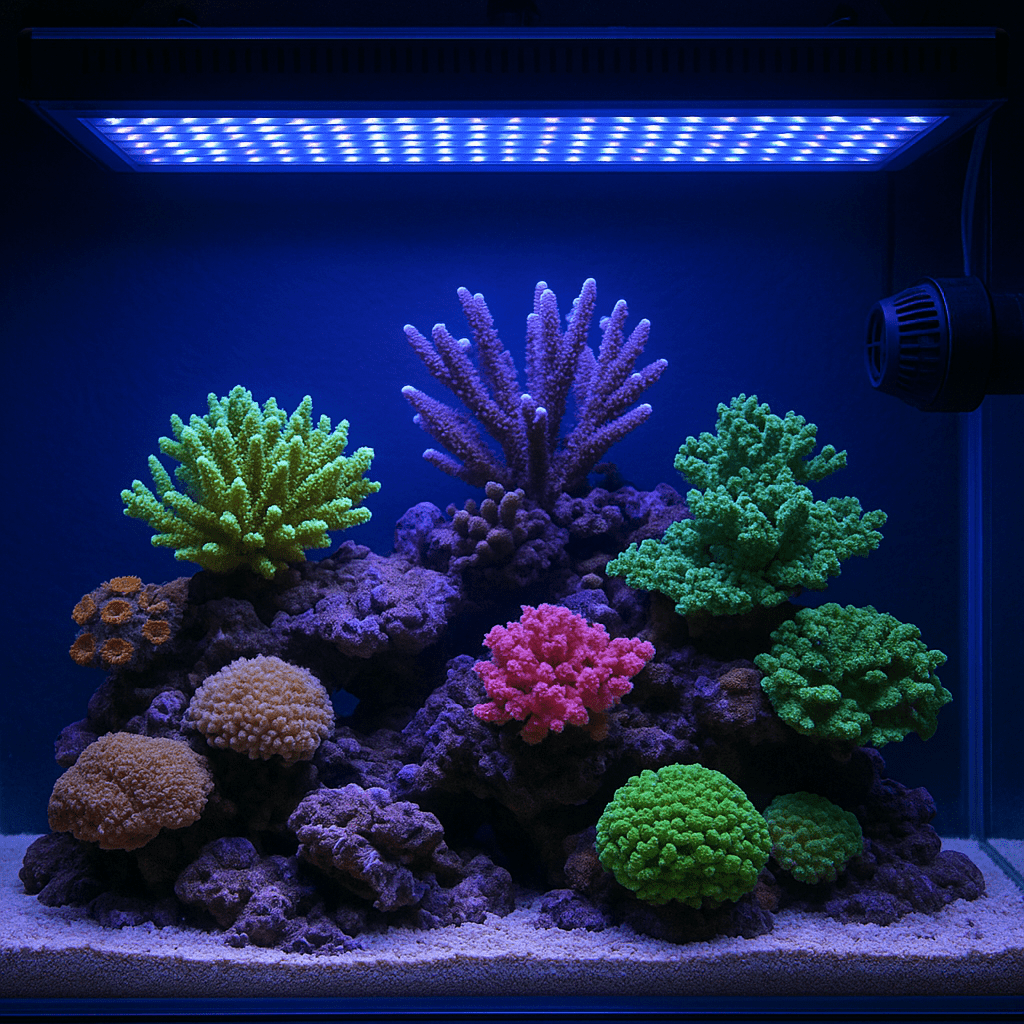
A reef tank light schedule should match coral needs, not just your viewing time. Most reef aquariums do best with a gradual ramp-up, 8 to 10 hours of peak lighting, and a consistent daily cycle that avoids sudden changes.
Lighting controls coral growth, color, and algae pressure. It also affects fish behavior and tank stability. Many hobbyists focus on fixture strength first. That matters, but the daily schedule matters just as much. In this guide, you will learn how long to run reef lights, how to set sunrise and sunset periods, and how to adjust your schedule for soft corals, LPS, and SPS systems. You will also learn how to solve common problems like coral bleaching, nuisance algae, and weak polyp extension caused by poor timing.
Quick Reference Light Schedule Table
| Tank Type | Ramp Up | Peak Intensity | Ramp Down | Total Photoperiod |
|---|---|---|---|---|
| Soft coral reef | 1.5 to 2 hours | 6 to 8 hours | 1.5 to 2 hours | 9 to 11 hours |
| LPS reef | 1.5 to 2 hours | 7 to 9 hours | 1.5 to 2 hours | 10 to 12 hours |
| SPS reef | 2 hours | 8 to 10 hours | 2 hours | 11 to 12 hours |
| Fish-only with live rock | 1 hour | 6 to 8 hours | 1 hour | 8 to 10 hours |
| New tank acclimation | 1 to 2 hours | 4 to 6 hours | 1 to 2 hours | 6 to 8 hours |
Use this table as a starting point. Every tank is different. Coral placement, nutrient levels, and fixture power all change the ideal schedule.
Why Light Schedule Matters in a Reef Tank
Corals rely on light for energy. Their zooxanthellae convert light into sugars. That process follows a daily rhythm. When the schedule changes often, corals can become stressed. Growth may slow. Colors may fade. Some corals stay closed longer than normal.
Fish also benefit from consistency. A stable day and night cycle reduces stress. It encourages normal feeding and sleeping behavior. Invertebrates respond the same way. Sudden on and off cycles can startle livestock. That is why ramping features are useful.
A good schedule also helps with algae control. Too much light can fuel nuisance algae. Too little light can weaken corals and give algae the advantage anyway. The goal is balance. Stable intensity and stable timing usually work better than constant tweaking.
If you are still dialing in your system, read our reef tank setup guide. It pairs well with lighting planning.
How Long Should Reef Lights Stay On?
Most reef tanks do well with 9 to 12 total hours of light. That includes dim ramp periods. Peak intensity usually lasts 6 to 10 hours. The exact number depends on your coral mix and fixture output.
Soft coral tanks often need less peak light. Many soft corals tolerate moderate PAR and shorter peak periods. LPS tanks usually fit in the middle. SPS tanks often need the longest strong-light window, but only if nutrients and flow are balanced.
Do not copy another reefer’s schedule blindly. One tank may use powerful LEDs over a shallow aquarium. Another may use T5s over a deep tank. The same 10-hour schedule can produce very different results. Always consider PAR, mounting height, and coral placement.
As a simple baseline, many hobbyists succeed with this pattern: two hours of ramp up, eight hours of peak, and two hours of ramp down. That creates a 12-hour viewing window without blasting corals all day.
Best Reef Tank Light Schedule for Beginners
Beginners should keep things simple. Start with a predictable schedule. Avoid frequent changes. Corals like consistency more than constant experimentation.
A strong beginner schedule is this:
- 10:00 AM to 12:00 PM: ramp up
- 12:00 PM to 8:00 PM: peak intensity
- 8:00 PM to 10:00 PM: ramp down
This gives you evening viewing time. It also avoids a harsh midday blast from the moment lights turn on. If your fixture has separate channels, keep white channels lower than blue channels at first. Many reef tanks look better and run cooler that way.
If your tank is new, shorten the peak period. Start around 4 to 6 hours of peak output. Increase slowly over two to four weeks. This helps limit ugly-stage algae while your tank matures. Learn more in our reef tank cycling guide.
Do not run moonlights all night. Fish and corals still need darkness. Very dim moonlights for a short evening period are fine. Constant overnight light can disrupt natural behavior.
Step-by-Step: How to Set Your Reef Light Schedule
Setting a good schedule is easier when you follow a clear process.
- Identify your coral types. Soft corals, LPS, and SPS have different needs.
- Check your fixture output. Powerful LEDs need more caution than weaker fixtures.
- Set a 1.5 to 2 hour ramp up. This reduces shock.
- Choose a peak period. Start with 6 to 8 hours for mixed reefs.
- Set a 1.5 to 2 hour ramp down. This creates a natural sunset effect.
- Keep the schedule fixed for at least two weeks. Watch coral response.
- Adjust only one thing at a time. Change either duration or intensity, not both.
Take notes during this process. Watch for polyp extension, color changes, and algae growth. Corals often respond slowly. A rushed adjustment can make diagnosis harder.
If you struggle with coral placement, our coral placement guide can help match light zones to coral types.
Lighting Requirements by Coral Type
Soft corals usually prefer lower to moderate light. Zoanthids, mushrooms, and leathers often thrive with a shorter peak period. Too much light can make them shrink or stay closed.
LPS corals usually like moderate light and stability. Acans, hammers, frogspawn, and brains often respond well to a moderate peak window. Excessive intensity can bleach tissue, especially in upper rockwork.
SPS corals usually need the most light. Acropora and montipora often perform best with strong PAR and a longer peak period. Still, they need acclimation. Even healthy SPS can bleach under a sudden increase.
Remember that schedule and intensity work together. A high-intensity fixture with a shorter peak may deliver more total usable light than a weaker fixture running longer. If possible, measure PAR instead of guessing.
Should You Match Natural Sunlight Cycles?
Natural reefs do not receive identical light every day. Clouds, water depth, and seasonal changes all matter. In the home aquarium, perfect realism is less important than stability. Your tank is a closed system. Corals benefit from a repeatable pattern.
You can still borrow ideas from nature. Gentle sunrise and sunset periods are useful. Blue-heavy evening lighting can improve viewing and reduce harsh transitions. Seasonal tweaks are optional. They are not required for coral health in most tanks.
Some advanced aquarists simulate lunar cycles. This can be interesting, especially for spawning behavior. For most hobbyists, it is unnecessary. Focus first on stable daytime lighting, good nutrients, and proper flow.
For a broader look at coral health basics, visit our reef water parameters guide.
Common Problems
Corals Are Bleaching After a Schedule Change
This usually means too much light, too much time at peak intensity, or both. Shorten the peak period first. Reduce intensity if needed. Raise the fixture slightly if your model allows it. Use acclimation mode whenever possible.
Check water chemistry too. Unstable alkalinity can worsen light stress. Bleaching is rarely caused by schedule alone.
Nuisance Algae Is Getting Worse
Long photoperiods often help algae. Cut the peak period by one to two hours. Avoid extending the day just for viewing. Also check nitrate, phosphate, and maintenance habits. Lighting often exposes a nutrient issue rather than creating it alone.
Old bulbs can also shift spectrum in T5 or metal halide systems. That can favor algae growth.
Corals Stay Closed Most of the Day
Look at intensity changes first. Corals may stay retracted if the light comes on too fast. Increase ramp time. Review flow as well. Poor water movement can mimic lighting issues. Pests and fish nipping are also possible causes.
Colors Look Brown and Growth Is Slow
This can happen when light is too weak or the peak period is too short. Increase intensity slowly. Extend peak time by 30 minutes each week. Do not make large jumps. Brown coloration can also reflect elevated nutrients, so test before blaming the lights alone.
Advanced Tips for Better Results
Use a timer or app-based controller. Manual switching leads to inconsistency. Even small daily changes add up over time. Automation removes that variable.
Keep blue channels dominant during ramp periods. This often looks more natural. It also avoids shocking corals with bright white light early in the day. Many successful reefers run lower white percentages overall.
Acclimate all new corals to your schedule. A frag from a dim dealer tank can burn quickly in a bright home system. Start lower in the tank or use reduced intensity. Then move it slowly over one to two weeks.
Finally, avoid chasing social media settings. Your tank has different depth, rockwork, nutrients, and coral species. Build your own stable schedule and let the corals guide you.
Frequently Asked Questions
How many hours of blue light should a reef tank have?
Blue light often runs through the full photoperiod. Many reefers use 9 to 12 total hours, including ramp periods. Peak blue intensity usually overlaps the main daylight window.
Is 12 hours of light too much for a reef tank?
Not always. Twelve total hours can work if part of that time is low-intensity ramping. Twelve full hours of strong peak output is often too much for many tanks.
Should reef tank lights be on at night?
No. Reef tanks need a dark period. Short evening moonlight is fine if it is very dim. Constant overnight lighting can stress fish and disrupt coral rhythms.
What is the best light schedule for a mixed reef?
A great starting point is two hours ramp up, seven to eight hours peak, and two hours ramp down. Then adjust slowly based on coral response.
Can too much light cause algae in a reef tank?
Yes, but it is usually part of a bigger issue. Excess nutrients, weak export, and old bulbs also drive algae. Light duration often makes the problem more visible.
A smart reef light schedule supports coral health, limits stress, and helps keep algae under control. Start simple, stay consistent, and make slow changes. In reef keeping, stable lighting almost always beats aggressive tweaking.
Was this helpful?
Related Posts
Best Filtration Systems
Best Filtration Systems for a Healthy Saltwater Aquarium Choosing the best filtration system for your saltwater aquarium is…
 By
By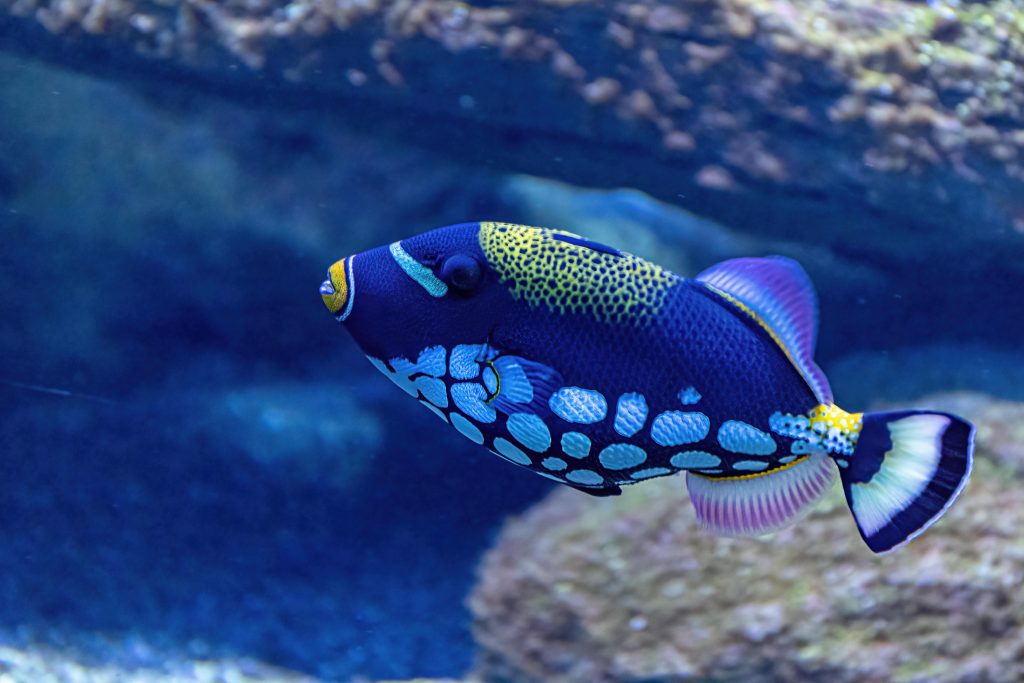
Clown Triggerfish (Balistoides Conspicillum)
Clown triggerfish are stunning but aggressive marine fish that need very large tanks, strong filtration, and careful tankmate…
[favorite_button]
My Bookmarks:
To see full list click here
[user_favorites user_id="" include_links="true" site_id="" post_types="" include_thumbnails="true" thumbnail_size="thumbnail" include_excerpt="false"]