

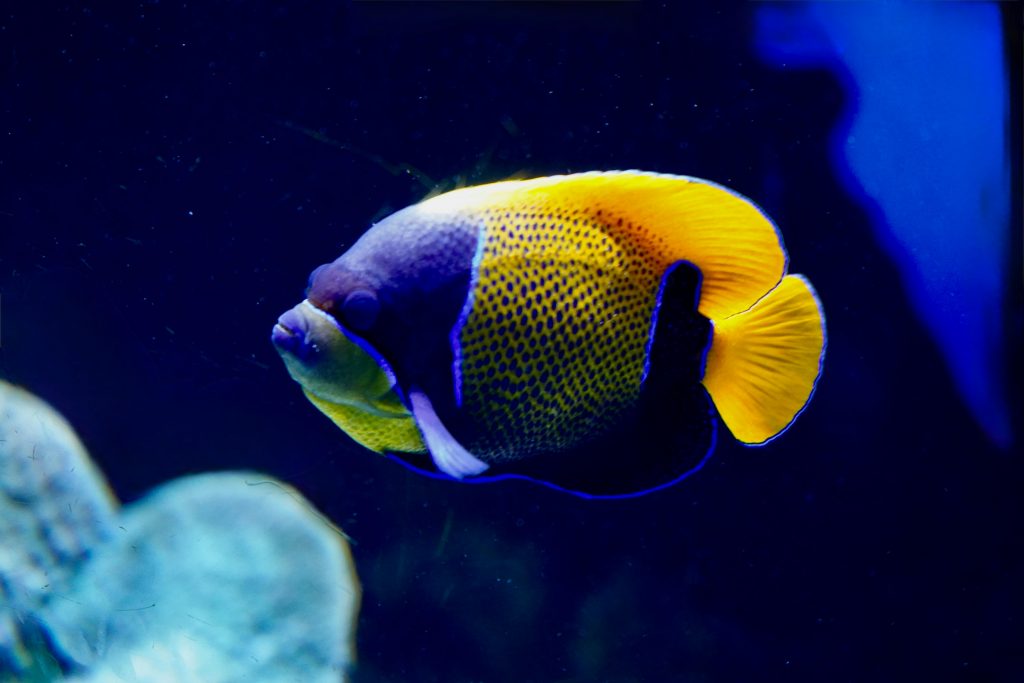
The Majestic Blue Girdled Angelfish, Pomacanthus navarchus, is one of the most striking large angelfish in the hobby. It combines deep blue, yellow, and orange tones with a bold mask and sweeping body pattern. It is not the easiest reef fish for beginners, but it can thrive in a mature aquarium with stable water, careful feeding, and thoughtful tankmate selection.
In this guide, you will learn how to care for the Majestic Angelfish in captivity. We will cover tank size, diet, reef compatibility, behavior, and common problems. If you want a showpiece fish with real personality, this species deserves a close look.
Quick Care Summary
| Common name | Majestic Blue Girdled Angelfish |
| Scientific name | Pomacanthus navarchus |
| Care level | Moderate |
| Temperament | Semi-aggressive |
| Adult size | Up to 10 inches |
| Minimum tank size | 125 gallons |
| Diet | Omnivore with sponge-based foods |
| Reef safe | With caution |
| Temperature | 75-79°F |
| Salinity | 1.024-1.026 |
| pH | 8.1-8.4 |
| Best for | Large mature fish-only or mixed reef systems |
The quick summary gives the basics, but this fish rewards deeper planning. Juveniles often adapt faster than adults. Healthy specimens are alert, thick-bodied, and eager to inspect the tank. Avoid fish with pinched bellies, cloudy eyes, or rapid breathing.
Natural Habitat
Pomacanthus navarchus comes from the Indo-Pacific. It is found around Indonesia, the Philippines, Papua New Guinea, and nearby reef regions. In nature, it lives on lagoon reefs and outer reef slopes. It usually stays near caves, coral heads, and rocky crevices.
This habitat explains many of its aquarium needs. The fish wants shelter and open swimming space. It also spends time picking at surfaces for algae, tunicates, and sponges. Wild adults often hold territories. That is why they can become pushy in smaller tanks.
Juveniles look very different from adults. Young fish show concentric blue and white curved stripes. As they mature, they develop the iconic yellow midsection and dark blue body. This color change is dramatic. It is one reason many collectors love the species.
Aquarium Setup
A 125-gallon tank is the practical minimum for one Majestic Angelfish. A 150-gallon or larger tank is better. Bigger systems offer more stable water and more room for territories. This matters once the fish reaches adult size.
Build the aquascape with caves, arches, and shaded retreats. Leave open swimming lanes in the front and center. The fish should be able to duck into rockwork quickly. Secure all rock structures well. Large angels are strong and can bump loose pieces.
Mature live rock is a major benefit. It provides grazing surfaces and natural micro-life. Strong filtration is also important. Use a quality protein skimmer and keep nitrate under control. Stable salinity and temperature matter more than chasing perfect numbers.
Quarantine is strongly recommended. Large angelfish can carry marine ich, flukes, or bacterial issues. A calm, well-fed fish adapts far better after quarantine. For more planning help, see our guides on reef tank setup, marine fish quarantine, and protein skimmer guide.
Lighting Requirements
The Majestic Angelfish does not need intense lighting for its own health. It adapts well to normal fish-only lighting and to reef lighting. What matters most is access to shaded areas. In bright tanks, the fish should have caves and overhangs to retreat under.
If the fish lives in a mixed reef, your coral lighting plan will drive the setup. The angelfish can still do well under stronger lights if the aquascape is thoughtful. Sudden lighting changes can stress new arrivals. Acclimate them slowly and keep the first few days quiet.
Many keepers notice better daytime activity once the fish feels secure. A nervous specimen may hide under bright light. As it settles, it will spend more time cruising the rockwork and greeting you at feeding time.
Water Flow
Moderate to strong water movement works well. Aim for varied flow rather than one harsh jet. This species comes from reef zones with steady movement, but it still needs calm pockets behind the rockwork. Good flow helps oxygenation and keeps waste from collecting.
Direct blasting flow can make the fish avoid parts of the tank. Instead, create broad circulation with return nozzles and powerheads. In mixed reefs, random flow patterns also help coral health. Watch the fish’s behavior. If it constantly fights one stream, adjust pump placement.
Strong surface agitation is useful, especially in warm tanks. Large angelfish are active and produce heavy waste. Extra oxygen supports appetite and overall resilience.
Feeding
Feeding is one of the most important parts of Majestic Angelfish care. This species is an omnivore, but sponge material is especially valuable. A varied diet helps maintain body weight, immune function, and color. Feed two to three times daily when possible.
Offer a mix of high-quality angelfish preparations, frozen mysis, brine enriched with vitamins, chopped clam, nori, and pellets. Look for foods made for marine angels that include sponge. Rotate foods often. Variety reduces picky feeding and improves long-term health.
New imports sometimes refuse prepared foods at first. Try half-shell clam, frozen angel formulas, or food clipped near their hiding area. Soaking food in vitamins can help stressed fish recover. For nutrition basics, our reef fish feeding guide and nori for reef fish article are useful next reads.
A well-fed Majestic Angelfish is less likely to pick at corals. It is not a guarantee, but hunger often makes nipping worse. Thin fish decline quickly, so monitor body condition every week.
Compatibility
This fish is semi-aggressive. It usually ignores dissimilar tankmates, but it may bully new additions or other angelfish. Introduce it after very timid fish have settled. Avoid keeping it with other large Pomacanthus species unless the tank is very large and carefully managed.
Good tankmates include larger wrasses, tangs, rabbitfish, anthias in spacious systems, and sturdy clownfish pairs. Avoid tiny passive fish in cramped tanks. The Majestic Angelfish can become dominant around feeding time.
Reef compatibility is mixed. Some individuals behave well for years. Others nip at fleshy LPS corals, zoanthids, clam mantles, and even some soft corals. SPS systems with less fleshy coral tissue sometimes fare better, but there are no guarantees. If your reef contains prized acans, scolys, or clams, this fish is a real risk.
Many hobbyists keep it successfully in “reef safe with caution” setups. Success depends on the individual fish, feeding frequency, and coral selection.
Step-by-Step Acclimation Guide
- Prepare a quarantine tank before purchase. Include PVC shelters and stable salinity.
- Dim the lights before arrival. Stress drops when the environment is calm.
- Float the bag to match temperature. Then drip acclimate if shipping water is clean.
- Transfer the fish without bag water. Observe breathing and swimming immediately.
- Offer hiding places and do not force feeding on the first hour.
- Try frozen angel food or clam within the first day.
- Watch for ich, flukes, frayed fins, or refusal to eat.
- Keep water pristine during quarantine. Test ammonia often.
- Move the fish to the display only after it is feeding strongly.
- Rearrange some rockwork if aggressive tankmates already own the display.
This slow approach prevents many common failures. Rushing a large angelfish into a busy display often leads to stress and disease.
Common Problems
Majestic Angelfish not eating
The most common causes are shipping stress, internal parasites, bullying, or poor acclimation. Start with low stress. Provide cover. Offer sponge-based frozen foods, clam, and mysis. Check for rapid breathing or stringy waste. If the fish keeps losing weight, investigate parasites.
Nipping corals
Some individuals simply sample corals. Underfeeding can make it worse. Increase feeding frequency first. Remove highly tempting corals if possible. If nipping becomes constant, the fish may need a fish-only system. There is no reliable training method once the habit is established.
Faded color or dark stress bars
Color loss usually points to stress, poor nutrition, or unstable water quality. Test nitrate, salinity, and temperature. Improve diet variety. Make sure the fish is not being harassed. Colors often deepen again after several weeks of stable care.
Heavy breathing
Check oxygen, ammonia, and signs of flukes or gill irritation. Increase aeration right away. Inspect for parasites in quarantine. Heavy breathing should never be ignored in a large angelfish.
Propagation or Breeding
The Majestic Blue Girdled Angelfish is not a species hobbyists propagate in home aquariums. Like many marine angelfish, it has a complex spawning and larval phase. Adults release eggs into the water column, usually at dusk in the wild. The tiny larvae need specialized live foods and advanced rearing systems.
For most aquarists, breeding is not practical. The focus should remain on long-term husbandry and sourcing healthy specimens. Captive breeding advances may improve in the future, but wild collection still supplies most fish in the trade today.
Frequently Asked Questions
Is the Majestic Angelfish reef safe?
It is reef safe with caution. Some individuals ignore corals. Others nip LPS, zoanthids, and clam mantles.
How big does Pomacanthus navarchus get?
Adults can reach about 10 inches. Most need a 125-gallon tank or larger.
What does a Majestic Angelfish eat?
Feed sponge-based angel foods, mysis, clam, marine algae, and quality pellets. Variety is important.
Can I keep two Majestic Angelfish together?
Usually no in average home aquariums. They are territorial. Very large systems offer the best chance.
Is this a good beginner saltwater fish?
Not usually. It needs a large mature tank, careful feeding, and close observation. Intermediate keepers are better suited.
Final Thoughts
The Majestic Blue Girdled Angelfish is a true centerpiece fish. It is bold, beautiful, and full of character. It also asks for space, stability, and patience. If you provide a mature tank, strong nutrition, and smart compatibility choices, Pomacanthus navarchus can become one of the most rewarding fish in your collection.
For many hobbyists, the biggest question is reef safety. The honest answer is simple. This species is always a gamble with corals. If you accept that risk and plan around it, the Majestic Angelfish can be an unforgettable addition to a large marine aquarium.
Was this helpful?
Related Posts
Butterflyfish Care in Marine Aquariums
Practical butterflyfish care for marine aquariums, including tank size, feeding steps, and quarantine tips for healthy long-term success.
 By
By
Reef Tank Plumbing Basics
Learn reef tank plumbing basics, including drains, return pumps, sump flow, noise control, and flood prevention for a…
[favorite_button]
My Bookmarks:
To see full list click here
[user_favorites user_id="" include_links="true" site_id="" post_types="" include_thumbnails="true" thumbnail_size="thumbnail" include_excerpt="false"]