

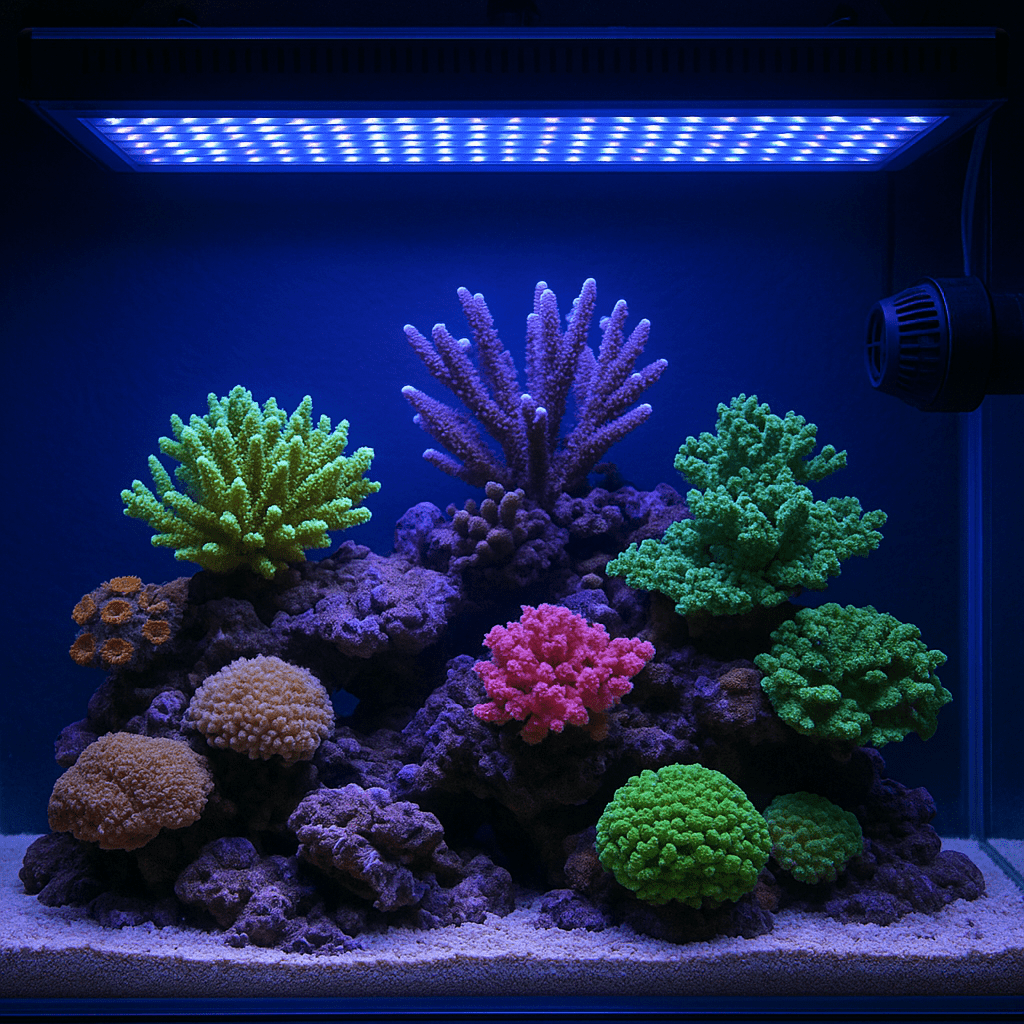
Powerhead vs wavemaker is a common reef tank question. The short answer is simple. A powerhead gives steady directional flow. A wavemaker creates changing, more natural flow patterns. Most modern reef tanks benefit more from wavemakers, but powerheads still have useful roles in mixing, dead spot control, and budget builds.
Water movement drives reef tank health. It carries oxygen, suspends waste, delivers food, and helps corals shed mucus. Yet many hobbyists use the terms powerhead and wavemaker as if they mean the same thing. They overlap, but they are not identical. In this guide, you will learn what each device does, how they differ, which one suits your tank, and how to place them for better coral growth. You will also see common mistakes, troubleshooting tips, and practical buying advice for beginner and intermediate reef keepers.
Quick Reference Table
| Feature | Powerhead | Wavemaker |
|---|---|---|
| Flow type | Constant, directional | Variable, pulsing, alternating |
| Best use | Dead spots, mixing, simple setups | Coral health, natural reef flow, SPS tanks |
| Controller needed | Usually no | Usually yes or built-in |
| Coral suitability | Softies and basic mixed reefs | Mixed reefs, LPS, SPS |
| Cost | Usually lower | Usually higher |
| Energy use | Often low to moderate | Varies by model and programming |
| Noise potential | Usually low | Can vary with pulse settings |
| Ease of use | Very simple | More features, more setup |
This table gives the fast answer. Now let’s break down what these pumps really do inside a reef aquarium.
What Is a Powerhead?
A powerhead is a small submersible pump. It moves water in one main direction. Many older reef tanks used simple powerheads for all in-tank circulation. They are still common today.
The main job of a powerhead is straightforward. It pushes water where you point it. That makes it useful for breaking up dead spots behind rockwork. It also helps keep detritus suspended so your filtration can remove it.
Some hobbyists use powerheads near the surface for gas exchange. Others aim one behind the aquascape to stop waste buildup. In fish-only tanks, frag systems, and basic soft coral tanks, a simple powerhead may be enough.
The downside is flow quality. A constant jet is less natural than reef surge. Corals can tolerate it, but many species respond better to changing current. Direct flow can also irritate fleshy corals if aimed too aggressively.
What Is a Wavemaker?
A wavemaker is a circulation pump designed to vary flow. It may pulse, ramp up, alternate sides, or follow random programs. Some wavemakers connect to controllers. Others include built-in presets.
The goal is to mimic ocean movement more closely. Natural reefs do not experience one narrow stream all day. Water shifts constantly. That changing motion benefits corals in several ways. It improves gas exchange around tissue. It helps remove waste and mucus. It also brings suspended food from different directions.
Wavemakers are especially useful in mixed reefs and SPS systems. Acropora, montipora, and many other stony corals prefer strong, chaotic flow. Even LPS corals usually do better with indirect, varied movement than with one constant blast.
Modern wavemakers often use wide-flow designs. These spread water across a broad area. That creates gentler but more effective circulation. It feels less harsh than a narrow jet, even when total flow is high.
Powerhead vs Wavemaker: The Real Differences
The biggest difference is flow pattern. A powerhead usually produces fixed flow. A wavemaker creates changing flow. That matters because coral health depends on water movement quality, not only gallons per hour.
The second difference is control. Most powerheads are basic on-and-off devices. Wavemakers often allow pulse speed, intensity, timing, and sync modes. This gives you more flexibility as your reef matures.
The third difference is reef suitability. A powerhead can support a reef tank, but it often needs careful placement. A wavemaker usually makes it easier to create broad, tank-wide circulation. That is why many reef keepers upgrade later.
The fourth difference is price. Powerheads are usually cheaper. Wavemakers cost more because of motors, controllers, and programming. Still, many hobbyists find the better coral response worth the extra cost.
In short, a powerhead moves water. A wavemaker manages flow dynamics. That distinction helps when planning a reef tank for long-term success.
Why Water Flow Matters in a Reef Tank
Flow is easy to underestimate. Lighting gets more attention. Filtration gets more attention. Yet poor circulation causes many hidden reef problems.
Good flow keeps oxygen levels stable. It moves carbon dioxide away from the water surface. It also prevents detritus from settling in low-flow areas. That reduces nutrient spikes and nuisance algae.
Corals rely on flow every day. Water movement delivers dissolved nutrients and plankton. It carries away waste products. It helps coral tissue breathe. It also prevents sediment from collecting on delicate polyps.
Different corals need different flow strengths. Mushrooms and many fleshy LPS prefer lower, indirect movement. SPS corals usually need stronger, more turbulent flow. A wavemaker makes these varied zones easier to create in one aquarium.
If you want to better understand coral placement, see where to place corals in a reef tank.
When a Powerhead Is the Better Choice
Powerheads still make sense in many setups. Budget is the first reason. A new hobbyist may need reliable circulation without spending heavily on smart pumps.
They also work well in quarantine tanks. You may only need simple water movement there. A basic powerhead can keep oxygen high and waste suspended. That is often enough for short-term holding.
Powerheads are useful for target jobs. One can sit behind rockwork. Another can aim at the surface. Some reef keepers pair a wavemaker with a small powerhead to fix one stubborn dead zone.
They are also fine in soft coral tanks with modest flow demand. Zoanthids, mushrooms, and leathers often do well with steady but indirect circulation. The key is avoiding a harsh direct blast.
If your tank is simple, small, or temporary, a powerhead may be all you need right now.
When a Wavemaker Is the Better Choice
A wavemaker is usually the better choice for a display reef. It creates more natural movement. That supports coral growth and improves overall tank cleanliness.
Mixed reefs benefit a lot from variable flow. You can keep lower-flow zones for LPS. You can also create stronger random movement for SPS higher on the rockwork. That flexibility is hard to match with fixed pumps alone.
Wavemakers also improve viewing. Corals sway more naturally. Polyps extend better in many cases. The tank often looks more alive because water movement feels less mechanical.
If you plan to keep acropora or other demanding stony corals, a wavemaker is strongly recommended. Stable parameters matter, but strong random flow is also essential. For more on reef stability, read reef tank parameter guide.
For most hobbyists building a long-term reef, a wavemaker is the smarter investment.
How to Choose the Right Pump for Your Tank
Start with tank size. Small nano reefs need less total flow, but they still need good movement. Large tanks need broader coverage and often more than one pump.
Next, consider coral type. Soft coral tanks usually need moderate flow. LPS tanks need moderate but indirect flow. SPS systems need strong, chaotic flow across the whole tank.
Then look at aquascape. Dense rock structures create dead spots. Open aquascapes allow easier circulation. A tank with many caves may need multiple pumps from different angles.
Noise matters too. Some pumps hum more at certain settings. Bedroom tanks need quieter models. Controller features also matter. If you like fine tuning, a wavemaker with app control is helpful. If you want simplicity, a basic pump may suit you better.
Finally, think about maintenance. All pumps need regular cleaning. Coralline algae and calcium buildup reduce performance over time.
Step-by-Step Placement Guide
Good placement matters as much as pump choice. Follow these steps.
- Map your rockwork first. Identify caves, corners, and tight gaps.
- Place the first pump high enough to ripple the surface.
- Aim flow across the tank, not directly at one coral.
- Add a second pump on the opposite side if needed.
- Create intersecting flow paths for more random movement.
- Check the sand bed for bare spots or sandstorms.
- Watch coral polyp extension for several days.
- Adjust slowly. Small angle changes can make a big difference.
Try to avoid blasting fleshy corals. Euphyllia, scolymia, and open brains can retract under harsh flow. Detritus should stay suspended, but corals should not look pinned down. If you struggle with low-flow debris, see how to remove detritus from a reef tank.
Common Problems
Corals Stay Closed
This often means the flow is too direct or too weak. Look at the coral type first. Soft corals may tolerate more sway. Fleshy LPS usually want gentler movement. Reposition the pump and watch for improvement over several days.
Detritus Collects Behind Rocks
This points to dead spots. Add a small powerhead behind the aquascape or change your pump angle. During maintenance, use a turkey baster to lift trapped waste into the water column so filtration can remove it.
Sand Blowing Everywhere
The pump is too strong for its position. Raise it higher or aim it toward the glass for diffused flow. You can also reduce intensity if your wavemaker allows it. Fine sand shifts easily in high-energy tanks.
Pump Output Drops Over Time
This usually comes from calcium deposits, algae, or snail shells in the impeller housing. Clean the pump in diluted vinegar, rinse well, and reassemble. Monthly cleaning prevents many failures.
Too Much Noise
Check alignment, magnet seating, and pulse settings. Some wavemakers click at very short intervals. A longer pulse mode may reduce noise. Dirty impellers can also rattle.
Can You Use Both Together?
Yes, and many reef keepers do. A wavemaker can handle primary display flow. A smaller powerhead can target a problem zone. This combo works well in tanks with complex rockwork.
Using both also spreads wear across multiple pumps. If one fails, the tank still has some circulation until you replace it. That adds a measure of safety, especially in coral-heavy systems.
Just avoid overcomplicating the setup. More pumps are not always better. The goal is balanced circulation, not random equipment clutter.
Frequently Asked Questions
Is a wavemaker just a powerhead?
Not exactly. A wavemaker is a type of circulation pump, but it is built to vary flow. A standard powerhead usually runs at one steady output.
Do I need a wavemaker in a reef tank?
Not always, but most reef tanks benefit from one. Corals usually respond better to changing flow than to a constant stream.
Can a powerhead keep corals alive?
Yes, especially in simple soft coral or beginner mixed reefs. Still, proper placement is critical, and advanced corals usually prefer more dynamic flow.
How much flow should a reef tank have?
It depends on coral type and aquascape. Soft corals need less flow than SPS. Focus on broad circulation and coral response, not only turnover numbers.
How often should I clean my pumps?
Clean them about once a month in most reef tanks. Heavy coralline growth may require more frequent service. Regular cleaning keeps output stable.
Final Verdict
If you want the simplest answer, here it is. Choose a powerhead for basic, steady circulation and targeted flow fixes. Choose a wavemaker for a healthier, more natural reef environment. For most modern reef displays, the wavemaker wins.
That said, powerheads still have value. They are affordable, reliable, and useful in many support roles. The best choice depends on your tank size, coral goals, and budget. If you are planning a new build, also read reef tank flow guide for a deeper look at circulation strategy.
Was this helpful?
Related Posts
Kenya Tree Corals
Kenya Tree corals are hardy soft corals with easy care, moderate light needs, and fast growth. Learn placement,…
 By
By
Rhodactis Mushrooms Care
Rhodactis mushrooms are hardy reef corals that prefer low to moderate light, gentle flow, and stable water. Learn…
[favorite_button]
My Bookmarks:
To see full list click here
[user_favorites user_id="" include_links="true" site_id="" post_types="" include_thumbnails="true" thumbnail_size="thumbnail" include_excerpt="false"]