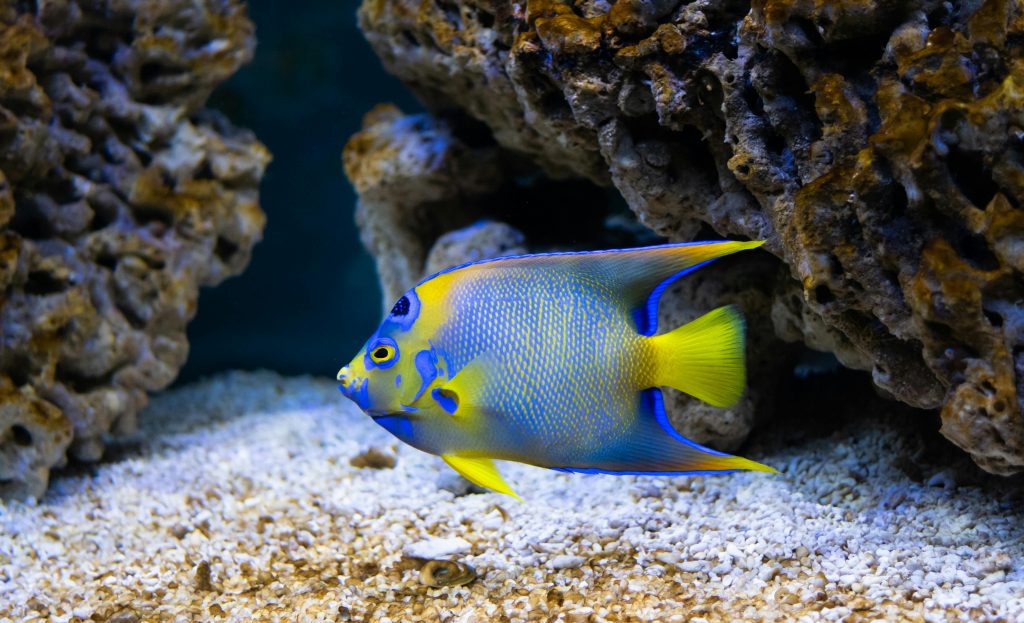
Queen angelfish are stunning Caribbean marine fish with bold blue, yellow, and neon accents. They are not beginner fish. Adults grow large, become territorial, and need a mature aquarium with excellent water quality, varied feeding, and careful tankmate selection.
This guide covers what reef keepers need to know before buying a queen angelfish. You will learn about adult size, tank requirements, diet, behavior, reef compatibility, and common health issues. I will also explain why this species is usually better for fish-only systems than mixed reefs. If you love large angelfish, this article will help you decide if Holacanthus ciliaris fits your aquarium and your long-term plans.
Quick Reference Care Table
| Common name | Queen Angelfish |
| Scientific name | Holacanthus ciliaris |
| Adult size | Up to 18 inches |
| Minimum tank size | 180 gallons for juveniles, 220+ gallons for adults |
| Temperament | Semi-aggressive to aggressive |
| Diet | Omnivore with heavy sponge and algae component |
| Reef safe | No, with caution at best |
| Temperature | 75–80°F |
| Salinity | 1.024–1.026 |
| pH | 8.1–8.4 |
| Nitrate | Preferably under 20 ppm |
| Experience level | Intermediate to advanced |
The quick table gives the short answer. Queen angelfish need space, stable water, and a strong feeding routine. They reward good care with amazing color and bold personality. They also create real challenges in reef tanks.
Natural Habitat
Queen angelfish come from the western Atlantic. They are common in the Caribbean, the Gulf of Mexico, and nearby tropical waters. In nature, they live around coral reefs, rocky areas, and sponge-rich zones. Juveniles often stay in sheltered habitats. Adults patrol larger reef territories.
This natural history matters in captivity. Wild queen angels graze all day. They pick at sponges, tunicates, algae, and encrusting organisms. That constant browsing explains their heavy appetite and their tendency to nip corals and sessile invertebrates in aquariums. They are not delicate fish, but they are active and demanding. A cramped tank does not match their natural behavior.
Juveniles are often more adaptable than adults. They settle into prepared foods more easily. They also adjust to captive life with fewer issues. If you want to keep this species, a healthy juvenile is usually the best choice. Avoid thin specimens with pinched bellies or faded color.
Aquarium Setup
Tank size is the biggest decision. A queen angelfish is not suitable for small systems. A juvenile may look tiny in the store, but adults become deep-bodied and powerful swimmers. I consider 180 gallons the bare minimum for a small specimen. A 220-gallon or larger aquarium is much better for long-term care.
Build the aquascape with open swimming lanes and secure rock structures. The fish needs caves, overhangs, and shaded retreat areas. It also needs broad open space in front of the rockwork. Avoid packing the tank wall to wall with rock. That limits movement and increases stress.
Use strong filtration. Large angelfish eat heavily and produce heavy waste. A quality protein skimmer is essential. Mechanical filtration helps trap debris. Biological filtration must be mature and stable. Many keepers also use refugiums or algae scrubbers to help control nutrients. Keep oxygen high with good gas exchange and surface movement.
Do not add a queen angelfish to a new tank. Let the system mature first. Stable chemistry matters more than chasing perfect numbers. For help building a stable system, see how to cycle a saltwater tank and reef tank parameter guide.
Lighting Requirements
Queen angelfish do not have special lighting demands like corals do. They do well under standard marine lighting. The goal is not high PAR. The goal is a stable day and night cycle that supports fish health and the rest of the aquarium.
If the fish lives in a fish-only system, moderate lighting works well. In a reef tank, the angelfish will simply adapt to the coral lighting as long as the aquascape includes shaded areas. Bright tanks can stress new arrivals if there are no places to retreat. Add caves and overhangs so the fish can settle in calmly.
Consistency helps. Use a timer for a predictable photo period. Sudden changes in intensity can startle large angels. If you upgrade lights, acclimate the whole system gradually. This is more important in mixed tanks where corals and algae growth also respond to light changes.
Water Flow
Queen angelfish enjoy moderate to strong water movement, but not chaotic blasting flow in every area. In the wild, they live around reef structures with changing currents. In the aquarium, aim for varied flow. Create active zones for oxygenation and calmer zones near caves and rock shelters.
Strong circulation helps in several ways. It keeps oxygen high. It suspends waste so filtration can remove it. It also prevents dead spots behind rockwork. This matters because large angels are messy eaters. Uneaten food can quickly raise nutrients if flow is poor.
Watch the fish, not just the pumps. If the queen struggles to move through the tank or avoids large sections, the flow pattern may be too harsh. If detritus settles everywhere, flow is too weak. Good circulation should support swimming, feeding, and clean rock surfaces without forcing the fish into one corner.
Feeding
Feeding is where many queen angelfish succeed or fail. This species needs a varied omnivore diet with marine sponge content. A simple flake-only diet is not enough. Offer foods made for marine angelfish, especially formulas that include sponge material. Supplement with frozen mysis, chopped clam, shrimp, krill, and high-quality pellets.
Vegetable matter also matters. Offer dried nori and foods with spirulina or marine algae. Juveniles often accept smaller foods more readily. Adults usually eat aggressively once settled. Feed two to three times daily when possible. Smaller, frequent meals are better than one huge feeding. This matches their natural grazing behavior.
A healthy queen angelfish should look full-bodied and alert. Sunken flanks suggest underfeeding, internal issues, or poor adjustment. New fish can be shy at first. Use a mix of frozen foods and angelfish preparations to trigger feeding. For broader nutrition tips, read best food for marine angelfish.
Compatibility
Queen angelfish are bold and often territorial. They usually do best with other robust fish that can hold their own. Good tankmates may include larger tangs, rabbitfish, triggerfish with caution, wrasses, and some peaceful to moderately assertive community fish. Avoid tiny, timid fish that may be bullied during feeding.
Use caution with other angelfish. Mixing large angels often causes serious aggression unless the tank is very large. Even then, success is never guaranteed. Similar body shape and feeding style increase conflict. Introduce with planning, backup options, and realistic expectations.
Reef compatibility is the biggest warning. Queen angelfish are not considered reef safe. They commonly nip at large polyp stony corals, soft corals, zoanthids, clam mantles, and sponge-like invertebrates. Some individuals behave for a while. Many eventually sample prized corals. In most cases, this fish belongs in a fish-only or fish-only-with-live-rock system. If you want a mixed reef, review reef safe angelfish guide before taking the risk.
Step-by-Step Acclimation Guide
Large angelfish benefit from a careful arrival process. Rushing leads to stress and disease.
- Prepare a quarantine tank before purchase. Use stable salinity, heat, and hiding places.
- Dim the lights when the fish arrives. This reduces panic.
- Float the bag briefly to match temperature. Then move to drip acclimation if needed.
- Transfer the fish gently. Do not add store water to your tank.
- Observe breathing, balance, and feeding response during quarantine.
- Offer several foods within the first day. Try frozen mysis and angelfish formulas.
- Treat disease only when needed or follow your standard quarantine protocol.
- Move the fish to the display after it eats well and shows no health issues.
Quarantine is especially important with marine ich and flukes. Queen angelfish are hardy once established, but imported specimens can arrive stressed. For a full disease-prevention plan, see marine fish quarantine guide.
Propagation and Breeding
Breeding queen angelfish in home aquariums is extremely rare. This species is a pelagic spawner in the wild. Pairs release eggs into open water, usually at dusk. The larvae are delicate and require specialized rearing methods far beyond normal hobby systems.
Because of that, hobbyists should not expect to breed or raise this fish at home. There is no practical fragging or propagation method like there is with corals. The best focus is long-term husbandry, disease prevention, and proper nutrition. If you want a species to breed, clownfish or dottybacks are much more realistic choices.
Common Problems
Why is my queen angelfish not eating?
New imports often refuse food from stress. Poor acclimation, bullying, and internal parasites can also cause appetite loss. First, test water quality and confirm strong oxygenation. Offer multiple foods, including sponge-based angel formulas, mysis, and clam. Reduce aggression from tankmates. If the fish still refuses food and loses weight, quarantine and investigate parasites.
Why is my queen angelfish losing color?
Faded color usually points to stress, poor diet, or declining water quality. Check nitrate, pH, salinity, and temperature stability. Improve diet variety. Add marine algae and sponge-based foods. Also look for harassment from other fish. A confident, well-fed queen angelfish usually shows strong color.
Why is my queen angelfish nipping corals?
Because that is normal behavior for this species. Hunger can make it worse, but even well-fed fish may nip. There is no guaranteed fix. Extra feeding may reduce damage. It rarely eliminates it. If coral safety matters, remove the angelfish or move it to a fish-only system.
Why is my queen angelfish acting aggressive?
Territorial behavior increases as the fish matures. Small tanks make aggression worse. Rearranging rockwork can help during introductions. Adding the queen last can also reduce dominance. In many cases, the real solution is more space and better tankmate choices.
Frequently Asked Questions
How big does a queen angelfish get?
Adults can reach about 18 inches. Many become very deep-bodied. Plan for the adult size, not the store size.
Is a queen angelfish reef safe?
No. Some individuals behave better than others, but most eventually nip corals, clams, or other invertebrates.
What is the minimum tank size for a queen angelfish?
A 180-gallon tank is the practical minimum for a juvenile. A 220-gallon or larger tank is better for long-term care.
Can queen angelfish live with tangs?
Yes, often successfully, if the tank is large enough. Introductions still need monitoring because both groups can be territorial.
Are queen angelfish good for beginners?
Not usually. Their size, aggression, diet, and reef risk make them better for intermediate or advanced marine keepers.
Final Thoughts
Queen angelfish are among the most beautiful marine fish in the hobby. They are also among the least suitable for small tanks and peaceful reef displays. If you can provide a large, mature aquarium and a rich diet, they can become spectacular show fish. If your goal is a coral-safe reef, choose a different angelfish. Success with Holacanthus ciliaris comes from planning for its adult needs from day one.
Was this helpful?
Related Posts
Light Schedule Tips
Light Schedule Tips for a Happy Saltwater Aquarium Dialing in your light schedule is one of the most…
 By
By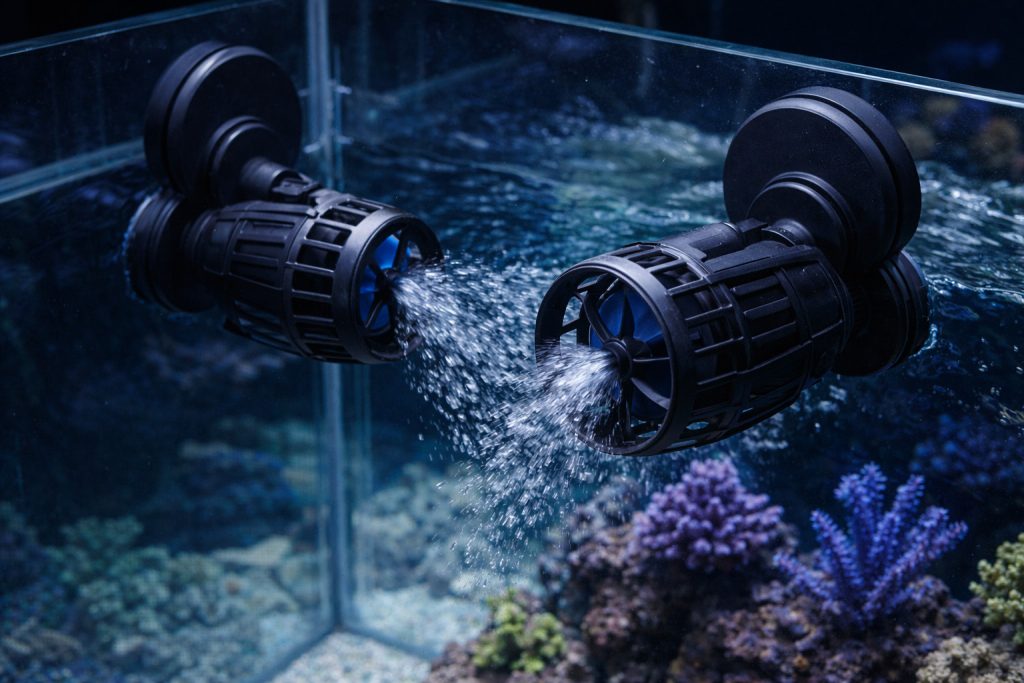
Reef Tank Flow And Circulation
Reef tank flow and circulation keep corals healthy, waste suspended, and oxygen levels stable. Learn how to set…