Reef fish do not just look pretty. They communicate, compete, and cooperate all day. Learning basic behavior helps you prevent fights and stress.
Reading reef fish body language
Fish show stress fast if you know the signs. Look for clamped fins, pale color, and rapid breathing. Normal breathing is steady and even. Many reef fish sit near 60 to 90 gill beats per minute.
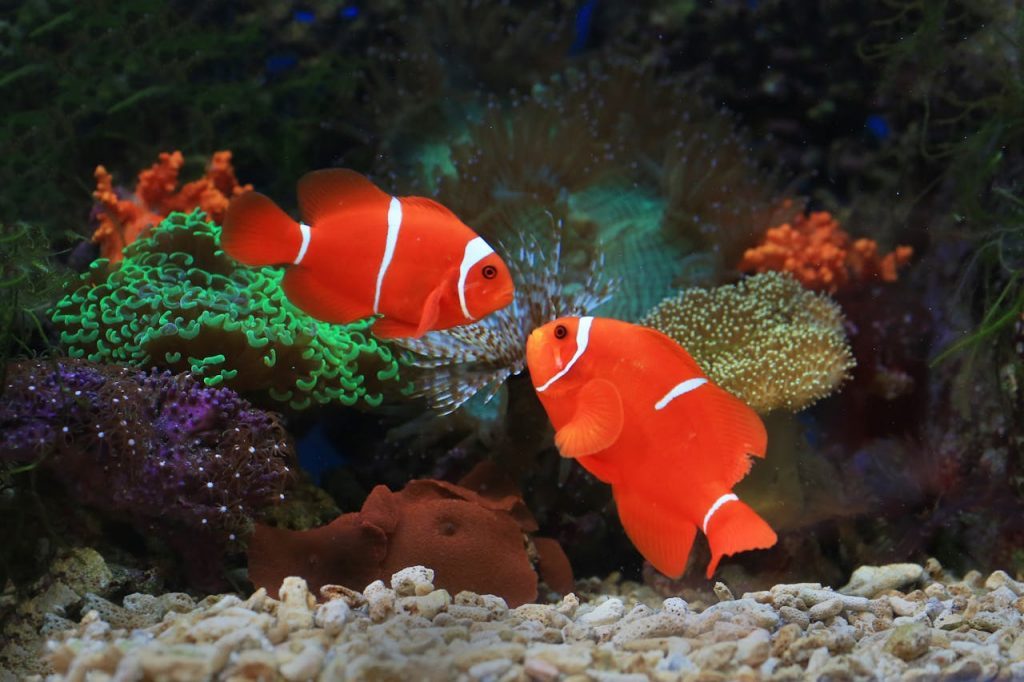
Territorial displays are common in new tanks. Watch for flared fins, side flashing, and tail slaps. Chasing that lasts under three seconds is often normal. Chasing that repeats every minute needs action.
Feeding behavior gives clues about health. A confident fish eats within 30 to 60 seconds. A stressed fish may hover and pick at food. It may spit food out or ignore it.
Use a simple daily check routine. Observe for five minutes before feeding. Then watch another five minutes after feeding. Track changes in a notebook or in reef tank journaling.
- Healthy posture: fins open, smooth swimming, steady breathing
- Stress posture: hiding all day, glass surfing, rapid breathing
- Aggression cues: head-down postures, repeated charging, nipped fins
Territory, hierarchy, and tank layout
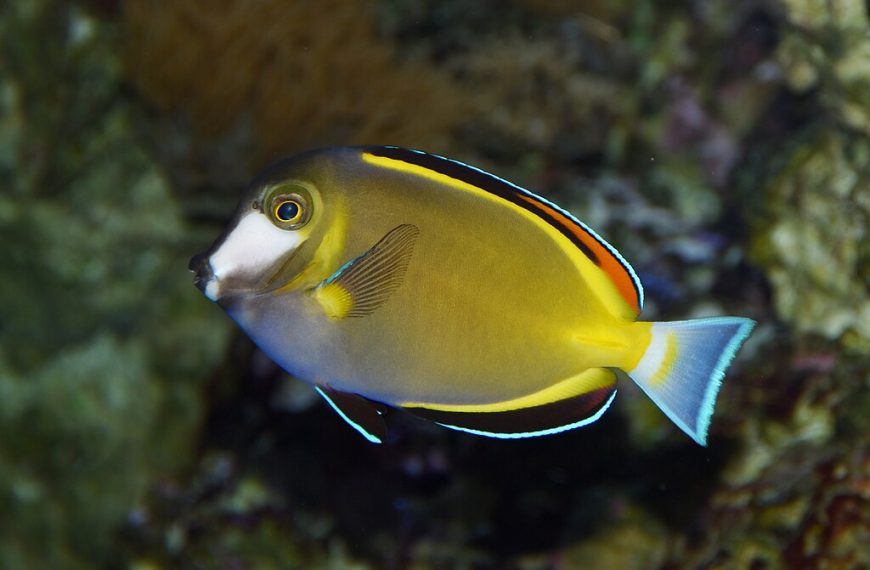
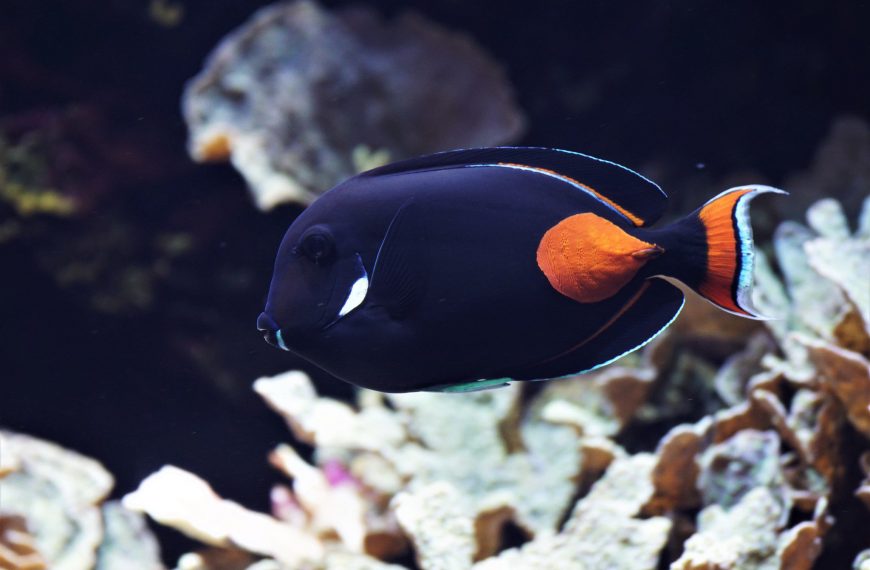
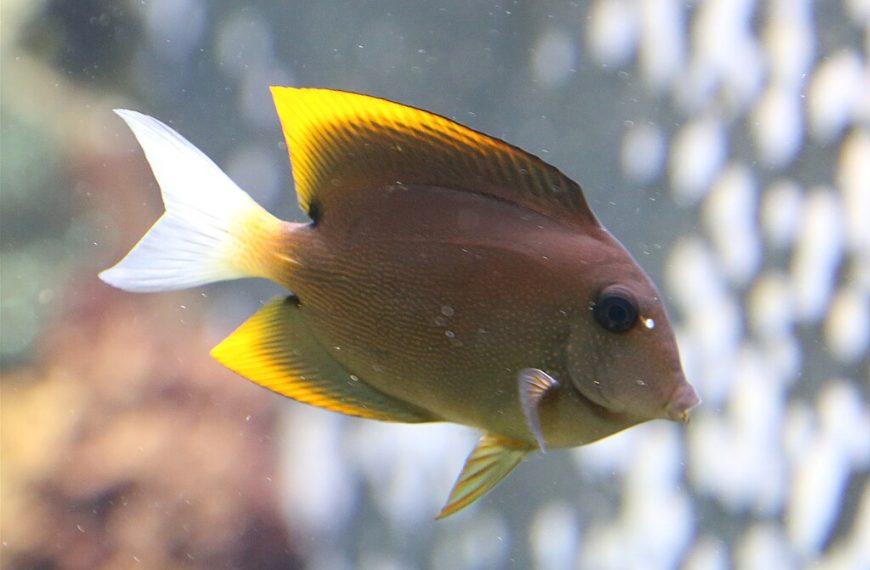
Most reef fish claim space around rockwork. Damsels and dottybacks defend caves hard. Tangs defend open lanes and grazing zones. A 4-foot tank length helps reduce tang disputes.
Build rockwork that breaks lines of sight. Use two to three main rock “islands” in a 75-gallon tank. Leave sand channels between them. Add at least one cave per fish that sleeps in rock.
Stocking order matters more than most gear. Add peaceful fish first, then semi-aggressive fish later. Add the most aggressive fish last. This reduces instant territory claims.
When you must add a new fish, reset the map. Move one or two rocks, not the whole reef. Dim lights for 24 hours after release. Use an acclimation box for 2 to 3 days when needed.
- Provide 6 to 10 hiding spots in a 60 to 90 gallon reef
- Keep at least 2 open swim lanes from end to end
- Feed small amounts 2 to 3 times daily during introductions
Compatibility, feeding pressure, and troubleshooting
Compatibility is often about diet and pace. Fast eaters can starve shy fish. Anthias and chromis rush food first. Mandarins and some wrasses need time and pods.
Use multiple feeding stations to spread pressure. Place nori on two clips, spaced 18 inches apart. Broadcast frozen food into high flow for 20 seconds. Then spot feed timid fish with a pipette.
Keep water stable to reduce conflict. Aim for 24 to 26°C, salinity 1.025, and pH 8.1 to 8.4. Keep ammonia and nitrite at 0 ppm. Keep nitrate near 2 to 20 ppm for mixed reefs.
If fighting escalates, act fast. Separate the bully for seven days in a breeder box. Add a mirror for 10 minutes to redirect a tang. Review your quarantine basics before any new additions. Also check reef fish compatibility chart for risky pairs.
- Common mistake: adding two similar tangs under 120 gallons
- Common mistake: one cave for several cave sleepers
- Quick fix: add a second feeding clip and reduce competition
Reef fish behavior becomes predictable with practice. Watch body language, then adjust space and feeding. Small changes often prevent big problems. Your fish will look calmer and feed better.
Sources: Michael S. Kent, “Fish Physiology and Behavior” (text reference); Fenner, “The Conscientious Marine Aquarist”; Sprung & Delbeek, “The Reef Aquarium” (Vol. 1–3).
Was this helpful?
Related Posts
Protein Skimmer Reef Tank Guide
Learn how a protein skimmer works, how to size one, and how to tune it for a cleaner,…
 By
By
Reef Aquarium Water Parameters
Learn the ideal reef aquarium water parameters, safe ranges, and how to keep salinity, alkalinity, nutrients, and pH…