


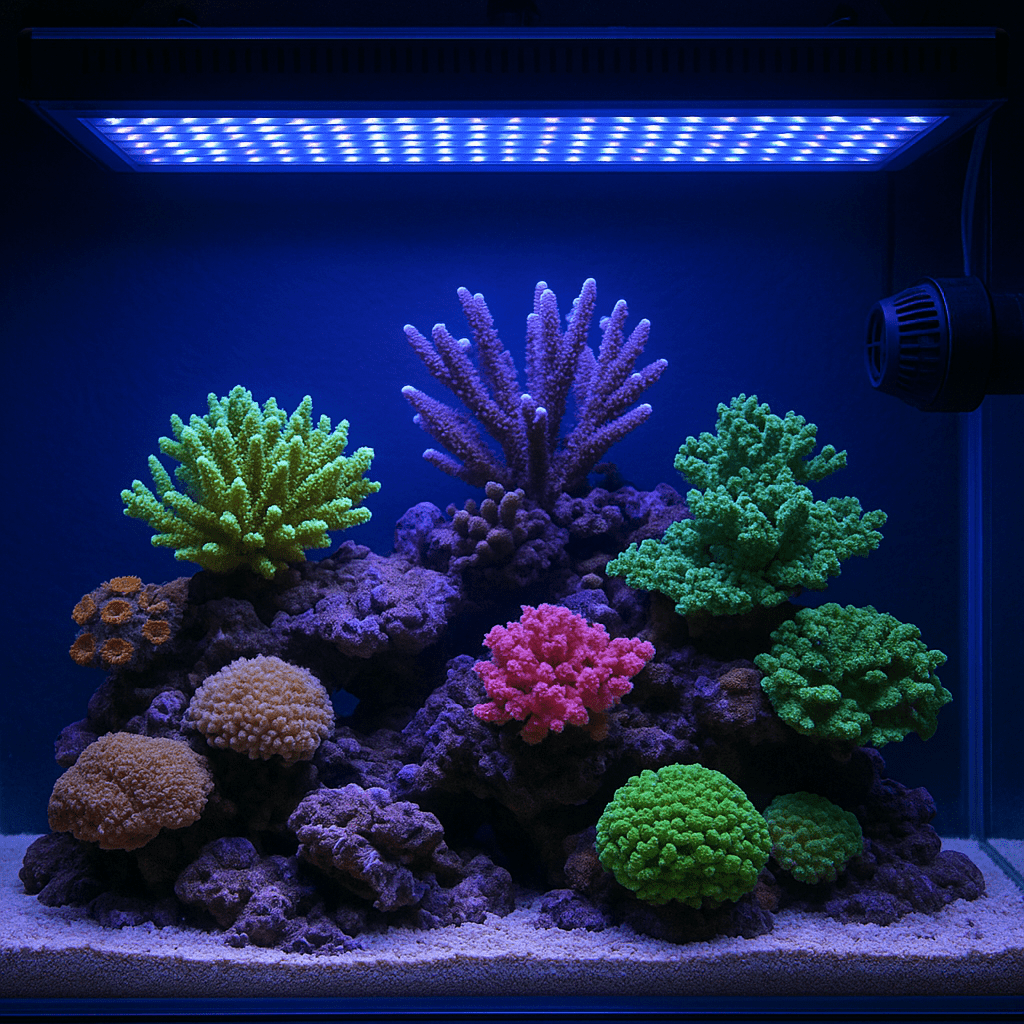
Stable reef rockwork protects your livestock, your glass, and your sanity. Good structures do more than look natural. They resist burrowing fish, strong flow, and accidental bumps during maintenance. This guide explains how to build secure aquascapes, choose the right materials, and avoid the common mistakes that cause collapses later.
Many reef keepers focus on coral placement first. Rock stability should come first instead. A beautiful aquascape fails if it shifts under flow or topples when a snail wedges underneath. Strong rockwork also improves coral growth. It creates reliable shelves, caves, and flow channels. In this guide, you will learn how to plan a stable layout, test each section, use reef-safe bonding methods, and troubleshoot weak areas before they become a problem.
Quick Reference Table
| Rockwork Factor | Best Practice | Why It Matters |
|---|---|---|
| Base layer | Place largest rocks directly on tank bottom or supports | Prevents settling and shifting in sand |
| Bonding | Use reef-safe mortar, epoxy, or super glue gel | Adds strength to arches and shelves |
| Weight distribution | Keep heavy mass low and centered | Reduces tipping risk |
| Flow planning | Leave open channels around structures | Improves detritus export and coral health |
| Height | Leave space from glass and waterline | Allows cleaning and coral growth |
| Testing | Push and twist gently before filling tank | Finds weak joints early |
| Burrowers | Avoid resting rock on sand alone | Prevents collapse from digging fish or shrimp |
Use this table as a quick checklist during your build. Most failures happen from poor base support, weak joints, or rushed planning.
Why Reef Rockwork Stability Matters
Unstable rockwork causes more than visual problems. A collapse can crack coral skeletons, trap fish, and scratch aquarium glass. It can also stir detritus and sand into the water. That sudden mess may stress corals and clog pumps. In severe cases, a toppled structure can crack the tank itself.
Stable rockwork also improves long-term husbandry. You can clean around it more easily. You can place corals with confidence. Fish feel safer when caves and overhangs stay consistent. Water flow stays predictable too. That helps reduce dead spots where waste collects. Strong aquascapes support both aesthetics and biology. They create secure surfaces for bacterial colonization and coral attachment. Good reef design is not just about stacking rocks. It is about building a structure that remains safe for years.
Planning Your Aquascape Before You Stack
Start with a clear plan. Decide whether you want islands, arches, bommies, or a negative space layout. Each style affects stability. Islands are often easiest to secure. Tall arches need more reinforcement. Large walls can become detritus traps if packed too tightly.
Measure your tank first. Leave room between rock and glass on all sides. This makes cleaning much easier. It also improves flow around the structure. Leave vertical space too. Corals grow upward and outward. A rock stack that looks low today may become crowded later. Think about fish behavior as well. Tangs need swim lanes. Wrasses like sleeping crevices. Gobies and pistol shrimp can undermine unsupported rocks. Sketch your layout on paper. Dry-fit rocks outside the tank if possible. This step saves time and prevents unstable improvisation once the build starts.
Best Materials for Stable Reef Rockwork
Dry rock is the most common choice today. It is easy to shape and plan with. Marco-style reef rock is especially popular because it is lightweight and porous. Live rock can also work well, but it may come in awkward shapes. That can make secure stacking harder.
For bonding, reef-safe mortar offers the strongest hold for large structures. Epoxy putty works well for medium joints and touch-ups. Thick cyanoacrylate gel helps lock smaller contact points. Many hobbyists use glue and epoxy together. The glue provides a quick hold. The epoxy adds bulk. Acrylic rods or fiberglass rods can reinforce tall sections. Some reef keepers drill rock and pin pieces together. Avoid metal hardware. It can corrode in saltwater. Also avoid unknown landscaping stone. Only use rock sold as aquarium safe. Stable materials matter as much as stable design.
Step-by-Step Guide to Building Stable Rockwork
Step one is to build on a solid base. Place foundational rocks on the bare tank bottom, egg crate, or approved supports. Do not rely on sand to hold weight. Sand shifts over time. Burrowing fish can move it quickly.
Step two is to place the heaviest rocks low. Spread weight across broad contact points. Avoid balancing rocks on small tips. Step three is to dry-fit each layer. Look for natural locking shapes. If a piece wobbles now, it will wobble later. Step four is to bond key joints. Use mortar for major structures. Use epoxy and glue for smaller connections. Step five is to test every section. Push gently from several angles. Twist lightly. If anything moves, reinforce it. Step six is to check maintenance access. Can you clean the glass? Can you remove a pump? Can you catch a fish if needed? Build for real reef keeping, not just day-one appearance.
Aquarium Setup Considerations
Tank size changes what counts as stable. In small tanks, even modest rocks can feel crowded. In larger tanks, wide spans and tall shelves need more support. Rimless tanks deserve extra caution. They look clean, but pressure points and accidental impacts become more concerning.
Aquascaping should match your equipment plan. Leave room for wavemakers to create broad flow. Keep overflow teeth clear. Do not trap heaters or return nozzles behind rock. Think about future coral colonies too. Branching SPS can catch flow and add top-heavy weight over time. LPS corals may extend long sweeper tentacles into narrow gaps. Stable setup means planning beyond bare rock. It means anticipating what the reef will become. If you use sand, add it after the rock structure is secure. That prevents hidden settling. If you keep jawfish, engineer extra support. Digging species can destabilize weak foundations surprisingly fast.
Water Flow and Rock Stability
Strong water movement does not usually knock over well-built rockwork. It does expose bad design. Narrow towers, loose shelves, and poorly bonded arches may shift under repeated pulse flow. This is more common in SPS systems with powerful wavemakers.
Design your rock to work with flow, not against it. Leave channels between islands. Create open swim-throughs. Avoid packing rock tightly against the back wall. This traps detritus and reduces circulation. Broad, low structures are often the most stable under heavy flow. They also make coral placement easier. Watch for sand erosion around the base. Strong pumps can uncover unsupported areas over time. Recheck stability after changing pump settings. Also inspect after adding large snails, urchins, or rock-moving fish. Water movement should keep waste suspended, but your structure should remain motionless under normal reef conditions.
Compatibility With Fish, Invertebrates, and Corals
Some livestock actively tests your aquascape. Urchins can bulldoze loose frags and small rocks. Pistol shrimp and some gobies excavate under structures. Large turbo snails can shift poorly placed pieces. Triggerfish and some wrasses may move substrate aggressively. Plan for these behaviors before stocking.
Corals also affect stability over time. Encrusting corals can help lock rocks together. Large plating corals can create leverage if attached to weak shelves. Heavy colonies increase strain on overhangs. Place high-mass corals only on proven stable surfaces. Fish compatibility matters too. Shy species prefer caves that do not change. Territorial fish often claim rock zones. A collapsed hiding place can increase aggression. Stable rockwork supports livestock welfare. It gives each animal a predictable environment. If you keep burrowing species, use supported caves or rock feet. Never rest a decorative cave directly on loose sand and hope for the best.
Common Problems
Why does my rockwork wobble after adding sand?
This usually means the base rocks were not fully supported. Sand compresses and shifts. It cannot replace a solid foundation. The fix is to remove pressure from the unstable area and reset the base on the tank bottom or stable supports. Do not ignore small movement. It often gets worse.
Can epoxy alone hold a large arch?
Sometimes, but it is not ideal for major load-bearing joints. Large arches need mechanical support or mortar. Acrylic rods help a lot. Epoxy works best as a secondary stabilizer. If the arch flexes during testing, rebuild it before livestock goes in.
What if a burrowing fish undermines the base?
Reevaluate the foundation immediately. Add support under the rock, not more sand around it. You may need to lift and reset part of the structure. Burrowers expose weak planning quickly. Build with them in mind from the start if they are on your stocking list.
How do I fix detritus traps in dense rockwork?
Open the structure if possible. Remove unnecessary filler rocks. Increase spacing between islands. Redirect flow through low areas and behind the scape. Stable rockwork should also be cleanable rockwork. If waste always settles in one pocket, the design needs adjustment.
Propagation and Fragging Considerations
Planning shelves for future coral growth
Stable shelves make frag placement easier. They also reduce accidental falls during maintenance. Build flat or slightly angled ledges where frags can be glued securely. Avoid tiny balancing points. Corals become heavy with time. Plan for mature colonies, not fresh frags.
Removing frags without destabilizing the structure
Do not glue frags onto key structural joints. Keep coral mounts separate from critical support points. If you need to chisel or cut later, you should not weaken the aquascape. This matters most in minimalist scapes where each rock carries more load.
Frequently Asked Questions
Should reef rock sit on glass or sand?
It should sit on a stable base, usually the tank bottom or a secure support. Sand alone is risky.
Is mortar better than epoxy for reef rock?
For large structures, yes. Mortar is usually stronger and better for load-bearing joints.
How much space should I leave between rock and glass?
Leave enough room for a scraper and your hand. A few inches is ideal in most tanks.
Can I build rockwork inside the tank?
Yes, but dry-fitting outside the tank is easier and safer. It also improves your bonding options.
What is the safest aquascape style for beginners?
Low islands with wide bases are usually the safest. They are stable, easy to clean, and flexible for coral placement.
Final Tips for Long-Term Stability
Reef rockwork is never just decoration. It is structural habitat. Build slowly and test often. Prioritize broad bases, secure joints, and open flow paths. Leave room for maintenance and coral growth. Recheck the scape after major livestock additions and pump changes. If something feels unstable, fix it now. Problems rarely improve on their own.
For more aquascaping help, read our guides on reef aquascaping ideas, how to cycle a reef tank, reef tank flow guide, and best clean up crew for reef tank. Strong rockwork gives every reef a better start. It also makes every future step easier.
Was this helpful?
Related Posts
Reef Alkalinity and Calcium Guide
Learn the ideal reef alkalinity and calcium ranges, how they interact, and how to test, dose, and troubleshoot…
 By
ByReef Tank Basics
Learn reef tank basics, from setup and cycling to lighting, flow, and water chemistry, so your first reef…
[favorite_button]
My Bookmarks:
To see full list click here
[user_favorites user_id="" include_links="true" site_id="" post_types="" include_thumbnails="true" thumbnail_size="thumbnail" include_excerpt="false"]