

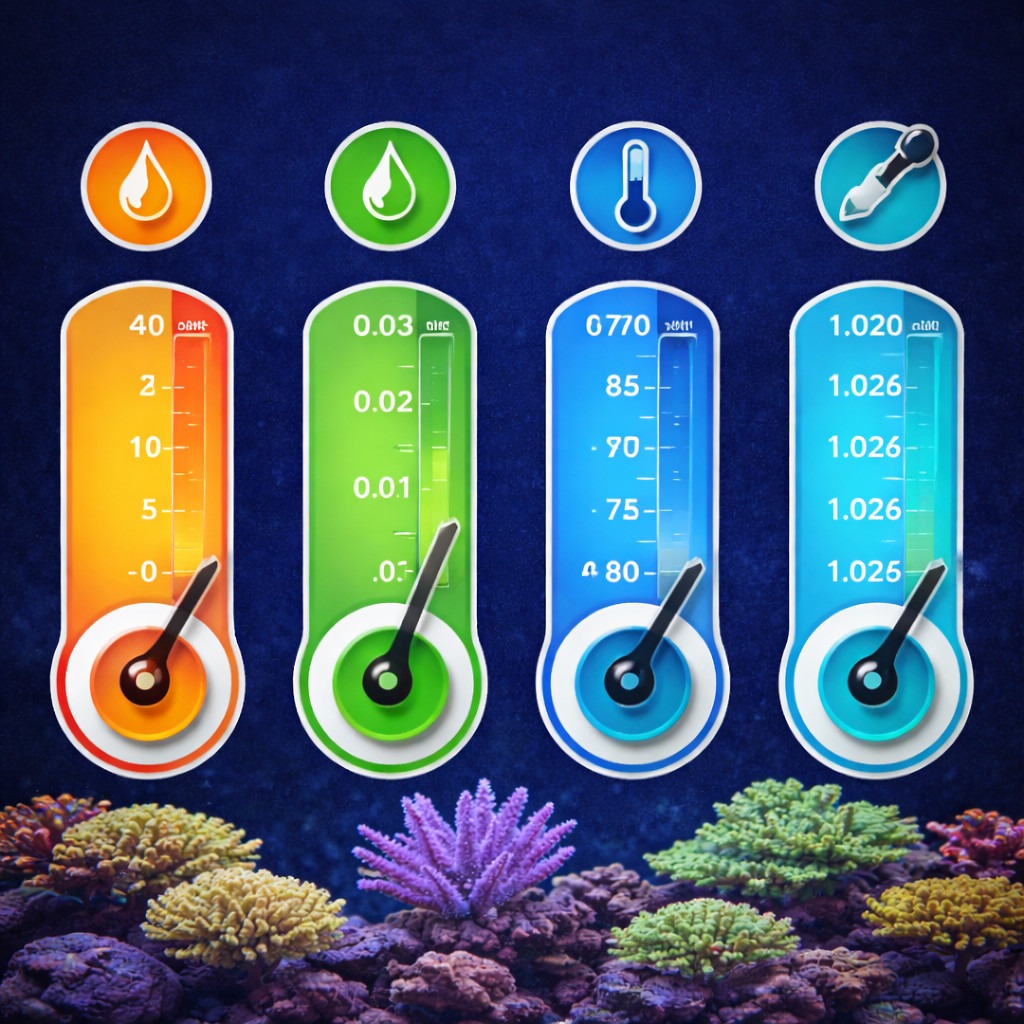
A reef tank parameter chart gives you target ranges for salinity, temperature, alkalinity, calcium, magnesium, nitrate, phosphate, and pH. Stable numbers matter more than chasing perfect numbers. Use this guide to understand each parameter, test correctly, and keep your reef healthy over the long term.
Many reef problems start with unstable water chemistry. Corals react fast to swings in alkalinity, salinity, and temperature. Fish also suffer when oxygen, pH, or nutrients drift too far. This guide explains the most important reef tank parameters in plain language. You will learn ideal target ranges, why each number matters, how often to test, and what to do when values move out of range. Whether you keep soft corals, LPS, SPS, or a mixed reef, this article will help you build a testing routine that supports healthy growth and fewer surprises.
Quick Reef Tank Parameter Chart
| Parameter | Recommended Range | Best Practice |
|---|---|---|
| Temperature | 76–79°F | Keep daily swing under 1°F |
| Salinity | 1.025–1.026 SG | Match natural seawater closely |
| pH | 7.8–8.4 | Prioritize stability over chasing highs |
| Alkalinity | 7.5–9.0 dKH | Keep stable day to day |
| Calcium | 400–450 ppm | Support coral skeleton growth |
| Magnesium | 1250–1400 ppm | Helps stabilize calcium and alkalinity |
| Nitrate | 2–15 ppm | Avoid both zero and excess |
| Phosphate | 0.03–0.10 ppm | Low but measurable is ideal |
| Ammonia | 0 ppm | Any reading is a warning sign |
| Nitrite | 0 ppm | Should be zero in mature reefs |
| Dissolved Oxygen | 7–8+ mg/L | Strong gas exchange helps |
Use this chart as a starting point. Your exact targets can shift slightly based on your coral mix. SPS systems often do best with tighter stability. Soft coral tanks usually tolerate a bit more variation. The key is consistency.
Why Reef Tank Parameters Matter
Corals build skeletons from calcium carbonate. That process depends on stable alkalinity, calcium, magnesium, pH, and salinity. If one major parameter swings, coral growth slows. Tissue recession can follow. Fish may survive poor stability longer than corals, but stress still builds over time.
New hobbyists often focus only on nitrate and phosphate. Those matter, but they are only part of the picture. Temperature swings can trigger stress. Salinity creep can happen from evaporation. Low alkalinity can stall SPS growth. Excess nutrients can fuel algae and brown corals. Ultra-low nutrients can also cause pale tissue and poor polyp extension.
A good reef tank parameter chart helps you avoid guessing. It also makes troubleshooting easier. When corals stop opening, you can compare your test results to proven ranges. Then you can fix the real issue instead of changing several things at once.
Temperature and Salinity Targets
Temperature and salinity are the foundation of reef stability. Most reef tanks do best between 76 and 79 degrees Fahrenheit. Some hobbyists run slightly warmer. Others prefer 77 to 78 degrees. The exact number matters less than avoiding daily swings. A one-degree change is fine. Larger swings can stress coral tissue and fish respiration.
Salinity should stay between 1.025 and 1.026 specific gravity. This closely matches natural seawater. Many coral issues start when salinity drifts down from repeated top-off mistakes or up from poor calibration. Always use a calibrated refractometer or a high-quality digital salinity meter. Calibrate with a 35 ppt standard, not freshwater.
Use an auto top-off system if possible. Evaporation removes freshwater only. Salt stays behind. That means salinity rises unless you replace evaporated water daily. Stable salinity supports coral osmotic balance, fish health, and consistent test results across every other parameter.
Alkalinity, Calcium, and Magnesium
These three parameters work together. Alkalinity is usually the most important number to watch in a reef with stony corals. A good target is 7.5 to 9.0 dKH. Keep it stable. Sudden changes often cause burnt tips, poor extension, or tissue loss in sensitive SPS corals.
Calcium should stay around 400 to 450 ppm. Corals, coralline algae, clams, and other calcifying organisms all use it. Magnesium should sit between 1250 and 1400 ppm. Magnesium helps prevent calcium and carbonate from falling out of solution too quickly. When magnesium is low, keeping calcium and alkalinity stable becomes harder.
Do not chase very high numbers. More is not better. Elevated calcium and alkalinity can create instability and precipitation. If your reef consumes these elements quickly, consider two-part dosing, kalkwasser, or a calcium reactor. Test often before increasing any dose. Small corrections are safer than large corrections.
pH, Nitrate, and Phosphate
pH often causes unnecessary worry. Most healthy reef tanks run between 7.8 and 8.4. Stability matters more than hitting 8.3 every day. Low indoor air exchange often depresses pH. If alkalinity is stable, fish are healthy, and corals look good, a pH of 7.9 may be acceptable.
Nitrate and phosphate are nutrients, not just waste. Corals need some available nutrients to maintain color and tissue health. A practical nitrate target is 2 to 15 ppm. A practical phosphate target is 0.03 to 0.10 ppm. Ultra-low nutrients can lead to pale corals and slow growth. Excess nutrients can drive nuisance algae and reduce skeletal growth.
Keep both nutrients balanced. High nitrate with zero phosphate can stress corals. The reverse can also create issues. If you run heavy filtration, large skimmers, or aggressive media, test regularly so you do not strip nutrients too far. Mixed reefs usually do best with low but measurable nutrient levels.
Ammonia, Nitrite, and Oxygen
Ammonia and nitrite should be zero in an established reef tank. Any measurable ammonia is a red flag. It can point to a dead fish, overfeeding, a stalled cycle, or a failed biofilter. Nitrite is less toxic in saltwater than freshwater, but it still should not linger in a mature system.
Dissolved oxygen is often overlooked. Fish breathing hard at the surface can signal low oxygen. This problem gets worse at night, during heat waves, or in tanks with poor surface agitation. Aim for strong gas exchange through surface movement, a properly sized protein skimmer, and good overall flow.
If your reef looks stressed after a power outage, oxygen may be the first issue. Battery air pumps and circulation backups can save livestock. Oxygen also affects pH. Better air exchange often improves both fish comfort and daily pH stability.
How Often to Test Reef Tank Parameters
Your testing schedule should match your tank’s age and coral demand. New tanks need more frequent testing. Mature systems can follow a steady routine. Test salinity and temperature several times each week, or monitor them daily. Alkalinity should be tested two to four times weekly in SPS tanks. In lower-demand tanks, once weekly may be enough.
Calcium and magnesium can usually be tested weekly or every two weeks once consumption is known. Nitrate and phosphate should be checked weekly at first. After your system stabilizes, every one to two weeks often works. Test ammonia any time livestock seems distressed or something dies.
Write results down. A simple log shows trends that single tests miss. If alkalinity drops 0.3 dKH every day, you know your dosing rate is too low. If phosphate rises after feeding changes, you can adjust before algae spreads. Consistent records turn reef keeping into a predictable routine.
Step-by-Step: How to Use a Reef Tank Parameter Chart
- Test at the same time of day when possible.
- Use reliable kits and check expiration dates.
- Compare each result to your target range.
- Look for trends, not isolated numbers.
- Correct only one major issue at a time.
- Make small adjustments over several days.
- Retest after every correction.
- Log the result and note any livestock changes.
This method prevents overcorrection. Many reef tanks get into trouble when hobbyists react too fast. For example, a low alkalinity reading may tempt you to add a large dose. That quick jump can stress corals more than the original low value. Slow correction is safer. Aim for gradual movement toward your target range.
Charts are tools, not strict laws. If your reef thrives at 8.0 dKH, 430 calcium, and 10 ppm nitrate, keep it there. Do not force a different target just because another hobbyist uses it. Stability matched to your livestock is the real goal.
Common Problems
Why are my corals losing color?
Pale corals often point to low nutrients, unstable alkalinity, excessive light, or sudden salinity changes. Test nitrate and phosphate first. If both are near zero, feed more or reduce nutrient export. Check alkalinity over several days. Daily swings can fade tissue and reduce polyp extension.
Why is my alkalinity always dropping?
Growing corals and coralline algae consume alkalinity every day. If water changes no longer keep up, start a dosing plan. Measure daily consumption for one week. Then match that demand with two-part dosing or kalkwasser. Recheck often until the dose is stable.
Why do I have algae with “good” water tests?
Algae can consume nutrients before your test kit detects them. Detritus buildup, old rock, weak flow, and overfeeding also contribute. Check phosphate with a low-range kit. Increase export slowly. Improve flow and manual removal. Review your feeding routine and source water quality.
Why is my pH low?
Low pH often comes from high indoor carbon dioxide. Open windows when possible. Improve skimmer air intake. Increase surface agitation. Verify alkalinity first. If alkalinity is normal and pH stays above 7.8, your reef may still be fine. Avoid quick chemical fixes unless you understand the cause.
Frequently Asked Questions
What is the ideal salinity for a reef tank?
The ideal salinity is usually 1.025 to 1.026 specific gravity. Keep it stable every day.
What is the best alkalinity for a mixed reef?
A mixed reef often does well between 8 and 9 dKH. Stability matters more than the exact number.
Should nitrate and phosphate be zero?
No. Most reef tanks do better with low but measurable nutrients. Zero can stress corals.
How often should I test alkalinity?
Test two to four times weekly in high-demand tanks. Weekly may be enough in lower-demand systems.
What parameter is most important in a reef tank?
There is no single winner. Temperature, salinity, and alkalinity are usually the most critical daily stability markers.
Final Tips for Keeping Parameters Stable
Good reef keeping is often about routine. Top off evaporation daily. Mix saltwater carefully. Calibrate tools often. Test before dosing, not after problems appear. Feed consistently. Clean pumps and skimmers so flow and gas exchange stay strong. Make changes slowly and watch how your animals respond.
If you are building a maintenance plan, start with the basics. Keep salinity stable. Lock in temperature. Track alkalinity closely. Then fine-tune calcium, magnesium, nitrate, and phosphate. Over time, your reef tank parameter chart becomes a personal reference for your system. That is when reef keeping gets easier and more predictable.
For more help, read our guides on reef tank water change schedule, reef tank alkalinity, reef tank salinity, and best reef tank test kits.
Was this helpful?
Related Posts
Blue Dot Jawfish (Opistognathus Rosenblatti)
Blue Dot Jawfish need cool water, deep sand, and a tight lid. Learn how to keep Opistognathus rosenblatti…
 By
By
Arc Eye Hawkfish (Paracirrhites arcatus)
Arc Eye Hawkfish care is simple in a stable tank. Learn tank size, feeding, reef safety, and shrimp…
[favorite_button]
My Bookmarks:
To see full list click here
[user_favorites user_id="" include_links="true" site_id="" post_types="" include_thumbnails="true" thumbnail_size="thumbnail" include_excerpt="false"]