

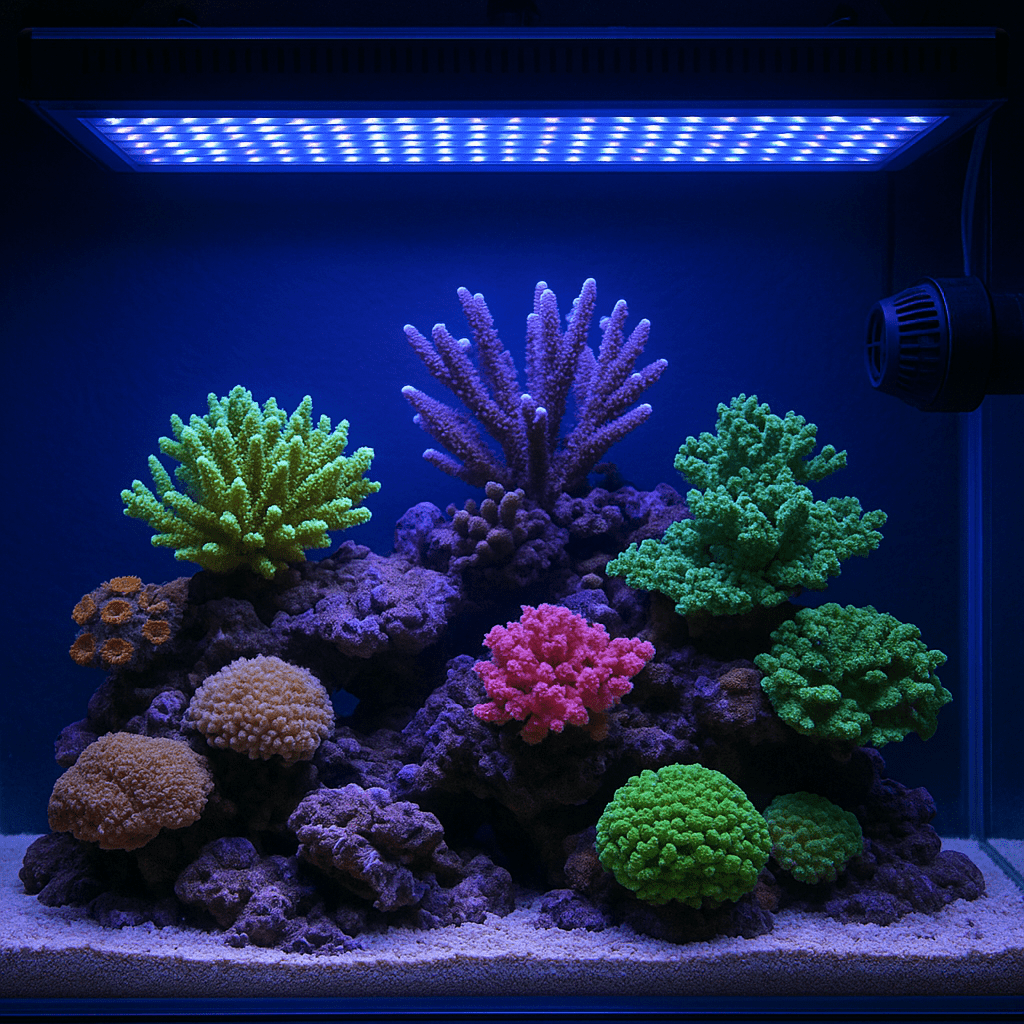
Reef tank temperature control keeps corals, fish, and invertebrates stable and healthy. Most reef tanks do best between 77 and 79°F. The real goal is consistency. Small daily swings are normal, but large spikes or drops can trigger stress, coral recession, low oxygen, and disease.
Many reef problems start with unstable temperature. New hobbyists often focus on lights, salt mix, and test kits first. Those matter, but temperature is just as important. It affects coral metabolism, fish respiration, dissolved oxygen, and even how quickly waste breaks down. In this guide, you will learn the ideal reef temperature range, how to choose heaters and chillers, how to prevent summer overheating, and how to troubleshoot common temperature issues before they become livestock losses.
Quick Reference Table
| Topic | Recommended Range or Tip |
|---|---|
| Ideal reef temperature | 77–79°F |
| Acceptable daily swing | 1–2°F or less |
| Emergency high temperature | 82°F and above needs action |
| Emergency low temperature | Below 75°F needs action |
| Heater sizing | Use one properly sized heater or two smaller heaters |
| Best control method | External temperature controller for accuracy and safety |
| Cooling tools | Fans, open lid, cooler room, chiller if needed |
| Probe placement | High-flow sump or display area |
This table gives you the basics. The sections below explain how to apply them in a real reef tank.
Why Temperature Stability Matters in a Reef Tank
Corals come from stable tropical seas. They can handle modest variation, but they dislike sudden change. In a home aquarium, temperature shifts happen faster than they do on a reef. A tank can heat up in a few hours from strong lights, warm room air, pumps, or a stuck heater.
High temperature lowers oxygen levels. That stresses fish first. Corals also suffer. They may close up, produce excess mucus, lose color, or begin tissue recession. In severe cases, prolonged heat can contribute to bleaching. Low temperature is also harmful. Fish become sluggish. Digestion slows. Coral growth drops. Immune function weakens.
Stability matters more than chasing a perfect number. A reef held at 78°F every day is usually better off than one that swings from 76 to 81°F. Consistent conditions help corals extend polyps, feed normally, and calcify efficiently. Stable temperature also supports beneficial bacteria, which keep your nitrogen cycle working smoothly.
What Is the Best Temperature for a Reef Tank?
For most mixed reefs, 77 to 79°F is the sweet spot. This range works well for common soft corals, LPS, SPS, clownfish, gobies, wrasses, snails, and shrimp. It is also easy to maintain with standard equipment in most homes.
Some hobbyists run tanks slightly cooler, around 76 to 77°F. Others keep them closer to 79 or 80°F. Either approach can work if the temperature stays stable. Problems usually start when the tank swings hard between day and night, or when summer heat pushes the system past 81 or 82°F for long periods.
If you keep delicate SPS corals, consistency becomes even more important. Rapid changes can stress Acropora and other sensitive species quickly. If you keep a fish-only marine system, the acceptable range is often broader. Reef tanks are less forgiving because corals and invertebrates respond strongly to instability.
Aim for a target temperature, then build your equipment around that target. For most hobbyists, 78°F is a practical set point.
Aquarium Setup for Better Temperature Control
Tank design affects temperature more than many beginners expect. Small tanks change temperature quickly. Nano reefs are especially vulnerable. A 20-gallon tank can overheat much faster than a 120-gallon system. More water volume means more thermal stability.
Sumps help in two ways. First, they increase total water volume. Second, they give you a dedicated place for heaters, probes, and cooling fans. This keeps equipment out of sight and improves temperature distribution. Good water movement also matters. Dead spots can create uneven heating, especially in tanks with weak circulation.
Room placement is critical. Avoid direct sunlight. Keep the aquarium away from windows, heating vents, and exterior doors. Sunlight can raise water temperature quickly, even in winter. Warm rooms also make cooling harder. If your tank sits upstairs, expect higher summer temperatures.
Lids influence heat retention too. Tight glass lids reduce evaporation, but they trap heat. Mesh tops allow better gas exchange and cooling. If overheating is a recurring issue, your tank cover may be part of the problem.
Heating Equipment: Heaters, Controllers, and Safe Placement
A reliable heater is essential in almost every reef tank. Choose a quality heater matched to your system volume and room conditions. Undersized heaters struggle in cool homes. Oversized heaters can raise temperature too fast if they fail on.
Many reef keepers prefer two smaller heaters instead of one large unit. This adds redundancy. If one heater fails off, the other slows the temperature drop. If one sticks on, it has less power to overheat the system quickly. This is a simple but effective safety upgrade.
An external temperature controller is one of the best investments you can make. It acts as a backup to the heater thermostat. Set the heater slightly above the controller set point. Then let the controller turn the heater on and off. This setup improves accuracy and reduces the risk of catastrophic overheating.
Place heaters in an area with steady flow. A sump chamber with good circulation is ideal. Avoid placing heaters where water level fluctuates heavily. Keep probes in a stable, high-flow area too. Test your heater and controller every few months. Equipment fails. Routine checks prevent surprises.
Cooling Methods for Summer and Overheating Prevention
Heat is often harder to manage than cold. Reef lighting, return pumps, powerheads, and warm room air all add heat. In summer, this can push tanks beyond safe limits. The first goal is prevention. Keep the room cool if possible. Air conditioning helps more than any aquarium gadget.
Evaporative cooling is the easiest reef-safe method. A simple fan blowing across the sump or display can drop temperature several degrees. It works by increasing evaporation. The tradeoff is higher top-off demand. This makes an auto top-off system very helpful. Without one, salinity can swing as water evaporates.
If fans are not enough, a chiller may be necessary. Chillers are most useful in hot climates, enclosed cabinets, or systems with powerful lighting and pumps. Size the chiller correctly for your total water volume and heat load. A small chiller that runs nonstop is not efficient.
Do not use ice directly in the tank. It cools unevenly and can cause sudden swings. In an emergency, floating sealed bags of ice in the sump is safer. Slow changes are always better than rapid ones.
Step-by-Step: How to Dial In Reef Tank Temperature Control
Start by choosing your target. For most reefs, use 78°F. Next, confirm your thermometer is accurate. Cheap thermometers can be off by several degrees. Compare two devices before making changes.
Install your heater in a high-flow area. If you use a controller, set the heater itself slightly higher than the controller. Then set the controller to your true target temperature. Watch the tank for several days. Track day and night readings. This shows your natural swing.
If the tank runs hot during the day, add a fan over the sump or display. Reduce heat sources if possible. Check whether pumps, lids, or cabinet airflow are trapping warmth. If the room gets very hot, improve room cooling first. If heat remains a chronic issue, add a chiller.
Finally, create alerts if your controller supports them. Temperature alarms can save a tank during heater failure, power loss, or summer heat spikes. Keep a backup heater on hand. Reef tanks are much easier to protect when you plan before an emergency.
Compatibility With Corals, Fish, and Invertebrates
Most common reef livestock share similar temperature needs. Soft corals like zoanthids, mushrooms, and leathers usually do well at 77 to 79°F. LPS corals such as hammers, torches, acans, and frogspawn also thrive in that range. SPS corals often demand the most stability, even if the exact number varies slightly between systems.
Reef fish also benefit from steady temperature. Clownfish, blennies, tangs, gobies, and wrasses handle normal reef temperatures well. Problems arise when oxygen drops during heat spikes. Fish may gasp near the surface, hide, or breathe rapidly. This is often the first warning sign.
Invertebrates can be sensitive too. Shrimp, snails, crabs, and sea stars often react poorly to sudden changes. Temperature shock during water changes is a common mistake. Always match new saltwater closely to the display tank. Stable temperature supports healthy molting, feeding, and long-term survival in many invertebrates.
If your tank houses a mixed reef, stability is the common need across all groups. That makes temperature control one of the most universal parts of reef husbandry.
Common Problems
Why does my reef tank keep overheating?
The usual causes are strong lighting, hot room air, enclosed cabinets, heat from pumps, and poor evaporation. Start by checking the room temperature. Then review your lid, sump airflow, and equipment heat. Add a fan before buying a chiller. Many tanks only need better ventilation.
Why is my heater not maintaining temperature?
The heater may be undersized, poorly placed, failing, or reading inaccurate water temperature. Verify the thermometer first. Then inspect the heater location. Low-flow areas often cause false readings. In cold rooms, you may need more wattage or a second heater.
Can temperature swings cause coral stress?
Yes. Corals often react to swings before they react to a slightly imperfect set point. Signs include poor polyp extension, fading color, excess slime, and tissue recession. Check your temperature graph over 24 hours. Hidden swings often happen overnight or during peak lighting hours.
What should I do during a power outage?
Insulate the tank to slow heat loss or heat gain. In winter, wrap the aquarium sides with blankets, but keep gas exchange open. In summer, open the canopy and use battery-powered fans if possible. A battery air pump helps oxygen levels. For long outages, a generator is the best protection.
Frequently Asked Questions
Is 80°F too warm for a reef tank?
Not always, but it leaves less room for error. A stable 80°F can work. Trouble starts when the tank climbs higher during the day. Many hobbyists prefer 78°F because it provides a safety buffer.
How many heaters should I use?
Two smaller heaters are often safer than one large heater. This adds redundancy and reduces the risk of severe overheating if one unit sticks on.
Do LED lights heat a reef tank?
Yes, but usually less than older metal halide systems. LEDs still add heat to the water and surrounding air, especially in enclosed canopies.
How often should I check reef tank temperature?
Check it daily at minimum. A digital controller with min and max tracking is even better. It reveals swings you may never see during casual checks.
Can I lower temperature quickly in an emergency?
Lower it gradually. Use fans, cooler room air, and sealed ice bags in the sump if needed. Avoid sudden drops. Rapid cooling can stress livestock just like overheating.
Final Tips for Long-Term Temperature Stability
The best reef tank temperature control plan is simple and reliable. Pick a target. Use accurate equipment. Add redundancy. Plan for summer heat and power outages before they happen. Most reef keepers lose stability from neglected basics, not from rare equipment failures.
Keep your reef between 77 and 79°F if you want an easy starting point. Limit swings to 1 or 2 degrees. Use a controller if your budget allows. Watch your tank during seasonal changes. Summer and winter often reveal weaknesses in your setup.
If you want to improve overall stability, read our guides on reef tank parameters, how to cycle a reef tank, reef tank salinity, and best auto top off for reef tank. Strong temperature control works best when the rest of your system is stable too.
Was this helpful?
Related Posts
Best Filtration Systems
Best Filtration Systems for a Healthy Saltwater Aquarium Choosing the best filtration system for your saltwater aquarium is…
 By
By
Clown Triggerfish (Balistoides Conspicillum)
Clown triggerfish are stunning but aggressive marine fish that need very large tanks, strong filtration, and careful tankmate…
[favorite_button]
My Bookmarks:
To see full list click here
[user_favorites user_id="" include_links="true" site_id="" post_types="" include_thumbnails="true" thumbnail_size="thumbnail" include_excerpt="false"]