

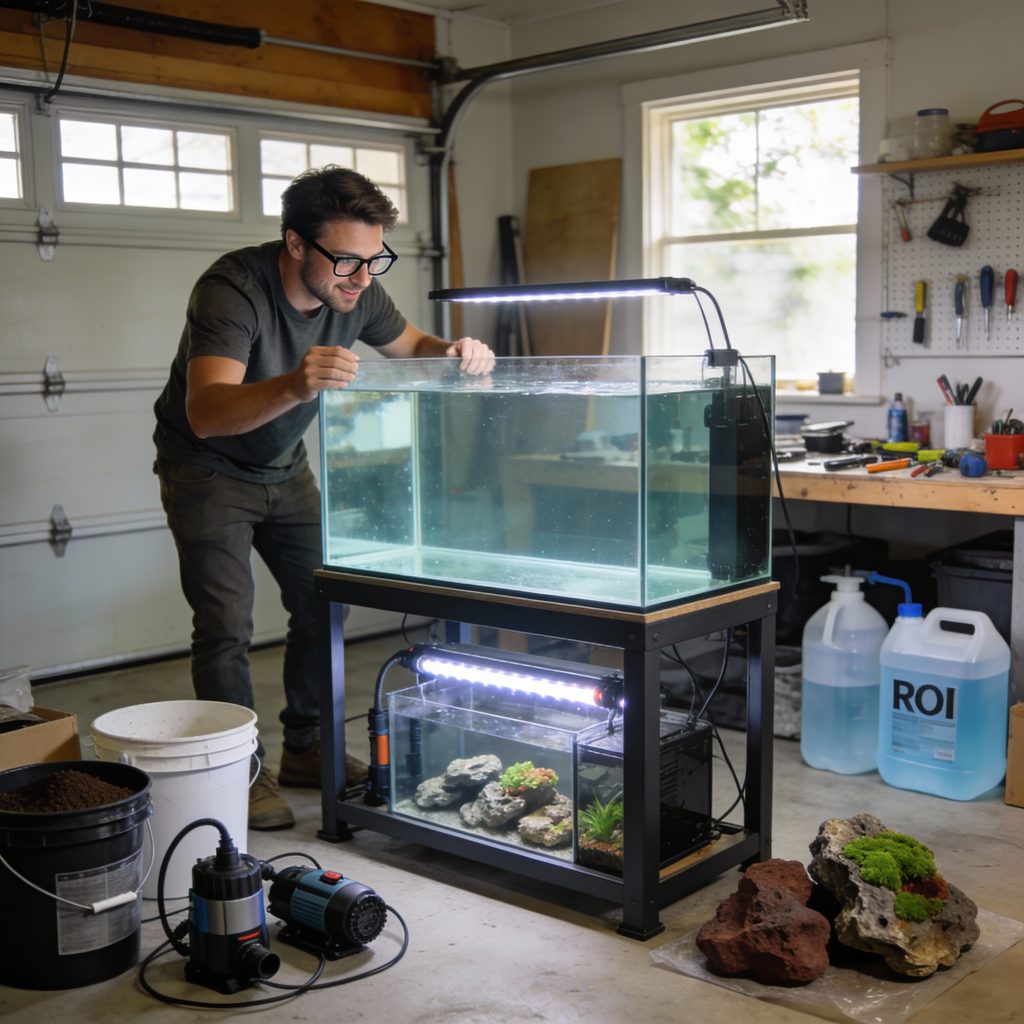
Your first reef tank is one of the most rewarding builds in the aquarium hobby, but it’s also one of the easiest to rush. A successful reef is less about buying “the best” gear and more about building a stable system: consistent salinity, strong biological filtration, appropriate light and flow, and a patient stocking plan. This guide walks you through a proven beginner-friendly setup process, from choosing a tank size and equipment to mixing saltwater, cycling, and adding your first clean-up crew and corals.
1) Choose the Right Tank Size (Bigger Is Usually Easier)
For a first reef tank, stability is your best friend. Larger water volume buffers mistakes in salinity, temperature, and nutrients. Tiny tanks can be done, but they demand tighter discipline and faster reactions.
- Best “first reef” sweet spot: 20 to 40 gallons (or a 30 to 60 gallon system with a sump)
- Beginner-friendly all-in-one (AIO) option: 20 to 30 gallons with a rear filtration chamber
- If you want fish variety: 40 breeder or 50 to 75 gallons
Also consider practical constraints: where the tank will sit (level floor), access for maintenance, and proximity to power and water. A reef tank is not “set and forget”, so make it easy to work on.
2) Plan Your Budget Around the “Big Three”: Light, Flow, Filtration
Many first-timers overspend on livestock and underspend on stability. Prioritize equipment that keeps water quality consistent and supports coral needs.
Lighting
Pick your light based on the corals you intend to keep in the first 6 to 12 months. Soft corals and many LPS are forgiving. SPS generally require stronger, more uniform lighting and tighter nutrient and alkalinity control.
- Beginner plan: start with softies and hardy LPS, upgrade later if you catch the SPS bug
- Key features to look for: reef spectrum control, a proven mounting option, and a reliable schedule (ramp up/down)
Flow
Corals rely on water movement to deliver oxygen and nutrients and to carry away waste. Inadequate flow leads to detritus buildup, cyano, and unhappy coral tissue.
- Target: varied, turbulent flow rather than a single harsh jet
- Rule of thumb: 20 to 40x total turnover for mixed reefs (more for SPS-dominant)
- Tip: two smaller wavemakers often beat one big one for eliminating dead spots
Filtration (and the role of a sump)
Filtration in reef tanks is usually a combination of biological filtration (live rock and bacteria), mechanical filtration (filter socks/floss), and nutrient export (protein skimmer, refugium, water changes).
- AIO tanks: can work extremely well for beginners if you keep up with maintenance
- Sump systems: offer more water volume, hide equipment, and make upgrades easier
- Protein skimmer: optional on small, lightly stocked tanks; very helpful as bioload increases
3) Essential Equipment Checklist
Here’s a practical checklist for setting up your 1st reef tank. You can start simple and add complexity as you gain experience.
- Tank + stand (rated for the filled weight)
- Heater (and ideally a temperature controller for safety)
- Thermometer (digital is easiest)
- Return pump (if using a sump) or media basket (if using an AIO)
- Wavemaker(s)
- Reef light
- RO/DI unit or a reliable source of RO/DI water
- Refractometer (calibrated with 35 ppt solution) or a quality salinity meter
- Test kits: ammonia, nitrite, nitrate, phosphate; later add alkalinity, calcium, magnesium
- Salt mix and mixing container
- Power strip with drip loops, and ideally a GFCI outlet
- Auto top-off (ATO) strongly recommended to maintain stable salinity
- Optional but useful: protein skimmer, activated carbon, phosphate media, filter roller, refugium light
4) Rock and Sand: Building the Foundation
Your rockwork is more than decoration. It is the primary home for nitrifying bacteria and a major driver of flow patterns and coral placement options.
Live Rock vs Dry Rock
Dry rock is common today and avoids many pest risks, but it often takes longer to mature biologically. Live rock can speed biodiversity, but it may introduce hitchhikers. Many reefers use mostly dry rock and “seed” it with a small amount of trusted live rock or a quality bacterial starter.
How Much Rock and Sand?
- Rock: aim for a functional aquascape with plenty of open swimming space and caves. Old rules like “1 pound per gallon” are not necessary. Focus on structure and stability.
- Sand: 0.5 to 1.5 inches is easy to keep clean. Deep sand beds can work, but they require more planning and long-term husbandry.
Aquascape tip: keep rock off the glass where possible, and leave room behind the structure for flow and cleaning. Use reef-safe epoxy or cement if you build tall arches or shelves.
5) Mixing Saltwater Correctly (This Prevents So Many Problems)
Consistent salinity is a cornerstone of reef stability. Mix saltwater with RO/DI water, heat it, and circulate it until clear and fully dissolved.
- Target salinity: 35 ppt (1.026 specific gravity) for most reef tanks
- Mixing steps: add RO/DI water to a container, add a powerhead, add heater, then slowly add salt mix
- Wait time: typically 2 to 24 hours depending on salt and temperature
- Measure correctly: calibrate your refractometer with 35 ppt calibration fluid, not freshwater
Pro tip: if you don’t have an ATO, evaporation will raise salinity quickly, especially on smaller tanks. For most beginners, an ATO is one of the highest “success per dollar” upgrades you can make.
6) Cycling Your Reef Tank (The Patient Part That Pays Off)
Cycling establishes the bacteria that convert toxic ammonia into nitrite and then nitrate. This is non-negotiable. A “clear tank” is not the same thing as a cycled tank.
Two Beginner-Friendly Cycling Methods
- Fishless cycle with ammonia: add a measured ammonia source and bottled bacteria. Test until ammonia and nitrite process down reliably.
- Ghost feeding: add a small amount of fish food to generate ammonia. This is slower and less precise but can work.
What to test during cycling: ammonia, nitrite, nitrate. You’re looking for ammonia and nitrite to hit zero after dosing, with nitrate rising as the end product.
Typical timeline: 2 to 6 weeks depending on temperature, bacteria, rock type, and method. Dry rock systems often benefit from extra time to mature before heavy stocking.
7) Target Water Parameters for a Beginner Mixed Reef
Chasing perfect numbers causes more harm than slightly imperfect but stable parameters. Pick reasonable targets and keep them consistent.
| Parameter | Recommended Range | Notes |
|---|---|---|
| Temperature | 77 to 79°F (25 to 26°C) | Stability matters more than the exact number |
| Salinity | 35 ppt (1.026 SG) | Use an ATO to prevent daily swings |
| pH | 7.9 to 8.3 | Focus on alkalinity and gas exchange |
| Alkalinity | 8 to 9 dKH | Keep stable; avoid big corrections |
| Calcium | 400 to 450 ppm | Needed for coral skeleton growth |
| Magnesium | 1250 to 1400 ppm | Helps stabilize alkalinity and calcium |
| Ammonia | 0 | Any detectable level is a red flag |
| Nitrite | 0 | Should be zero before adding livestock |
| Nitrate | 5 to 20 ppm | Some nutrients help avoid “ultra-clean” instability |
| Phosphate | 0.03 to 0.10 ppm | Too low can starve corals; too high fuels nuisance algae |
8) Your First Livestock: Start With a Clean-Up Crew, Then Hardy Fish
Once the tank can process ammonia and nitrite to zero, add livestock slowly. A reef tank’s biology needs time to scale up with the bioload.
Clean-Up Crew (CUC)
Skip the “100 snails day one” approach. Add a modest crew and increase only if you see a real need.
- Good starter snails: trochus, turbo (larger tanks), nassarius (for sand), cerith
- Optional: a few hermit crabs (they can be opportunistic and may kill snails for shells)
- Tip: provide spare shells if you keep hermits
First Fish
Choose hardy, peaceful fish that fit your tank size. Add one fish at a time and wait 1 to 2 weeks between additions while testing nutrients.
- Great beginner choices: ocellaris clownfish, firefish, royal gramma, tailspot blenny (tank size permitting)
- Avoid early on: delicate species, aggressive damsels, and fish that require mature sand beds or specialized diets
Quarantine note: If you can, quarantine fish. Marine ich and other parasites are far easier to prevent than to remove from a display reef.
9) First Corals: Easy Wins That Teach You Reefkeeping
Corals do best in stable systems with consistent salinity, temperature, and alkalinity. For your first reef tank, start with forgiving corals that tolerate minor nutrient swings.
- Soft corals: zoanthids, mushrooms, leathers (give them space and good flow)
- Hardy LPS: hammer and frogspawn (Euphyllia), candy cane (Caulastrea), Duncan
- Placement basics: start lower and in moderate flow, then adjust over 1 to 2 weeks based on polyp extension and color
Coral safety tip: dip new corals to reduce pests like flatworms, nudibranchs, and unwanted algae. Also plan for coral warfare: many LPS have sweepers and can sting neighbors at night.
10) A Simple Maintenance Routine (Consistency Beats Complexity)
Reef tanks thrive on repeatable routines. You do not need to test everything every day, but you do need to observe the tank and keep the basics stable.
Daily (5 minutes)
- Check temperature and equipment operation
- Confirm ATO is working and reservoir has water
- Feed fish appropriately (avoid overfeeding)
- Quick visual scan for coral recession, closed polyps, or unusual fish behavior
Weekly
- Test nitrate and phosphate
- Clean glass and remove visible detritus
- Change or rinse mechanical filtration (floss/sock)
- Perform a 10 to 15% water change if nutrients drift or as a steady routine
Monthly
- Test alkalinity, calcium, magnesium (more often once you keep more stony corals)
- Clean wavemakers and pumps (vinegar soak if needed)
- Replace activated carbon if you run it
Common Beginner Mistakes (and How to Avoid Them)
Rushing the cycle
If you add fish before the biofilter is ready, you risk ammonia spikes and long-term instability. Test, confirm, then stock slowly.
Salinity swings from evaporation
Evaporation removes freshwater only, so salinity rises. An ATO prevents daily swings that stress fish and corals.
Overcleaning and “zero nutrient” chasing
Ultra-low nitrate and phosphate can lead to pale corals, dinoflagellates, and instability. Aim for measurable nutrients and stable alkalinity.
Overstocking early
Each fish addition increases feeding and waste. Give your tank time to adapt between additions.
Skipping quarantine and coral dips
Pests and parasites are common in the hobby. Even a basic quarantine plan and consistent coral dipping can save months of frustration.
Beginner Setup Timeline (A Realistic Pace)
- Week 1: assemble tank, leak test, add rock and sand, mix saltwater, start equipment
- Weeks 1 to 4 (or longer): cycle the tank, test ammonia/nitrite/nitrate, adjust salinity and temperature
- Weeks 3 to 6: add a small clean-up crew once algae appears and parameters are stable
- Weeks 4 to 8: add first hardy fish, one at a time
- Weeks 6 to 12: add first easy corals; start tracking alkalinity once stony corals are present
FAQ: Setting Up Your 1st Reef Tank
How long does it take to set up a reef tank?
You can physically set up the tank in a day, but cycling and early maturation typically take 2 to 6+ weeks. Stocking slowly over the first 2 to 3 months leads to better long-term stability.
Do I need a sump for my first reef tank?
No. Many beginners succeed with AIO tanks. A sump adds water volume and hides equipment, but it also adds complexity. Choose the option that fits your space and comfort level.
What salinity should I run in a reef tank?
Most reef tanks do best around 35 ppt (1.026 specific gravity). Keep it stable with an ATO and always measure with a calibrated refractometer or a reliable salinity meter.
Can I use tap water for a reef tank?
It’s strongly discouraged. Tap water often contains phosphate, nitrate, silica, chlorine/chloramine, and metals that can fuel algae and harm invertebrates. Use RO/DI water for mixing saltwater and topping off evaporation.
When can I add my first corals?
After the tank is cycled (ammonia and nitrite at zero) and you can maintain stable salinity and temperature. Many hobbyists add easy soft corals or hardy LPS between weeks 6 and 12, once the tank settles in.
Was this helpful?
Related Posts
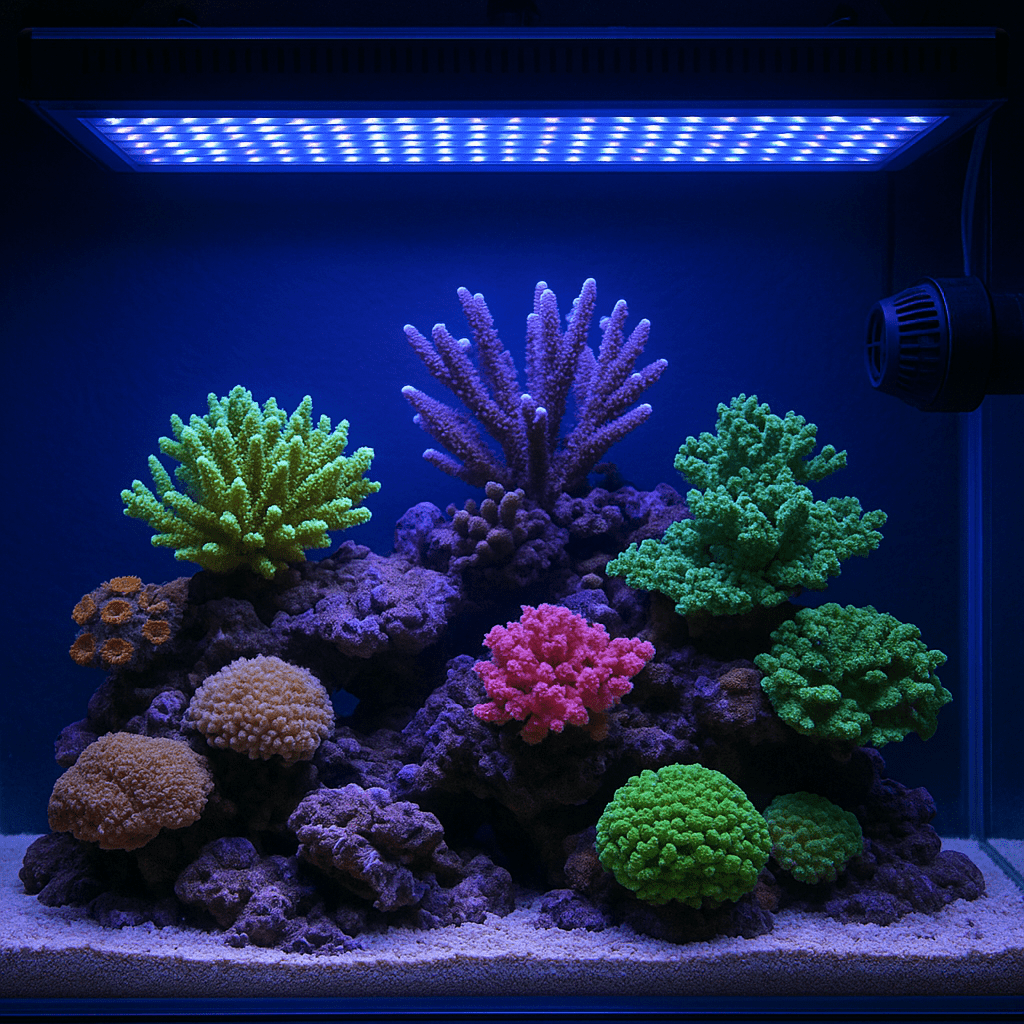
Best Filtration Systems
Best Filtration Systems for a Healthy Saltwater Aquarium Choosing the best filtration system for your saltwater aquarium is…
 By
By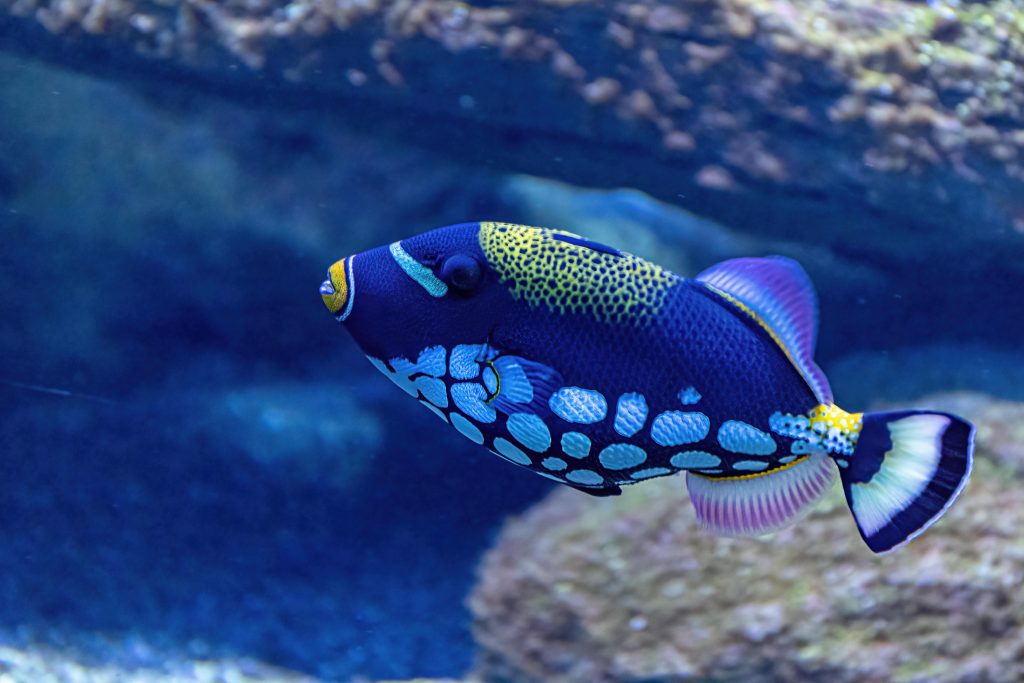
Clown Triggerfish (Balistoides Conspicillum)
Clown triggerfish are stunning but aggressive marine fish that need very large tanks, strong filtration, and careful tankmate…
[favorite_button]
My Bookmarks:
To see full list click here
[user_favorites user_id="" include_links="true" site_id="" post_types="" include_thumbnails="true" thumbnail_size="thumbnail" include_excerpt="false"]