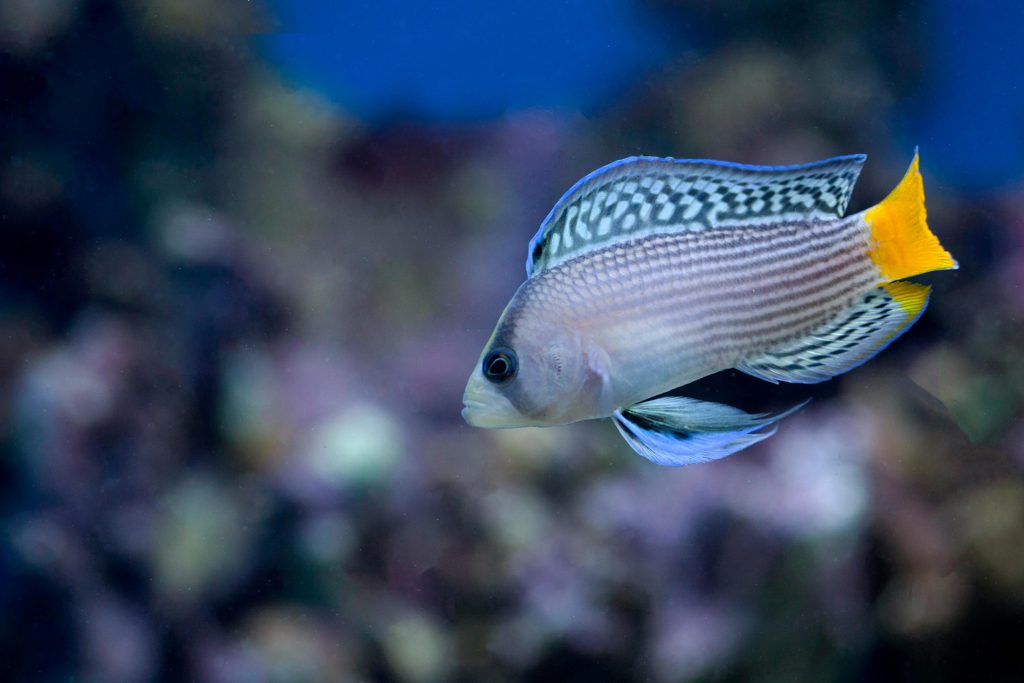
The Splendid Dottyback (Manonichthys splendens) is a striking reef fish. It shows bold color and confident behavior. It also needs a careful plan before you buy.
This guide covers tank size, feeding, and compatibility. It also includes practical steps for quarantine and long-term care. Use it to avoid common dottyback mistakes.
Natural behavior and tank setup
Splendid Dottybacks stay near rockwork and caves. They defend a small home range. In small tanks, this can become constant chasing. Plan space and hiding spots first.
Use a 30-gallon minimum for one fish. Aim for 40 gallons if you want tank mates. Provide at least 1 to 1.5 pounds of rock per gallon. Build several caves with line-of-sight breaks.
Keep water stable and oxygen-rich. Target 25–26°C (77–79°F), salinity 1.025, and pH 8.1–8.4. Keep ammonia and nitrite at 0 ppm. Keep nitrate under 10–20 ppm for best color.
Moderate flow works best in most tanks. Give calm pockets near caves. Use a tight lid or mesh top. Dottybacks can jump when startled. For more baseline planning, see reef tank setup basics.
- Add 3+ hiding spots per fish in the rockwork.
- Use a dim ramp-up light schedule for new arrivals.
- Keep alkalinity stable at 8–9 dKH to reduce stress.
Feeding, quarantine, and daily care
Splendid Dottybacks are meaty food eaters. Feed small portions twice daily. Use frozen mysis, finely chopped shrimp, and quality pellets. Rinse frozen foods to reduce phosphate spikes.
Watch the belly after meals. A slight, rounded belly is ideal. A pinched belly suggests internal parasites or poor intake. If the fish refuses food for 48 hours, reduce light and add more cover.
Quarantine is strongly recommended for 21–30 days. Use a 10–20 gallon bare tank with PVC hides. Match salinity and temperature to the display. Observe for ich spots, frayed fins, and rapid breathing.
During quarantine, keep ammonia under 0.25 ppm at all times. Use daily testing and water changes as needed. If you need a step-by-step plan, review our saltwater fish quarantine guide. It helps you set a repeatable routine.
- Feed twice daily, but remove uneaten food within five minutes.
- Soak foods in vitamins 2–3 times per week for recovery.
- Do 10% weekly water changes to keep nitrate controlled.
Compatibility, reef safety, and troubleshooting
This species can be semi-aggressive. Avoid tiny gobies and timid firefish in small tanks. Choose tank mates that can hold their own. Good options include larger clownfish, certain wrasses, and sturdy damsels.
Reef safety depends on the individual fish. Many ignore corals. Some may pick at small shrimp or very small crabs. If you keep ornamental shrimp, add them first and provide deep rock crevices.
Common problems include fin nips and hiding all day. Fin nips often mean territory pressure. Add more caves and rearrange rock to reset boundaries. Persistent hiding can mean bullying or too-bright lighting.
If you see rapid breathing, check oxygen and temperature first. Aim for strong surface agitation and stable 77–79°F. Also test for ammonia, even in mature tanks. For parameter targets, see reef tank water parameters.
- Add the dottyback last in community tanks to reduce dominance.
- Use an acclimation box for 2–3 days with new tank mates.
- Do not keep two in small tanks unless you have a proven pair.
The Splendid Dottyback can be a standout fish with the right setup. Give it rockwork, stable parameters, and a steady feeding routine. Plan compatibility early, and quarantine every new arrival.
With these steps, you can keep color strong and stress low. You also reduce chasing and disease risk. That leads to a calmer and healthier reef display.
Sources: FishBase species summaries (Manonichthys splendens); Scott W. Michael, Reef Fishes (Vol. 1); Fenner, The Conscientious Marine Aquarist.
Was this helpful?
Related Posts
Protein Skimmer Reef Tank Guide
Learn how a protein skimmer works, how to size one, and how to tune it for a cleaner,…
 By
By
Reef Aquarium Water Parameters
Learn the ideal reef aquarium water parameters, safe ranges, and how to keep salinity, alkalinity, nutrients, and pH…