

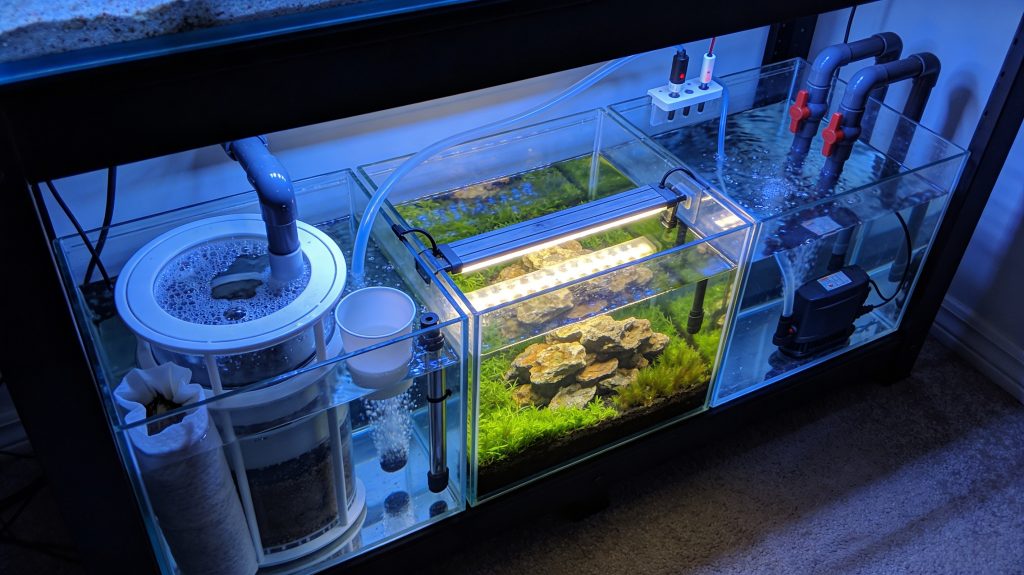
A sump refugium adds water volume, nutrient control, and a safe place for beneficial life. It can make a reef tank more stable and easier to manage. A good setup grows macroalgae, supports copepods, and helps reduce nitrate and phosphate without adding much daily work.
Many reef keepers hear the word refugium early in the hobby. It sounds advanced, but the concept is simple. A refugium is a protected chamber, usually inside a sump, that supports natural filtration. It often holds macroalgae, live rock rubble, sand, or all three. Water flows through it slowly enough for life to thrive. In return, the refugium helps export nutrients and boosts biodiversity. In this guide, you will learn how a sump refugium works, what equipment you need, how to size it, how to light it, and how to avoid the most common mistakes.
Quick Reference Table
| Category | Recommendation |
|---|---|
| Best purpose | Nutrient export, pod production, added stability |
| Common macroalgae | Chaetomorpha is the safest starter choice |
| Refugium size | 10% to 20% of total system volume works well |
| Flow rate | Low to moderate, enough to tumble algae gently |
| Light schedule | Reverse daylight cycle or 12 to 16 hours daily |
| Light spectrum | Plant or refugium LED with strong red spectrum |
| Harvest schedule | Trim macroalgae every 1 to 3 weeks |
| Main benefits | Lower nutrients, higher pod population, pH support |
| Main risks | Detritus buildup, algae die-off, poor flow, pests |
This table gives you the basics. The best setup still depends on your tank goals. A soft coral reef, SPS tank, and fish-only system may use a refugium differently. The details below will help you build one that fits your system.
What a Sump Refugium Does
A sump refugium is a low-stress zone inside your filtration system. It is separated from fish and many hungry invertebrates. That protection allows pods, worms, and microfauna to reproduce. Some of that life enters the display and becomes food for corals and fish. This is especially useful for mandarins and other pod hunters.
The refugium also removes nutrients through macroalgae growth. As algae grows, it consumes nitrate and phosphate. When you harvest part of that algae, you physically export those nutrients. This is the core idea behind natural nutrient control. A refugium can also help stabilize pH when lit at night. That happens because the algae consumes carbon dioxide while your display lights are off.
It is not a magic fix. A refugium will not solve overfeeding, poor maintenance, or weak export elsewhere. But it is a powerful support tool. It works best as part of a balanced reef system.
Natural Habitat Inspiration
Refugiums mimic sheltered marine zones. In nature, lagoon edges, seagrass beds, rubble fields, and protected reef flats support dense life. Water moves through these areas, but not with extreme force. Nutrients are available. Small crustaceans hide among algae and rock. Juvenile animals use these places as safe nursery grounds.
Your sump refugium copies that pattern on a small scale. Macroalgae acts like a marine plant bed. Rock rubble creates hiding spaces. Slower flow allows tiny organisms to settle and reproduce. This is why a refugium can feel so alive compared with a sterile filter chamber. It is not just a nutrient box. It is a miniature ecosystem.
That natural approach is one reason many reef keepers prefer refugiums over purely mechanical solutions. They add resilience. They also make the system more biologically complete.
Aquarium Setup and Sump Layout
The ideal sump refugium sits in a dedicated chamber. Most hobbyists place it after mechanical filtration and before the return pump. This keeps large debris out while still allowing pods and dissolved nutrients to reach the refugium. Some systems place the refugium first for pod protection. That can work too, but detritus buildup is often higher.
A useful target is 10% to 20% of total system volume. Bigger is usually better. Even a small chamber can still help. A compact all-in-one sump may only have room for a basket with macroalgae. That is still worthwhile. If you are building a sump from scratch, leave enough room for algae growth and easy harvesting.
Simple is best. You need a chamber, stable water depth, a refugium light, and a way to keep algae from clogging the return section. Egg crate, baffles, or mesh screens help. Avoid overcomplicated designs at first. A clean, accessible refugium is easier to maintain and more likely to succeed.
Step-by-Step Sump Refugium Setup
- Choose the refugium chamber in your sump. Pick an area with stable water level.
- Install mechanical filtration before it if possible. Filter socks or roller mats reduce detritus.
- Add a light designed for macroalgae growth. Mount it securely and shield nearby equipment.
- Select your media. Chaetomorpha is the easiest starting macroalgae. Add a small amount first.
- Optional: add a little live rock rubble. This increases surface area and pod habitat.
- Set flow to low or moderate. The algae should move gently, not blast around.
- Run the light on a reverse schedule. Many hobbyists start with 12 hours nightly.
- Test nitrate and phosphate weekly. Watch how the refugium changes nutrient levels.
- Harvest excess algae regularly. Remove only part of the mass each time.
- Clean detritus from the chamber during water changes. This prevents nutrient traps.
This process is simple, but patience matters. Refugiums often take a few weeks to settle in. Macroalgae may pause before it starts growing well. That is normal if nutrients, light, and flow are still balancing out.
Best Refugium Media and Macroalgae Choices
Chaetomorpha is the most common refugium macroalgae for good reason. It grows fast, rarely attaches to surfaces, and is easy to harvest. It also has a lower risk of going sexual than Caulerpa. For beginners, Chaeto is usually the best first choice.
Caulerpa can grow very fast and remove nutrients efficiently. It also comes with risks. Some species can release stored nutrients and reproductive material into the water if stressed. That event is often called going sexual. Strong pruning and steady lighting reduce the risk, but many reef keepers still avoid it.
Live rock rubble is optional. It gives pods and worms more habitat, but it also traps detritus. Bare-bottom refugiums are easier to clean. Sand beds are less common today. Deep sand beds can work, but they require planning and long-term care. For most modern reef tanks, a bare-bottom refugium with Chaeto is the easiest and safest setup.
Lighting Requirements
Refugium lighting should be strong enough to grow macroalgae consistently. It does not need to look pretty. It needs the right spectrum and enough intensity. Many successful refugium lights use strong red and warm white output. Dedicated refugium LEDs usually outperform spare display lights.
Start with a 12-hour reverse daylight schedule. That means the refugium light turns on when the display light turns off. This can reduce nighttime pH swings. Some hobbyists run 16 hours or even 24 hours. Longer schedules can increase growth, but they may also stress some algae. If you use Caulerpa, longer lighting is often used to reduce sexual events.
Watch the algae itself. Pale color, breakup, or no growth often means weak light, low nutrients, or poor iron availability. Dark, dense growth with steady expansion usually means conditions are good. Clean salt spray from the light regularly. Dirty lenses reduce output fast.
Water Flow
Refugiums need movement, but not chaos. Low to moderate flow works best in most systems. The goal is to bring nutrients and oxygen to the algae while preventing dead spots. Chaeto often does best when it tumbles gently. Constant tumbling is nice, but not required.
If flow is too weak, detritus settles and the algae can smother underneath. If flow is too strong, pods get flushed out quickly and algae may break apart. A small feed pump or manifold line can help fine-tune the chamber. In many standard sumps, the normal sump flow is enough.
Look for signs of poor circulation. Brown sludge, cyanobacteria, and compacted algae mats often point to weak movement. Add a small internal pump only if needed. Keep the chamber simple and easy to clean.
Feeding, Nutrients, and Refugium Performance
A refugium needs nutrients to grow macroalgae. That sounds obvious, but it causes many problems. If nitrate and phosphate are already near zero, the algae may starve. In ultra-low nutrient tanks, a refugium can fail even with strong lighting. Sometimes the solution is not more light. It is more available nutrients.
Feed fish consistently and test often. Many reef tanks do well with nitrate around 2 to 15 ppm and phosphate around 0.03 to 0.10 ppm. There is no perfect number for every tank. Stability matters more than chasing one target. If your refugium strips nutrients too hard, coral color may fade. Growth can slow. In that case, reduce photoperiod or harvest more aggressively.
Trace elements can matter too. Iron is often discussed because macroalgae uses it for growth. If Chaeto stalls despite adequate nutrients and light, low iron may be part of the issue. Dose carefully and test when possible.
Compatibility With Reef Fish, Corals, and Invertebrates
A sump refugium is compatible with almost any reef system. It is especially helpful in tanks with pod-eating fish. Mandarins, scooter dragonets, and some wrasses benefit from the extra live food. Coral tanks also benefit from the added stability and dissolved nutrient control.
The main compatibility concern is indirect. A very efficient refugium can lower nutrients too much for some soft corals and LPS. This is common in lightly stocked tanks. If corals look pale or stop extending well, test nitrate and phosphate before making big changes. The refugium may be working too well.
Some hobbyists place snails or small hermits in the refugium. That can help with film algae and detritus. Avoid animals that will destroy the macroalgae or eat too many pods. The chamber should remain a protected zone first.
Propagation and Harvesting
How to Harvest Macroalgae
Harvesting is how nutrient export actually happens. If you let the algae fill the chamber forever, growth slows and the nutrient benefit drops. Remove a portion every one to three weeks. Many reef keepers remove about one-third of the mass at a time. This keeps the algae actively growing.
How to Share or Propagate Chaeto
Chaeto propagation is simple. Separate a healthy portion and place it in another established refugium. Rinse lightly in old tank water if it holds debris. Inspect for pests before sharing with another hobbyist. This is one easy way to seed a new reef system with pods and beneficial microfauna.
Common Problems
Why is my Chaeto not growing?
The usual causes are weak light, low nitrate, low phosphate, poor flow, or low iron. Start by testing nutrients. If both nitrate and phosphate are near zero, the algae may be starving. If nutrients are available, improve lighting and check for detritus buildup. Healthy Chaeto should feel springy and look clean.
Why is the refugium full of detritus?
Detritus collects when flow is too weak or mechanical filtration is poor. Add or improve filter socks, floss, or a roller mat before the refugium. During water changes, siphon the chamber bottom. Bare-bottom refugiums are much easier to keep clean than rubble-heavy designs.
Why did my macroalgae turn white or melt?
This often points to sudden stress. Common triggers include weak nutrients, overheating, poor light, or sudden chemistry changes. Remove decaying algae quickly. Test nitrate, phosphate, salinity, and temperature. Replace only after the cause is fixed.
Can a refugium lower nutrients too much?
Yes. This happens in lightly stocked tanks or systems with strong skimming and carbon dosing. If nutrients bottom out, shorten the refugium light cycle or harvest more often. Some tanks need only a small refugium photoperiod to stay balanced.
Frequently Asked Questions
Do I need a refugium for a reef tank?
No. Many successful reef tanks run without one. A refugium is helpful, not mandatory. It adds stability and natural filtration, which many hobbyists value.
What is the best macroalgae for beginners?
Chaetomorpha is usually the best beginner choice. It is easy to manage and simple to harvest. It also has fewer risks than many Caulerpa species.
Should I use sand in my refugium?
Most reef keepers skip sand today. Bare-bottom refugiums are easier to clean and maintain. Sand can work, but it adds complexity and can trap waste.
How long should refugium lights stay on?
Start with 12 hours on a reverse schedule. Adjust based on algae growth and nutrient trends. Some tanks need more time. Others need less.
How often should I harvest Chaeto?
Most tanks need harvesting every one to three weeks. The exact schedule depends on growth rate. Remove enough to keep the algae actively expanding.
Final Tips for Long-Term Success
Keep your sump refugium simple. Use strong lighting, steady flow, and easy access for cleaning. Test nutrients before making changes. Do not expect instant results. Refugiums work best over time. They reward consistency more than constant tweaking.
If you are building a new reef system, a sump refugium is worth considering. It adds flexibility and a natural safety net. If you already run a sump, adding one is often straightforward. Start small, observe closely, and let the biology do the work.
Related reading: reef tank parameter guide, chaeto in refugium, how to lower nitrate in a reef tank, copepods for reef tanks, reef sump setup guide.
Was this helpful?
Related Posts
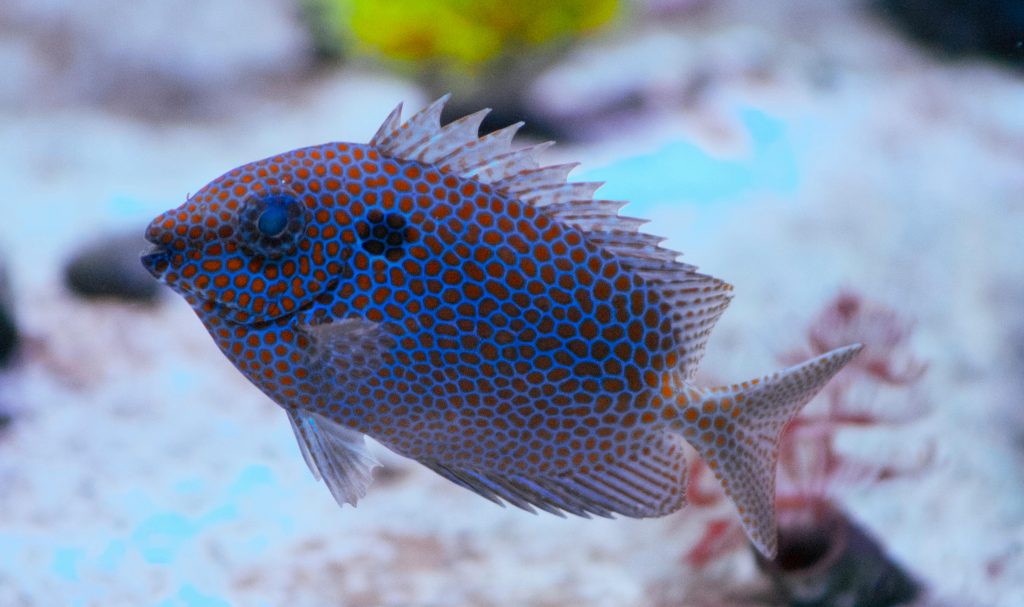
Gold Spotted Rabbitfish (Siganus Punctatus)
Gold Spotted Rabbitfish care includes large tanks, heavy algae feeding, and caution with corals. Learn tank size, diet,…
 By
By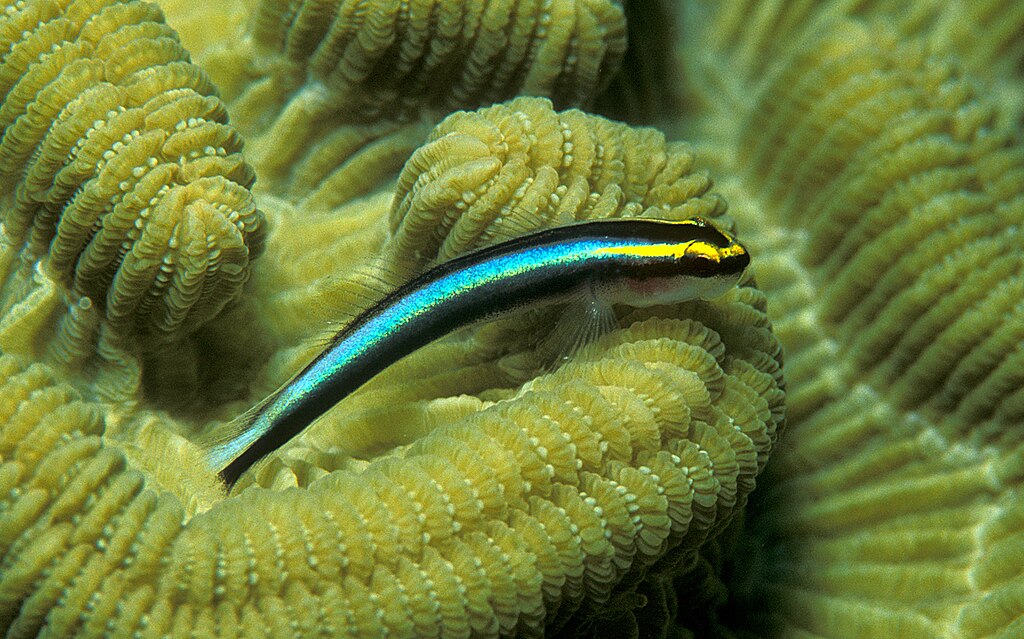
Sharknose Goby (Elacatinus evelynae)
Sharknose Goby care is simple in stable reef tanks. Learn feeding, tank setup, compatibility, and common problems for…
[favorite_button]
My Bookmarks:
To see full list click here
[user_favorites user_id="" include_links="true" site_id="" post_types="" include_thumbnails="true" thumbnail_size="thumbnail" include_excerpt="false"]