

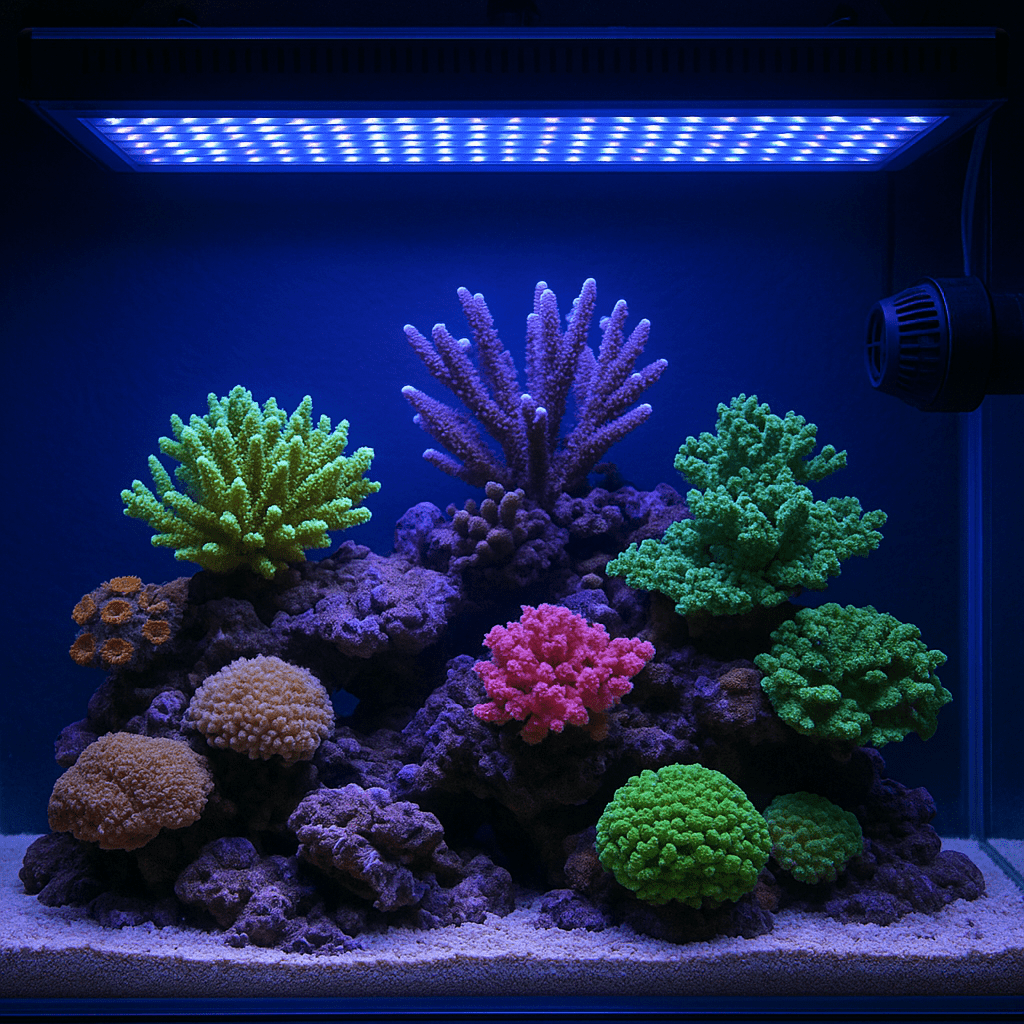
A reef tank water change does more than remove dirty water. It resets trace elements, lowers nutrients, and helps stabilize coral health. A good checklist prevents rushed mistakes. It also keeps salinity, temperature, and alkalinity from swinging during routine maintenance.
This guide gives you a practical reef aquarium water change checklist you can follow every time. You will learn what to prepare before the change, what to test, how much water to replace, and what to watch after the job is done. The goal is simple. Make water changes safer, faster, and more consistent for fish, corals, and invertebrates.
Quick Reference Table
| Task | What to Check | Target or Tip |
|---|---|---|
| Mix new saltwater | Salinity and temperature | Match display tank closely |
| Test key parameters | Alkalinity, nitrate, phosphate | Know your baseline before changing water |
| Shut down equipment | Return pump, skimmer, ATO | Prevent overflow and salinity drift |
| Remove old water | Detritus from sump and bare spots | Vacuum waste without disturbing corals |
| Add new water slowly | Flow rate and temperature | Avoid sudden swings |
| Restart equipment | Water level and pump operation | Check for normal flow and skimmer behavior |
| Observe livestock | Polyp extension and fish breathing | Watch for stress over the next hour |
Use this table as a fast pre-flight check before every maintenance session.
Why a Water Change Checklist Matters
Many reef problems start during routine maintenance. The issue is often not the water change itself. The issue is poor preparation. New saltwater may be too cold. Salinity may be off. The auto top off may stay on and dilute the tank. A checklist prevents these common errors.
Consistency matters more than perfection. Corals handle stable conditions better than frequent swings. Even a small mismatch in alkalinity can irritate sensitive SPS corals. Large temperature shifts can stress fish. A forgotten heater in a mixing bin can also create trouble.
A written process saves time. It also reduces decision fatigue. You do not need to remember every step while holding hoses and buckets. Follow the same order each time. Your reef will respond better. Your maintenance sessions will feel easier and more controlled.
Before the Water Change
Start by deciding how much water you plan to change. Most reef keepers change 10 to 15 percent weekly or every two weeks. Heavier nutrient systems may need more. Stable low nutrient systems may need less. Avoid huge changes unless you are correcting a clear problem.
Mix your saltwater at least several hours ahead. Overnight is even better. This gives the salt time to dissolve fully. It also lets pH and gas exchange settle. Use a clean food-safe container. Add a heater and a small pump for circulation. Always add salt to water. Never add water to dry salt.
Test the new water before use. Check salinity with a calibrated refractometer or digital meter. Confirm temperature with a reliable thermometer. If you keep demanding corals, check alkalinity too. Matching the display tank reduces stress. This is especially important in SPS-dominant reef tanks.
Water Change Equipment Checklist
Gather all tools before you begin. This keeps the process smooth. You will need mixed saltwater, a heater, a mixing pump, buckets or tubing, and towels. Keep a refractometer nearby. A turkey baster or small powerhead helps blow detritus from rockwork before removal.
Have test kits ready if you plan to check parameters before and after. Keep gloves on hand if you work around bristleworms, palythoas, or sharp rock. A dedicated siphon hose is useful for vacuuming the sump or substrate. Use separate tools for aquarium work only. Household residues can contaminate a reef tank.
If your system has an auto top off, know how to disable it first. The same goes for dosing pumps. This step is often missed. It can create salinity drift or dose supplements into a low-water sump. That leads to unstable chemistry after the water change.
Step-by-Step Water Change Checklist
- Check the display tank temperature and salinity.
- Match the new saltwater to those values.
- Turn off the return pump, skimmer, ATO, and dosing pumps.
- Shut down heaters if water level will drop below safe depth.
- Blow detritus from rockwork with a baster or powerhead.
- Siphon old water from the sump, bare bottom areas, or dirty substrate zones.
- Remove only the planned volume. Do not guess.
- Add new saltwater slowly to avoid stirring sand or shocking corals.
- Restart the return pump and confirm normal sump level.
- Turn the skimmer back on after the water level stabilizes.
- Re-enable the ATO and dosing pumps.
- Observe fish and corals for at least 15 to 30 minutes.
This order works well for most reef systems. You can adjust it for your setup. The key is keeping the sequence consistent.
How Much Water Should You Change?
There is no perfect number for every reef tank. The right amount depends on stocking, feeding, filtration, and coral demand. For many mixed reefs, 10 percent weekly works well. It is easy to manage. It also avoids major swings. Smaller, regular changes are usually safer than large, infrequent ones.
If nitrate and phosphate stay elevated, a water change can help. Still, do not expect it to solve the root cause alone. Overfeeding, weak export, and detritus buildup need attention too. A checklist helps you remove waste while changing water. That gives better results than simply swapping water.
Large emergency changes have a place. They can help after contamination, major dosing mistakes, or sudden ammonia issues. In those cases, parameter matching becomes even more important. Sudden chemistry changes on top of an existing problem can worsen stress.
Water Chemistry to Watch
Salinity and temperature come first. These are the fastest ways to stress livestock during a water change. After that, focus on alkalinity. Reef salt mixes can vary. If your tank runs at 7.5 dKH and the new water is 10 dKH, sensitive corals may react poorly. This is common in SPS systems.
Nitrate and phosphate are useful to track before the change. They show whether your schedule is working. Calcium and magnesium matter too, though they do not need checking every single time in all tanks. If your reef uses heavy dosing, compare fresh saltwater values to your display. Know what your salt mix adds.
Keep notes after each maintenance session. Record salinity, alkalinity, and the water change volume. Patterns become easier to spot. This simple habit improves long-term reef stability.
Common Problems
Why do corals close after a water change?
Brief coral retraction can be normal. Stronger reactions usually point to a mismatch. Check salinity, temperature, and alkalinity first. Also consider residue in buckets or pumps. If you stirred deep detritus, the tank may have experienced a temporary nutrient or bacterial spike.
Next time, match parameters more closely and add water slower. Clean your mixing gear well. Avoid blasting sand beds too aggressively during the change.
Why is my skimmer overflowing after a water change?
This is very common. Fresh salt mixes can temporarily change surface tension. Additives, filter socks, and epoxy can also trigger overflow. Lower the skimmer air or raise the cup for a short time. Let the system settle for a few hours.
Always restart the skimmer only after the sump water level returns to normal. This prevents false tuning problems.
Why did salinity drop after the water change?
The usual cause is the ATO staying on during water removal. It adds fresh water while the sump level falls. Another cause is poorly mixed saltwater. Measure both the tank and new water before starting. Turn the ATO off every time. Then turn it back on only after the system is fully running again.
Why are nitrate and phosphate still high?
A water change can dilute nutrients, but it cannot fix constant input. Check feeding, mechanical filtration, and detritus traps. Clean the sump. Rinse filter socks often. Review export methods like skimming, refugiums, or media. Water changes work best as part of a full nutrient control plan.
Best Practices for Safer Water Changes
Keep dedicated mixing containers and hoses. Label them clearly. Calibrate your salinity tool often. Heat and circulate new water long enough. Never rush a large change before work or bed. Reef mistakes happen when you feel pressed for time.
Try to remove waste while siphoning. Target dead spots in the sump. Lift loose debris from bare areas behind rockwork. If you run sand, vacuum lightly in sections over time. Do not deep clean the whole bed at once. That can release trapped waste and irritate the tank.
Most important, keep your schedule realistic. A smaller water change done every week beats a perfect plan you never follow. Long-term reef success comes from repeatable habits.
Frequently Asked Questions
How often should I do a reef tank water change?
Most reef tanks do well with a 10 to 15 percent change weekly or biweekly. Heavy bio-load systems may need more frequent changes.
Should new saltwater match tank alkalinity?
Yes, especially in SPS tanks. A large alkalinity difference can stress corals, even if salinity and temperature match.
Can I do a water change right after feeding corals?
It is better to wait. Let corals and fish consume food first. Otherwise, you may remove food before it benefits the tank.
Do water changes replace dosing?
Not in most established reef tanks. Water changes help, but growing corals often consume alkalinity, calcium, and magnesium faster than changes can replace them.
What is the biggest water change mistake?
Parameter mismatch is the biggest one. Salinity, temperature, and alkalinity errors cause many post-change problems.
Helpful FancyReef Guides
- reef tank salinity guide
- how to lower nitrate in a reef tank
- reef tank alkalinity explained
- best reef aquarium test kits
- beginner reef tank maintenance schedule
A simple water change checklist protects your reef from avoidable stress. Prepare your saltwater well. Match key parameters closely. Follow the same steps every time. That routine will keep your reef cleaner, more stable, and much easier to manage.
Was this helpful?
Related Posts
Reef Aquascape Basics
Learn reef aquascape basics for better flow, coral placement, and a cleaner, more natural-looking saltwater aquarium.
 By
ByOur Lighting Schedule Guide
Our lighting schedule guide helps you set reef-safe photoperiods, ramps, and intensity targets to support coral growth and…
[favorite_button]
My Bookmarks:
To see full list click here
[user_favorites user_id="" include_links="true" site_id="" post_types="" include_thumbnails="true" thumbnail_size="thumbnail" include_excerpt="false"]