

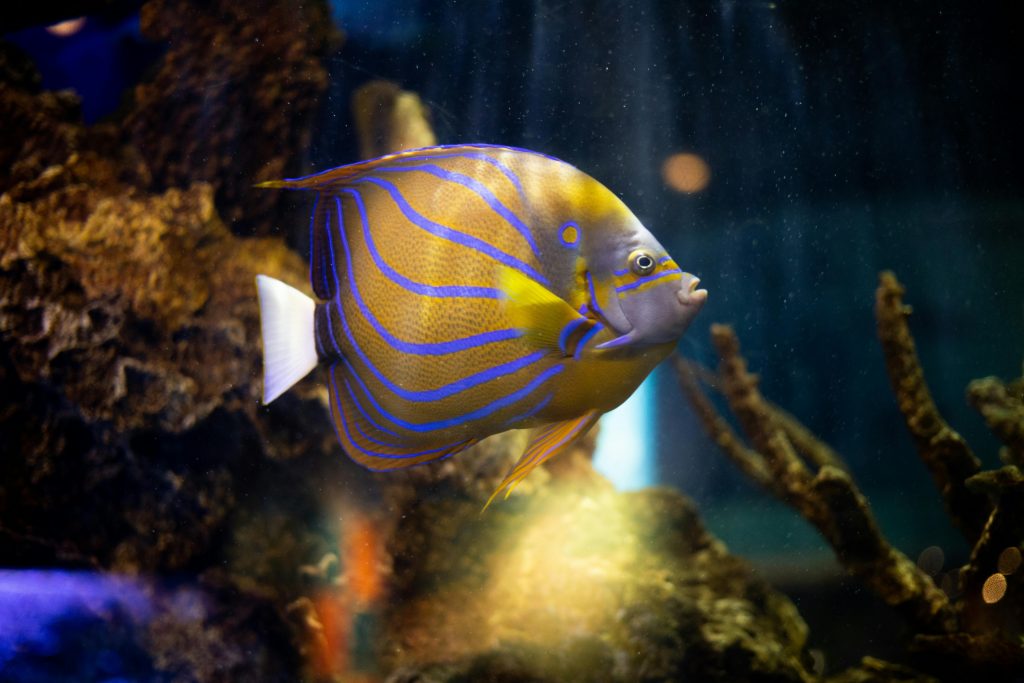
The Annularis Angelfish is a stunning large marine angelfish with bold blue and yellow patterning. It is best kept by aquarists with large, stable tanks, strong filtration, and a plan for its adult size and semi-aggressive behavior.
The Annularis Angelfish, Pomacanthus annularis, is one of the most recognizable show fish in the hobby. Juveniles display dramatic curved blue and white bands. Adults develop a richer golden body, electric blue scale edging, and the famous ring marking that gives the species its common name. This fish can become the visual centerpiece of a large marine aquarium. It also brings real husbandry challenges. In this guide, you will learn tank size, diet, reef compatibility, water quality needs, behavior, and common problems. You will also learn whether this species fits your setup before you buy one.
Annularis Angelfish Quick Care Facts
| Scientific name | Pomacanthus annularis |
| Common names | Annularis Angelfish, Blue Ring Angelfish |
| Care level | Moderate to advanced |
| Temperament | Semi-aggressive |
| Adult size | Up to 12 inches |
| Minimum tank size | 180 gallons |
| Diet | Omnivore with sponge-based foods |
| Reef safe | With caution |
| Temperature | 75-79°F |
| Salinity | 1.024-1.026 |
| pH | 8.1-8.4 |
| Lifespan | 10 years or more |
These quick facts only tell part of the story. This species grows large, eats heavily, and needs room to establish territory. It also needs excellent water quality. Hobbyists who plan ahead usually have much better long-term success.
Natural Habitat
The Annularis Angelfish occurs across the Indo-Pacific region. It is commonly found around India, Sri Lanka, Southeast Asia, and parts of Indonesia. In nature, it lives on coastal reefs, lagoons, and reef slopes. Juveniles often hide among rockwork, roots, or sheltered reef structure. Adults spend more time in open reef areas with caves and overhangs.
This habitat matters in captivity. These fish are used to complex structure and many grazing opportunities. They also move through large territories. That is why small tanks often lead to stress, pacing, aggression, or poor feeding response. Wild Annularis Angelfish feed on sponges, tunicates, algae, and encrusting organisms. A good captive diet should reflect that variety. When you understand where the fish comes from, its care becomes much easier to plan.
Aquarium Setup
A 180-gallon tank is the practical minimum for an adult Annularis Angelfish. Larger is better. A 220-gallon or bigger system gives more swimming space and better dilution of waste. This species becomes thick-bodied and active with age. It needs long open areas for cruising and solid rockwork for security.
Build an aquascape with caves, arches, and shaded retreat zones. Leave open channels around the rockwork. Avoid stacking rock too tightly against the glass. The fish should be able to move around the structure without feeling trapped. Strong filtration is essential. Use an oversized protein skimmer and keep nutrient export consistent. Stable salinity and temperature matter more than chasing perfect numbers. Quarantine is strongly recommended before introduction. You can read more about reef tank setup basics and marine fish quarantine if you are planning a large display.
Lighting Requirements
The Annularis Angelfish does not need intense lighting for its own health. It adapts well to moderate or bright aquarium lighting. Lighting choice mostly depends on the rest of the tank. In fish-only systems, moderate lighting is enough. In mixed reefs, the fish can live under stronger reef lighting if it has shaded areas.
Provide caves and overhangs so the fish can retreat when needed. New specimens often feel exposed under very bright lights. Dimmer acclimation periods can help reduce stress during the first week. If the fish hides constantly, review your aquascape and tank mates. Lighting alone is rarely the problem. Stress, aggression, or poor acclimation is more likely. If your display includes corals, keep the fish’s comfort in mind when arranging high-light areas and shaded zones.
Water Flow
Moderate to strong water movement works well for this species. The goal is not direct blasting flow. The goal is broad, oxygen-rich circulation across the tank. Good flow helps export waste, supports gas exchange, and prevents dead spots around large rock structures.
Avoid pointing strong powerheads directly at the fish’s favorite cave or resting area. That can create constant stress. Instead, create varied flow zones. This fish will choose where it feels comfortable. In larger tanks, alternating flow patterns often work best. They keep detritus suspended and mimic more natural movement. Stable oxygen levels are important, especially in warm systems or tanks with heavy feeding. Large angelfish consume a lot of oxygen and produce a lot of waste, so circulation should never be an afterthought.
Feeding
Feeding is one of the biggest keys to long-term success. Annularis Angelfish are omnivores, but they need more than generic flakes. Offer a varied diet with sponge-based angelfish preparations, frozen mysis, enriched brine, chopped seafood, marine algae, and high-quality pellets. Feed juveniles two to three times daily. Feed adults at least twice daily.
Variety helps prevent nutritional gaps. It also keeps the fish interested in food. Many large angels do best when sponge material is included often. A fish that eats aggressively usually settles faster and resists disease better. Use nori sheets for extra grazing, even though this is not a tang. Remove uneaten food promptly to protect water quality. If you want to improve your feeding plan, see our guides on best food for marine angelfish and how to lower nitrates in a reef tank.
Compatibility
The Annularis Angelfish is semi-aggressive and territorial. It usually does best with other robust tank mates. Good companions include larger tangs, peaceful triggers, larger wrasses, foxfaces, and similarly sized community fish that can handle themselves. Avoid very timid fish. They may be bullied, especially once the angelfish settles in.
Use caution with other large angelfish. Mixing angels can work in very large tanks, but conflict is common. Add the Annularis later if possible. Reef compatibility is also mixed. Some individuals ignore many corals. Others nip at large polyp stony corals, zoanthids, clam mantles, and soft corals. There is no guarantee. In a reef tank, this fish is always a calculated risk. Hobbyists who keep one in mixed reefs should watch coral behavior closely and have a backup plan. Learn more about reef safe angelfish choices before adding any large angel to a coral system.
Step-by-Step Acclimation Guide
Large angelfish often struggle when rushed into a display. A careful process improves survival.
- Prepare a quarantine tank with stable salinity, hiding places, and strong aeration.
- Match temperature slowly after arrival.
- Use drip acclimation if salinity differs significantly.
- Transfer the fish gently without adding store water to the tank.
- Keep lights dim for the first day.
- Offer food within several hours, but do not overfeed.
- Observe breathing, swimming, and body condition daily.
- Treat parasites if symptoms appear during quarantine.
- Move the fish to the display only after it is eating well and behaving normally.
Acclimation stress causes many early losses. Patience matters more than speed. A fish that starts strong usually adapts much better in the long run.
Propagation or Breeding
Can Annularis Angelfish Be Bred in Home Aquariums?
Breeding this species in home aquariums is extremely rare. Like many large marine angelfish, they are pelagic spawners in nature. They release eggs into open water. Their courtship behavior also requires space that most hobby systems cannot provide.
Why Captive Breeding Is Difficult
The biggest issues are adult size, pair formation, larval rearing, and food demands for tiny fry. Even public aquariums and advanced breeders face serious challenges. For most hobbyists, propagation is not a realistic goal. Focus on excellent care, nutrition, and long-term health instead.
Common Problems
Why Is My Annularis Angelfish Not Eating?
New imports often refuse food from stress. Poor acclimation, bullying, and internal parasites are also possible causes. Offer several food types, including sponge-based frozen foods. Reduce aggression from tank mates. Keep lighting lower during the first few days. If the fish still refuses food after several days, investigate disease and review quarantine conditions.
Why Is It Hiding All the Time?
Hiding usually means the fish feels unsafe. The tank may be too small, too bright, or too aggressive. Add more rock cover and check for harassment. Test ammonia, nitrite, nitrate, and salinity. Poor water quality can also cause withdrawn behavior.
Why Is It Nipping Corals?
This is common with many large angelfish. Hunger can increase nipping, but some fish simply develop a taste for coral tissue or clam mantles. Feed a more varied diet and increase feeding frequency slightly. If damage continues, the fish may need to move to a fish-only system.
Why Is It Breathing Fast?
Rapid breathing can signal ammonia, low oxygen, flukes, ich, or severe stress. Test water immediately. Increase aeration. Observe for flashing, spots, or excess mucus. Fast action matters because large angels decline quickly when gill function is compromised.
Frequently Asked Questions
Is the Annularis Angelfish reef safe?
It is reef safe with caution at best. Some individuals behave well. Others nip corals and clams. Risk increases in mixed reefs with fleshy corals.
How big does an Annularis Angelfish get?
Adults can reach about 12 inches. Their body mass also becomes impressive. Plan for adult size from the start.
What is the minimum tank size for an Annularis Angelfish?
A 180-gallon tank is the minimum for long-term care. Bigger tanks provide better swimming space and more stable water quality.
What does an Annularis Angelfish eat?
Feed sponge-based angelfish foods, frozen mysis, chopped seafood, marine algae, and quality pellets. Variety is important.
Is the Annularis Angelfish good for beginners?
Usually no. It is better for intermediate or advanced hobbyists with large tanks and solid marine fish experience.
Final Thoughts
The Annularis Angelfish is a spectacular display fish, but it is not an impulse purchase. It needs space, structure, stable water, and a varied diet. It may also challenge coral keepers with occasional nipping. In the right tank, though, it becomes a bold and beautiful centerpiece that rewards careful planning. If you can meet its adult needs, Pomacanthus annularis can be one of the most impressive angelfish in the hobby.
Was this helpful?
Related Posts
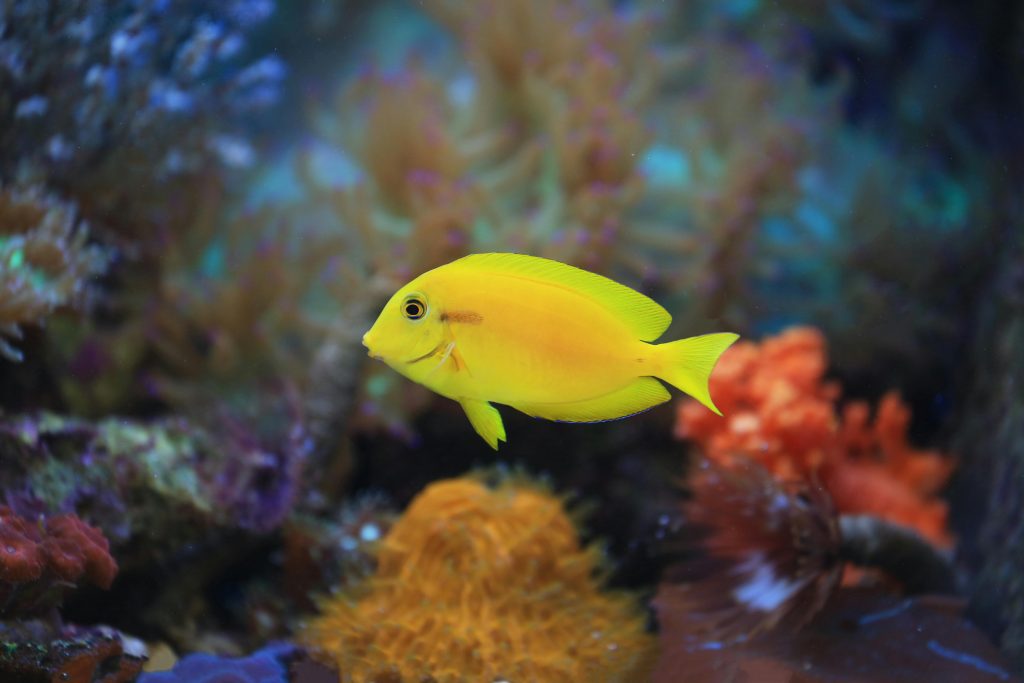
Juvenile Orange Shoulder (acanthurus Olivaceus)
Juvenile orange shoulder tangs are bright, hardy, and reef safe, but they grow large and need a spacious…
 By
By
Best Filtration Systems
Best Filtration Systems for a Healthy Saltwater Aquarium Choosing the best filtration system for your saltwater aquarium is…
[favorite_button]
My Bookmarks:
To see full list click here
[user_favorites user_id="" include_links="true" site_id="" post_types="" include_thumbnails="true" thumbnail_size="thumbnail" include_excerpt="false"]