

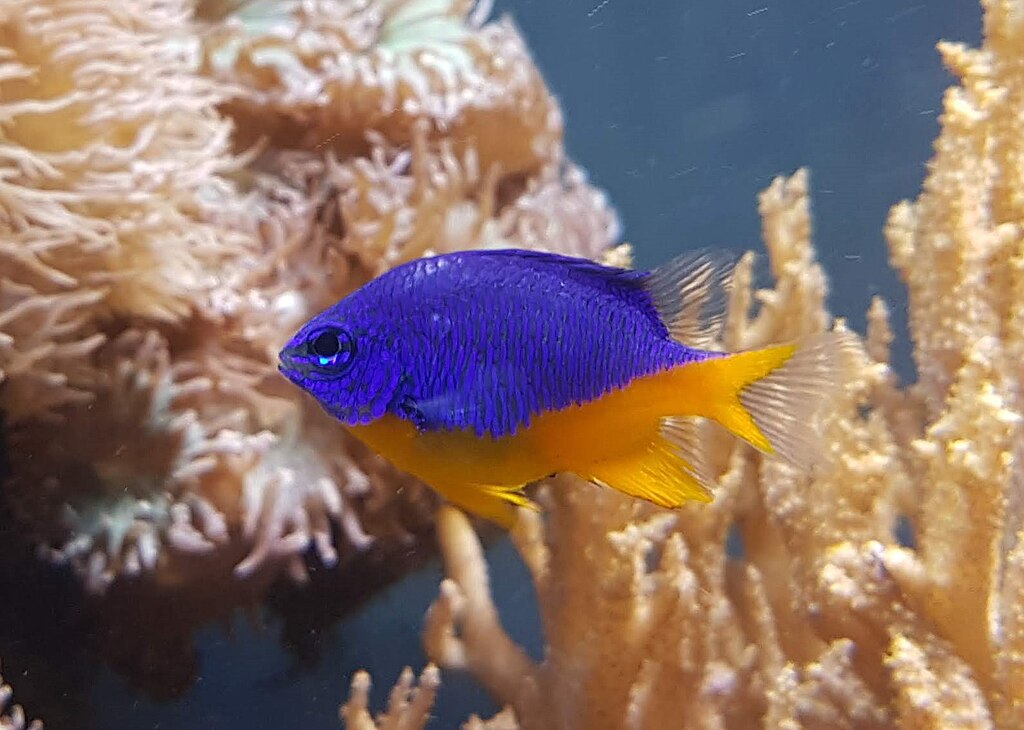
The Azure Damselfish is one of the best damselfish for reef tanks. It stays small, shows bright color, and adapts well to captive life. It is still a damselfish, though. That means temperament matters. With the right tank size, rockwork, and tank mates, Chrysiptera hemicyanea can be a hardy and attractive addition for beginners and experienced reef keepers alike.
This guide covers Azure Damselfish care in practical terms. You will learn about tank size, behavior, feeding, compatibility, and common problems. You will also see where this fish lives in nature and how that habitat shapes its aquarium needs. If you want a colorful blue-and-yellow reef fish that is active, durable, and affordable, this species deserves a close look.
Quick Reference Care Table
| Common name | Azure Damselfish |
| Scientific name | Chrysiptera hemicyanea |
| Care level | Easy |
| Temperament | Semi-aggressive |
| Adult size | About 2.5 to 3 inches |
| Minimum tank size | 30 gallons for one, larger for mixed communities |
| Diet | Omnivore |
| Reef safe | Yes |
| Temperature | 76 to 80°F |
| Salinity | 1.024 to 1.026 |
| pH | 8.1 to 8.4 |
| Flow | Moderate |
| Lighting | No special demand |
This species is often recommended as a better alternative to more aggressive damselfish. That is mostly true. Azure Damselfish are usually less hostile than three-stripe or domino damsels. Still, they can defend a cave or rock crevice with surprising confidence. Plan the tank around that behavior from the start.
Natural Habitat
Chrysiptera hemicyanea comes from the western Pacific. It is commonly found around Indonesia and nearby reef systems. In the wild, it lives in protected reef areas with rubble, branching coral, and rock crevices. These fish stay close to cover. They dart out to feed, then retreat when threatened.
This natural behavior explains much of their aquarium personality. Azure Damselfish like defined territories. They feel secure when they have holes and overhangs. Open tanks with little structure often increase stress and aggression. A reef tank with mature live rock suits them best. The rock gives them shelter and feeding surfaces. It also helps break lines of sight. That reduces chasing between tank mates.
In nature, they feed on small planktonic foods and algae-based material. They are not picky hunters. They are opportunistic feeders. That makes them easy to feed in captivity. It also means they stay active in the water column and around the rocks throughout the day.
Aquarium Setup
A single Azure Damselfish can live in a 30-gallon aquarium. Bigger is better for long-term stability. A 40-gallon breeder or larger gives you more room for aquascaping and compatibility. If you plan a mixed reef with other semi-aggressive fish, start larger. Extra space helps a lot with damselfish behavior.
Build the aquascape with caves, arches, and broken sight lines. Do not make one solid wall of rock. Create several territories instead. This fish will usually claim one area and patrol it. If every fish has a retreat, conflict stays lower. Stable water quality matters more than any special decor. Keep ammonia and nitrite at zero. Keep nitrate controlled. Good filtration and regular water changes are enough in most systems.
A covered tank is wise. Azure Damselfish are not the worst jumpers, but startled fish can launch. Keep salinity stable. Avoid sudden swings in temperature. Like most reef fish, they handle consistency better than perfection. If you are cycling a new tank, wait until it is fully mature before adding them. Hardy does not mean immune to poor conditions.
Lighting Requirements
Azure Damselfish have no special lighting requirement. They do well under standard reef lighting and under fish-only lighting. Your coral choices should drive the lighting plan, not this fish. That said, moderate reef lighting often shows their color best. The blue body and yellow belly look especially sharp under balanced spectrum lighting.
Very intense light is not harmful by itself if the fish has shade. In fact, access to shaded caves matters more than the exact PAR level. In brightly lit tanks, they often move between open water and dim rockwork. This is normal. It mirrors their natural reef behavior. If the fish hides constantly, lighting is usually not the only issue. Aggressive tank mates, lack of cover, or recent introduction are more likely causes.
If you run a coral-heavy system, provide overhangs and lower-light pockets. This helps the fish feel secure. It also creates a more natural display. For more reef planning basics, see: reef tank setup guide, reef aquarium aquascaping tips.
Water Flow
Moderate water flow works best for Azure Damselfish. They are active swimmers, but they do not need extreme current. In reef tanks, they usually adapt well to varied flow zones. They often hover near rock faces, dart through moderate current, and rest in calmer pockets. This is another reason to build a layered aquascape.
Aim for flow that keeps detritus suspended without blasting the fish from its shelter. Random flow patterns are ideal. Strong, direct laminar flow can make a small fish work too hard. If your corals require heavy flow, create protected areas behind rock structures. Watch the fish after powerhead changes. Fast breathing, constant hiding, or refusal to leave one cave can signal too much direct current.
Good flow also supports oxygenation and waste export. That helps all reef fish. Stable oxygen levels are especially important in warmer tanks. At night, make sure circulation remains adequate. Oxygen dips can stress fish long before test kits show obvious water quality problems.
Feeding
Azure Damselfish are easy to feed. They accept most prepared foods quickly. Offer a varied omnivorous diet for best color and health. Good staples include quality marine pellets, marine flakes, frozen mysis shrimp, frozen brine shrimp, finely chopped seafood, and foods with spirulina or other algae content.
Feed small portions once or twice daily. In active community tanks, two smaller feedings are often better. This reduces competition and helps shy fish eat. Do not rely on one food only. Variety supports immune function and keeps fish in breeding condition. These damselfish are bold feeders, so avoid overfeeding just because they always look hungry.
If the fish is new, start with frozen foods. Many newly imported fish respond faster to moving food. Once settled, transition to pellets for convenience. A healthy Azure Damselfish should show strong interest at feeding time. A sudden drop in appetite often points to stress, bullying, or disease. For more nutrition help, see: best foods for marine fish.
Compatibility
Azure Damselfish are reef safe with corals and most invertebrates. They do not nip corals in the usual sense. They are a good match for mixed reefs, soft coral tanks, and many LPS systems. The real issue is temperament. They can be pushy toward peaceful fish, especially in small tanks.
Good tank mates include clownfish, firefish in larger peaceful setups with caution, gobies, blennies, wrasses, cardinalfish, and many reef-safe dwarf angels in suitable tanks. Avoid combining them with very aggressive damsels unless the tank is large and carefully planned. Also avoid tiny, timid fish in cramped aquariums. The Azure may not injure them, but constant chasing causes chronic stress.
Add Azure Damselfish after very peaceful species when possible. This often reduces territorial dominance. In larger tanks, a single specimen is usually easiest. Pairs or groups can work, but aggression risk rises without enough space and structure. If your goal is a calm nano reef, choose carefully. Hardy fish can still become tank bullies. Helpful reads include: reef fish compatibility chart, best beginner saltwater fish.
Step-by-Step Guide to Adding an Azure Damselfish
1. Choose a healthy fish. Look for clear eyes, full fins, and steady breathing. The fish should respond to movement and show interest in food.
2. Quarantine first. A separate quarantine tank helps prevent ich, velvet, and bacterial issues from entering your display.
3. Match salinity carefully. Many store systems run lower salinity. Test it before a quick transfer.
4. Acclimate slowly. Temperature match first. Then use a measured drip or cup method if salinity differs.
5. Introduce with lights dimmed. This reduces immediate territorial responses from existing fish.
6. Feed lightly after release. A small feeding can distract established fish and encourage the newcomer to settle.
7. Watch the first week closely. Minor chasing is common. Constant attacks, torn fins, or refusal to leave hiding spots need action.
8. Adjust rockwork if needed. Small aquascape changes can break established territories and reduce aggression fast.
Propagation and Breeding
Can Azure Damselfish breed in captivity?
Yes, they can spawn in aquariums. Like many damselfish, they lay adhesive eggs on a cleaned surface near a territory. The male usually guards the nest. Spawning is more likely in stable, mature systems with excellent nutrition and low stress. Pairs form best in larger tanks with plenty of rock cover.
What makes breeding difficult?
The challenge is not always spawning. The challenge is raising larvae. The fry are tiny and need specialized first foods such as rotifers and later copepods or enriched baby brine. Most hobbyists do not attempt this unless they already raise marine fish larvae. Still, courtship and nest guarding are fascinating behaviors to observe in a home reef.
Common Problems
Why is my Azure Damselfish hiding?
New fish often hide for several days. That is normal. Longer-term hiding usually points to bullying, too little cover, poor acclimation, or disease. Check breathing rate and appetite. If the fish only hides when another fish approaches, compatibility is the likely issue.
Why is my Azure Damselfish aggressive?
Territorial behavior increases in small tanks and sparse aquascapes. One cave becomes a whole kingdom. Add more rock structure, increase visual barriers, and review stocking. In some cases, removing the aggressor and reintroducing later can help. Adding new fish after a damselfish has settled often causes conflict.
Why did the color fade?
Stress is the most common reason. Shipping, poor diet, harassment, and unstable water quality all reduce color. Test salinity, temperature, nitrate, and pH. Offer varied foods with marine proteins and algae content. Once the fish feels secure, color usually improves.
What diseases affect Azure Damselfish?
They can get marine ich, velvet, bacterial infections, and external parasites like any reef fish. Their hardiness can hide early symptoms. Quarantine remains the best defense. If one fish shows flashing, spots, or rapid breathing, assess the whole system quickly. Early treatment matters.
Frequently Asked Questions
Are Azure Damselfish good for beginners?
Yes. They are hardy, easy to feed, and reef safe. Beginners must still plan for their semi-aggressive nature.
How big does an Azure Damselfish get?
Most reach about 2.5 to 3 inches in captivity. They stay small but act bold.
Can Azure Damselfish live alone?
Yes. A single fish often works best in community reef tanks. Solitary specimens are common and easy to manage.
Are they reef safe with shrimp?
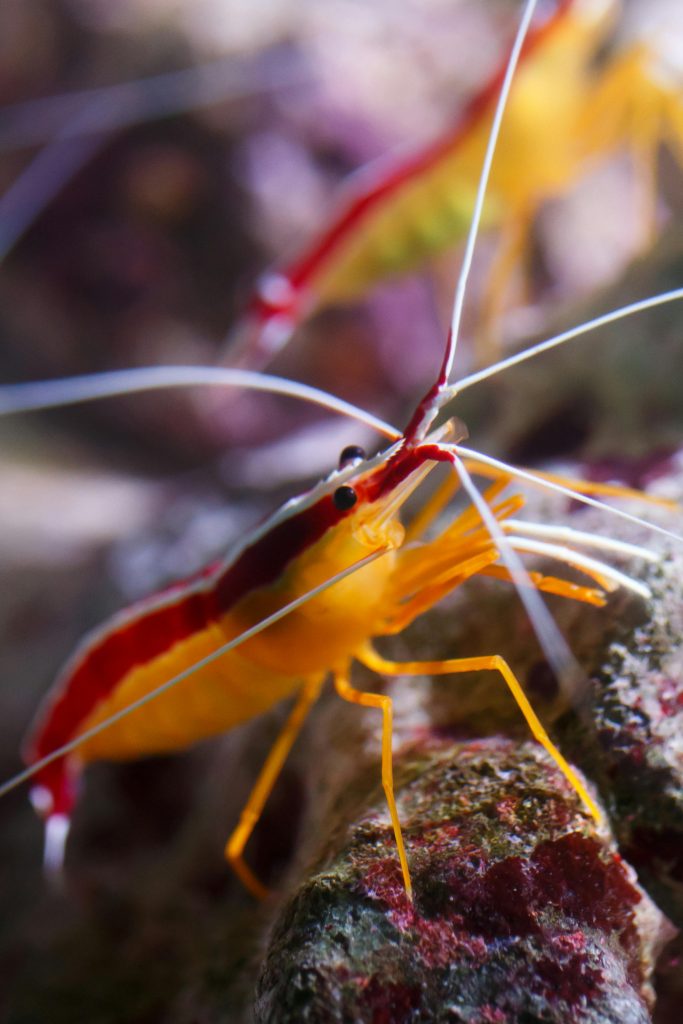
Usually, yes. They generally ignore cleaner shrimp and other common reef-safe invertebrates.
What is the best tank size for long-term success?
Thirty gallons is a practical minimum for one fish. Larger tanks give better behavior and easier compatibility.
Final Thoughts
The Azure Damselfish offers a rare mix of beauty, durability, and value. It is one of the more manageable damselfish for reef aquariums. That does not mean harmless. Respect its territorial side, and it usually becomes an excellent display fish. Give it rock cover, stable water, and sensible tank mates. In return, you get bright color, constant activity, and a fish that thrives in many reef systems.
Was this helpful?
Related Posts
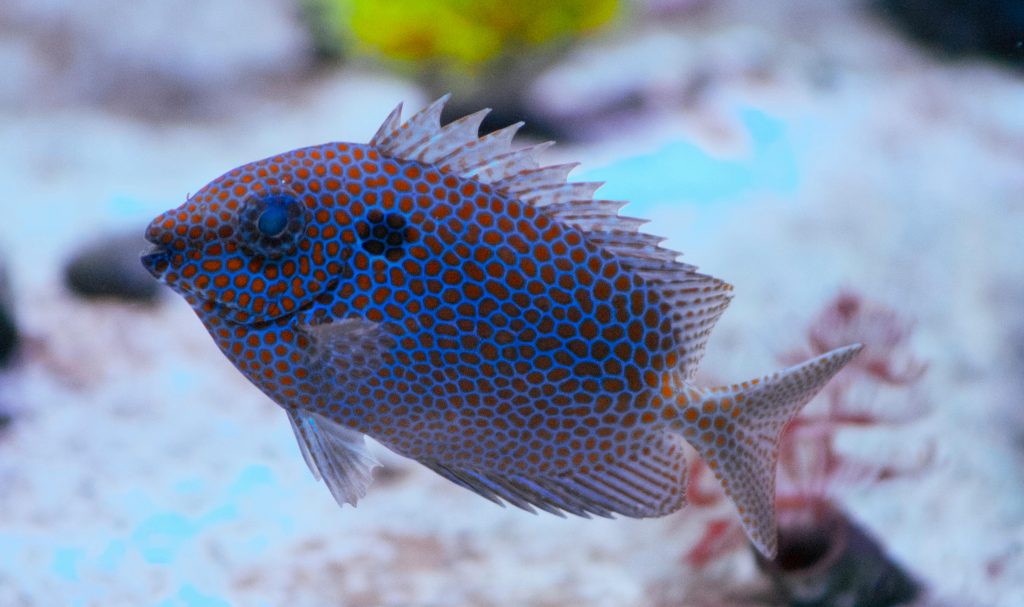
Gold Spotted Rabbitfish (Siganus Punctatus)
Gold Spotted Rabbitfish care includes large tanks, heavy algae feeding, and caution with corals. Learn tank size, diet,…
 By
By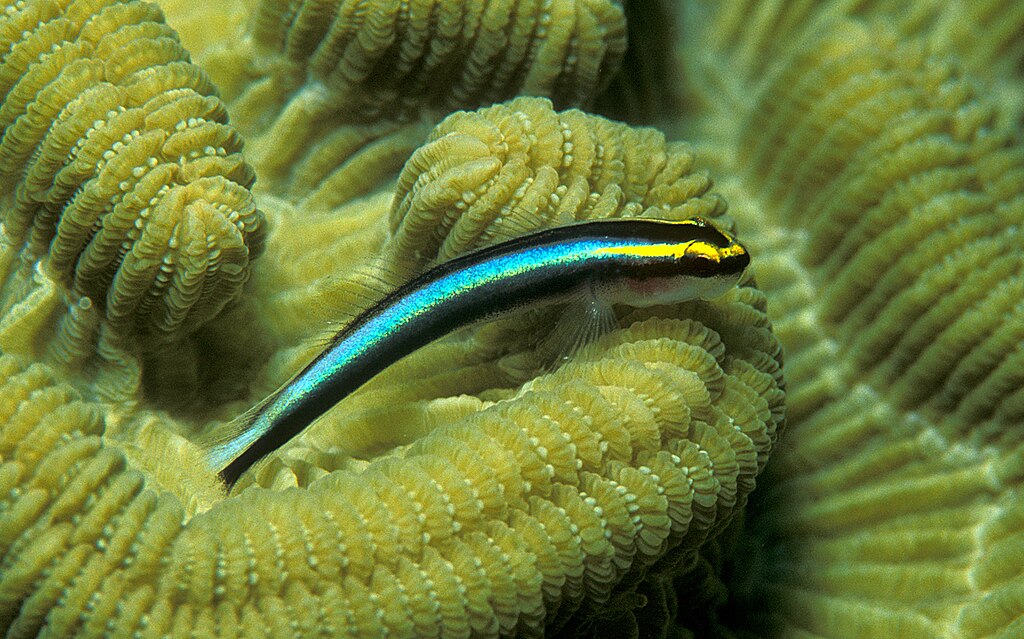
Sharknose Goby (Elacatinus evelynae)
Sharknose Goby care is simple in stable reef tanks. Learn feeding, tank setup, compatibility, and common problems for…
[favorite_button]
My Bookmarks:
To see full list click here
[user_favorites user_id="" include_links="true" site_id="" post_types="" include_thumbnails="true" thumbnail_size="thumbnail" include_excerpt="false"]