

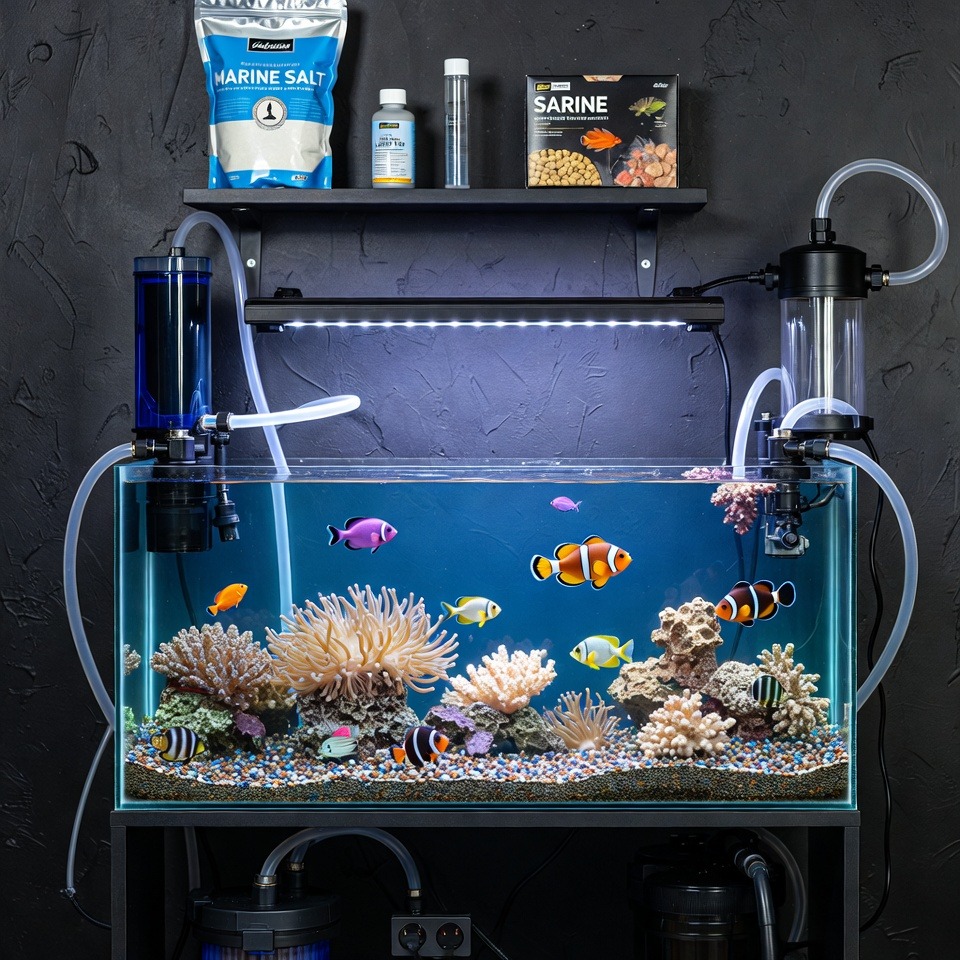
Setting up a beginner saltwater aquarium is easier when you follow a clear plan. Start with the right tank, stable equipment, and patient cycling. That approach prevents many common mistakes and gives fish and corals a healthier start.
A saltwater tank can feel intimidating at first. There are more moving parts than a freshwater setup. You need to think about salinity, live rock, filtration, and long-term stability. The good news is that beginners do best when they keep things simple. In this guide, you will learn how to choose a tank, pick essential equipment, mix saltwater, cycle the aquarium, and stock it safely. You will also learn which beginner mistakes cause trouble and how to avoid them. By the end, you will have a practical roadmap for building a stable marine aquarium that looks great and stays healthy.
Beginner Saltwater Aquarium Setup Quick Reference
| Category | Beginner Recommendation |
|---|---|
| Tank size | 20 to 40 gallons minimum |
| Best starter style | All-in-one reef-ready aquarium |
| Salinity | 1.025 specific gravity |
| Temperature | 77 to 79°F |
| Filtration | Live rock, mechanical media, protein skimmer if possible |
| Lighting | Basic marine LED for fish-only, reef-capable LED for corals |
| Flow | Moderate, varied water movement |
| Cycle time | Usually 2 to 6 weeks |
| First livestock | Clean-up crew, then hardy fish |
| Water changes | 10 to 15% weekly |
This chart gives you the basic targets. The real key is stability. Chasing perfect numbers causes more problems than slightly imperfect but steady numbers.
Why beginners should start simple
Many new hobbyists try to build a dream reef on day one. That often leads to overspending and avoidable losses. A simple system is easier to understand. It is also easier to maintain. Bigger tanks are usually more stable than tiny tanks. That surprises many beginners. A 10-gallon saltwater tank changes fast. Salinity rises quickly from evaporation. Temperature swings happen faster too. A 20 to 40 gallon setup gives you more room for error.
Choose a fish-only tank if you want the easiest start. Choose a beginner reef tank if corals are your main goal. Either way, avoid rushing. Marine tanks reward patience. Every step matters. A stable cycle matters. Quarantine matters. Slow stocking matters. If you learn those habits early, your tank will be healthier long term. For more planning tips, see: saltwater aquarium basics, reef tank maintenance checklist, beginner reef fish, and live rock for reef tanks.
Choosing the right aquarium and location
Your tank choice shapes everything that follows. For most beginners, an all-in-one aquarium is the easiest option. It hides filtration in the back chamber. It also reduces plumbing mistakes. A standard glass tank with a hang-on-back filter can work well too. If you want a sump, keep the design simple. More equipment is not always better.
Place the aquarium on a level stand. Keep it away from windows and air vents. Direct sunlight fuels algae growth. Vents can create temperature swings. Make sure the floor can support the weight. Saltwater tanks are heavy. A 30-gallon setup with rock and sand weighs much more than 30 gallons of water alone. Keep the tank near power outlets and a water source if possible. You will do regular water changes. Easy access makes those tasks much easier. Leave room around the back and top. You will need space for cords, maintenance, and feeding.
Essential equipment for a beginner saltwater aquarium
You do not need every gadget sold online. You do need reliable basics. Start with the tank, stand, heater, thermometer, circulation pump, and filtration. Add a marine light that matches your goals. Fish-only tanks need modest lighting. Reef tanks need stronger lighting for coral growth. A refractometer is also essential. It measures salinity more accurately than swing-arm hydrometers.
Use reverse osmosis deionized water if possible. RO/DI water prevents many algae and nutrient issues. You will also need marine salt mix, test kits, and buckets used only for aquarium work. A protein skimmer is helpful, especially on larger systems. It removes dissolved waste before it breaks down. Live rock provides biological filtration. Beneficial bacteria colonize its surface. Sand is optional, but many beginners like the natural look. If you use sand, choose aragonite. Keep the bed shallow unless you understand deep sand bed management. Reliable gear matters more than fancy gear.
How to set up the tank step by step
Start by rinsing the empty tank with fresh water only. Do not use soap. Place the tank on the stand and confirm it is level. Add rinsed sand if you plan to use it. Then add your rock structure. Build a stable aquascape with open areas for flow. Avoid leaning rock against the glass. Secure unstable pieces with reef-safe putty if needed.
Next, fill the tank with premixed saltwater. Mix salt in a separate container, not inside the display. Heat and circulate the water before use. Aim for 1.025 specific gravity and 77 to 79°F. Install the heater, pump, filter media, and light. Start all equipment and check for leaks. Let the system run for a day. Then test salinity and temperature again. Small adjustments are normal. Once everything is stable, begin the nitrogen cycle. Do not add fish yet. This waiting period protects your future livestock from toxic ammonia and nitrite.
Understanding the nitrogen cycle
The nitrogen cycle is the foundation of a healthy saltwater aquarium. Fish waste and uneaten food produce ammonia. Ammonia is highly toxic. Beneficial bacteria convert ammonia into nitrite. Nitrite is also toxic. A second group of bacteria converts nitrite into nitrate. Nitrate is less dangerous in low amounts. Water changes and biological export help control it.
To cycle the tank, add an ammonia source. Many hobbyists use bottled bacteria and pure ammonia. Others use a small amount of fish food. Test ammonia, nitrite, and nitrate every few days. The cycle is complete when ammonia and nitrite both read zero after processing a dose of ammonia. This usually takes two to six weeks. Do not trust time alone. Always test. Patience here saves fish later. If you want a deeper explanation, read: aquarium nitrogen cycle. It helps beginners understand why early stocking causes so many losses.
Water parameters beginners should monitor
Stable water chemistry matters more than chasing perfect numbers. For a beginner saltwater aquarium, monitor salinity, temperature, ammonia, nitrite, nitrate, and pH. If you keep corals, also monitor alkalinity, calcium, magnesium, and phosphate. Fish-only systems are more forgiving. Reef tanks demand tighter control.
A good target range is 1.025 specific gravity, 77 to 79°F, pH around 8.0 to 8.4, and nitrate kept reasonably low. Reef tanks often aim for moderate nutrients, not zero nutrients. Corals still need available nutrients. Test regularly, but do not overreact to one odd result. Confirm anything surprising with a second test. Top off evaporated water with fresh RO/DI water, not saltwater. Salt stays behind when water evaporates. That is a common beginner mistake. Weekly testing builds confidence. It also helps you spot trends before they become problems.
Aquascaping and aquarium setup tips
Aquascaping affects flow, fish behavior, and future coral placement. Build with open space in mind. New hobbyists often use too much rock. Dense rock walls trap detritus and restrict water movement. Leave channels and caves for fish. Create secure hiding places without blocking the whole back wall. Fish feel safer when they can retreat quickly.
Think ahead if you plan to keep corals later. Flat shelves work well for many coral frags. Taller islands can create zones for different light levels. Keep rock away from the glass so you can clean it easily. Make sure the structure cannot shift if a snail or fish bumps it. Good aquascaping looks natural, but function matters most. Strong flow around and through the rock helps reduce dead spots. Dead spots collect waste. Waste buildup often leads to algae and nutrient spikes. A clean, open layout makes maintenance much easier over time.
Lighting requirements for beginner tanks
Lighting should match your livestock. Fish-only tanks do not need expensive reef lights. A simple marine LED is enough for viewing and a normal day-night rhythm. If you want soft corals or easy LPS corals, buy a reef-capable LED from the start. Upgrading later costs more. It also disrupts the system.
Run lights for about eight to ten hours daily at first. Longer light periods often fuel nuisance algae in new tanks. Avoid blasting the tank with maximum intensity. New systems need time to mature. Corals also need time to acclimate. If your light has adjustable channels, use moderate settings until you understand the tank’s response. Strong blue-heavy spectra are popular for coral fluorescence, but balanced output is useful for growth and natural viewing. Keep the schedule consistent. Sudden changes stress animals. Stable lighting, like stable chemistry, supports healthier long-term results.
Water flow and filtration
Water movement keeps oxygen levels up and waste suspended for removal. It also prevents dead zones in the rockwork. Most beginner tanks need moderate, varied flow. One strong jet pointed in a single direction is not ideal. It creates harsh spots and calm spots. Aim pumps so currents intersect and spread.
For filtration, think in layers. Mechanical filtration catches particles. Biological filtration handles ammonia and nitrite. Chemical media can polish the water when needed. Replace or clean filter floss often. Dirty mechanical media becomes a nutrient trap. Live rock does much of the biological work in marine tanks. A protein skimmer adds another layer of waste export. It is helpful, but not mandatory on every small beginner setup. The best filtration system is one you can maintain consistently. Simple systems often outperform complicated systems that get neglected. Good flow and regular cleaning solve many issues before they become serious.
Feeding and stocking your first saltwater tank
Stock slowly. That is one of the most important beginner rules. Add a clean-up crew after the cycle if the tank is ready. Then add one hardy fish at a time. Wait at least one to two weeks between additions. This gives the biofilter time to adjust. It also lets you observe each animal closely.
Good beginner fish include ocellaris clownfish, royal grammas, firefish, and some gobies. Avoid impulse purchases. Research adult size, temperament, and diet first. Feed small amounts once or twice daily. Uneaten food quickly pollutes a marine tank. Rotate foods for better nutrition. Use quality pellets, frozen mysis, and algae-based options when appropriate. If you plan a reef, choose reef-safe fish from the start. That prevents future compatibility problems. Quarantine new fish whenever possible. It reduces the risk of introducing ich, velvet, and bacterial infections into your display tank.
Compatibility in a beginner marine aquarium
Compatibility matters just as much as water quality. Peaceful fish can still fight in small spaces. Territorial species often claim caves and corners. Overstocking increases stress and aggression. It also raises nutrient levels. Beginners usually do best with a small community of calm fish that occupy different areas of the tank.
If you want corals later, avoid fish known for nipping polyps or eating invertebrates. Some wrasses, dwarf angels, and butterflyfish can create problems in reef tanks. Snails and hermit crabs are useful, but they need stable salinity too. Shrimp can be excellent additions once the tank is mature enough. Always match livestock to the system size. A fish that looks tiny in the store may outgrow a nano tank quickly. Careful planning avoids hard choices later. A peaceful stocking plan creates a more enjoyable aquarium and a healthier environment for every animal.
Common Problems
Why is my new saltwater tank cloudy?
Cloudiness is common in new setups. It often comes from sand dust, bacterial blooms, or disturbed rock. If the cloudiness appeared right after filling the tank, it is usually harmless sediment. Mechanical filtration and time will clear it. If it appears during cycling, a bacterial bloom is more likely.
Check ammonia and nitrite. Make sure you are not overfeeding an empty or lightly stocked tank. Improve flow and replace dirty filter floss. Do not add clarifiers unless you know the cause. Most cloudy water problems improve once the tank stabilizes.
Why does algae appear so fast?
New tanks often go through ugly stages. Diatoms, green film algae, and other blooms are normal. Excess light, overfeeding, and poor source water make them worse. Use RO/DI water, shorten the light period, and keep up with water changes.
Clean mechanical media often. Do not add too many algae eaters too early. Let the tank mature. Stability and nutrient control usually beat algae over time.
Why are my fish breathing fast?
Rapid breathing can signal stress, low oxygen, ammonia exposure, or disease. Test ammonia immediately. Check temperature and salinity too. Make sure pumps are running and the surface is agitated. Warm water holds less oxygen.
If water quality looks fine, consider disease or recent aggression. Quarantine is the safest next step when symptoms continue. Fast action matters with marine fish.
Why does salinity keep rising?
Evaporation causes salinity to rise. Water leaves the tank, but salt remains. Top off daily with fresh RO/DI water. Never top off with saltwater. An auto top-off system makes this much easier and more stable.
Check your refractometer calibration too. Inaccurate readings cause confusion. Stable salinity is critical for fish, corals, and invertebrates.
Frequently Asked Questions
How much does a beginner saltwater aquarium cost?
Costs vary widely. A basic beginner setup often starts in the low hundreds. Reef-ready systems cost more. Reliable equipment saves money long term by preventing failures.
What is the best tank size for a beginner?
A 20 to 40 gallon tank is a great starting range. It offers better stability than tiny nano tanks. It is also still manageable for maintenance and cost.
Can I use tap water in a saltwater aquarium?
It is not recommended. Tap water can contain phosphate, nitrate, metals, and other contaminants. RO/DI water gives you a cleaner, more predictable start.
How long should I wait before adding fish?
Wait until the nitrogen cycle is complete. Test to confirm ammonia and nitrite are zero. That usually takes two to six weeks, sometimes longer.
Is a protein skimmer necessary for beginners?
Not always. Many small beginner tanks run well without one. Still, a skimmer helps with waste export and oxygenation. It becomes more useful as bioload increases.
A beginner saltwater aquarium setup succeeds when you focus on stability, patience, and simple routines. Choose a sensible tank size. Buy reliable equipment. Cycle the system fully. Then stock slowly and maintain consistent water quality. Those habits will carry you from your first marine tank to a thriving reef.
Was this helpful?
Related Posts
Our Reef Emergency Plan
A reef emergency plan helps you act fast during outages, leaks, and water quality crashes. Here is the…
 By
ByReef Alkalinity and Calcium Guide
Learn the ideal reef alkalinity and calcium ranges, how they interact, and how to test, dose, and troubleshoot…
[favorite_button]
My Bookmarks:
To see full list click here
[user_favorites user_id="" include_links="true" site_id="" post_types="" include_thumbnails="true" thumbnail_size="thumbnail" include_excerpt="false"]