Best Lighting For LPS Corals
Lighting for LPS (Large Polyp Stony) corals doesn’t have to be complicated or expensive, but it does need to be stable, moderate, and consistent. Unlike many SPS corals, most LPS come from deeper or more turbid reef zones and are adapted to lower light. That makes them perfect for mixed reefs and newer hobbyists, as long as you match your lighting to their needs.
Ideal PAR and Spectrum for LPS Corals
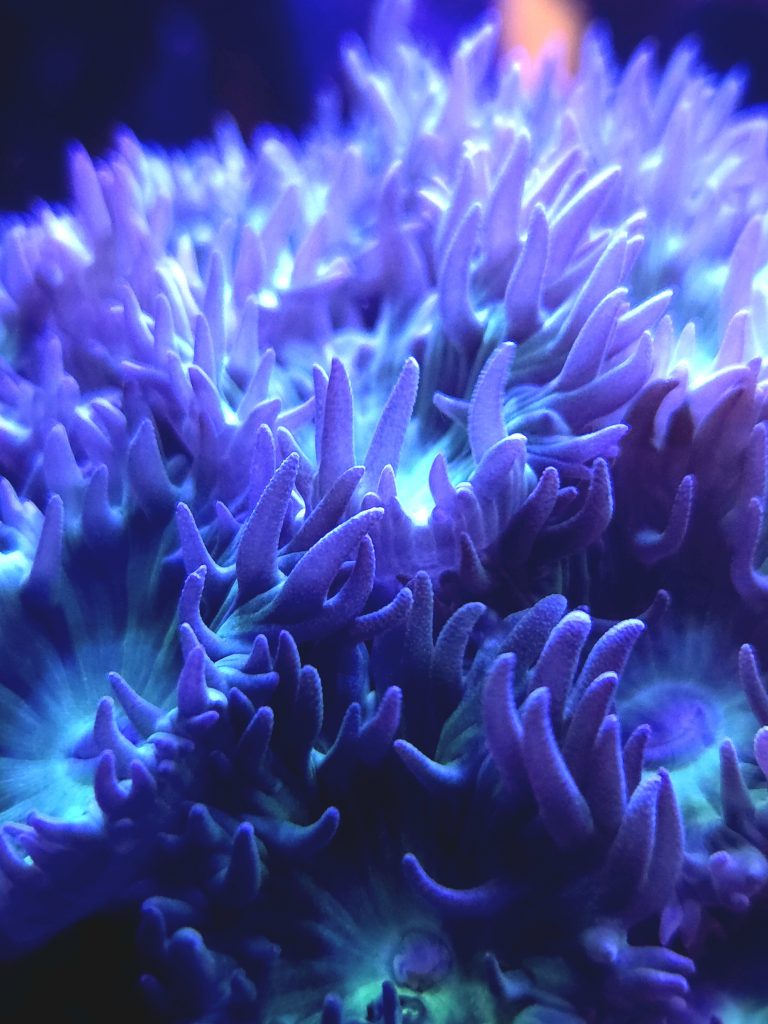
Most popular LPS corals (hammer, frogspawn, torch, acans, favias, blastos, and candy canes) thrive in the 50–150 PAR range, with many doing best around 75–125 PAR. This is significantly lower than what most SPS require, so blasting your tank with intense light can actually harm LPS by causing bleaching or tissue recession.
Target PAR Ranges
- Low light LPS (acans, blastos, some favias): 50–100 PAR
- Moderate light LPS (hammer, frogspawn, candy cane): 75–125 PAR
- Higher light-tolerant LPS (torches, some chalices): 100–150 PAR
In terms of spectrum, LPS respond best to a blue-heavy spectrum in the 14K–20K range:
- Strong royal blue and blue channels (around 420–470 nm)
- Moderate white for color balance
- Optional: low levels of UV/violet and a touch of red/green for color pop
If you’re unsure how to balance your spectrum, start with a preset reef profile on your light and adjust slowly based on coral response. For more help on dialing in your reef system, see our guide on how to start a reef aquarium.
Best Types of Lights for LPS Tanks
The good news is that almost any modern reef-capable light can grow LPS corals if it’s used correctly. The main things to look for are even coverage, dimmability, and reliable spectrum control.
LEDs
- Pros: Energy efficient, customizable spectrum, dimmable, shimmer effect.
- Cons: Can create hotspots; a PAR meter is very helpful for fine-tuning.
For LPS, avoid running your LEDs at 100% intensity. Many reefers find that 30–60% power on most fixtures is plenty, depending on tank depth and mounting height.
T5 and Hybrid Setups
- T5-only: Very even spread, great for mixed reefs; choose bulbs in the 14K–20K range.
- Hybrid (LED + T5): Combines LED shimmer and pop with T5 coverage, ideal for tanks with both SPS and LPS.
If you’re planning a mixed reef, consider placing your LPS in lower PAR zones under a hybrid or LED setup while keeping your SPS higher up. Our article on best SPS corals for beginners has more on high-light placement that pairs well with LPS layouts.
Placement, Photoperiod, and Acclimation
Even with the best light, placement and acclimation are where many hobbyists go wrong.
Placement Tips
- Start new LPS on the sandbed or lower rockwork, especially under strong LEDs.
- Watch for signs of too much light: retracted polyps, faded color, or tissue pulling away from the skeleton.
- Signs of too little light: stretched, reaching polyps and dull coloration.
Photoperiod and Acclimation
- Use a 9–10 hour main photoperiod with 1–2 hour blue-only ramp up/down.
- When upgrading lights, use an acclimation mode or reduce intensity by 30–50% and increase slowly over 2–3 weeks.
- Move corals up the rockwork in small steps, giving them several days at each height.
Tip: If you don’t own a PAR meter, borrow or rent one if possible. It’s one of the best investments you can make in reef stability and will help you match light levels to each coral type.
With moderate PAR, a blue-heavy spectrum, and slow, careful acclimation, LPS corals reward you with full, flowing polyps and intense color. Pair good lighting with stable nutrients and flow, and your LPS garden can become the centerpiece of your reef. For more stocking ideas that match well with LPS tanks, check out our guide to best beginner saltwater fish.
Sources
- Borneman, E. H. Aquarium Corals. TFH Publications.
- Delbeek, J. C., & Sprung, J. The Reef Aquarium series. Ricordea Publishing.
- Bulk Reef Supply Investigates – PAR and spectrum testing for common reef lights.
- World Wide Corals & Tidal Gardens husbandry videos and articles on LPS care.
Was this helpful?
Related Posts
Protein Skimmer Reef Tank Guide
Learn how a protein skimmer works, how to size one, and how to tune it for a cleaner,…
 By
By
Reef Aquarium Water Parameters
Learn the ideal reef aquarium water parameters, safe ranges, and how to keep salinity, alkalinity, nutrients, and pH…