
A reef safe cleanup crew controls algae, detritus, and leftover food without harming corals or most tank mates. The best mix includes snails, small hermits, shrimp, and other grazers chosen for your tank size, substrate, and nuisance algae problems.
A good cleanup crew does more than make a reef tank look tidy. It supports nutrient control. It reduces waste buildup. It also helps prevent small issues from becoming ugly outbreaks. Many beginners buy a random cleanup crew package and hope for the best. That often leads to losses, empty shells, or animals that do not match the tank’s needs. The best approach is more targeted. You want species that fit your rockwork, sand bed, algae type, and stocking level. In this guide, I will break down the best reef safe cleanup crew members, how many you need, which ones to avoid, and how to build a balanced team that actually works in a reef aquarium.
Quick Reference Table
| Cleanup Crew Member | Best For | Reef Safe | Notes |
|---|---|---|---|
| Trochus Snails | Film algae and rock grazing | Yes | Excellent all-around choice. Can often right themselves. |
| Turbo Snails | Heavy algae grazing | Yes | Strong eaters. Can knock loose frags over. |
| Cerith Snails | Sand, rock, and crevices | Yes | Great for mixed surfaces and detritus. |
| Nassarius Snails | Leftover food in sand bed | Yes | Not algae eaters. Good scavengers. |
| Astraea Snails | Glass and rock algae | Usually | Useful grazers. May struggle if flipped over. |
| Blue Leg Hermits | Detritus and some algae | Usually | Can fight over shells. Provide extras. |
| Scarlet Hermits | Light algae and scavenging | Usually | More peaceful than many hermits. |
| Cleaner Shrimp | Leftover food and fish interaction | Yes | Not a primary algae cleaner. |
| Peppermint Shrimp | Aiptasia control | Usually | Species matters. Some ignore aiptasia. |
| Tuxedo Urchin | Algae on rockwork | Usually | Effective but may carry loose items. |
What Makes a Cleanup Crew Reef Safe?
Reef safe means the animal usually leaves corals, fish, and desirable invertebrates alone. That does not mean it is harmless in every situation. Some species are safe with caution. Hermit crabs are a good example. Many are useful scavengers. Some also kill snails for shells or pick at weak tank mates. Large crabs are another risk. They may start safe when small. They often become opportunistic later.
A true reef safe cleanup crew member should fill a useful role. It should graze algae, stir sand, or consume leftovers. It should also stay manageable in a home aquarium. The best species are predictable. They survive well in stable reef systems. They also match the food available in the tank. That last point matters most. A cleanup crew cannot live on hope alone. If your tank is spotless, many grazers will starve unless you supplement their diet.
Best Reef Safe Cleanup Crew Members
Trochus snails are my top recommendation for most reef tanks. They eat film algae well. They work on glass, rocks, and equipment. They are hardy and active. They also reproduce in some aquariums. That is a big bonus. If I could only choose one cleanup crew animal, it would be trochus.
Cerith snails are another excellent choice. They stay smaller. They reach tight spaces. They also move across sand and rock. This makes them versatile. Nassarius snails are different. They do not eat nuisance algae. They live in the sand and rush out when food enters the tank. They are great for leftover meaty foods and detritus.
Turbo snails are powerful algae eaters. They are useful during ugly phases. They can clear heavy growth fast. They are less delicate than many hobbyists expect. Still, they are clumsy. Secure your frags first. Astraea snails also graze well, but they are less forgiving if they fall onto the sand bed.
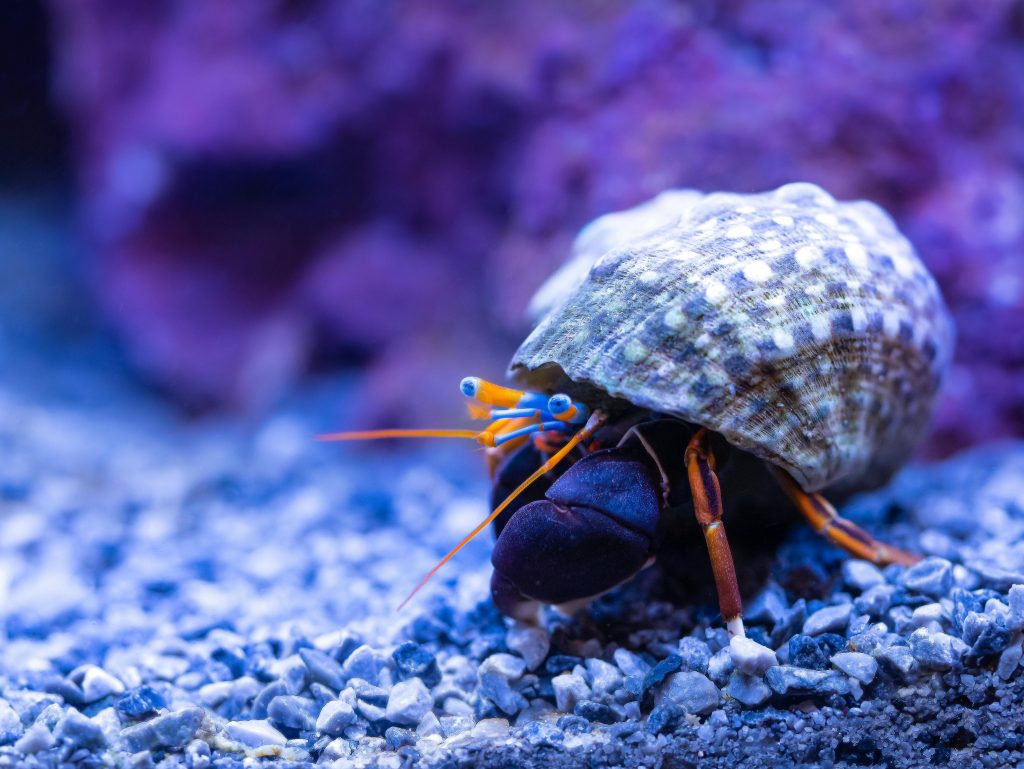
For crabs, scarlet hermits are usually safer than many alternatives. Blue leg hermits are popular too. Both can help with scraps and some algae. Still, I use hermits lightly. Too many create competition. That often ends with dead snails. Add spare shells if you keep them.
Cleanup Crew by Job
Different pests need different workers. Film algae on glass calls for trochus, astraea, and cerith snails. Hair algae often needs turbo snails, urchins, or manual removal first. Detritus in the sand bed is better handled by nassarius snails and good flow. Leftover fish food is handled by scavengers like nassarius, hermits, and cleaner shrimp.
Cyanobacteria and dinoflagellates are often blamed on weak cleanup crews. That is usually a mistake. Most cleanup crew members do not solve those problems directly. Those issues are tied to nutrients, flow, lighting, and tank maturity. A cleanup crew helps with general maintenance. It does not replace reef husbandry. If your rocks are covered in algae, test nutrients and review feeding. Also inspect your flow pattern and source water.
The best reef safe cleanup crew works as a team. Use grazers for rock and glass. Use scavengers for leftovers. Use sand sifters carefully. Then let filtration and maintenance handle the rest.
How Many Cleanup Crew Members Do You Need?
This is where many reef keepers overbuy. Online packages often suggest very high numbers. A new tank rarely supports that many animals. Start small. Then add more only if needed. For a 20 gallon reef, you might begin with 3 to 5 trochus or cerith snails, 2 to 3 nassarius snails, and maybe 1 or 2 small hermits if you want crabs. For a 40 gallon tank, double that slowly based on algae growth and feeding levels.
Think in terms of available food. Heavy algae means more grazers can survive. A clean mature tank needs fewer. Also consider your fish. Some wrasses and puffers prey on snails and crabs. That changes the equation fast. A cleanup crew should be adjusted over time. It is not a one-time purchase. Watch your tank weekly. If algae remains untouched, add help. If snails sit idle and the glass stays clean, you may already have enough.
Aquarium Setup and Conditions for a Healthy Cleanup Crew
Most reef safe cleanup crew animals need stable reef parameters. They do poorly in tanks with rapid salinity swings. They also struggle in immature systems with unstable alkalinity and pH. Acclimation matters too. Snails and shrimp can react badly to sudden salinity changes. Drip acclimation is often the safest option.
Rockwork should offer grazing surfaces and hiding spaces. A sand bed helps nassarius and cerith snails. Moderate flow keeps detritus suspended so the filtration system can remove it. It also prevents dead spots where waste builds up. Avoid copper exposure at all costs. Invertebrates are very sensitive to it. If you medicate fish, do it in a separate quarantine tank. For more basics on system planning, see reef tank setup guide, reef aquarium water parameters, and how to cycle a reef tank.
Water Parameters
| Parameter | Recommended Range |
|---|---|
| Temperature | 76 to 79°F |
| Salinity | 1.025 to 1.026 specific gravity |
| pH | 8.1 to 8.4 |
| Alkalinity | 8 to 9 dKH |
| Ammonia | 0 ppm |
| Nitrite | 0 ppm |
| Nitrate | 2 to 15 ppm |
| Phosphate | 0.03 to 0.10 ppm |
Stability matters more than chasing exact numbers. Sudden changes kill more invertebrates than slightly imperfect values. Keep salinity stable. Top off evaporated water daily. Match salinity during water changes. If your tank runs ultra low nutrients, monitor herbivores closely. They may need supplemental feeding with dried algae or sinking foods.
Feeding a Cleanup Crew
Many hobbyists assume a cleanup crew feeds itself forever. That is not always true. In a newer tank, there may be plenty to eat. In a mature low-nutrient reef, food can become scarce. Snails may slowly starve. Hermits may turn aggressive. Urchins may strip rockwork bare. This is why matching crew size to available food is so important.
You can supplement with dried nori, algae wafers, sinking pellets, or small pieces of frozen food. Feed lightly. Target feed after lights out if fish steal everything first. Nassarius snails benefit from meaty leftovers. Trochus and turbo snails benefit from algal films and seaweed sheets. If you want a tank that stays balanced long term, do not think of the cleanup crew as disposable. They are livestock. Feed them when the tank cannot.
Compatibility With Fish, Corals, and Invertebrates
Most snails are safe with corals. They may crawl over colonies, but they do not usually cause damage. Hermits are less predictable. They are often fine in mixed reefs, but hungry individuals can irritate corals or attack snails. Shrimp are generally safe, though some may steal food from LPS corals during feeding time.
Fish compatibility is the bigger concern. Triggerfish, puffers, some wrasses, and hawkfish may prey on cleanup crew members. Even reef safe fish can pick at tiny hermits or shrimp. Research each species before adding expensive invertebrates. If you keep peaceful community fish, your options improve greatly. For stocking ideas, check best reef safe fish for beginners and reef safe invertebrates guide.
Common Problems
Why is my cleanup crew dying?
The usual causes are poor acclimation, salinity swings, starvation, or predation. Test salinity first. Then inspect for ammonia or hidden aggression. Make sure the tank is fully cycled. Also avoid adding large crews to sterile new systems. They need food and stable water.
Why are snails not eating algae?
They may not eat that specific algae type. Many snails ignore cyanobacteria and some nuisance films. Hair algae that is too long is also harder to graze. Manually remove the bulk first. Then let the crew maintain the remainder. Also check whether the snails are actually alive and active at night.
Are hermit crabs killing my snails?
Sometimes yes. Hermits may kill snails for shells or food. This becomes more likely when shells are limited or food is scarce. Add spare shells in several sizes. Reduce hermit numbers if losses continue. If you prefer a lower-risk approach, build a snail-heavy crew instead.
Why is algae still growing with a cleanup crew?
A cleanup crew controls light algae growth. It does not fix excess nutrients, weak flow, old bulbs, or overfeeding. Test nitrate and phosphate. Improve export. Increase manual removal. Then let the cleanup crew handle daily maintenance. Think support, not miracle cure.
Best Cleanup Crew Combinations by Tank Type
For a beginner mixed reef, I like a simple combination. Use mostly trochus and cerith snails. Add a few nassarius for the sand. Skip most crabs at first. This setup is easy to manage and causes fewer losses. For a soft coral tank with moderate nutrients, you can add a turbo snail or two if algae grows fast. For a nano reef, stay conservative. Small tanks cannot support large crews for long.
For tanks with recurring aiptasia, peppermint shrimp may help if you get the right species. For tanks with stubborn rock algae, a tuxedo urchin can be useful. Just secure loose frags. Every tank is different. Build the crew around the problem you actually have. Do not buy ten species because a package says you should.
Frequently Asked Questions
What is the best reef safe cleanup crew snail?
Trochus snails are the best all-around choice for most reef tanks. They are hardy, useful, and efficient algae grazers.
How soon should I add a cleanup crew to a reef tank?
Add a small crew after the tank is fully cycled and has visible food available. Do not add them to a sterile tank.
Are hermit crabs necessary in a reef tank?
No. They can be helpful, but they are optional. Many successful reef tanks use mostly snails and skip hermits entirely.
Can a cleanup crew remove hair algae?
It can help control hair algae, but severe outbreaks need manual removal and nutrient correction first.
What cleanup crew is best for a nano reef?
Use a light crew of trochus, cerith, and a few nassarius snails. Avoid overstocking small tanks with too many grazers.
Final Thoughts
The best reef safe cleanup crew is balanced, not oversized. Start with hardy snails. Add scavengers with a purpose. Use hermits and specialty invertebrates carefully. Most of all, match the crew to your tank’s real needs. A smart cleanup crew supports a healthy reef. It does not replace testing, water changes, or good feeding habits. If you build it thoughtfully, your tank stays cleaner, more stable, and much easier to enjoy.
Was this helpful?
Related Posts
Protein Skimmer Reef Tank Guide
Learn how a protein skimmer works, how to size one, and how to tune it for a cleaner,…
 By
By
Dragonets Fish Care
Dragonets are beautiful reef fish, but they need mature tanks and steady food sources. Learn how to keep…