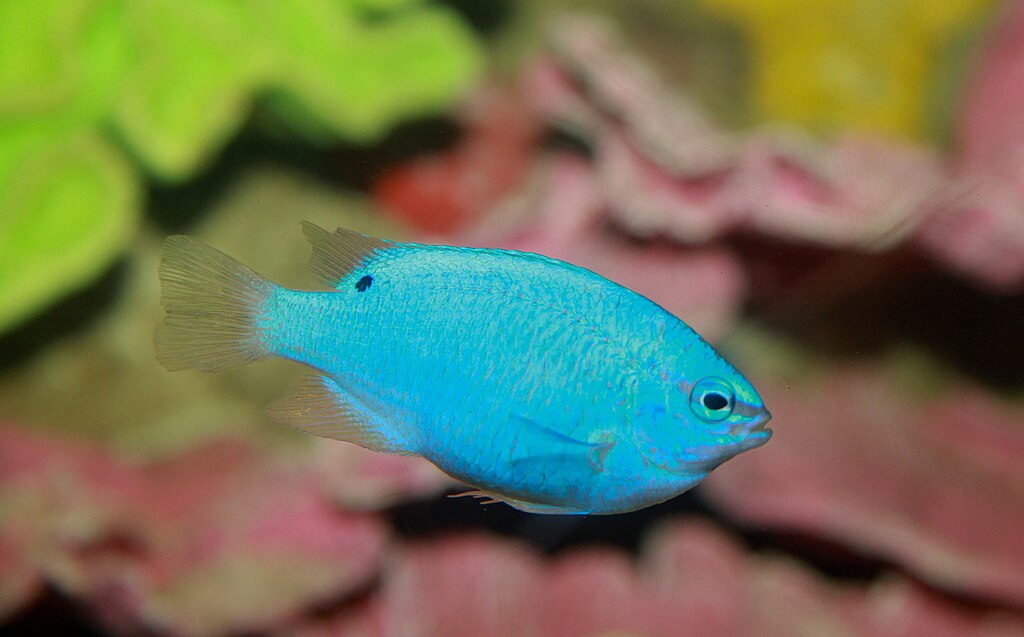
The Blue Damselfish (Chrysiptera cyanea) is often one of the first fish new reef keepers encounter: it’s small, brilliantly colored, hardy, and inexpensive. But like many damsels, this electric-blue gem can also be feisty. Understanding its behavior and needs will help you decide if it fits your saltwater aquarium and how to keep it successfully long term.
Blue Damselfish Basics
Blue Damselfish are found throughout the Indo-Pacific and are naturally at home on shallow reefs and lagoons. In aquariums, they typically reach about 2.5–3 inches (6–7.5 cm), making them suitable for a range of tank sizes.
Key Characteristics
- Common names: Blue Devil Damselfish, Sky Blue Damselfish
- Scientific name: Chrysiptera cyanea
- Adult size: ~3 inches
- Temperament: Semi-aggressive, especially toward smaller or similar-shaped fish
- Reef safe: Yes (does not typically nip corals or inverts)
- Lifespan: 5–10 years with good care
If you’re still planning your setup, you may want to read our guide on best beginner saltwater fish to see how the Blue Damselfish compares to other hardy options.
Tank Requirements and Compatibility
Despite their small size, Blue Damselfish can dominate a tank if space and hiding spots are limited. Good aquascaping and stocking choices go a long way toward keeping the peace.
Tank Size and Aquascape
- Minimum tank size: 30 gallons for a single specimen.
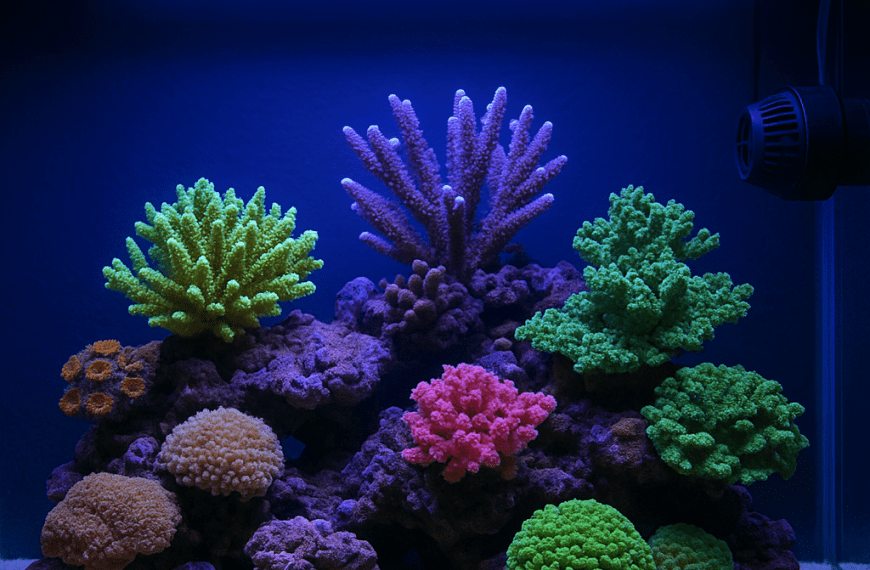
- Rockwork: Provide multiple caves and crevices so the fish can establish a territory without controlling the entire tank.
- Flow and lighting: Moderate flow and standard reef lighting are usually sufficient.
Tip: In smaller tanks, keep just one Blue Damselfish to reduce territorial aggression. Groups are best attempted only in larger systems with plenty of rockwork.
Tankmates
Blue Damselfish do best with other semi-aggressive or confident species. Avoid very timid or slow-moving tankmates that can be bullied.
- Good companions: clownfish, dottybacks, dwarf angelfish, larger wrasses.
- Use caution with: smaller gobies, firefish, and peaceful nano species.
If you’re planning a mixed community, check out our article on saltwater fish compatibility to help map out a stocking list that works with a Blue Damselfish.
Feeding, Care, and Long-Term Success
Blue Damselfish are omnivores and not picky eaters, which makes them forgiving for newer hobbyists.
Diet
- Offer a varied diet of high-quality marine pellets or flakes as a staple.
- Supplement with frozen foods like mysis shrimp, brine shrimp, and finely chopped seafood.
- Include some algae-based foods or spirulina to support overall health and coloration.
Water Quality and Maintenance
- Temperature: 24–27°C (75–81°F)
- Salinity: 1.024–1.026 specific gravity
- pH: 8.1–8.4
- Ammonia and nitrite: 0 ppm; nitrate kept as low as practical
Regular water changes and a stable environment are more important than chasing perfect numbers. For a step-by-step routine, see our saltwater aquarium maintenance schedule.
Tip: Introduce Blue Damselfish later in the stocking order so they don’t claim the entire tank before other fish arrive.
With their intense blue color, hardy nature, and constant activity, Blue Damselfish can be a rewarding addition to many marine aquariums. As long as you respect their territorial streak, provide enough space and hiding places, and choose suitable tankmates, they can thrive for years and add vibrant motion to your reef or fish-only system.
Sources
- Michael, S. W. (2001). Damselfishes & Anemonefishes. Microcosm Ltd.
- Fenner, R. (2001). The Conscientious Marine Aquarist. Microcosm Ltd.
- FishBase: Chrysiptera cyanea species summary (accessed 2024).
Was this helpful?
Related Posts
Protein Skimmer Reef Tank Guide
Learn how a protein skimmer works, how to size one, and how to tune it for a cleaner,…
 By
By
Reef Aquarium Water Parameters
Learn the ideal reef aquarium water parameters, safe ranges, and how to keep salinity, alkalinity, nutrients, and pH…