

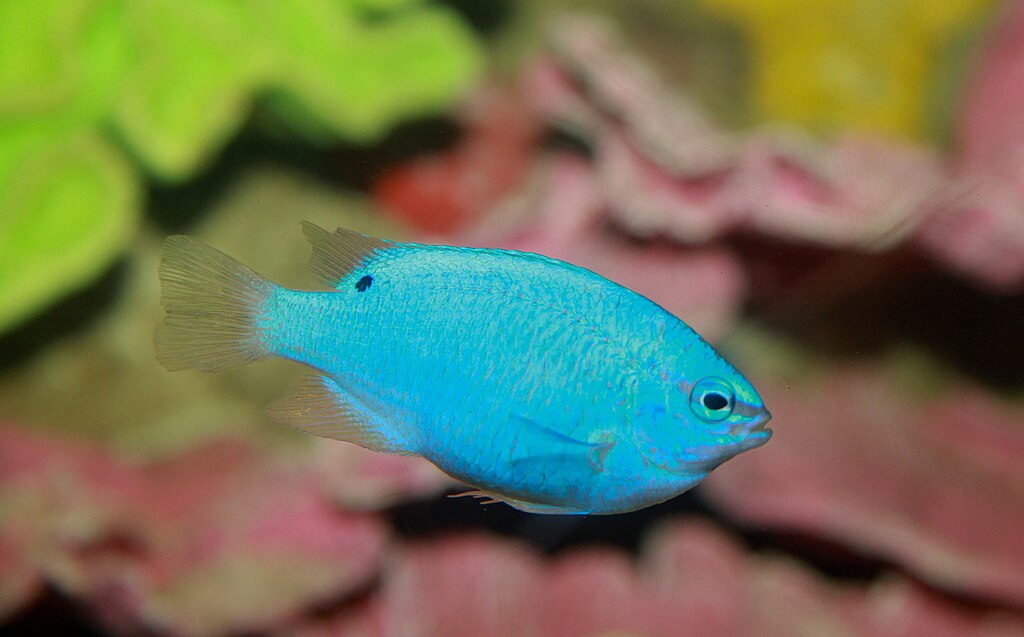
Blue Damselfish, Chrysiptera cyanea, is a hardy, bright blue marine fish that suits many reef tanks. It adapts well to captive life, eats readily, and stays small. Its biggest challenge is temperament. This species can become territorial, especially in smaller aquariums or crowded rockwork.
This guide explains how to keep Blue Damselfish successfully in a reef aquarium. You will learn about tank size, aquascaping, diet, water flow, and compatibility. I will also cover common behavior problems and practical ways to reduce aggression. For beginners, this fish can be rewarding. For intermediate hobbyists, it can be a useful addition when stocked with care and intention.
Blue Damselfish Care Quick Reference
| Common name | Blue Damselfish |
| Scientific name | Chrysiptera cyanea |
| Adult size | About 3 inches |
| Temperament | Semi-aggressive to aggressive |
| Minimum tank size | 30 gallons for one |
| Diet | Omnivore |
| Reef safe | Yes |
| Lighting | No special demand |
| Water flow | Moderate |
| Temperature | 76–80°F |
| Salinity | 1.024–1.026 |
| pH | 8.1–8.4 |
| Difficulty | Easy |
Use this table as a quick planning tool. It covers the basics, but success depends on the full setup. Blue Damselfish are tough fish, yet they still need stable reef conditions. Their hardiness should not be confused with tolerance for poor husbandry. Stable salinity, low nutrients, and good oxygenation matter. So does smart stocking order. In many tanks, aggression causes more losses than water quality.
Natural Habitat
Blue Damselfish occur in the Indo-Pacific region. They are found around coral reefs, lagoons, and shallow reef slopes. In nature, they stay close to rock and coral structure. That cover gives them safety and defined territory. They dart out to feed, then retreat quickly when threatened.
This natural behavior explains much of their captive personality. They are bold, fast, and defensive. They do not like open, exposed environments. A bare tank often increases stress and chasing. A tank with caves, branching rock, and visual barriers works much better. In the wild, they also experience strong water movement and high oxygen levels. That is why they do best in mature aquariums with active circulation and stable parameters.
Males may defend nesting sites during breeding. This territorial instinct remains strong in aquariums. It is one reason hobbyists often see chasing, nipping, and rock-guarding behavior. Understanding the reef habitat helps you design a setup that channels these instincts instead of fighting them.
Aquarium Setup
A single Blue Damselfish should have at least a 30-gallon tank. Larger is always better. In a nano aquarium, aggression usually becomes worse. The fish claims too much of the available space. Tankmates then have nowhere to escape. In a 40-gallon breeder or larger, rockwork can break lines of sight and reduce conflict.
Build the aquascape with caves, arches, and multiple retreat zones. Leave some open swimming room in front. Use rock islands or separated bommies when possible. That layout helps distribute territories. It also makes the tank look more natural. Secure every rock well. Damselfish are active and can dart through tight gaps at high speed.
Blue Damselfish are reef safe with corals. They do not nip polyps like some angelfish. They can live in mixed reefs, soft coral tanks, and many LPS systems. Keep ammonia and nitrite at zero. Aim for nitrate under 15 ppm and phosphate in a controlled range. Stable alkalinity and temperature support the whole reef. For broader planning, see: reef tank setup, live rock aquascaping, and reef tank water parameters.
Lighting Requirements
Blue Damselfish do not have special lighting needs. They are not light-dependent like corals or clams. Standard reef lighting works fine. What matters more is consistency and a natural day-night cycle. Sudden light changes can startle them. A ramp-up and ramp-down schedule helps reduce stress.
In coral tanks, set lighting for the corals first. The fish will adapt. Under bright reef LEDs, their electric blue color often looks striking. Males may show yellow or orange near the tail, depending on sex and collection variant. Good nutrition also improves color. Washed-out blue often points to stress, poor diet, or social pressure from tankmates.
If the tank is very brightly lit, make sure there are shaded areas under ledges. These fish appreciate cover. Shaded zones help them feel secure. That usually leads to better feeding response and less frantic movement.
Water Flow
Moderate water flow is ideal for Blue Damselfish. They come from reef areas with active movement. Good flow keeps oxygen high and waste suspended for filtration. It also supports coral health in a reef tank. Avoid dead spots behind the rockwork. Those areas collect detritus and reduce water quality.
Do not blast a small tank with chaotic flow from all directions. The goal is movement, not constant turbulence. Create varied zones. Let the fish choose where to rest and where to swim. Most damselfish handle stronger flow than many beginners expect, but they still need shelter from the current.
If the fish hides constantly, review both flow and aggression. Excessive current can push a timid specimen into one corner. On the other hand, weak flow can lower oxygen and increase stress. Watch breathing rate and general activity. Healthy Blue Damselfish are alert, responsive, and quick to feed.
Feeding
Blue Damselfish are easy feeders. They accept pellets, flakes, frozen foods, and many prepared diets. In the wild, they eat small crustaceans, plankton, and algae-based material. In captivity, variety works best. Feed small portions once or twice daily. Avoid dumping large amounts of food into the tank.
A good routine is simple. Offer a quality marine pellet in the morning. Feed frozen mysis, brine enriched with vitamins, or a mixed omnivore blend later in the day. Add occasional spirulina-based foods for balance. This supports color, immune function, and overall body condition. Healthy fish show full bellies without looking bloated.
Do not rely on one food forever. Rotating foods lowers the risk of nutritional gaps. If a new fish refuses dry food, start with frozen items first. Then mix in pellets slowly. Quarantined fish often settle faster with frequent small feedings. For more on nutrition, see: best food for reef fish.
Compatibility
Compatibility is the main issue with Blue Damselfish. They are reef safe, but not always community friendly. They often bully peaceful fish, especially gobies, firefish, dartfish, and shy wrasses. They may also harass new additions. This is why stocking order matters. Add the Blue Damselfish later, not first, in most mixed community tanks.
They usually do best with fish that can handle attitude. Clownfish, some wrasses, blennies, and many dwarf angelfish can work in larger systems. Avoid combining them with very aggressive damsels unless the tank is large and carefully planned. Multiple Blue Damselfish can fight unless the aquarium offers enough space and territory breaks.
With corals and invertebrates, they are generally safe. They do not eat shrimp, snails, or coral tissue under normal conditions. Still, they may defend a cave and chase cleaner shrimp away from that area. Observe interactions closely after adding any new animal. For stocking advice, visit: reef fish compatibility chart.
Step-by-Step Guide to Adding a Blue Damselfish
- Choose a healthy fish with clear eyes and full fins.
- Avoid specimens with rapid breathing or faded color.
- Quarantine for observation if possible.
- Offer hiding places in the quarantine tank.
- Feed small meals and watch for parasites.
- Prepare the display tank with stable salinity and temperature.
- Rearrange a little rockwork before introduction if aggression is expected.
- Use an acclimation box when adding the fish to a stocked reef.
- Release the fish with lights dimmed.
- Monitor chasing for several days.
This simple process improves success. The acclimation box is especially helpful in smaller reefs. It lets current residents see the newcomer without direct contact. In some tanks, this step prevents immediate attacks. If the Blue Damselfish is the aggressor, the box can still help by slowing its territorial claim. Always have a backup plan. A fish trap or removable rock section can save major frustration later.
Propagation or Breeding
Spawning Behavior
Blue Damselfish can spawn in captivity, though it is not common in casual home reefs. Males usually select and clean a nesting site on rock or a hard surface. They then court the female. After spawning, the male guards the eggs. During this period, aggression often increases. He may defend the nest fiercely against fish and invertebrates.
Raising Larvae
Raising larvae is difficult. The fry are tiny and need very small live foods. Most hobbyists do not attempt this without a dedicated breeding setup. If you observe egg guarding, treat it as a sign that the fish feel secure. It also confirms that the environment supports natural behavior. Still, expect the eggs to be eaten or lost in a mixed reef.
Common Problems
Why is my Blue Damselfish so aggressive?
The usual cause is territory pressure. Small tanks make this worse. Sparse rockwork also increases conflict. Add more visual barriers and caves. Rearrange rock if needed. Feed consistently, and avoid adding timid fish after the damsel has settled. In severe cases, removal may be the best option.
Why is my Blue Damselfish hiding all the time?
Hiding often means stress. Check for bullying, poor acclimation, or unstable water parameters. Test salinity, temperature, ammonia, and pH first. Review flow patterns too. A fish pinned behind rocks may be avoiding current or tankmates. Newly added specimens often need several days to settle.
Why has the color faded?
Faded color usually points to stress, poor diet, or disease. Offer varied foods with marine proteins and algae content. Check for parasites if breathing is fast or scratching occurs. Also look at social pressure. A bullied fish often loses color before showing physical damage.
Can Blue Damselfish get marine ich?
Yes. They are hardy, but not immune. Quarantine remains wise. Watch for white spots, flashing, clamped fins, and rapid breathing. Stress lowers resistance. Stable water and low aggression help prevent outbreaks, but they do not replace proper disease management.
Frequently Asked Questions
Is Blue Damselfish good for beginners?
Yes, in terms of hardiness and feeding. No, if you want a very peaceful fish. Beginners often underestimate its aggression. It is best for hobbyists who can plan tankmates carefully.
How big does Blue Damselfish get?
Most reach around 3 inches in captivity. Their small size does not mean they need little territory. Their attitude often exceeds their length.
Can Blue Damselfish live with clownfish?
Sometimes, yes. This works best in larger tanks with distinct territories. Watch closely during introduction. Individual temperament varies a lot.
Are Blue Damselfish reef safe?
Yes. They are considered reef safe with corals and most invertebrates. Their main risk is aggression toward other fish, not coral damage.
What is the best tank size for Blue Damselfish?
A 30-gallon tank is the practical minimum for one fish. A larger tank gives much better long-term results. More space means less stress and fewer fights.
Blue Damselfish can be a great choice when you understand its personality. It is colorful, hardy, active, and reef safe. Yet it is not a passive community fish. Success comes from smart aquascaping, stable reef conditions, and careful tankmate selection. If you plan around its territorial nature, Chrysiptera cyanea can become a striking and long-lived part of your reef.
Was this helpful?
Related Posts
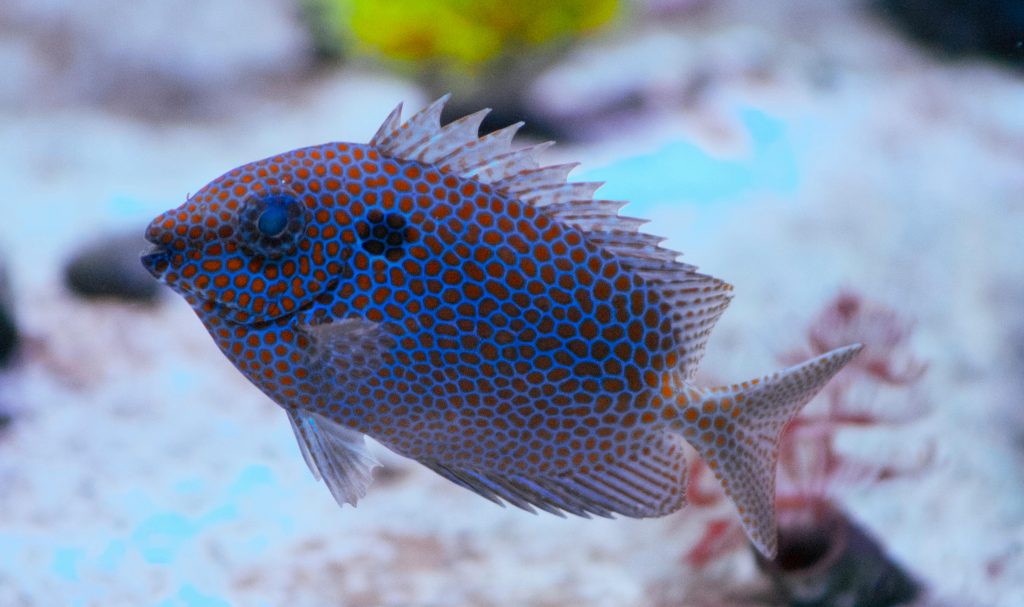
Gold Spotted Rabbitfish (Siganus Punctatus)
Gold Spotted Rabbitfish care includes large tanks, heavy algae feeding, and caution with corals. Learn tank size, diet,…
 By
By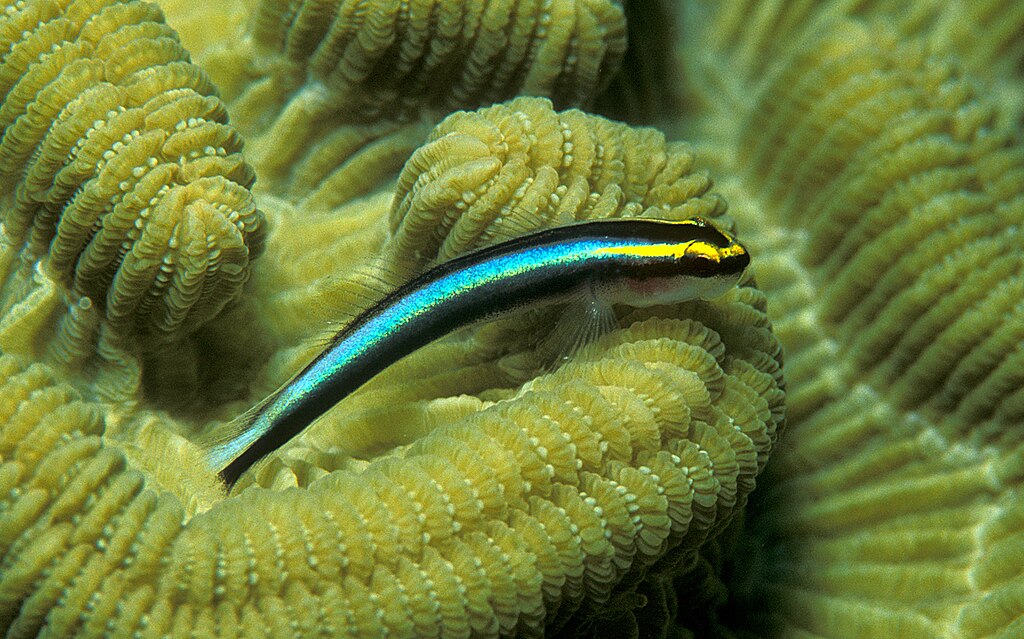
Sharknose Goby (Elacatinus evelynae)
Sharknose Goby care is simple in stable reef tanks. Learn feeding, tank setup, compatibility, and common problems for…
[favorite_button]
My Bookmarks:
To see full list click here
[user_favorites user_id="" include_links="true" site_id="" post_types="" include_thumbnails="true" thumbnail_size="thumbnail" include_excerpt="false"]