

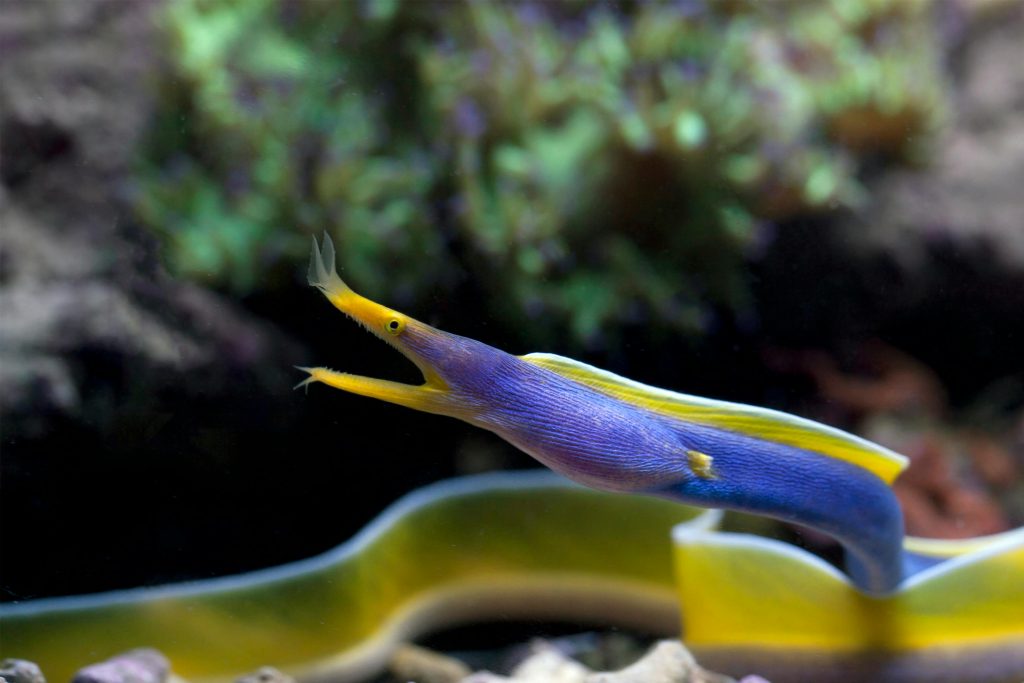
The Blue Ribbon Eel is stunning but very difficult to keep. It needs a secure tank, peaceful tankmates, and patient feeding work. Most losses happen from escape, starvation, or stress. This species is best for advanced marine keepers, not beginners.
The Blue Ribbon Eel, Rhinomuraena quaesita, is one of the most striking fish in the marine hobby. Its electric blue body and yellow dorsal fin make it unforgettable. Yet beauty does not equal ease. This eel has a poor survival record in captivity, mainly because many specimens refuse prepared foods and escape through tiny openings. In this guide, you will learn where this species lives in nature, how to set up a proper aquarium, what it eats, which tankmates work best, and how to troubleshoot the common problems hobbyists face.
Blue Ribbon Eel Care Quick Reference
| Scientific name | Rhinomuraena quaesita |
| Common names | Blue Ribbon Eel, Ribbon Eel |
| Care level | Expert only |
| Temperament | Shy, predatory, escape-prone |
| Minimum tank size | 125 gallons |
| Adult size | Up to 36 to 40 inches |
| Diet | Small fish, crustaceans, meaty marine foods |
| Reef safe | With caution; may eat small fish and shrimp |
| Temperature | 75 to 79°F |
| Salinity | 1.024 to 1.026 |
| pH | 8.1 to 8.4 |
| Nitrate | Ideally under 15 ppm |
| Special need | Tight lid with no gaps |
Use this table as a starting point only. Success with this species depends more on husbandry details than simple parameter numbers. Stability matters more than chasing exact values.
Natural Habitat
The Blue Ribbon Eel lives across the Indo-Pacific. It occurs in areas like Indonesia, the Philippines, southern Japan, and the Great Barrier Reef. In the wild, it inhabits sandy bottoms near reefs and lagoons. It usually keeps most of its body hidden inside burrows.
You will often see only the head and upper body exposed. The eel opens and closes its mouth constantly. Many new hobbyists mistake this for aggression. It is actually normal breathing behavior. These eels rely on ambush hunting. They wait near their burrow entrance and strike at passing prey.
This natural behavior explains their aquarium needs. They need deep hiding places, low stress, and a secure home base. Bright open tanks with little cover often lead to panic. Stress then causes feeding refusal and escape attempts. A setup that mimics a protected burrow zone gives the best chance of long-term success.
Aquarium Setup
A 125-gallon tank is the practical minimum for an adult Blue Ribbon Eel. Larger is better. This species grows long and needs room to turn, retreat, and establish a secure den. Footprint matters more than height. Long tanks work better than tall tanks.
Create several cave options with stable live rock. Use PVC tubes under the rockwork if needed. Many keepers build a hidden tunnel system with 1.5 to 2-inch PVC. Cover the pipe with sand and rock so it feels natural. This often helps the eel settle faster.
The lid is the most important part of the setup. Blue Ribbon Eels are famous escape artists. Cover every gap around plumbing, cords, and overflow boxes. Use mesh, acrylic, or custom covers with sealed openings. Even small gaps can be fatal. Check the lid after every maintenance session. Many escapes happen after feeding or aquascaping work.
Keep the tank peaceful. Avoid constant traffic and sudden disturbances. A mature, stable aquarium works best. New tanks often lack the stability this species needs. For more system planning, see reef tank setup guide and live rock for reef tanks.
Lighting Requirements
The Blue Ribbon Eel does not need intense lighting. It is not photosynthetic. Lighting should match the needs of your corals, not the eel. Still, very bright light over an exposed burrow can make the eel feel unsafe. That can reduce feeding response.
If you keep this species in a reef tank, provide shaded zones. Overhangs, caves, and deeper rock crevices help a lot. The eel should be able to watch the tank from a dim, protected spot. Many specimens become bolder once they trust their den.
A normal reef photoperiod is fine. Sudden light changes are not ideal. Ramp-up and ramp-down schedules reduce stress. If your tank uses strong LEDs, avoid placing the burrow entrance directly under the brightest area. Comfort and security matter more than light intensity for this fish.
Water Flow
Moderate flow works best. The eel should not be blasted at its burrow entrance. Strong direct flow can cause it to abandon a hiding place. Then it may roam, stress, or try to escape. Aim for broad, indirect circulation instead.
Good flow still matters for oxygenation and waste control. Blue Ribbon Eels are messy eaters once established. Uneaten food can quickly foul the water. Position pumps so detritus stays suspended but the den remains calm. This balance is important in mixed reef tanks.
Watch the eel’s behavior. If it constantly leaves a burrow or struggles to hold position, flow may be too strong. If debris collects around the den, flow may be too weak. Fine tuning often improves feeding and long-term stability.
Feeding
Feeding is the hardest part of Blue Ribbon Eel care. Many new imports refuse prepared foods for weeks. Some never adapt. In nature, they eat small fish and crustaceans. In captivity, they may accept silversides, lancefish, table shrimp, squid, clam, or marine fish flesh. Variety helps.
Use feeding tongs or a long feeding stick. Offer small pieces near the burrow entrance. Wiggle the food gently to mimic live prey. Do not jab or chase the eel. That usually makes things worse. Feed during calm periods, often near dusk if the eel seems shy.
Once established, feed two to three times per week. Juveniles may need smaller, more frequent meals. Avoid freshwater feeder fish. They are poor nutritionally and can introduce disease. Soak foods in vitamins if the eel is newly imported or thin. If you need help with marine diets, read best food for saltwater fish.
Compatibility
The Blue Ribbon Eel is not aggressive in the usual sense, but it is a predator. Very small fish may be viewed as food. Tiny gobies, firefish, and decorative shrimp are risky choices. Cleaner shrimp may survive in some tanks, but there are no guarantees.
Choose peaceful to moderately assertive tankmates that are too large to swallow. Good options may include tangs, rabbitfish, larger wrasses, foxfaces, and many angelfish in fish-only systems. Avoid boisterous bullies that harass the eel at its den. Triggers and aggressive puffers are poor choices.
Corals are usually ignored. That makes this species reef compatible in a limited sense. The real issue is fish and invertebrate predation. Also avoid housing it with other eels unless the tank is very large and carefully planned. Competition for caves and food can become a problem. For stocking ideas, see reef safe fish guide.
Step-by-Step Acclimation Guide
Proper acclimation improves your odds. It will not solve feeding issues, but it can reduce early stress.
- Prepare the tank before the eel arrives. Secure every opening.
- Dim the lights. Keep the room quiet.
- Use drip acclimation for 30 to 45 minutes.
- Do not expose the eel to air if possible.
- Transfer it gently into the tank near a prepared burrow.
- Leave the lights low for the rest of the day.
- Do not attempt feeding immediately. Wait until it settles.
- Offer food after one to three days, depending on behavior.
Quarantine is ideal, but it must be escape-proof and properly structured. Bare tanks often stress this species. If you quarantine, add secure tubes and cover every gap. Observe respiration, body condition, and feeding response closely.
Propagation or Fragging
Can Blue Ribbon Eels Be Bred in Home Aquariums?
There is no practical home breeding method for Blue Ribbon Eels. Captive breeding is not established in the hobby. Their larval stage is complex, and their long-term reproductive behavior is poorly suited to normal aquarium conditions.
Interesting Note on Sex Change
This species is known for sex-related color changes. Juveniles are black. Males are blue and yellow. Females become more yellow. This biology is fascinating, but it does not translate into realistic home breeding opportunities. Hobbyists should focus on survival and feeding success instead.
Common Problems
Why Is My Blue Ribbon Eel Not Eating?
This is the most common issue. New imports are often stressed and food-shy. Likely causes include shipping stress, lack of a secure burrow, aggressive tankmates, or unsuitable food presentation. Try dimmer lighting, more cover, and target feeding with moving food on tongs. Offer different marine-based foods. Be patient, but realistic. Long fasting can become fatal.
Why Does It Keep Trying to Escape?
Escape behavior usually means stress, poor security, or both. Check for gaps first. Then review the setup. Is the den exposed? Is a tankmate harassing the eel? Is flow too strong at the burrow? Correct the cause quickly. Once an eel finds a weakness, it may keep testing it.
Heavy Breathing or Constant Mouth Opening
Constant mouth opening is normal for this species. It helps move water across the gills. However, unusually rapid breathing, lethargy, or poor balance may indicate low oxygen, ammonia, or disease. Test water immediately. Increase aeration and inspect for recent feeding waste or dead spots.
Weight Loss and Thin Body Condition
A thin Blue Ribbon Eel is in danger. Common causes include chronic underfeeding, refusal of prepared foods, or competition during feeding. Feed with tongs so food reaches the eel directly. Use energy-rich marine foods and vitamin soaks. If the eel continues to lose mass, long-term recovery becomes unlikely.
Frequently Asked Questions
Is the Blue Ribbon Eel good for beginners?
No. This is an expert-level species. Feeding and escape prevention are major challenges.
Can a Blue Ribbon Eel live in a reef tank?
Yes, with caution. It usually ignores corals, but it may eat small fish and shrimp.
How big does a Blue Ribbon Eel get?
Most reach around 30 to 36 inches, though some can grow larger.
How often should I feed a Blue Ribbon Eel?
Established adults usually do well with two or three feedings each week.
Why is my eel black instead of blue?
Juveniles are black. As they mature, many transition to the familiar blue and yellow coloration.
Final Thoughts
The Blue Ribbon Eel is one of the hobby’s most beautiful fish. It is also one of the least forgiving. Success depends on a mature aquarium, a flawless lid, a secure den, and patient feeding work. If you want a hardy first eel, choose another species. If you still want Rhinomuraena quaesita, go in with realistic expectations and a careful plan. That approach gives this remarkable animal the best chance to thrive.
Was this helpful?
Related Posts
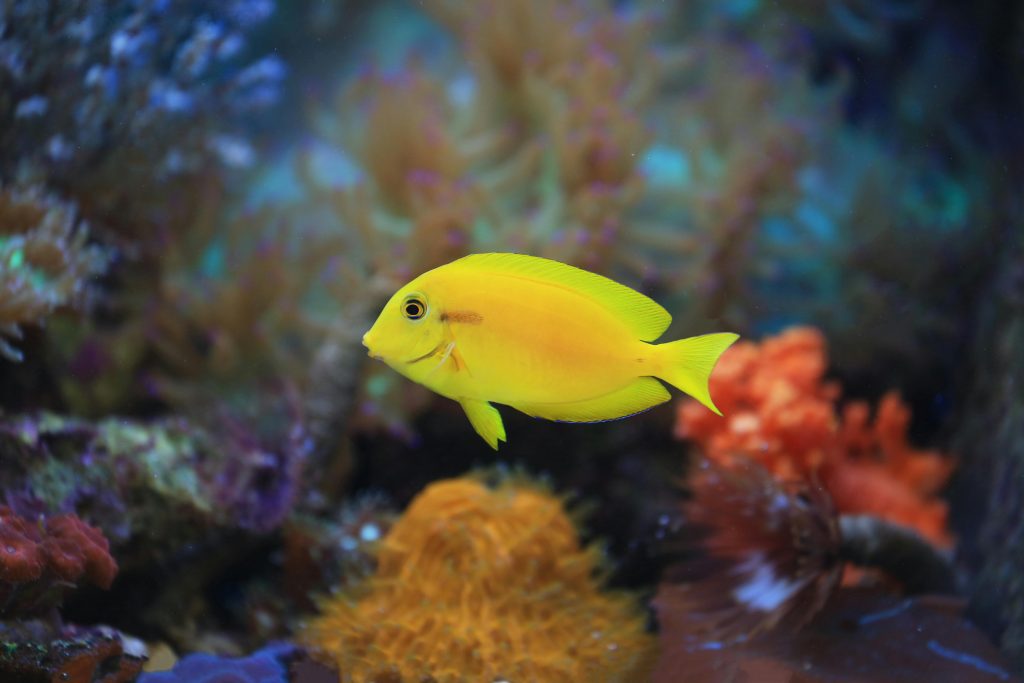
Juvenile Orange Shoulder (acanthurus Olivaceus)
Juvenile orange shoulder tangs are bright, hardy, and reef safe, but they grow large and need a spacious…
 By
By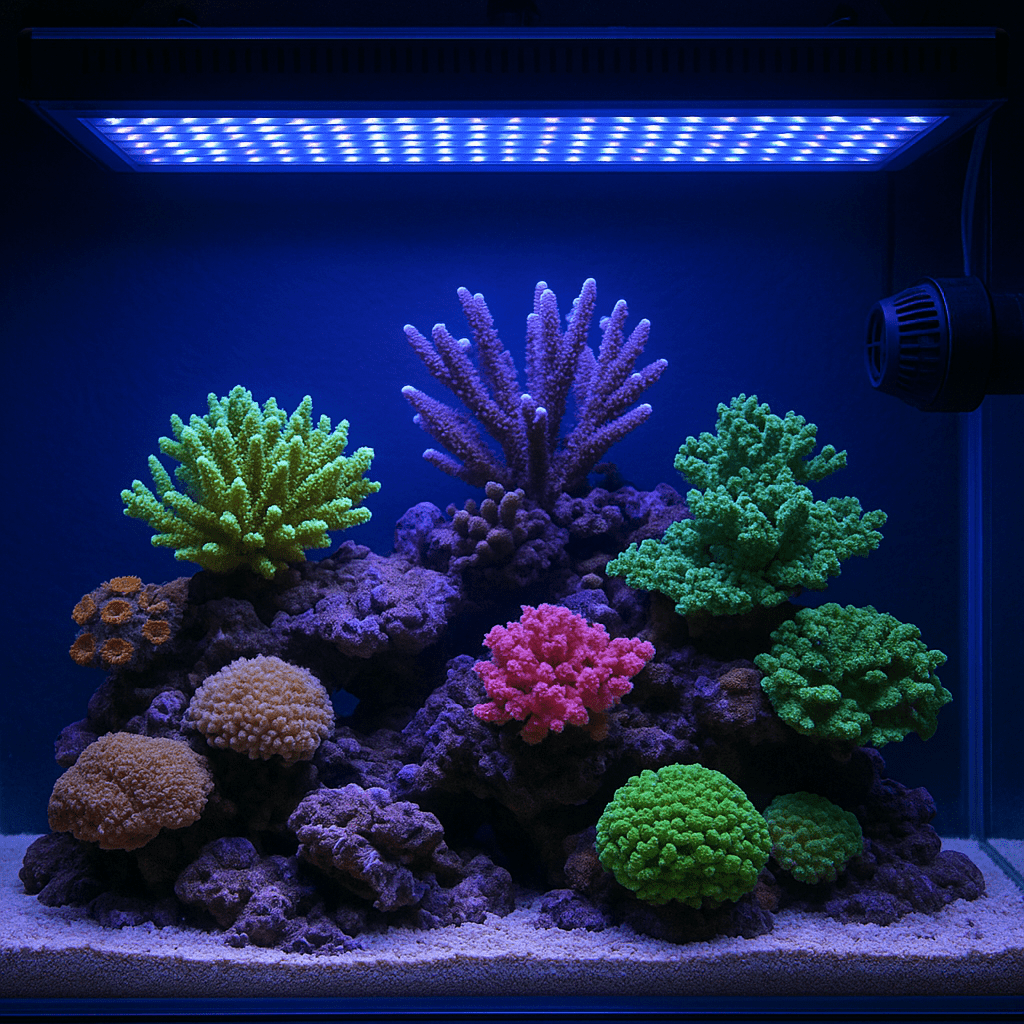
Best Filtration Systems
Best Filtration Systems for a Healthy Saltwater Aquarium Choosing the best filtration system for your saltwater aquarium is…
[favorite_button]
My Bookmarks:
To see full list click here
[user_favorites user_id="" include_links="true" site_id="" post_types="" include_thumbnails="true" thumbnail_size="thumbnail" include_excerpt="false"]