Building Your First Reef Tank
Starting a reef tank is one of the most rewarding projects in the saltwater aquarium hobby. You’re not just setting up a fish tank—you’re building a tiny slice of the ocean in your living room. With a bit of planning and patience, your first reef can thrive without becoming overwhelming or overly expensive.
Planning Your First Reef: Size, Gear, and Budget
Before buying anything, decide what type of reef you want. A beginner-friendly goal is a small mixed reef with a few hardy fish and soft corals.
Choosing the Right Tank Size
For your first reef, many hobbyists find the sweet spot is between 20–40 gallons. It’s large enough to be stable, but small enough to be affordable and easy to maintain.
- Under 10 gallons: Attractive but unforgiving; water parameters swing quickly.
- 20–40 gallons: Ideal starter range for most beginners.
- Over 55 gallons: More stable, but higher cost and more equipment.
For more help thinking through tank size, see our guide on choosing your first saltwater aquarium.
Essential Equipment Checklist
You don’t need every gadget on day one, but a few core pieces of gear are non‑negotiable:
- RO/DI water source – Reduces nuisance algae and keeps parameters stable.
- Heater and thermometer – Target 77–79°F (25–26°C).
- Quality reef light – Especially important if you plan to keep corals.
- Return pump and powerheads – Provide strong, varied flow.
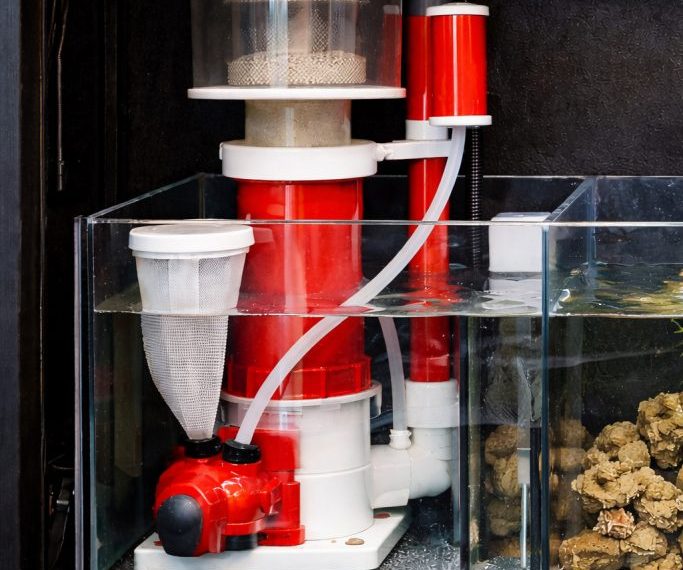
- Protein skimmer (optional at first) – Very helpful on tanks over ~30 gallons.
Choose equipment you can grow into. Upgrading everything six months in is one of the most common (and expensive) beginner mistakes.
Rock, Sand, and Cycle: Laying the Biological Foundation
Your reef’s stability depends on beneficial bacteria living on rock, sand, and filter media. This “biofilter” is what turns toxic waste into less harmful compounds.
Live Rock vs. Dry Rock
Both live rock and dry rock can work well:
- Live rock: Comes with bacteria and micro‑life; cycles faster but may bring pests.
- Dry rock: Clean and pest‑free; takes longer to mature but easier to aquascape.
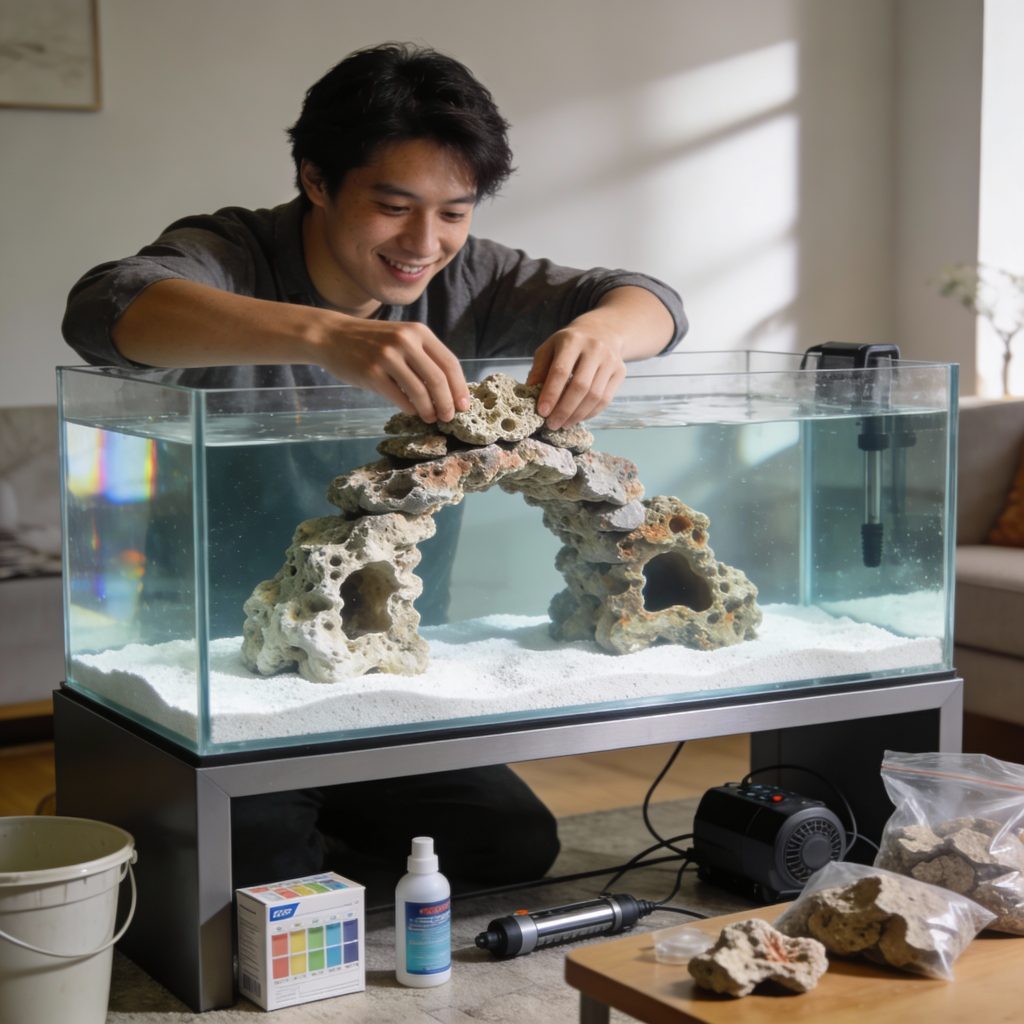
Whichever you choose, plan for roughly 0.5–1 pound of rock per gallon. Stack it securely and leave open areas for flow and fish to swim.
Cycling the Tank
Once the tank is filled with saltwater, rock, and sand, you’ll need to cycle it. This is the process of establishing your bacteria population.
- Add a source of ammonia (fish food, bottled ammonia, or a raw shrimp).
- Test for ammonia, nitrite, and nitrate regularly.
- Wait until ammonia and nitrite drop to zero and nitrate appears.
Tip: Be patient. Rushing the cycle is one of the fastest ways to run into algae blooms and livestock losses.
For a more step‑by‑step breakdown, check out our article on cycling a saltwater aquarium.
Stocking and Long‑Term Success
Once your tank is cycled, it’s time for the fun part: adding fish and corals. Go slowly and think long‑term.
Beginner‑Friendly Fish and Corals
- Good first fish: Ocellaris or Percula clownfish, firefish, royal gramma, watchman goby.
- Beginner corals: Zoanthids, green star polyps (isolate on their own rock), mushrooms, leathers.
Add no more than 1–2 fish every few weeks, testing water and watching behavior after each addition. For coral, start with hardy soft corals before moving on to LPS and SPS.
Simple Maintenance Routine
Consistency is more important than perfection. A realistic schedule for a new reefer might be:
- Daily: Feed fish lightly, check temperature and equipment.
- Weekly: 10–15% water change, clean glass, test salinity, nitrate, and alkalinity.
- Monthly: Rinse mechanical filtration, inspect pumps and heaters.
As your coral load increases, you may need to dose calcium and alkalinity. Our reef tank maintenance checklist can help you track tasks as your system matures.
Wrapping Up
Building your first reef tank is a journey, not a weekend project. Plan your system, cycle it patiently, stock slowly, and stick to a simple maintenance routine. Over time you’ll see your tank transform from bare rock to a living reef full of color and motion—and you’ll gain the confidence to tackle more advanced setups down the road.
Sources
- Fenner, R. M. (2008). The Conscientious Marine Aquarist. TFH Publications.
- Sprung, J., & Delbeek, J. C. (1994). The Reef Aquarium, Vol. 1. Ricordea Publishing.
- Michael, S. W. (2001). Marine Fishes: 500+ Essential-to-Know Aquarium Species. TFH Publications.
- Holmes-Farley, R. (2002–2010). Reef chemistry articles, Advanced Aquarist & Reefkeeping Magazine.
Was this helpful?
Related Posts
Protein Skimmer Reef Tank Guide
Learn how a protein skimmer works, how to size one, and how to tune it for a cleaner,…
 By
By
Reef Aquarium Water Parameters
Learn the ideal reef aquarium water parameters, safe ranges, and how to keep salinity, alkalinity, nutrients, and pH…