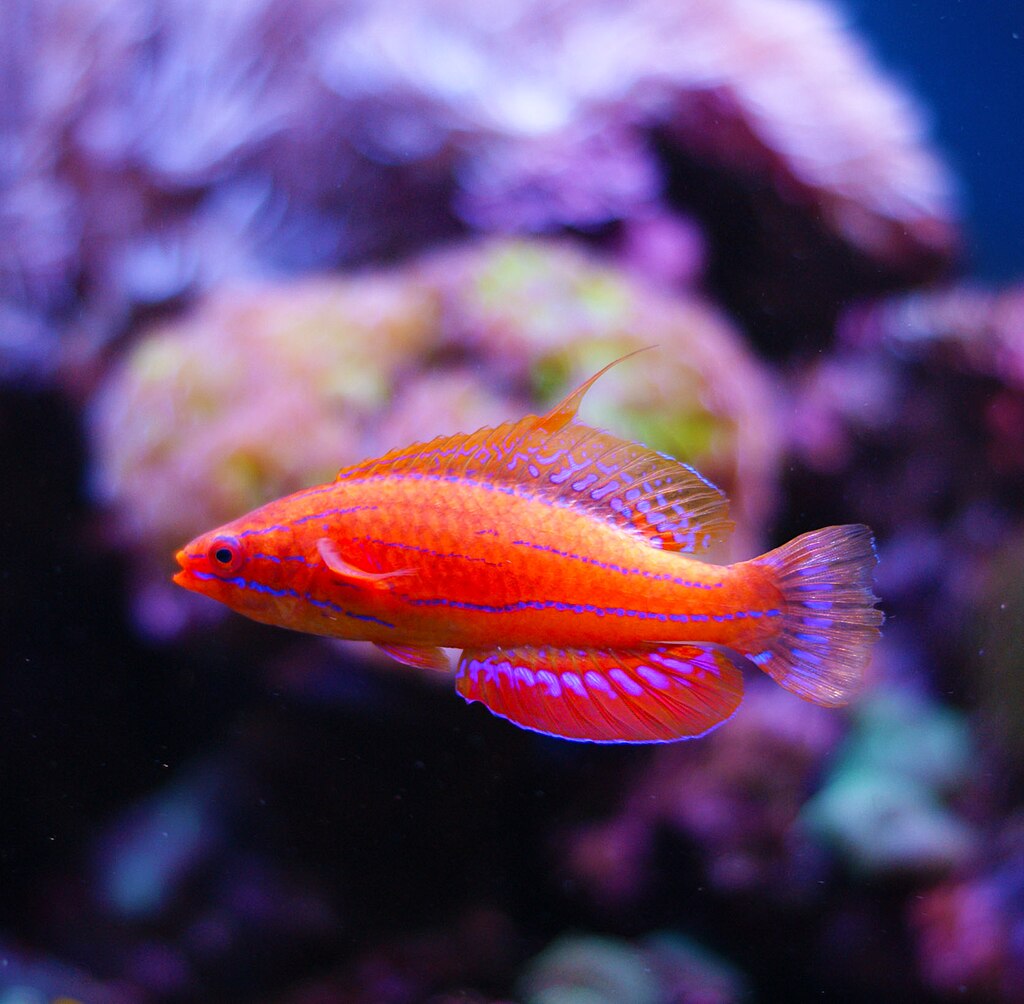
Carpenter’s flasher wrasse is a small reef fish with big energy. Males “flash” bright colors during courtship and feeding. With the right setup, this species is hardy and rewarding.
Natural behavior and what it means for your tank
Carpenter’s flasher wrasse stays active all day. It darts in open water and weaves through rockwork. Plan for movement, not just hiding spots. A 30-gallon tank works for one male or a pair.
They sleep in a mucus cocoon in the rockwork. They do not need sand for sleeping. Many still appreciate a soft sand bed. Keep 1–2 inches of fine sand if you want burrowing tankmates too.
Jumping is the top risk with this fish. They launch when startled or during flashing. Use a tight lid or mesh screen with 1/4 inch openings. Cover overflow teeth and cable gaps.
Flashing increases with calm tankmates and stable lighting. Males display most at dusk. Use a 30–60 minute ramp down if possible. For more on safe covers, see aquarium lids and mesh screens.
- Tank size: 30 gallons minimum for one male
- Temperature: 76–79°F
- Salinity: 1.025–1.026 specific gravity
- pH: 8.1–8.4 with stable alkalinity
Feeding, compatibility, and stocking choices
Carpenter’s flasher wrasse is a planktivore. It needs frequent small meals. Feed 2–3 times daily for best color and weight. Use small foods that stay suspended in flow.
Good staples include frozen mysis, calanus, and enriched brine. Add a fine pellet at 0.5–1 mm for convenience. Soak foods in vitamins twice weekly. This helps prevent fading and head issues.
Compatibility is usually excellent in peaceful reefs. Avoid aggressive dottybacks and large hawkfish. Be cautious with big fairy wrasses in small tanks. In a 30–40 gallon, keep it as the only flasher-type wrasse.
Groups can work in larger systems. Try one male with two to four females in 75 gallons or more. Add all females first, then the male. For more stocking planning, see reef tank stocking guide.
- Feed 2–3 times daily in small portions
- Use a mix of frozen and 0.5–1 mm pellets
- Keep with peaceful fish and non-bullying wrasses
- Provide strong, varied flow for midwater feeding
Acclimation, quarantine, and common problems
Start with a calm acclimation. Dim the lights and reduce flow for an hour. Drip acclimate for 30–45 minutes if salinity differs. Match salinity within 0.001 specific gravity when possible.
Quarantine helps, but wrasses stress in bare tanks. Use a covered 10–20 gallon QT with PVC and a dark backdrop. Provide an air stone and stable temperature. Keep ammonia at 0 ppm with seeded media.
Ich and velvet are the main threats. Watch for flashing against rocks and rapid breathing. A wrasse that stops eating for 24–48 hours needs attention. Check for bullying and test dissolved oxygen at night.
Many losses come from sudden parameter swings. Keep nitrate at 2–15 ppm and phosphate at 0.03–0.10 ppm. Avoid chasing zero nutrients in a new reef. For stability tips, read reef tank water parameters.
- Use a tight lid before the fish enters the tank
- Quarantine with cover, PVC, and seeded filtration
- Respond fast to fast breathing and appetite loss
- Stabilize nutrients instead of forcing ultra-low readings
Carpenter’s flasher wrasse rewards good husbandry with constant motion and vivid displays. Focus on a covered tank, frequent feeding, and peaceful tankmates. Keep parameters steady, and this wrasse can thrive for years.
Sources: Allen, Steene & Humann “Reef Fish Identification”; Michael “Marine Fishes”; Fenner “The Conscientious Marine Aquarist”.
Was this helpful?
Related Posts
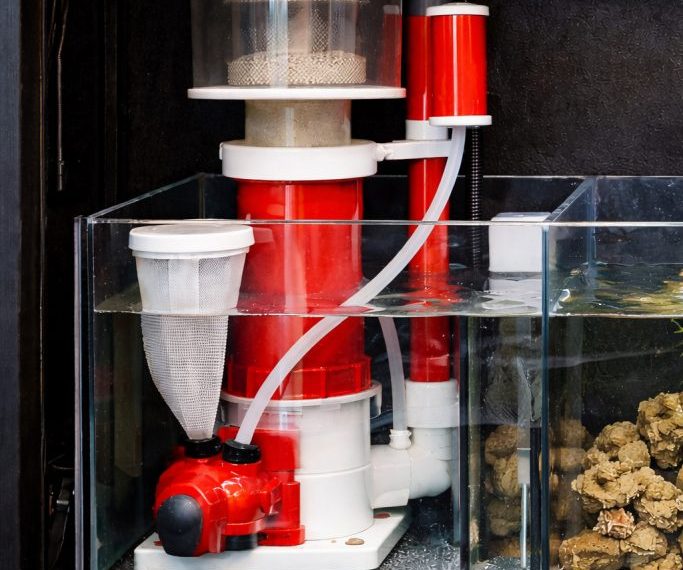
Protein Skimmer Reef Tank Guide
Learn how a protein skimmer works, how to size one, and how to tune it for a cleaner,…
 By
By
Reef Aquarium Water Parameters
Learn the ideal reef aquarium water parameters, safe ranges, and how to keep salinity, alkalinity, nutrients, and pH…