

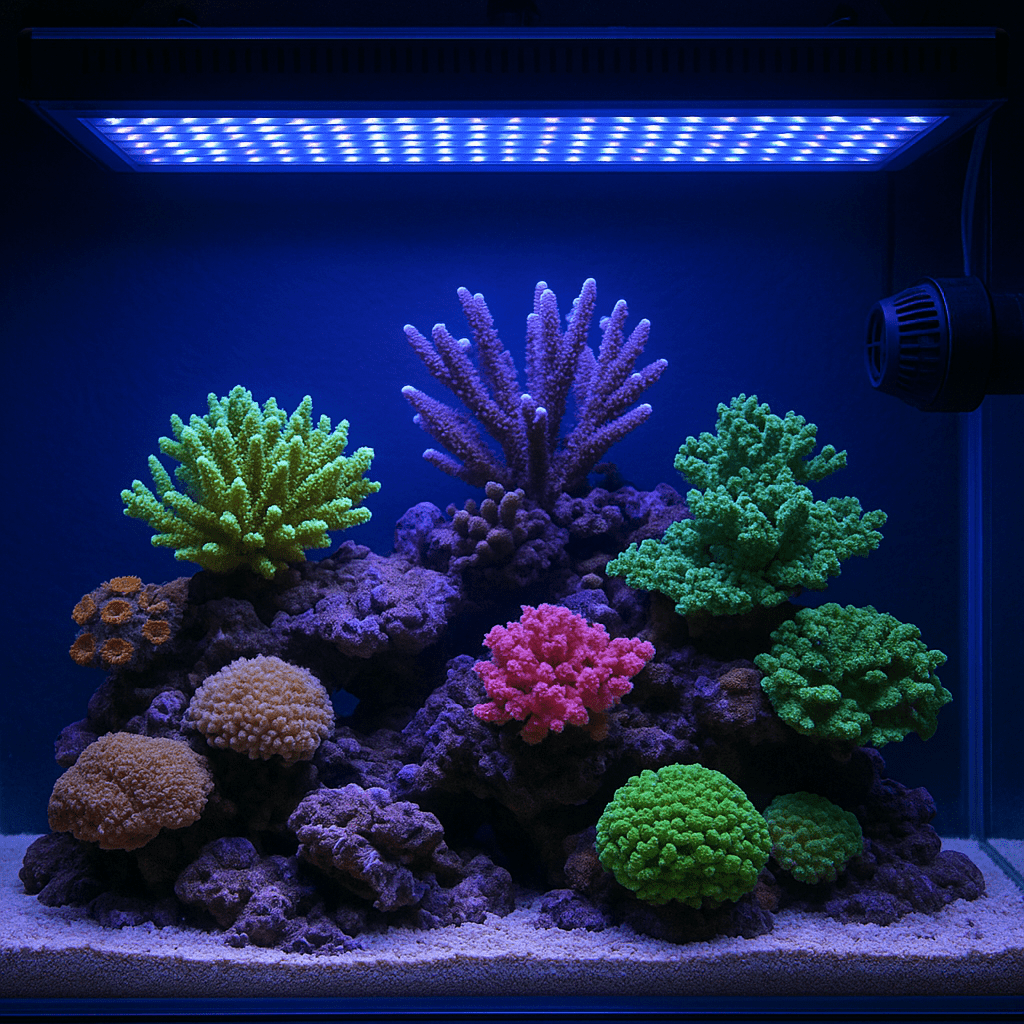
Chaetomorpha and Caulerpa are the two most common macroalgae used in reef refugiums. Both can export nutrients and support pod growth. Most hobbyists will find Chaetomorpha safer and easier. Caulerpa can grow faster, but it brings more risk and needs closer management.
Choosing between these macroalgae affects nutrient control, maintenance, and long-term stability. This guide explains the real differences in growth, care, risks, and reef compatibility. You will learn which macroalgae fits your tank goals, when each one works best, and how to avoid the common mistakes that frustrate reef keepers.
Quick Comparison Table
| Feature | Chaetomorpha | Caulerpa |
|---|---|---|
| Best use | Safe refugium nutrient export | Fast nutrient export and decorative macro systems |
| Growth rate | Moderate to fast | Fast to very fast |
| Risk level | Low | Moderate to high |
| Attachment | Free-floating | Attaches with runners and holdfasts |
| Sexual event risk | None in normal reef use | Possible |
| Pruning needs | Simple harvest | Frequent trimming |
| Escape into display | Low risk | Can become invasive |
| Pod habitat | Excellent | Good to excellent |
| Beginner friendly | Very beginner friendly | Better for experienced keepers |
If you want the short answer, choose Chaetomorpha for most reef tanks. Choose Caulerpa only if you understand the tradeoffs and can manage it closely.
What Is the Difference Between Chaetomorpha and Caulerpa?
Chaetomorpha is a wiry, spaghetti-like green macroalga. Reef keepers often call it chaeto. It usually forms a loose ball or tangled mass. It does not root into rock or sand. That makes it easy to remove and easy to control.
Caulerpa is a broad group of macroalgae species. Common types include grape Caulerpa, feather Caulerpa, and prolifera. Many have blades, fronds, or bead-like growth. They spread through runners and can attach firmly to surfaces.
Both consume nitrate and phosphate. Both also provide shelter for copepods and amphipods. The biggest difference is behavior. Chaeto stays where you put it. Caulerpa often tries to spread. That single trait shapes most of the pros and cons.
For many reef keepers, this is not just a biology question. It is a maintenance question. It is also a risk management question. A stable refugium should make reef keeping easier, not harder.
Natural Habitat
Chaetomorpha and Caulerpa both occur in shallow marine habitats. You will find them in lagoons, seagrass beds, reef flats, and sheltered coastal zones. These areas usually have strong sunlight, steady nutrient input, and moderate water movement.
Chaetomorpha often grows as loose mats. It can drift or tumble with current. This explains why it does well in refugiums with moderate flow. It does not need to anchor into substrate. It simply needs light, nutrients, and enough movement to prevent dead spots.
Caulerpa behaves more like a rooted plant, even though it is algae. It spreads across sand, rubble, and rock with runners. In nature, it can quickly colonize open space. That fast spread helps it compete. In aquariums, that same trait can become a problem.
Understanding their habitat helps explain their care. Chaeto thrives as a contained nutrient sponge. Caulerpa thrives as an aggressive colonizer. Your refugium design should match that behavior.
Aquarium Setup
Both macroalgae work best in a refugium or dedicated macroalgae chamber. A sump section is ideal. It keeps algae away from pumps, corals, and display rockwork. A hang-on refugium can also work on smaller systems.
Chaetomorpha needs open space to expand. A simple basket or bare chamber works well. Many hobbyists use an egg crate divider to keep the mass contained. This prevents strands from entering return pumps. A tumbling chaeto ball is helpful, but not required.
Caulerpa needs more planning. It can attach to rubble, sand, and chamber walls. If you use it, place it where you can easily inspect and trim every week. Avoid letting it grow near baffles or pump intakes. Fragments can spread into unwanted areas.
Tank size matters less than nutrient availability. In ultra-low nutrient reefs, either algae may struggle. In tanks with measurable nitrate and phosphate, growth is usually much better. Stable salinity, alkalinity, and pH also support healthier macroalgae growth.
Lighting Requirements
Macroalgae need strong, consistent light. A dedicated refugium light is usually better than spillover light from the display. Full-spectrum horticulture lights often grow macroalgae very well. Many reef keepers run refugium lights on a reverse schedule. That means the refugium light turns on when the display turns off.
Chaetomorpha usually responds best to moderate to high PAR. It grows thickest under bright light with good flow. If chaeto turns pale, brittle, or stops growing, light intensity may be too low. Iron deficiency or low nutrients can also cause poor color and weak growth.
Caulerpa also likes bright light. It often tolerates a wider range of conditions than chaeto. Some hobbyists run Caulerpa under longer photoperiods to reduce the risk of sexual events. A reverse cycle of 12 to 16 hours is common. Some keepers run it even longer.
Keep the light close enough for strong growth, but not so close that it overheats the chamber. Salt spray can also reduce output over time. Clean the fixture and splash guard often.
Water Flow
Flow is one of the biggest differences between success and failure. Chaetomorpha prefers moderate flow. Water should move through the mass and prevent detritus buildup. If the center collects waste, the inner strands can die. That often causes the ball to shrink or break apart.
A gentle tumble is ideal for chaeto. Tumbling exposes more surface area to light and nutrients. Still, many successful refugiums grow chaeto without full tumbling. The goal is even circulation, not violent movement.
Caulerpa tolerates lower flow better because it attaches and spreads. Even so, stagnant zones can trap detritus and fuel nuisance algae. Moderate flow keeps fronds cleaner and reduces decay. It also helps maintain gas exchange around dense growth.
If either macroalga traps detritus, siphon the chamber during water changes. Dirty refugiums often become nutrient sinks instead of nutrient export systems. Clean growth works better than neglected growth.
Feeding and Nutrient Export
Macroalgae do not need feeding in the usual sense. They consume dissolved nutrients from the water. That includes nitrate, phosphate, and trace elements. In practical reef terms, you feed your macroalgae by feeding your tank.
Chaetomorpha is widely used for steady nutrient export. As it grows, it locks nutrients into biomass. You remove those nutrients by harvesting part of the algae. This process is simple and predictable. That is one reason chaeto is so popular.
Caulerpa can export nutrients very quickly. This is useful in tanks with elevated nitrate or phosphate. However, rapid growth can also strip nutrients too low if you are not careful. Corals still need some available nutrients. A reef with zero measurable nutrients often looks pale and unstable.
Some systems need iron or trace supplementation for strong macroalgae growth. If your chaeto fades despite strong light and available nutrients, trace depletion may be the cause. Dose carefully and test when possible. More is not always better.
Compatibility With Reef Fish, Corals, and Invertebrates
In a refugium, both macroalgae are generally reef safe. They do not sting corals or attack fish. Their biggest compatibility issue is indirect. They change nutrient levels and can alter system balance.
Chaetomorpha is the safer choice for mixed reefs. It stays contained and rarely causes trouble in the display. It also creates excellent habitat for pods. That benefits mandarins and other pod-hunting fish. Many hobbyists use chaeto specifically to support a healthy microfauna population.
Caulerpa is more complicated. Herbivorous fish may eat some species if they reach the display. Tangs, rabbitfish, and some angels may graze it. That can be useful or frustrating, depending on your goal. The real concern is spread. Caulerpa can attach to display rock and become difficult to remove.
If you run a display refugium or macroalgae tank, Caulerpa can look attractive. In a coral reef display, most keepers prefer to avoid that risk. For standard reef systems, chaeto is usually the cleaner choice.
Step-by-Step: How to Choose the Right Macroalgae
- Decide your main goal. Use chaeto for safety and simplicity. Use Caulerpa for aggressive nutrient uptake or a macro display.
- Check your nutrient levels. If nitrate and phosphate are already very low, either algae may struggle.
- Look at your maintenance habits. Choose chaeto if you want easy harvests. Choose Caulerpa only if you trim regularly.
- Assess escape risk. If you do not want algae in the display, avoid Caulerpa.
- Set up strong refugium lighting. Both need consistent light to perform well.
- Provide moderate flow. Keep detritus from settling inside the algae mass.
- Harvest on schedule. Remove excess growth before it shades itself or decays.
- Monitor nutrient trends weekly. Macroalgae should support stability, not create swings.
For most beginners, this process ends with Chaetomorpha. It gives the benefits of a refugium with fewer surprises.
Propagation and Pruning
How to Harvest Chaetomorpha
Chaeto propagation is simple. Pull out a portion of the mass and discard it, trade it, or share it. Leave enough behind for regrowth. Harvesting every one to three weeks is common. The exact schedule depends on nutrient load and growth rate.
How to Trim Caulerpa
Caulerpa needs more careful pruning. Remove entire runners when possible. Avoid shredding it into many loose fragments. Small pieces can spread. Inspect the chamber after trimming and remove leftovers by hand or with a siphon.
Best Practice for Both
Never let macroalgae overfill the chamber. Dense growth blocks light and traps waste. Regular harvesting keeps growth healthy and nutrient export efficient. A half-full refugium often works better than one packed to the top.
Common Problems
Why Is My Chaeto Not Growing?
The most common causes are weak light, low nutrients, poor flow, or trace element depletion. Check nitrate and phosphate first. If both read zero, chaeto may be starving. If nutrients are available, improve lighting and circulation. Also inspect for detritus clogging the center.
Why Is My Chaeto Turning White or Falling Apart?
This usually points to die-off from shading, poor flow, or nutrient starvation. Remove damaged sections. Clean the chamber. Reduce the mass size so light reaches more surfaces. Confirm that salinity and temperature are stable.
Why Did My Caulerpa Go Sexual?
Caulerpa can release gametes and cloud the water during a sexual event. Stress, sudden lighting changes, neglect, or overgrowth can contribute. Remove affected algae quickly. Run fresh carbon. Perform a water change if the water clouds or livestock shows stress. Keep pruning consistent to reduce risk.
Why Is Caulerpa Spreading Into My Display?
Fragments or runners likely escaped from the refugium. Remove visible pieces by hand. Scrape attached growth from rock if needed. Improve physical containment in the sump. If the problem continues, switch to chaeto.
Why Are Nutrients Still High?
Macroalgae are not magic. If feeding is heavy and export is weak, nutrients can remain elevated. Increase harvest frequency, improve light, and clean trapped detritus. Also review skimming, water changes, and source water quality.
Frequently Asked Questions
Is Chaetomorpha better than Caulerpa for beginners?
Yes. Chaetomorpha is easier to contain, easier to harvest, and much lower risk. It is the better starting point for most reef keepers.
Does Caulerpa remove nutrients faster than chaeto?
Often yes. Many Caulerpa species grow very quickly. Faster growth can mean faster nutrient uptake. It also means more pruning and more risk.
Can I keep both Chaetomorpha and Caulerpa together?
You can, but it is not always ideal. One may outcompete the other. Mixed macro refugiums can work, but they need closer observation and more maintenance.
Does macroalgae replace a protein skimmer?
No. Macroalgae and skimmers do different jobs. Many successful reef tanks use both. Together, they create more balanced nutrient control.
Which macroalgae is best for pod production?
Chaetomorpha is usually the favorite. Its tangled structure gives pods excellent shelter. It is one of the best refugium choices for mandarin keepers.
Final Verdict
If you want the safest answer, choose Chaetomorpha. It is reliable, beginner friendly, and easy to manage. It supports pods well and rarely creates major problems. That makes it the best all-around refugium macroalga for most reef tanks.
Choose Caulerpa only when you need faster growth or want a dedicated macroalgae system. It can work very well, but it demands more attention. In reef keeping, simple systems often stay stable longer. That is why chaeto remains the default choice for so many hobbyists.
Related reading: best refugium lighting for chaeto, reef tank nitrate and phosphate guide, how to set up a refugium, copepods in a reef tank, protein skimmer vs refugium
Was this helpful?
Related Posts
Our Reef Emergency Plan
A reef emergency plan helps you act fast during outages, leaks, and water quality crashes. Here is the…
 By
ByReef Alkalinity and Calcium Guide
Learn the ideal reef alkalinity and calcium ranges, how they interact, and how to test, dose, and troubleshoot…
[favorite_button]
My Bookmarks:
To see full list click here
[user_favorites user_id="" include_links="true" site_id="" post_types="" include_thumbnails="true" thumbnail_size="thumbnail" include_excerpt="false"]