

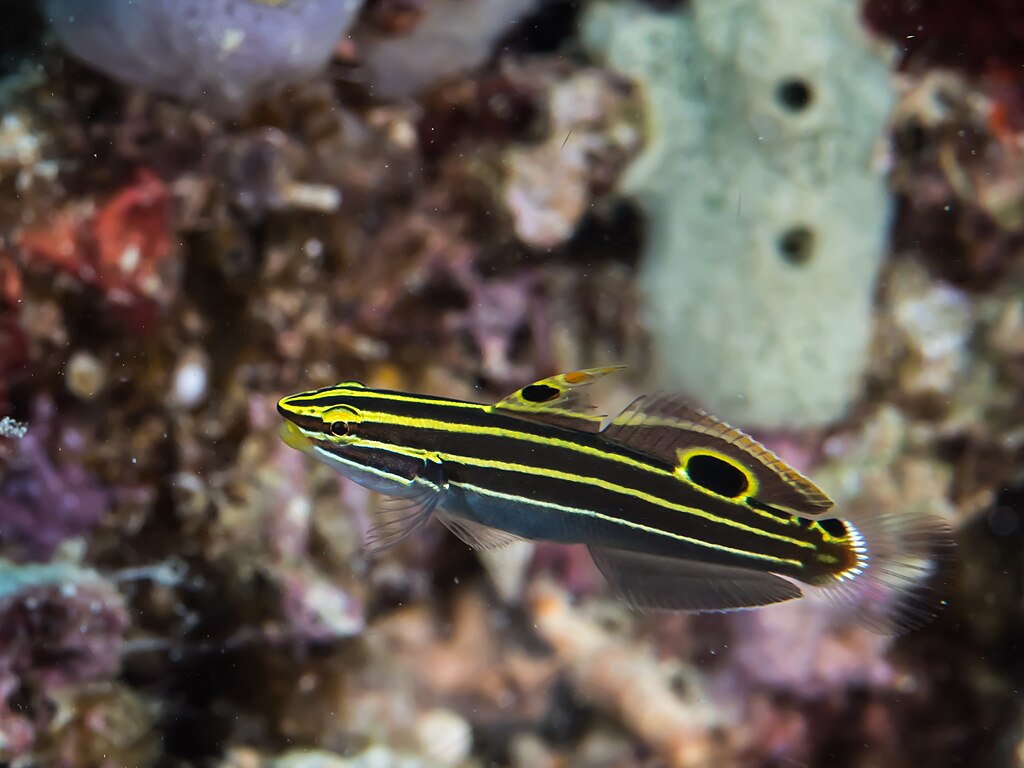
Hector’s goby is a small, peaceful sand-sifting reef fish with bright blue lines and constant activity. It does best in mature aquariums with fine sand, stable water, and plenty of natural microfauna. This species is attractive, useful, and beginner-friendly when its feeding needs are understood.
Many reef keepers first notice Hector’s goby because of its movement. It glides over the sand, picks at the substrate, and adds life to the lower part of the tank. It also stays fairly small, which makes it appealing for nano and medium reef systems. Still, this fish is not fully carefree. It needs a well-established aquarium, calm tank mates, and frequent access to tiny foods. In this guide, you will learn how to care for Koumansetta hectori, choose the right setup, feed it properly, and avoid the common mistakes that lead to weight loss or stress.
Quick Reference Care Table
| Common name | Hector’s Goby |
| Scientific name | Koumansetta hectori |
| Family | Gobiidae |
| Care level | Easy to moderate |
| Temperament | Peaceful |
| Adult size | About 3 inches |
| Minimum tank size | 20 gallons, larger is better |
| Diet | Microfauna, pellets, frozen foods, algae film |
| Reef safe | Yes |
| Preferred substrate | Fine sand |
| Temperature | 76–80°F |
| Salinity | 1.024–1.026 |
| pH | 8.1–8.4 |
| Flow | Low to moderate near the sand bed |
| Lighting | No special demand |
This quick chart covers the basics. The details matter most with this species. A healthy Hector’s goby should stay active, alert, and slightly rounded through the belly. Thin fish often struggle in newer tanks. Mature systems give them the best long-term results.
What Is Hector’s Goby?
Hector’s goby is a slender reef goby known for its blue horizontal stripes and yellow to tan body. It belongs to a group often called dragon gobies or sleeper-type gobies, though it is smaller and gentler than many larger sand sifters. It spends much of the day hovering low, pecking at the sand, and searching rock surfaces for edible film and tiny organisms.
This fish is popular because it combines beauty with utility. It helps keep the sand bed active and can reduce light surface film on substrate and rock. It also has a calm personality. That makes it a good fit for peaceful reef tanks. Even so, hobbyists should not assume it will survive on leftover food alone. Like many small grazing fish, it feeds often in nature. It benefits from a tank rich in pods, biofilm, and fine particulate foods. In the right setup, Hector’s goby becomes a hardy and rewarding reef inhabitant.
Natural Habitat
Koumansetta hectori occurs in the Indo-Pacific. It is found around shallow reef flats, lagoons, sandy rubble zones, and calm coastal reef areas. These habitats usually have mixed sand, small rock pieces, algae growth, and abundant micro-life. The fish stays close to the bottom and uses camouflage and quick movements for protection.
In the wild, Hector’s goby spends the day browsing. It does not hunt large prey. Instead, it picks at tiny invertebrates, detritus, algae film, and suspended edible particles trapped on the substrate. This natural behavior explains why mature aquariums work best. A sterile tank offers less grazing opportunity. Bare-bottom systems are also less ideal for this species. If you want to mimic its habitat, think shallow sand, porous live rock, and calm zones with light biological growth. Replicating these conditions improves feeding response, body weight, and overall confidence.
Aquarium Setup
A 20-gallon aquarium is often listed as the minimum size. A larger tank is safer. More water volume stays stable and supports more natural food. A 30-gallon or larger mature reef is an excellent home for one Hector’s goby. The tank should have a fine sand bed. Sharp crushed coral can irritate the mouth and gills. Fine aragonite sand is the better choice.
Use live rock with open areas between structures. This fish likes to move between sand patches and low rockwork. Leave room at the front of the tank for foraging. Avoid aggressive aquascapes that block the bottom. A secure lid is also wise. Gobies can jump, especially during acclimation or when chased. Stability matters more than fancy equipment. Keep ammonia and nitrite at zero. Keep nitrate and phosphate in a reasonable reef range. Sudden swings in salinity or temperature can stress this species quickly. For more help with system planning, see reef tank setup guide and reef aquarium sand bed guide.
Lighting Requirements
Hector’s goby has no demanding lighting requirement of its own. It does not depend on intense reef lighting like photosynthetic corals do. Moderate lighting is usually fine. What matters is how the lighting supports the overall aquarium. In a reef tank, your lights will be chosen mainly for coral health. The goby will adapt as long as it has shaded areas and a comfortable lower zone.
Very bright lighting can make new or timid specimens feel exposed, especially in sparse aquascapes. If the fish hides constantly, review the layout rather than the light alone. More rock cover and visual breaks often help. Some film algae and biofilm growth can also benefit this species. Ultra-clean systems with intense export may reduce natural grazing. The goal is balance. Keep the tank clean, but not sterile. If you are building a coral system around this fish, read reef lighting basics to match coral needs without making the lower tank too exposed.
Water Flow
Hector’s goby prefers low to moderate flow near the substrate. It can handle a reef tank with stronger overall circulation, but it should have calmer bottom zones where it can feed without being pushed around. This is easy to achieve with smart pump placement. Aim stronger flow across the upper rockwork and leave gentler movement along the sand bed.
Too much direct flow can prevent natural foraging. The fish may spend more energy holding position and less time eating. It may also avoid open sand completely. On the other hand, dead spots are not ideal either. Gentle movement keeps oxygen levels up and prevents waste buildup. Watch the fish rather than relying only on pump settings. A comfortable Hector’s goby moves smoothly, pauses to pick at surfaces, and does not appear pinned in place. Fine adjustments often make a big difference in behavior and feeding success.
Feeding Hector’s Goby
Feeding is the most important part of Hector’s goby care. Many specimens arrive thin. Some have spent too long in holding systems with little natural food. A healthy fish may accept prepared foods quickly, but others need time. Start with a mature tank that already contains copepods, biofilm, and light algae growth. Then offer small foods often.
Good options include enriched baby brine shrimp, frozen cyclops, finely chopped mysis, small sinking pellets, and high-quality marine flakes crushed into tiny pieces. Feed once or twice daily at minimum. More frequent small feedings are even better. Target feeding near the fish can help shy specimens. Watch closely to confirm it actually eats. Sand-sifting behavior does not always mean enough nutrition. The fish may browse all day and still lose weight in a poor system. A rounded belly is your best sign of success. For broader nutrition tips, visit best food for reef fish.
Compatibility
Hector’s goby is peaceful and reef safe. It usually ignores corals, shrimp, snails, and other invertebrates. It also works well with calm community fish. Good tank mates include clownfish, firefish, small blennies, cardinalfish, assessors, and other non-aggressive gobies if space allows. It is an excellent candidate for peaceful mixed reefs.
Avoid housing it with aggressive feeders and territorial bottom dwellers. Large wrasses, dottybacks, hawkfish, and some established gobies may outcompete or harass it. Fast fish can steal food before the goby reacts. This is a common cause of slow starvation. If keeping more than one Hector’s goby, add a bonded pair or use a larger tank with room and structure. Single specimens are usually the simplest choice. Because this fish stays near the bottom, always evaluate competition in that zone. Peaceful upper-water fish are rarely a problem. Bottom territory matters much more.
Step-by-Step Acclimation Guide
Proper acclimation improves survival. This fish does not handle rough transfer well.
- Prepare a covered quarantine or display tank first. Match salinity and temperature closely.
- Dim the lights before opening the bag. Bright light increases stress.
- Float the bag for temperature adjustment. Do this for 15 to 20 minutes.
- Use slow drip acclimation if salinity differs. Keep the process gentle and controlled.
- Transfer the fish without store water if possible. Use a specimen cup, not a rough net.
- Offer hiding spots and leave the tank quiet. Do not chase the fish to make it eat.
- Begin with small frozen foods and natural grazing access. Observe body weight daily.
Quarantine is strongly recommended. It helps you monitor feeding and watch for parasites. Thin fish often need extra attention before entering a busy display tank.
Propagation and Breeding
Hector’s goby is not commonly bred by home hobbyists, and captive breeding reports remain limited compared with clownfish or dottybacks. Like many gobies, it likely uses demersal eggs and a larval stage that requires specialized foods. That makes routine home propagation difficult.
Can Hector’s Goby Spawn in Aquariums?
Pairs may show courtship behavior in stable systems, especially if well fed. Still, successful rearing is rare. Larvae are very small and need live planktonic foods at the right size. Most hobbyists focus on long-term care rather than breeding.
Should You Try to Pair Them?
You can try in larger peaceful tanks, but do not force two adults into a small space. Watch for chasing and food competition. For most keepers, one healthy specimen is the safest plan.
Common Problems
Hector’s Goby Is Getting Thin
This is the most common issue. The likely causes are a new tank, low microfauna, strong feeding competition, or refusal of prepared foods. Increase feeding frequency. Offer smaller foods. Reduce competition during meals. Consider moving the fish to a quieter tank if needed.
Hiding All the Time
New arrivals often hide for several days. Persistent hiding suggests stress. Check for aggressive tank mates, excessive flow, or a lack of cover. Review water quality and salinity stability. Add visual breaks near the sand bed.
Not Eating Prepared Foods
Start with live or highly enticing frozen foods. Feed very small portions near the fish. Turn off pumps briefly if needed. Some specimens take time to recognize pellets. A mature tank can bridge the gap while training occurs.
Sand Spitting or Constant Sifting
This behavior is normal. It is how the fish searches for food. It usually does not rearrange the tank heavily like larger sleeper gobies. If the fish appears frantic, check feeding levels and bottom flow.
Jumping or Sudden Panic
Gobies can jump when startled. Use a tight lid or mesh cover. Sudden panic may come from reflections, bullying, or abrupt light changes. Reduce stress triggers and keep transitions gradual.
Frequently Asked Questions
Is Hector’s goby good for beginners?
Yes, with one condition. The tank should be mature and stable. Beginners often succeed if they research feeding well and avoid aggressive tank mates.
Will Hector’s goby clean the sand bed?
It helps keep the top layer active and browsed. It is not a full solution for dirty substrate. Good flow, filtration, and maintenance still matter.
Can Hector’s goby live in a nano reef?
Yes, if the nano reef is mature and not overcrowded. Very small tanks can struggle to provide enough natural food over time.
Is Hector’s goby reef safe with corals?
Yes. It does not normally nip corals or bother ornamental invertebrates. It is considered reef safe.
How long does Hector’s goby live?
With good care, several years is realistic. Longevity depends heavily on nutrition, low stress, and stable water quality.
Final Thoughts
Hector’s goby is one of the best small bottom-dwelling fish for a peaceful reef tank. It is colorful, useful, and full of personality. Its care is straightforward once you understand its feeding style. Give it fine sand, a mature aquarium, calm companions, and steady access to small foods. Do that, and this little goby can become a standout fish that is always in view and always working the reef.
Was this helpful?
Related Posts
Juvenile Orange Shoulder (acanthurus Olivaceus)
Juvenile orange shoulder tangs are bright, hardy, and reef safe, but they grow large and need a spacious…
 By
By
Best Filtration Systems
Best Filtration Systems for a Healthy Saltwater Aquarium Choosing the best filtration system for your saltwater aquarium is…
[favorite_button]
My Bookmarks:
To see full list click here
[user_favorites user_id="" include_links="true" site_id="" post_types="" include_thumbnails="true" thumbnail_size="thumbnail" include_excerpt="false"]