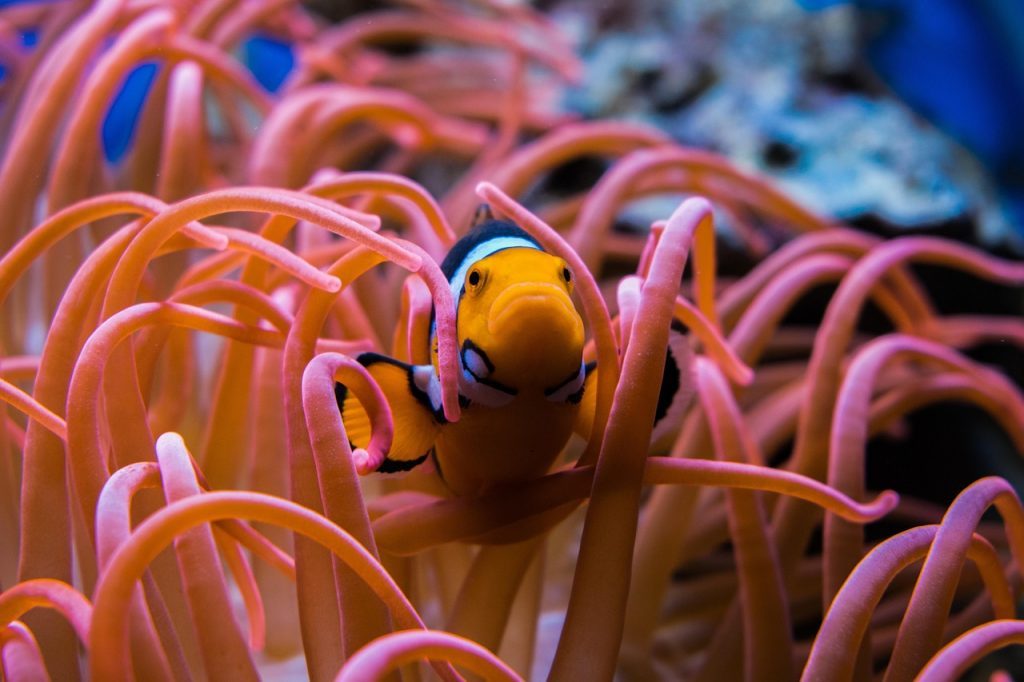
Clownfish and anemones are a classic reef pair. In aquariums, hosting can be easy or frustrating. The key is choosing compatible animals and giving them stable conditions.
Pick the right anemone and the right tank
Not every anemone is a safe match for every clownfish. Common, hardy choices include bubble tip anemones. Many captive-bred ocellaris also host them. Some clowns may ignore an anemone for weeks.
Tank maturity matters more than luck. Aim for a tank that is at least 6 months old. Use stable salinity at 1.025 to 1.026. Keep temperature at 25 to 26 C, or 77 to 79 F.
Give the anemone proper light and flow. Many bubble tips do well under PAR 150 to 250. Use random, moderate flow that makes tentacles sway. Avoid a direct jet that pins it down.
Plan space and safety before you buy. A 20 to 30-gallon tank can work for one bubble tip. Larger is easier to keep stable. Cover powerheads with guards or foam sleeves to prevent shredding.
- Target parameters: ammonia 0, nitrite 0, nitrate 2 to 15 ppm, phosphate 0.03 to 0.10 ppm
- Alkalinity: 8 to 9 dKH, calcium 400 to 450 ppm, magnesium 1250 to 1400 ppm
- Placement: start mid-rockwork, then let it choose its final spot
For more setup basics, review reef tank parameters. If you are still stocking, see our clownfish care guide for tankmate planning.
How hosting starts, and how to encourage it safely
Hosting is a behavior, not a requirement. Clownfish can live long lives without an anemone. Some will host a torch coral or a powerhead instead. Do not force contact between fish and anemone.
Start by reducing stress. Quarantine new clownfish for 2 to 4 weeks. Watch for ich and brooklynella. Use a separate acclimation box if the fish is bullied in the display.
Introduce the anemone first when possible. Give it 7 to 14 days to settle. Once it stays put, add the clownfish. Stable lighting schedules help, such as 9 hours peak intensity daily.
Feeding can nudge interest, but avoid overfeeding the anemone. Offer a 5 to 10 mm piece of mysis, shrimp, or clam once or twice weekly. Turn off pumps for 10 minutes during feeding. Remove leftovers after 20 minutes.
- Use a feeding stick to place food on the anemone’s tentacles
- Keep clownfish well fed with two small meals daily
- Maintain gentle nighttime flow so the anemone can breathe
If your clown hosts corals, check for tissue damage. Clowns can irritate LPS by constantly rubbing. You may need to move the coral or add a better host. See anemone placement and flow tips for safer positioning.
Troubleshooting common hosting problems
A wandering anemone usually signals a problem. Check light intensity and flow first. Then test salinity and alkalinity for swings. A 0.002 salinity change in a day can trigger movement.
If the clownfish never hosts, stay patient. Captive-bred fish can take months. Do not use mirrors or confinement tricks. Those methods raise stress and can cause injuries.
Watch for anemone deflation cycles. крат short deflation can be normal. Repeated gaping mouth, mushy tissue, or strong odor is not normal. Prepare a backup container with matched water for emergency isolation.
Also manage aggression. A hosting pair may defend a 12 to 18 inch radius. Keep timid fish away from that zone. Rearrange a rock or two if fights start after hosting begins.
- Mistake: adding an anemone to a new tank under 3 months old
- Mistake: blasting it with direct flow from a wavemaker
- Fix: stabilize alkalinity with small daily dosing, not big weekly jumps
Conclusion: Clownfish hosting anemones works best with planning and patience. Choose compatible species and keep parameters steady. Let the animals decide the pace, and you will see natural hosting behavior.
Sources: Fautin, D.G. & Allen, G.R. (1992) Anemonefishes and their Host Sea Anemones; Sprung, J. (2005) The Reef Aquarium Vol. 3; Delbeek, J.C. & Sprung, J. (1994) The Reef Aquarium Vol. 1
Was this helpful?
Related Posts
Best Reef Safe Cleanup Crew
The best reef safe cleanup crew includes hardy snails, selective scavengers, and a few specialty invertebrates matched to…
 By
By
Reef Safe Fish for Beginners
Discover the best reef safe fish for beginners, plus tank size, feeding, and compatibility tips for a peaceful…