
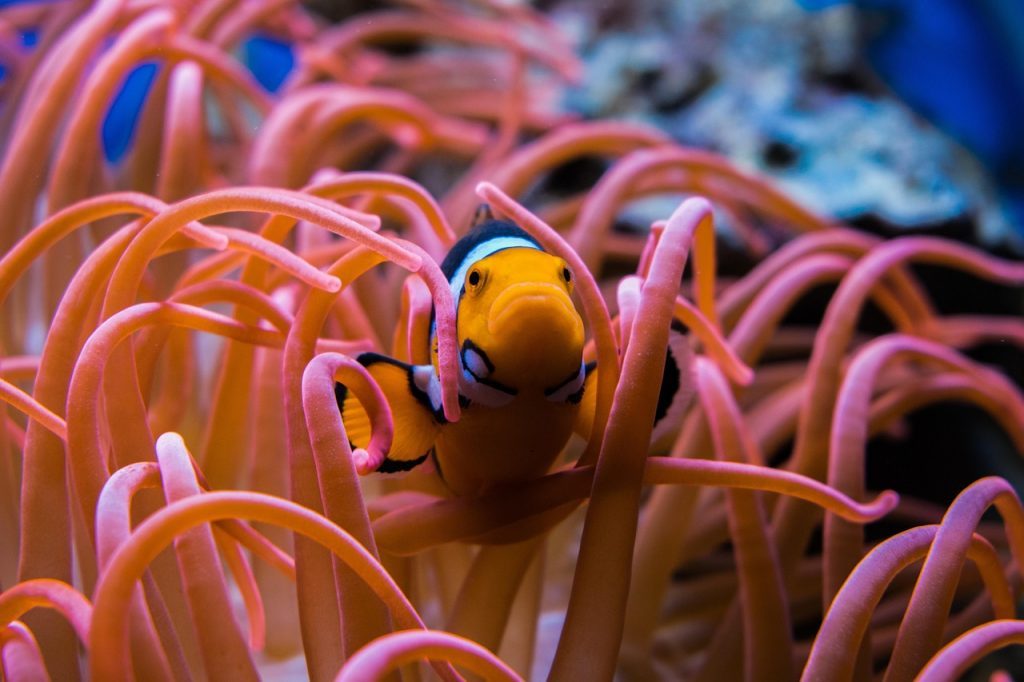
Clownfish hosting anemones is one of the most iconic reef tank behaviors. It looks amazing, but it does not always happen right away. Success depends on species choice, tank maturity, stable water, and patience. When the pairing is right, both animals can thrive in a well-planned reef aquarium.
Many hobbyists buy clownfish and an anemone expecting an instant bond. In reality, hosting can take days, months, or never happen at all. Some captive-bred clownfish ignore anemones completely. Others adopt powerheads, torches, or corner seams instead. In this guide, you will learn which clownfish and anemones pair best, how to set up the tank, what water conditions matter most, and how to avoid common mistakes. You will also learn when to intervene and when to simply let nature take its course.
Quick Reference Table
| Topic | Best Practice |
|---|---|
| Best clownfish for hosting | Ocellaris, Percula, Clarkii, Tomato, Maroon |
| Best beginner anemone | Bubble Tip Anemone (Entacmaea quadricolor) |
| Minimum tank size | 40 gallons for a single BTA setup |
| Tank age | At least 6 months, preferably longer |
| Lighting | Moderate to high reef lighting |
| Flow | Moderate, indirect, variable flow |
| Temperature | 77-79°F |
| Salinity | 1.025-1.026 specific gravity |
| Nitrate | Low to moderate, stable |
| Phosphate | Low but measurable |
| Feeding | Small meaty foods 1-2 times weekly |
| Main risk | Anemone wandering into pumps or corals |
This table gives you the short version. The details below will help you avoid expensive mistakes. Anemones are not beginner-proof animals. They demand stability more than most fish. Clownfish are hardy, but their host still needs mature reef conditions.
Do Clownfish Need Anemones?
No. Clownfish do not need an anemone to live a healthy life in captivity. They can breed, eat well, and behave normally without one. Many captive-bred clowns never see an anemone during early development. That can make hosting less predictable in home aquariums.
Anemones provide shelter in nature. Their stinging tentacles protect clownfish from predators. In return, clownfish defend the anemone, clean it, and may bring food. This is a true symbiotic relationship. In aquariums, the benefit is mostly visual and behavioral. It is rewarding to watch, but it is not required for clownfish welfare. If your tank is new, unstable, or small, skip the anemone for now. Healthy clownfish without a host are better than stressed clownfish with a dying anemone.
Which Clownfish Host Anemones Best?
Not all clownfish behave the same way. Ocellaris and Percula clownfish are the most popular. They stay smaller and are usually peaceful. They can host anemones, but some captive-bred individuals take a long time. Clarkii clownfish are often faster and bolder. Tomato and Maroon clownfish also host readily, but they can become aggressive.
If you want the best balance of temperament and availability, start with Ocellaris clownfish and a healthy Bubble Tip Anemone. If you want stronger hosting instincts, Clarkii clownfish are excellent. Just plan for a more assertive fish. Avoid mixing clown species in most tanks. Territorial fights can be severe. A bonded pair is usually the safest choice. Juveniles can be paired, but always watch for bullying as they mature.
Best Anemones for Clownfish Hosting
The Bubble Tip Anemone is the best option for most reef keepers. It is hardy compared with other hosting species. It adapts well to reef tanks. It also comes in beautiful color forms. Rose Bubble Tips are especially popular. Many clownfish accept them readily.
Other natural host anemones include Magnifica, Carpet, Sebae, and Long Tentacle anemones. These species can be stunning, but they are less forgiving. Magnifica anemones need very strong light and excellent flow. Carpet anemones can eat fish. Sebae anemones are often sold bleached and unhealthy. Long Tentacle anemones need a proper sand bed and stable placement. For beginners and intermediate hobbyists, Bubble Tip Anemones remain the smartest choice. They split in healthy systems and are easier to source as tank-propagated specimens.
Natural Habitat
Clownfish live in warm Indo-Pacific reefs. They are found among lagoons, reef slopes, and sheltered coral zones. Their host anemones anchor into rock or sand depending on species. Light is strong in these shallow reef areas. Water movement is steady but not chaotic.
In nature, clownfish usually stay close to a single host. They dart in and out of tentacles when threatened. This behavior reduces predation. Different clownfish species prefer different host anemones. That matters in captivity. While clownfish may adopt non-natural hosts in aquariums, natural pairings often produce the best results. Understanding habitat also explains why mature tanks matter. These animals evolved in stable environments. Sudden swings in salinity, temperature, or nutrients can stress them quickly.
Aquarium Setup
A stable reef tank is the foundation of success. For a Bubble Tip Anemone and clown pair, 40 gallons is a practical minimum. Larger tanks are easier to keep stable. They also reduce aggression and give the anemone room to settle. Add porous live rock with secure crevices. Bubble Tips like to place their foot deep in rockwork.
Protect all powerheads and overflow intakes. Wandering anemones can be shredded by pumps. That can crash a tank fast. Keep enough distance between the anemone and prized corals. Anemones sting nearby neighbors. Do not add an anemone to a fresh tank. Wait at least six months. Many experienced reefers wait closer to a year. Stable salinity, temperature, alkalinity, nitrate, and phosphate matter more than chasing perfect numbers. If you need help building a stable system, see reef tank setup guide and reef aquarium water parameters.
Lighting Requirements
Most host anemones need moderate to high lighting. Bubble Tip Anemones usually do well under quality reef LEDs, T5s, or hybrid systems. They contain zooxanthellae, which provide much of their energy. Weak lighting often leads to stretching, wandering, and poor color.
Aim for stable intensity rather than constant changes. Avoid moving the anemone often. Let it choose its own spot. If you recently upgraded lights, acclimate slowly. Sudden jumps in PAR can bleach an anemone. Pale tissue, a gaping mouth, and shrinking size are warning signs. Too little light can also cause problems. The anemone may climb the rockwork searching for a brighter location. Once it settles, resist the urge to keep adjusting the scape. Stability helps far more than perfection.
Water Flow
Host anemones prefer moderate, indirect flow. The tentacles should sway gently. They should not be blasted in one direction all day. Strong direct flow can cause the anemone to retract or move. Weak flow can let waste settle around the oral disc.
Random flow patterns work well in mixed reefs. If the anemone keeps wandering, review both flow and light. It may be searching for a better balance. Clownfish also affect flow around the anemone. Their constant movement can help circulate water through the tentacles. That is normal. However, very large clownfish can irritate a small or newly introduced anemone. In those cases, use a temporary acclimation box or divider until the anemone fully expands and attaches well.
Feeding
Anemones gain energy from light, but they still benefit from feeding. Offer small portions of mysis shrimp, finely chopped shrimp, or other marine meaty foods once or twice weekly. Do not overfeed. Large meals can rot if the anemone spits them out later.
Clownfish may bring food to the host. That behavior is a good sign, but it does not replace direct feeding in every tank. Feed the clownfish a varied diet too. Use quality pellets, frozen mysis, brine with enrichment, and occasional seafood blends. Healthy clownfish are more likely to display natural hosting behavior. If you want a stronger feeding plan, read best food for clownfish. Avoid target feeding when the anemone is stressed, deflated, or recently moved. Let it settle first.
Compatibility
Clownfish and anemones are usually reef safe with caution. The biggest issue is placement. Anemones can sting corals and move without warning. Keep space around them. Many reef keepers dedicate an island rock to the anemone. This can reduce wandering and limit coral damage.
Most peaceful reef fish ignore anemones. Some fish, however, may nip at stressed tissue. Large angelfish and certain butterflyfish are risky. Shrimp are usually safe, though very hungry anemones can catch weak or sleeping tank mates. Maroon, Tomato, and Clarkii clownfish may become territorial once established. They can bully new fish and even nip your hand during maintenance. Plan your stocking around the clown pair. For help choosing tank mates, visit reef safe fish for beginners.
How to Encourage Hosting
You cannot force hosting, but you can improve the odds. First, choose a natural or commonly accepted host. Bubble Tip Anemones work well in most home aquariums. Second, keep only one obvious host option at first. If your clowns already love a powerhead or torch coral, they may ignore the anemone.
Third, be patient. Some clownfish host on day one. Others take many months. Avoid stressful tricks. Do not net the fish into the anemone. Do not tape photos to the glass expecting a miracle. Those methods sometimes circulate online, but they are unreliable. Good health and low stress matter more. A settled anemone with full extension often attracts interest on its own. Younger clownfish may adapt faster than older established fish. If your pair never hosts, that is still normal. It does not mean anything is wrong.
Propagation and Splitting
Natural Splitting
Bubble Tip Anemones often reproduce by splitting in healthy aquariums. This usually happens after growth, feeding, or environmental change. A split can be a sign of strong health, but not always. Stress can also trigger division.
What Hobbyists Should Do
Leave the anemone alone during a split. Maintain stable parameters. Watch powerheads carefully. Newly divided anemones may move more than usual. Once healed, you can trade or relocate clones. Tank-propagated Bubble Tips are often hardier than wild imports. That makes them an excellent choice for reef hobbyists.
Common Problems
Why are my clownfish not hosting the anemone?
This is the most common question. The answer is usually simple. They may not want to. Captive-bred clownfish vary a lot. Give them time. Check that the anemone is healthy, expanded, and well placed. Remove competing host options if needed. Then wait.
Why is my anemone wandering?
Wandering usually means the anemone dislikes something. Review light, flow, and stability. Check salinity with a calibrated refractometer. Test temperature swings across the day. Inspect for nearby coral aggression. Protect pumps until it settles.
Why is the anemone shrinking or deflating?
Occasional deflation can be normal. Constant shrinking is not. Look for poor water quality, recent lighting changes, shipping stress, or damage to the foot. A gaping mouth and loss of stickiness are serious signs. Act quickly and improve conditions.
Can clownfish hurt an anemone?
Yes. Large, rough clownfish can stress a small or new anemone. This is common with Maroons and Clarkiis. If the anemone stays closed from constant attention, separate the fish temporarily. Reintroduce them after the anemone is firmly established.
Frequently Asked Questions
How long does it take clownfish to host an anemone?
It can take hours, weeks, months, or never happen. There is no fixed timeline. Species, age, and captive breeding all affect behavior.
What is the easiest anemone for clownfish?
The Bubble Tip Anemone is the easiest and most practical choice for most reef tanks. It is hardy and commonly available as aquacultured stock.
Can I keep clownfish without an anemone?
Yes. Clownfish do not need an anemone to stay healthy. Many live long, healthy lives without one in reef aquariums.
Will clownfish host corals instead?
Yes. They may adopt torch corals, frogspawn, toadstools, or even equipment. This can irritate corals over time, so watch closely.
When should I add an anemone to a reef tank?
Wait until the tank is mature and stable. Six months is a basic minimum. Longer is usually better for long-term success.
Clownfish hosting anemones is one of the best sights in reef keeping. It is also one of the most misunderstood. Focus on tank maturity, a healthy Bubble Tip Anemone, and stable conditions. Then let the fish decide. Patience usually beats every shortcut.
Was this helpful?
Related Posts
Best Filtration Systems
Best Filtration Systems for a Healthy Saltwater Aquarium Choosing the best filtration system for your saltwater aquarium is…
 By
By
Clown Triggerfish (Balistoides Conspicillum)
Clown triggerfish are stunning but aggressive marine fish that need very large tanks, strong filtration, and careful tankmate…
[favorite_button]
My Bookmarks:
To see full list click here
[user_favorites user_id="" include_links="true" site_id="" post_types="" include_thumbnails="true" thumbnail_size="thumbnail" include_excerpt="false"]