

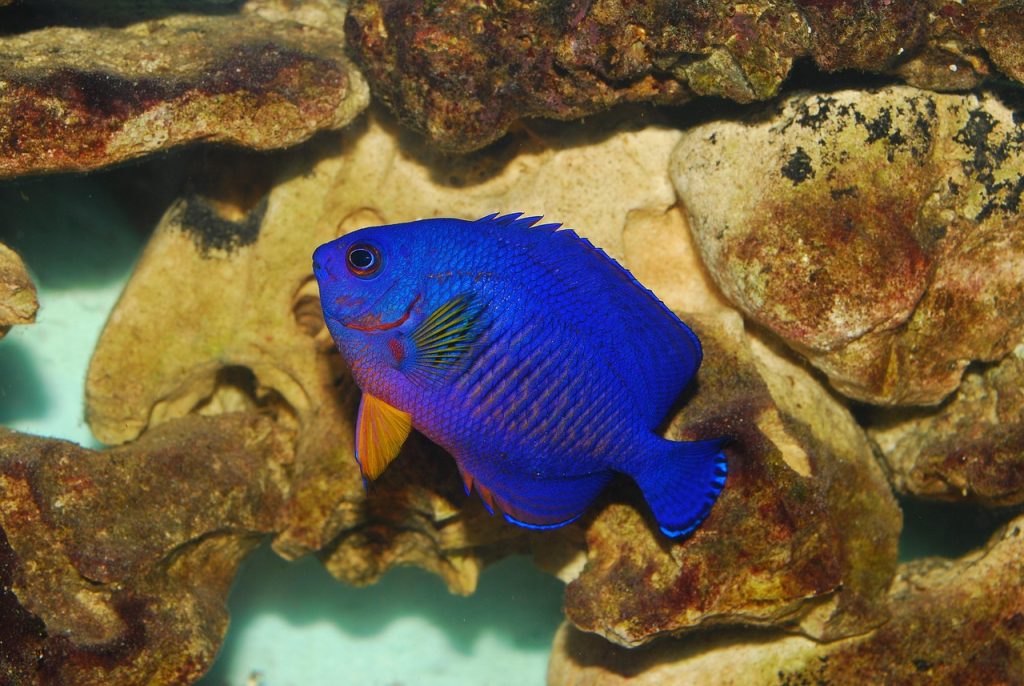
The Coral Beauty Angelfish is one of the most popular dwarf angelfish in reef keeping. It combines bold color, active behavior, and manageable size. This species can work in many marine tanks, but it is not fully reef safe. Success depends on tank size, mature rockwork, steady feeding, and careful coral selection.
If you want to keep Centropyge bispinosa, this guide covers the essentials. You will learn about tank size, diet, compatibility, reef safety, water quality, and common problems. You will also learn what to expect from its personality. That matters because Coral Beauties vary a lot by individual fish.
Coral Beauty Angelfish Quick Reference
| Common name | Coral Beauty Angelfish |
| Scientific name | Centropyge bispinosa |
| Family | Pomacanthidae |
| Care level | Moderate |
| Temperament | Semi-aggressive |
| Adult size | Up to 4 inches |
| Minimum tank size | 55 gallons |
| Diet | Omnivore with heavy grazing needs |
| Reef safe | With caution |
| Temperature | 76 to 80°F |
| Salinity | 1.024 to 1.026 |
| pH | 8.1 to 8.4 |
| Alkalinity | 8 to 9 dKH |
| Ideal placement | Established reef or fish-only tank with live rock |
The table gives a fast overview, but husbandry details matter. Coral Beauties often do well for years when they have stable water, mature rock, and frequent feeding. Problems usually begin when they are added to small tanks, sparse aquascapes, or immature systems.
Natural Habitat
The Coral Beauty Angelfish comes from the Indo-Pacific. It occurs across reefs in areas like Fiji, Indonesia, and the Great Barrier Reef. In nature, it lives around coral-rich slopes and rocky reef faces. It spends much of the day picking at algae, detritus, sponges, and tiny invertebrates.
This natural behavior explains its aquarium needs. It wants structure, hiding places, and grazing surfaces. It does not thrive in a bare tank with little rock. It also prefers a stable environment. Wild reefs do not swing wildly in salinity or temperature. Your aquarium should not either.
Coral Beauties are also territorial in the wild. They defend feeding areas from similar fish. That is why they can bully new tankmates or chase other dwarf angels. Understanding that natural behavior helps you plan stocking more wisely.
Aquarium Setup
A 55-gallon tank is the practical minimum for one Coral Beauty. Bigger is better. A 75-gallon tank gives more swimming room and reduces aggression. This fish is active all day. It needs caves, overhangs, and open lanes between rock structures.
Use plenty of mature live rock. This supports natural grazing and lowers stress. Avoid sterile aquascapes with little surface area. A Coral Beauty feels secure when it can duck into rockwork quickly. If it feels exposed, it may hide constantly or become aggressive.
Keep water quality stable. Aim for low nitrate and phosphate, but do not chase zero. Stable reef parameters matter more than extreme nutrient stripping. Good filtration, a quality protein skimmer, and regular water changes help a lot. Quarantine is strongly recommended. Dwarf angels can carry marine ich, flukes, and bacterial issues. You can learn more in FancyReef guides on quarantine fish, reef tank cycling, and reef tank water parameters.
Lighting Requirements
The Coral Beauty does not have strict lighting demands like photosynthetic corals. It adapts to a wide range of reef lighting. Moderate to strong lighting is fine if the aquascape offers shaded retreats. In mixed reefs, lighting is usually chosen for corals, not for the fish.
What matters more is how lighting affects grazing. Strong reef lights can support film algae and microgrowth on rocks. That gives the fish something to pick at between feedings. A tank that is too clean and too sterile can leave it with less natural foraging opportunity.
If a new Coral Beauty hides after introduction, lighting can play a role. Bright lights in a sparse tank can make it feel exposed. Acclimation boxes, dimmed lights, and extra shelter can help the fish settle in faster.
Water Flow
Moderate, varied flow works best. The fish comes from reefs with constant water movement, but it does not need direct blasting flow. It should be able to cruise around the rockwork without fighting a powerhead stream all day.
Create zones of different intensity. Let one part of the tank have stronger circulation and another remain calmer. This helps both the fish and the corals. Random flow patterns also keep detritus suspended and improve oxygen exchange.
Poor flow can contribute to algae buildup in dead spots and lower oxygen at night. Excessive direct flow can stress the fish and limit natural behavior. Aim for balance. If the Coral Beauty is always hiding behind rocks, review both flow and aquascape.
Feeding
Feeding is one of the biggest keys to long-term success. Coral Beauties are omnivores, but they lean heavily on constant grazing. They should not be fed like a fish that only eats once daily. Offer small amounts two to three times each day when possible.
Provide a varied diet. Use spirulina foods, marine algae, quality angelfish formulas, mysis shrimp, brine shrimp, and finely chopped frozen blends. Foods with sponge matter are especially useful for dwarf angels. Nori sheets can also be accepted, though some individuals prefer prepared foods first.
A well-fed Coral Beauty is often less likely to nip corals. That is not a guarantee, but it helps. Fish that are underfed often become more destructive grazers. Watch body shape closely. A healthy fish looks full through the belly, not pinched behind the head. If appetite drops suddenly, check for parasites, bullying, or declining water quality.
Compatibility
Coral Beauties are semi-aggressive. They usually do well with clownfish, wrasses, gobies, blennies, tangs, and many reef-safe community fish. Problems are more likely with other dwarf angelfish, similarly shaped fish, and timid species that cannot handle chasing.
Add the Coral Beauty after very shy fish whenever possible. In small tanks, it may claim the whole rock structure. In larger tanks, aggression is usually easier to manage. Introduce with an acclimation box if needed. Rearranging a little rockwork can also reduce territorial behavior.
Reef safety is the main concern. Some Coral Beauties ignore corals for years. Others nip at fleshy LPS, zoanthids, clam mantles, and even SPS polyps. There is no guarantee. Individual personality matters more than species descriptions. If you keep prized corals, understand the risk before adding one. Many hobbyists have success in mixed reefs, but caution is always warranted.
Is the Coral Beauty Angelfish Reef Safe?
The honest answer is reef safe with caution. This fish is safer than many large angelfish, but it is not perfectly reliable. Some individuals never touch corals. Others develop a taste for specific polyps or clam mantles. Once that behavior starts, it can be hard to stop.
Risk tends to increase in tanks with limited grazing, sparse feeding, or heavy competition. Fleshy LPS corals often face the most attention. Open brains, acans, and some euphyllia can be targets. Zoanthids and clam mantles may also be sampled. SPS systems sometimes fare better, but no setup is fully safe.
If you want the best odds, choose a healthy juvenile, provide mature rock, feed often, and monitor closely. Have a backup plan. Fish traps and acclimation boxes are useful if removal becomes necessary. For more livestock planning help, FancyReef readers often also check reef safe fish, beginner coral guide, and clean up crew basics.
Step-by-Step Acclimation Guide
- Quarantine the fish before display introduction. Observe for ich, flukes, and bacterial issues.
- Match salinity and temperature carefully. Sudden swings stress dwarf angels quickly.
- Provide PVC, rock, or shelter in quarantine. Bare exposure increases stress.
- Offer food within the first day. Try frozen mysis, spirulina brine, and angelfish formulas.
- Use a drip acclimation if shipping time was short and water quality is acceptable.
- Dim display lights during transfer. This lowers stress and reduces chasing.
- Use an acclimation box if tankmates are territorial. This is very helpful in established reefs.
- Watch for breathing rate, appetite, and hiding behavior during the first week.
Do not rush this process. Many Coral Beauties arrive in decent shape but decline from stress, poor feeding, or hidden parasites. Early observation makes a major difference.
Propagation or Breeding
Can hobbyists breed Coral Beauty Angelfish?
Breeding this species in home aquariums is rare. Like many marine angelfish, they are pelagic spawners. Eggs are released into the water column. Larvae are tiny and difficult to raise. Specialized live foods and larval systems are needed.
Sex and pairing behavior
Coral Beauties are protogynous hermaphrodites. That means females can transition to males. In the wild, they may form harems. In aquariums, keeping pairs or groups is difficult unless the tank is large and the fish are introduced carefully.
What hobbyists should focus on instead
Most hobbyists should focus on long-term care, not breeding. A healthy single specimen in a stable reef is a much more realistic goal. Good nutrition and low stress bring out the best color and behavior.
Common Problems
Coral Beauty not eating
New imports often refuse food for a few days. Stress is the most common cause. Offer several foods each day. Try frozen mysis, angelfish formulas, and foods soaked in vitamins. Also inspect for bullying. If the fish is breathing hard or flashing, check for flukes or ich.
Coral Beauty hiding all the time
Hiding usually points to stress, aggression, or poor aquascape. Add more caves and visual breaks. Review lighting intensity. Check whether a tang, wrasse, or clownfish is harassing it. A healthy Coral Beauty should spend much of the day exploring the rocks.
Coral Beauty nipping corals
This is a known risk. Increase feeding frequency first. Make sure the fish has algae and grazing surfaces. If nipping continues, removal may be required. Once a fish learns that a coral is food, behavior often persists.
Faded color or weight loss
Poor diet, internal parasites, and chronic stress are common causes. Review food variety and feeding schedule. Check for a pinched belly. Test water quality and observe social behavior. Quarantine treatment may be needed if the fish keeps losing condition.
Frequently Asked Questions
How big does a Coral Beauty Angelfish get?
Most reach about 4 inches in captivity. They stay much smaller than large marine angels.
Can a Coral Beauty live in a 40-gallon tank?
A 40-gallon breeder is still tight long term. A 55-gallon tank is a better minimum. Larger tanks reduce aggression and improve stability.
Are Coral Beauties aggressive?
They are semi-aggressive. Most become territorial around rockwork, especially in smaller tanks.
Do Coral Beauty Angelfish eat algae?
Yes. They graze on algae, film growth, and other material on live rock. They still need a varied prepared diet.
Is the Coral Beauty a good beginner saltwater fish?
It can be, but only in a stable and established tank. Beginners often succeed when they quarantine, feed well, and accept the reef-safe risk.
Final Thoughts
The Coral Beauty Angelfish earns its popularity. It is colorful, active, and full of personality. It also asks for more planning than many beginners expect. Give it a mature tank, plenty of rock, stable water, and frequent feeding. Respect its territorial side and its coral-nipping risk. If you do that, Centropyge bispinosa can become one of the most rewarding fish in your reef aquarium.
Was this helpful?
Related Posts
Reef Tank Plumbing Basics
Learn reef tank plumbing basics, including drains, return pumps, sump flow, noise control, and flood prevention for a…
 By
ByOur Reef Emergency Plan
A reef emergency plan helps you act fast during outages, leaks, and water quality crashes. Here is the…
[favorite_button]
My Bookmarks:
To see full list click here
[user_favorites user_id="" include_links="true" site_id="" post_types="" include_thumbnails="true" thumbnail_size="thumbnail" include_excerpt="false"]