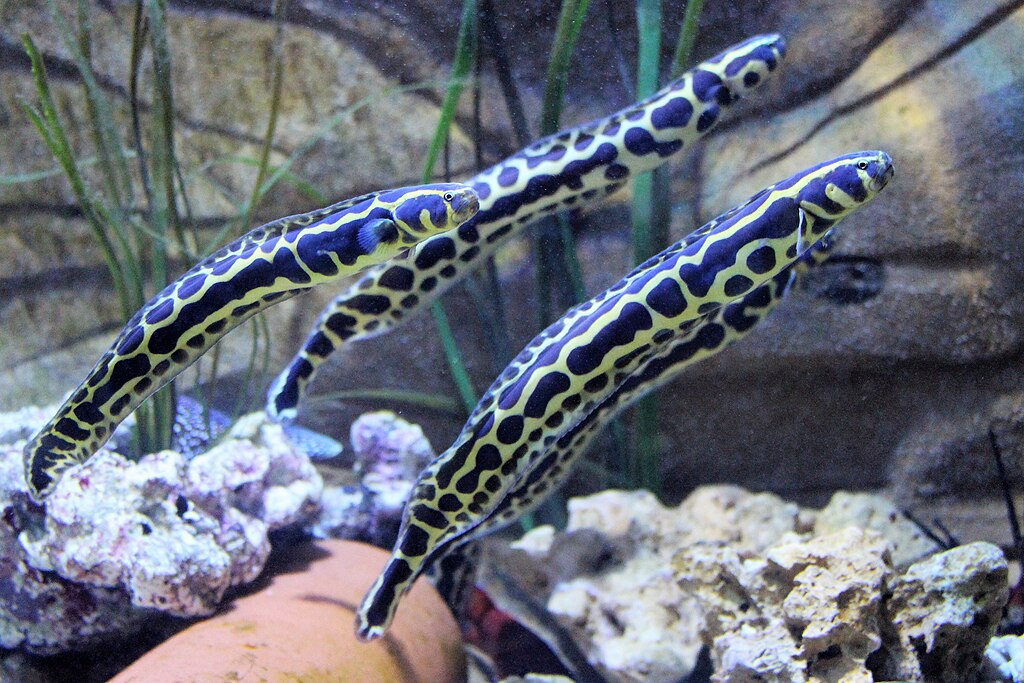
The Engineer Goby (Pholidichthys leucotaenia) is a burrowing oddball. It looks like an eel, but it is a goby relative. Keep it right, and it becomes a bold, long-lived centerpiece.
This fish reshapes sand like a tiny excavator. It also tests aquascapes and lids. Use this guide to plan space, rockwork, and feeding.
Tank size, aquascape, and burrow planning
Start with a 75-gallon tank for one adult. A 90-gallon is easier long term. Adults often reach 10–12 inches. Some exceed 14 inches in large systems.
Build rockwork on the glass, not on sand. Use epoxy or reef-safe cement for key joints. The fish will dig under rocks. Unsecured rocks can topple fast.
Use a sand bed of 2–4 inches. Choose 0.5–1.5 mm grain for stable tunnels. Add a few fist-sized rubble pieces. Many Engineer Gobies use rubble as “shoring.”
Cover every opening with a tight lid. They can jump during lights changes. Seal cable gaps with mesh or foam. For more on safe rockwork, see reef aquascaping basics.
- Minimum footprint: aim for 48 inches of length.
- Flow: moderate, but avoid blasting the burrow entrance.
- Lighting: any reef lighting works for the fish.
- Substrate: avoid sharp crushed coral that can scrape skin.
Water parameters, feeding, and daily care
Keep parameters stable and boring. Target 25–26°C (77–79°F). Keep salinity at 1.025–1.026 specific gravity. Maintain pH 8.1–8.4 and alkalinity 8–10 dKH.
Control nitrogen closely because burrowing stirs detritus. Keep ammonia and nitrite at 0 ppm. Keep nitrate under 20 ppm for fish-only. For reefs, aim under 10 ppm.
Feed small meals twice daily. Offer thawed mysis, chopped krill, and enriched brine. Add sinking pellets, 1–2 mm size, for routine. Use a feeding tube to target the burrow area.
A common mistake is underfeeding a shy new arrival. Watch the belly line at dusk. A pinched belly needs more frequent feeding. For a full schedule, see our saltwater fish feeding guide.
- Portion size: feed what it eats in 60–90 seconds.
- Soak foods: use vitamins 2–3 times per week.
- Skimming: run a strong skimmer to offset messy feeding.
- Water change: 10–15% weekly keeps sand storms cleaner.
Compatibility, behavior, and troubleshooting
Engineer Gobies are usually peaceful with fish. They may quarrel with their own kind in small tanks. Keep a single specimen unless you can house a bonded pair. Provide multiple caves if you try two.
They can undermine coral frags and small rock islands. Place frags on stable racks or glued bases. Expect sand on low corals. Keep LPS off the sand if they inflate and sting.
Quarantine helps, since they can carry ich and flukes. Use a 20–40 gallon QT with PVC pipes. Observe for 2–4 weeks. For a step plan, read marine fish quarantine setup.
Common issues include cloudy water after major digging. Add filter floss and replace it daily for a week. Another issue is burrow collapse from fine sand. Mix in a cup of rubble per 10 gallons to stabilize tunnels.
- Jumping risk: dim lights for 30 minutes after introduction.
- Rock falls: stop digging by rebuilding on the glass.
- Refusing food: try live blackworms or clam on half shell.
The Engineer Goby rewards planning and patience. Give it sand depth, locked rockwork, and a tight lid. Feed consistently, and it will settle into a bold routine. With stable parameters, it can thrive for many years.
Sources: FishBase (Pholidichthys leucotaenia species summary); Scott W. Michael, Marine Fishes; Fenner, The Conscientious Marine Aquarist.
Was this helpful?
Related Posts
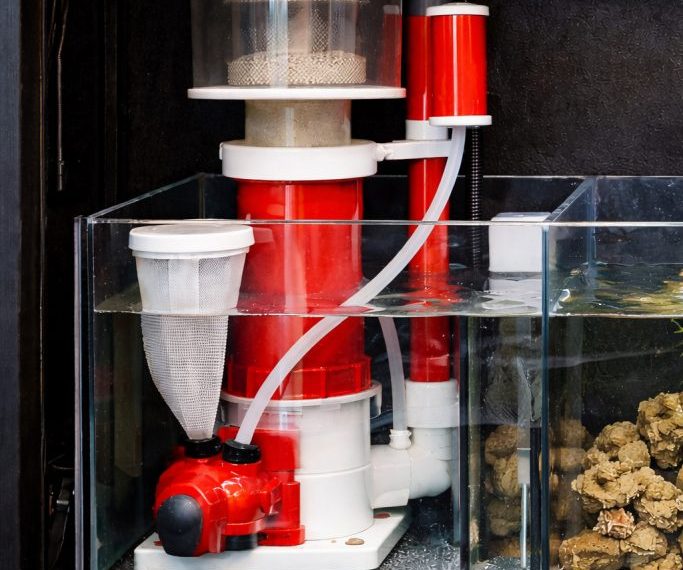
Protein Skimmer Reef Tank Guide
Learn how a protein skimmer works, how to size one, and how to tune it for a cleaner,…
 By
By
Reef Aquarium Water Parameters
Learn the ideal reef aquarium water parameters, safe ranges, and how to keep salinity, alkalinity, nutrients, and pH…