

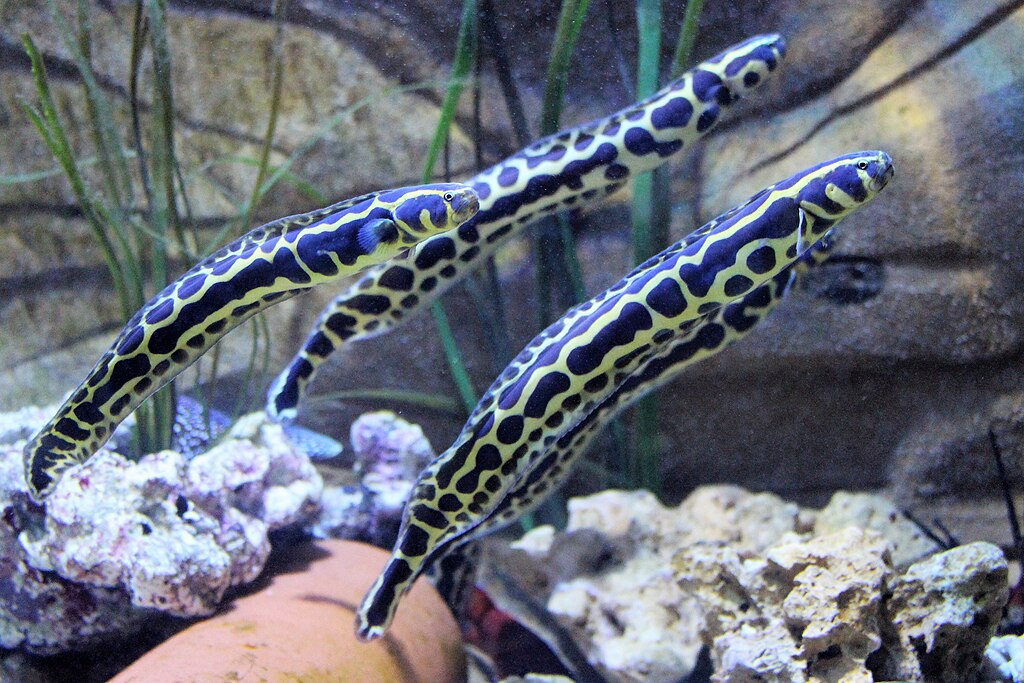
The engineer goby is a striking marine fish with bold stripes, eel-like movement, and nonstop digging behavior. Despite its common name, it is not a true goby. It is a burrowing reef fish that needs deep sand, stable rockwork, and careful tankmate choices. In the right setup, it becomes a hardy and fascinating long-term display animal.
Many reef keepers buy an engineer goby for its dramatic juvenile pattern. Then they discover it grows large, rearranges the substrate, and spends much of its life tunneling under rock. That does not make it a bad choice. It simply means this fish needs planning. In this guide, you will learn how big Pholidichthys leucotaenia gets, what it eats, how to build a safe aquarium around its burrowing habits, and how to avoid the most common care mistakes. If you want a unique reef-safe fish with tons of personality, this species deserves a close look.
Quick Care Reference
| Common name | Engineer goby |
| Scientific name | Pholidichthys leucotaenia |
| Care level | Moderate |
| Temperament | Generally peaceful, but can eat very small tankmates |
| Adult size | Up to 12 to 14 inches |
| Minimum tank size | 75 gallons for juveniles, 125 gallons preferred for adults |
| Diet | Carnivore |
| Reef safe | Usually with corals, but may disturb frags and small invertebrates |
| Water flow | Moderate |
| Lighting | No special need |
| Best feature | Unique burrowing behavior and dramatic appearance |
This table gives you the short version. The details matter even more with this species. Engineer gobies are hardy once established, but their behavior shapes the whole aquarium. Their need to dig is not occasional. It is constant. That means aquascape stability, sand depth, and livestock selection all become part of their care plan.
Natural Habitat
Pholidichthys leucotaenia comes from the Indo-Pacific. It is found around reefs, lagoons, and sandy rubble zones. In nature, these fish live in burrow systems. Juveniles often gather in groups. Adults may live in pairs or loose colonies around tunnel networks. They stay close to shelter and dart back into their burrows when threatened.
This natural behavior explains almost everything about their aquarium needs. They do not want an open bare-bottom layout. They want a soft substrate, plenty of cover, and rock that creates secure shaded areas. In the wild, they feed on meaty foods and small animal matter drifting near the bottom. They are not algae grazers. They are active bottom dwellers that use the sand bed as a home, not just a place to rest.
Juveniles look very different from adults. Young fish have bold black and white horizontal stripes. Adults develop a more eel-like body with darker coloration and reduced striping. This change surprises many hobbyists. It is normal, and it is one reason this fish often gets mistaken for a different species later in life.
Aquarium Setup
Tank size is one of the biggest care factors. A small juvenile may look fine in a modest tank. That does not last. Engineer gobies can exceed a foot in length. They also need room to build tunnels and move through the rockwork. A 75-gallon tank works as a starting point for a young specimen. A 125-gallon tank or larger is a much better long-term choice.
Use a sand bed deep enough for digging. Around 2 to 4 inches works well in most systems. Fine sand or a mixed sand and small rubble substrate is ideal. Avoid sharp crushed coral. It can irritate the fish and limit natural burrowing. Most importantly, place rockwork directly on the tank bottom or on stable supports before adding sand. Never balance rock on top of loose substrate alone. Engineer gobies will undermine it over time.
Expect this fish to move sand around coral bases, frag plugs, and lower rock ledges. Secure frags well. Leave some open sand near the front if you want to watch the tunnels develop. A tight lid is also important. Like many long-bodied fish, engineer gobies can jump when startled.
Lighting Requirements
Engineer gobies do not have special lighting demands. They are not photosynthetic, and they do not need intense reef lighting. Their lighting needs are shaped more by the corals in the tank than by the fish itself. In mixed reefs, they adapt well to common LED, T5, or hybrid systems as long as they have shaded retreats.
Bright light can make newly introduced fish more cautious. This is especially true in sparse aquascapes. Overhangs, caves, and tunnel entrances help them feel secure. If your tank runs strong reef lighting for SPS corals, that is usually fine. Just make sure the fish has darker areas to retreat into during the day.
Many hobbyists notice their engineer goby becomes bolder during feeding time, then slips back into its burrow under full lighting. That is normal behavior. Do not assume the fish is unhealthy just because it spends time under cover. As long as it eats well and maintains body weight, occasional hiding is expected.
Water Flow
Moderate flow is best. Engineer gobies do not need high-energy flow blasting the substrate. Strong direct flow can collapse tunnel entrances and create constant sandstorms. On the other hand, very weak flow allows waste to collect in the areas where these fish dig and rest.
Aim for broad, indirect water movement. Keep detritus suspended without stripping the sand bed bare. In tanks with powerful wavemakers, angle pumps away from the burrow zone. This helps the fish maintain stable tunnels. It also reduces stress. If your engineer goby keeps rebuilding the same entrance each day, flow may be too direct in that spot.
Good flow matters for water quality too. Burrowing fish stir debris into the water column. That can be helpful if your filtration removes it. Protein skimming, mechanical filtration, and regular maintenance become more important in tanks with active diggers. If detritus settles behind rock where the fish tunnels, adjust flow before nutrients creep upward.
Feeding
Engineer gobies are carnivores. They do best on a varied meaty diet. Offer mysis shrimp, finely chopped seafood, enriched brine shrimp, krill pieces, clam, and quality sinking pellets. Juveniles often feed eagerly in the open. Adults can become more secretive, but they still learn feeding routines quickly.
Feed once or twice daily. Small portions work best. This fish has an elongated body, so weight loss can sneak up on you. Watch the area behind the head and along the back. A healthy fish should look full, not pinched. In community tanks, use a turkey baster or feeding tube if faster fish steal most of the food. Target feeding near the burrow entrance often works well.
Do not rely on leftover food alone. Engineer gobies are not sand sifters in the same way as some gobies. They need direct nutrition. A varied diet supports growth, immune function, and coloration. Soak foods in vitamins occasionally if the fish is newly imported, recovering from stress, or refusing prepared foods. Most specimens adapt to frozen food quickly once settled.
Compatibility
Engineer gobies are usually peaceful toward medium and larger fish. They mix well with many community reef species, including tangs, clownfish, wrasses, dwarf angels, and peaceful basslets. They are often calm during the day and become more active around feeding time and at dusk.
There are two main compatibility concerns. First, they can eat very small fish, tiny ornamental shrimp, and other bite-sized tankmates once fully grown. A juvenile may ignore them for months. An adult may not. Second, their digging can irritate corals by dropping sand onto tissue or destabilizing frags placed low in the tank. Most established corals are safe from direct nipping, but the fish can still create problems through excavation.
They may coexist with other engineer gobies in large tanks, especially if introduced together while young. In smaller tanks, territorial disputes can develop. If you keep one, plan the whole lower aquascape around its behavior. For more stocking ideas, see reef safe fish for beginners, best sand for reef tank, reef tank aquascaping tips, and quarantine marine fish.
Step-by-Step Acclimation and Introduction
Start with quarantine if possible. This species is hardy, but marine fish still arrive stressed. Observe breathing, appetite, and body condition for several weeks. Offer hiding places in quarantine, such as PVC elbows or small piles of inert rock. Keep ammonia at zero and oxygen high.
Before moving the fish into the display, check the aquascape carefully. Make sure rocks cannot shift if sand is removed beneath them. Dim the lights during introduction. Acclimate slowly to salinity and temperature. Release the fish near a cave or open sand area where it can choose a burrow site quickly.
For the first week, expect hiding and digging. That is normal. Feed small meaty foods near the entrance once or twice each day. Do not keep rearranging the rockwork because the fish disappears. Give it time. Most engineer gobies settle once they establish a tunnel network. Stability is the key. Sudden disturbances often reset their sense of security.
Propagation and Breeding
Can engineer gobies breed in aquariums?
Spawning in home aquariums is uncommon. This species has complex social and nesting behavior. In nature, adults use burrow systems and may guard eggs. Public aquariums and advanced breeders have had more success than typical hobbyists. Most fish offered for sale are wild collected.
What makes breeding difficult?
Large adult size is one challenge. Pair formation is another. You also need a secure environment with minimal disturbance and excellent nutrition. Larval rearing would be the hardest stage. Like many marine fish, the larvae likely require specialized live foods and careful culture methods. For most hobbyists, long-term care is the realistic goal rather than captive propagation.
Common Problems
Why is my engineer goby always hiding?
Hiding is often normal. New fish hide more than established ones. They also hide more in bright tanks with little cover. If the fish eats well and comes out at feeding time, this is usually not a problem. Add more caves and reduce sudden movement around the tank if it seems overly shy.
Why does it keep collapsing the aquascape?
The fish is doing what it naturally does. The real issue is unstable rock placement. Move rock onto the glass bottom or secure it with reef-safe supports or mortar. Do not rely on sand to hold structures in place. Engineer gobies will dig under almost anything that looks like shelter.
Why is sand covering my corals?
Burrowing sends sand onto nearby corals and frags. Raise sensitive corals higher on the rockwork. Secure frags firmly. Create a dedicated digging zone with open sand near the fish’s preferred shelter area. Some hobbyists also use slightly heavier grain sand to reduce constant drifting.
Why is my engineer goby losing weight?
Competition is the most common cause. Faster fish may be eating everything first. Target feed near the burrow. Increase feeding frequency with smaller portions. Check for internal parasites if appetite drops or the body looks pinched despite regular feeding. Quarantine helps prevent this problem.
Can it kill shrimp or tiny fish?
Yes, it can. Large adults may eat small ornamental shrimp, nano fish, and other very small tankmates. This risk rises as the fish matures. If you want to keep cleaner shrimp or tiny gobies, choose tankmates carefully and understand the risk is never zero.
Frequently Asked Questions
Is an engineer goby reef safe?
Usually yes with corals, but with caution. It does not typically nip corals. It can still bury them with sand or knock over frags while digging.
How big does an engineer goby get?
Most can reach 12 inches or more in captivity. Some grow even larger with time, good feeding, and a spacious tank.
Is an engineer goby actually a goby?
No. Despite the common name, it is not a true goby. It belongs to its own family and has very different behavior and body shape.
Can I keep more than one engineer goby?
Sometimes, especially in larger tanks and when introduced young. In smaller systems, aggression or territorial stress can develop as they mature.
What is the best tank for an engineer goby?
A larger tank with a deep sand bed, secure rockwork, a tight lid, and peaceful but not tiny tankmates is ideal. Stability matters more than fancy equipment.
Final Thoughts
The engineer goby is one of the most unusual fish in the marine hobby. It combines the look of a striped juvenile reef fish with the long-term behavior of a determined burrow builder. It is hardy, interesting, and often full of personality. It is also not a casual purchase. Adult size, digging habits, and predator risk toward tiny tankmates all need attention.
If you build the tank around its needs, this fish can thrive for years. Give it sand to dig, rock that cannot fall, and a steady meaty diet. In return, you get one of the most engaging bottom dwellers available to reef keepers. For hobbyists who enjoy natural behavior as much as bright color, the engineer goby is an excellent choice.
Was this helpful?
Related Posts
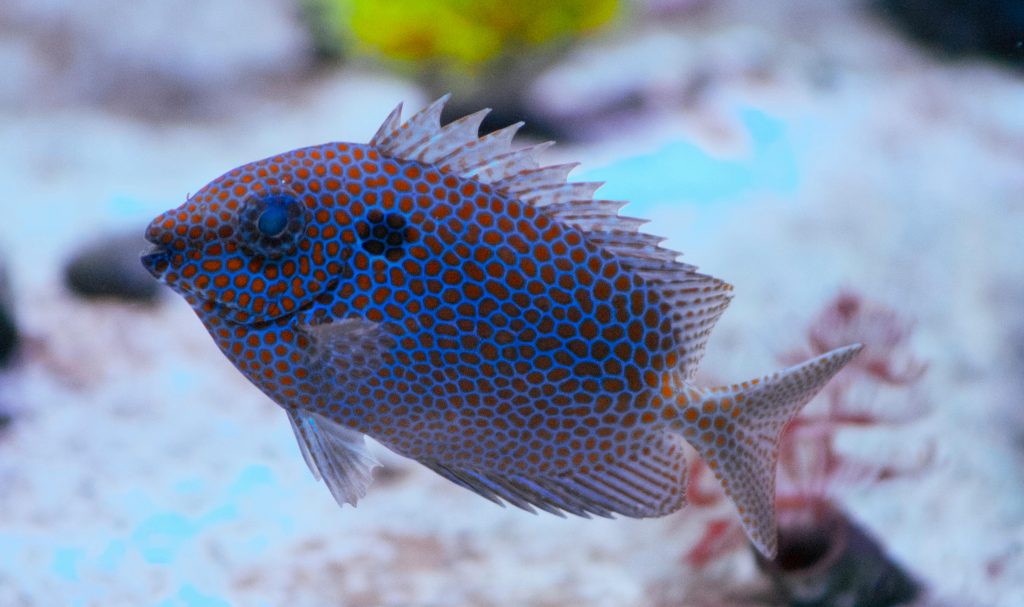
Gold Spotted Rabbitfish (Siganus Punctatus)
Gold Spotted Rabbitfish care includes large tanks, heavy algae feeding, and caution with corals. Learn tank size, diet,…
 By
By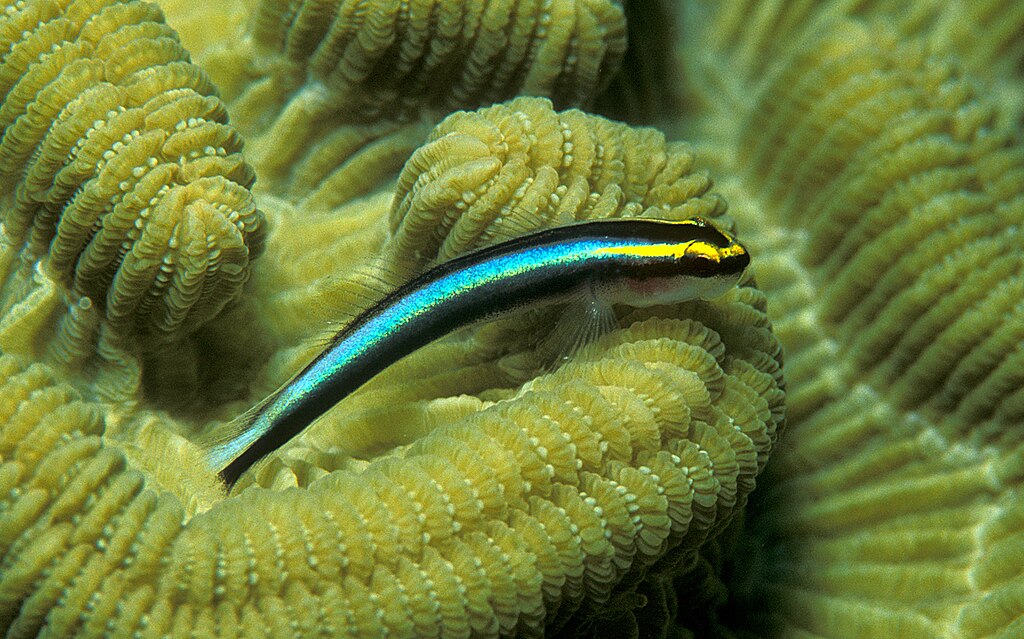
Sharknose Goby (Elacatinus evelynae)
Sharknose Goby care is simple in stable reef tanks. Learn feeding, tank setup, compatibility, and common problems for…
[favorite_button]
My Bookmarks:
To see full list click here
[user_favorites user_id="" include_links="true" site_id="" post_types="" include_thumbnails="true" thumbnail_size="thumbnail" include_excerpt="false"]