

A solid fish quarantine protocol protects your display tank from disease, stress, and costly losses. It also gives new fish time to recover, eat well, and adapt before facing tankmates, corals, and the daily competition of a busy reef aquarium.
Many hobbyists skip quarantine because it feels complicated. In practice, it is one of the simplest ways to avoid disaster. Marine ich, velvet, flukes, and bacterial infections often arrive on healthy-looking fish. A proper quarantine routine helps you spot problems early. It also lets you treat fish in a controlled setting without exposing your reef to medications. In this guide, you will learn how to set up a quarantine tank, how long to quarantine fish, what equipment matters most, and how to troubleshoot common problems. The goal is simple. Bring home new fish safely and keep your reef stable.
Fish Quarantine Protocol Quick Reference
| Category | Recommendation |
|---|---|
| Tank size | 10 to 20 gallons for small fish, 20 to 40 gallons for larger species |
| Quarantine length | 30 days minimum, 45 days preferred for observation and treatment margin |
| Filtration | Sponge filter or hang-on-back filter with seeded media |
| Heater | Use a reliable adjustable heater with thermometer |
| Shelter | PVC elbows, couplers, or inert plastic caves |
| Substrate | Bare bottom for easy cleaning and medication control |
| Salinity | Match source water first, then adjust slowly if needed |
| Temperature | 76 to 78°F |
| Ammonia control | Test daily at first and keep water change water ready |
| Main goal | Observation, conditioning, and treatment before display transfer |
This simple setup works for most reef fish. It is inexpensive, easy to clean, and easy to monitor. Keep quarantine separate from your display. Use dedicated nets, buckets, hoses, and towels. Cross contamination defeats the whole process.
Why Every Reef Keeper Needs a Fish Quarantine Protocol
Quarantine is not just for advanced hobbyists. It is basic risk management. Reef tanks are hard to medicate once disease gets inside. Copper, formalin, and many antibiotics are unsafe around corals, shrimp, snails, and other invertebrates. Catching every fish from a mature reef is also stressful and often difficult.
A quarantine tank solves those problems before they start. New fish can rest in a quiet environment. They can regain weight after shipping. You can watch breathing, appetite, waste, skin condition, and behavior without distractions. Weak fish often hide symptoms in a dealer tank. Those symptoms become clearer after a few days in quarantine.
Quarantine also protects your investment. One infected fish can wipe out a stocking plan that took years to build. Corals may survive, but your fish population can collapse quickly. If you want a stable reef, a repeatable fish quarantine protocol should be part of every purchase.
Quarantine Tank Setup
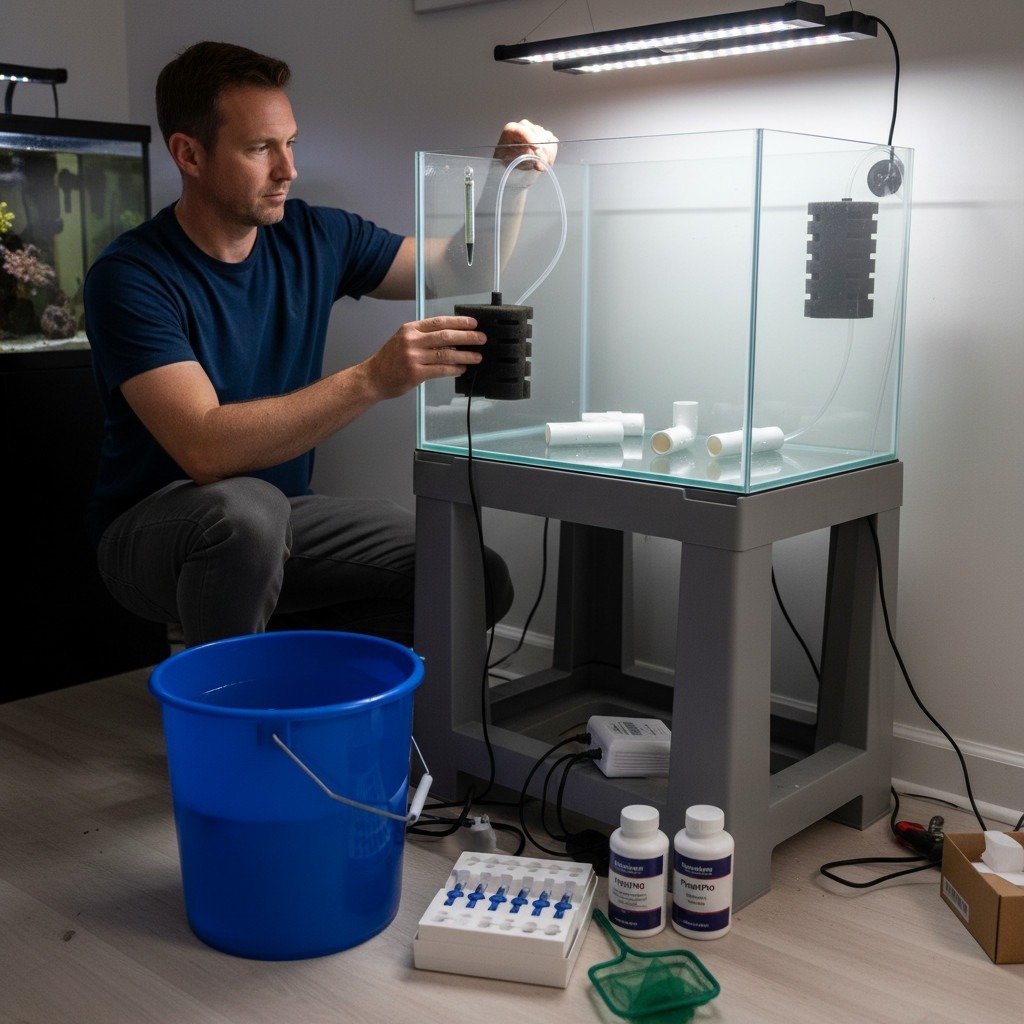
A fish quarantine tank should be simple. Bare bottom is best. It makes waste easy to remove. It also prevents sand and rock from absorbing medication. Most small reef fish do well in a 10 to 20 gallon quarantine tank. Tangs, rabbitfish, and larger angels need more room. Use the largest practical tank for active swimmers.
Add a sponge filter or hang-on-back filter. Seed the media in your sump before use when possible. This helps with biological filtration. Use a heater, thermometer, and lid. Many marine fish jump when stressed. Place several pieces of PVC pipe in the tank. These act as caves and reduce stress. Avoid live rock. It can absorb medications and carry pests.
Keep lighting dim. Bright light increases stress in fresh imports. A simple ambient room light or low-output aquarium light is enough. Strong flow is not needed, but surface agitation matters. Good gas exchange supports fish during treatment. For more on stable water conditions, see water parameter guide, reef tank cycling basics, and aquarium acclimation guide.
Step-by-Step Fish Quarantine Protocol
Start by preparing saltwater before the fish arrives. Match the salinity and temperature of the seller’s water as closely as possible. This reduces osmotic stress. Float the bag to equalize temperature. Then test the bag water if possible. Many stores keep fish at lower salinity. Sudden changes can shock new arrivals.
Transfer the fish gently. Avoid adding store water to your quarantine tank. A specimen container works better than a net for delicate fish. Once the fish is in quarantine, keep the room quiet. Do not chase it for inspection on day one. Let it settle. Offer a small meal after several hours if the fish appears calm.
During the first week, focus on observation and feeding response. Check respiration, body condition, fin damage, flashing, scratching, and visible spots. Test ammonia daily. Perform water changes as needed. Siphon waste from the bottom. If the fish is eating, begin your chosen treatment plan or continue strict observation based on your protocol and risk tolerance.
Most hobbyists use one of two approaches. The first is observation-only quarantine. This works when fish come from trusted sources and show no symptoms. The second is prophylactic quarantine. This means treating for common parasites before symptoms appear. Common methods include copper for ich and velvet, praziquantel for flukes, and observation for bacterial issues. Follow medication instructions carefully. Test therapeutic levels when using copper. Never guess.
At the end of quarantine, confirm the fish is eating aggressively, breathing normally, and free of symptoms. Match quarantine water to the display tank. Then transfer the fish with clean equipment. Do not pour quarantine water into the display. This final step matters as much as the first.
Water Quality and Stability During Quarantine
Water quality problems kill more quarantine fish than medication does. Small tanks swing quickly. Ammonia can rise within hours, especially after heavy feeding. Test often. Keep a bottle of ammonia detoxifier on hand for emergencies, but do not rely on it as your main plan. Water changes remain the safest response.
Maintain temperature between 76 and 78°F. Keep salinity stable. Sudden swings weaken fish and can worsen disease. pH should stay consistent with normal marine conditions. Do not chase exact numbers daily. Stability matters more. Use premixed saltwater that is heated and aerated before water changes. This prevents stress during maintenance.
Feed lightly but often. Uneaten food is a major ammonia source. Remove leftovers after a few minutes. If a fish refuses food, try different textures and sizes. Frozen mysis, enriched brine, pellets, nori, and clam can all help. For shy species, use a feeding ring or target feed near their shelter. For more support, see marine fish feeding schedule and beginner reef tank mistakes.
Feeding and Conditioning New Fish
Quarantine is not only about disease. It is also about conditioning. Many fish arrive thin after collection, holding, and shipping. A fish that eats well in quarantine usually adapts better in the display. Start with foods the species is likely to recognize. Tangs and rabbitfish often respond to nori quickly. Wrasses may prefer frozen foods. Picky butterflies may need clam, blackworms, or frequent small feedings.
Use variety. This builds strength and improves immune response. Soak foods in vitamins if needed. Watch each fish eat. Group feeding behavior can hide weak individuals in store systems. In quarantine, you can confirm that every fish gets enough food. This is especially useful for mandarins, anthias, and shy gobies.
Do not overfeed to force weight gain. Heavy feeding without export causes ammonia spikes and cloudy water. Small meals two to four times daily are better. The goal is steady recovery, not fast bloating. A fish that gains confidence and feeds aggressively is usually ready for the next step.
Compatibility and Transfer to the Display Tank
A quarantined fish still needs a smart introduction to the display tank. Established fish may harass newcomers. This is common with tangs, dottybacks, damsels, and some wrasses. If possible, add new fish after lights dim. Rearranging a small section of rockwork can reduce territorial aggression. An acclimation box also works well for sensitive introductions.
Make sure the fish is strong before transfer. A fish that barely survived quarantine should not enter a competitive reef. It may stop eating and decline. Wait until the fish is alert, active, and feeding with confidence. This is especially important for species that need frequent meals.
Quarantine also helps coral safety indirectly. Sick fish often trigger emergency treatments and instability. A healthy fish population supports a healthier reef overall. Stable stocking reduces stress, waste spikes, and disease pressure across the system.
Common Problems
Fish Is Not Eating
New fish often refuse food for a day or two. Stress is the main cause. Keep lighting low and provide extra shelter. Offer a wider range of foods. Try frozen mysis, enriched brine, pellets, nori, or fresh clam. Check for rapid breathing or visible lesions. Parasites and shipping damage can suppress appetite. If the fish still refuses food after several days, review species-specific needs and inspect for disease.
Ammonia Keeps Rising
This usually means the biofilter is weak or the tank is overfed. Reduce feeding volume. Siphon waste daily. Add seeded media if available. Perform immediate water changes with matched saltwater. Test again after each change. Bare bottom tanks are easier to keep stable because debris stays visible.
White Spots Appear After Arrival
White spots can indicate marine ich, but not always. Sand grains, stress mucus, and lymphocystis can look similar. Look at the full picture. Is the fish scratching? Is breathing elevated? Are spots increasing daily? If you suspect ich or velvet, act quickly. Delays can be fatal, especially with velvet. Move forward with a tested treatment plan and monitor closely.
Fish Breathes Fast
Rapid breathing is a red flag. Check ammonia first. Then check temperature and surface agitation. Gill flukes, velvet, and shipping stress are also common causes. Increase aeration right away. Observe the fish closely. Fast breathing with lethargy often needs immediate action.
Fish Looks Fine for Weeks, Then Declines
This can happen with internal parasites, low-grade bacterial issues, or chronic stress. Watch body weight, feces, and feeding enthusiasm. Some fish eat but still lose mass. That points to internal problems. Extend quarantine if needed. Do not rush transfer just because the calendar says so.
Frequently Asked Questions
How long should I quarantine new saltwater fish?
Thirty days is the minimum most hobbyists use. Forty-five days is safer. It gives more time for observation, treatment, and recovery.
Can I use live rock in a quarantine tank?
It is not recommended. Live rock absorbs medications and can carry pests. PVC and seeded filter media are safer choices.
Do all fish need quarantine?
Yes, that is the safest approach. Even healthy-looking fish can carry parasites or infections without obvious symptoms.
Should I treat every fish with copper?
Not every hobbyist does. Some use observation-only methods. Others prefer prophylactic treatment. The best choice depends on your source, experience, and risk tolerance.
Can I quarantine fish and corals together?
No. Fish medications can harm corals and invertebrates. Fish quarantine and coral quarantine should always be separate systems.
Final Thoughts
A reliable fish quarantine protocol saves livestock, money, and frustration. It is one of the best habits a reef keeper can build. Keep the setup simple. Focus on clean water, low stress, careful observation, and steady feeding. Over time, quarantine becomes routine. More importantly, it keeps your display tank safer and far more stable.
Was this helpful?
Related Posts
Juvenile Orange Shoulder (acanthurus Olivaceus)
Juvenile orange shoulder tangs are bright, hardy, and reef safe, but they grow large and need a spacious…
 By
By
Best Filtration Systems
Best Filtration Systems for a Healthy Saltwater Aquarium Choosing the best filtration system for your saltwater aquarium is…
[favorite_button]
My Bookmarks:
To see full list click here
[user_favorites user_id="" include_links="true" site_id="" post_types="" include_thumbnails="true" thumbnail_size="thumbnail" include_excerpt="false"]