

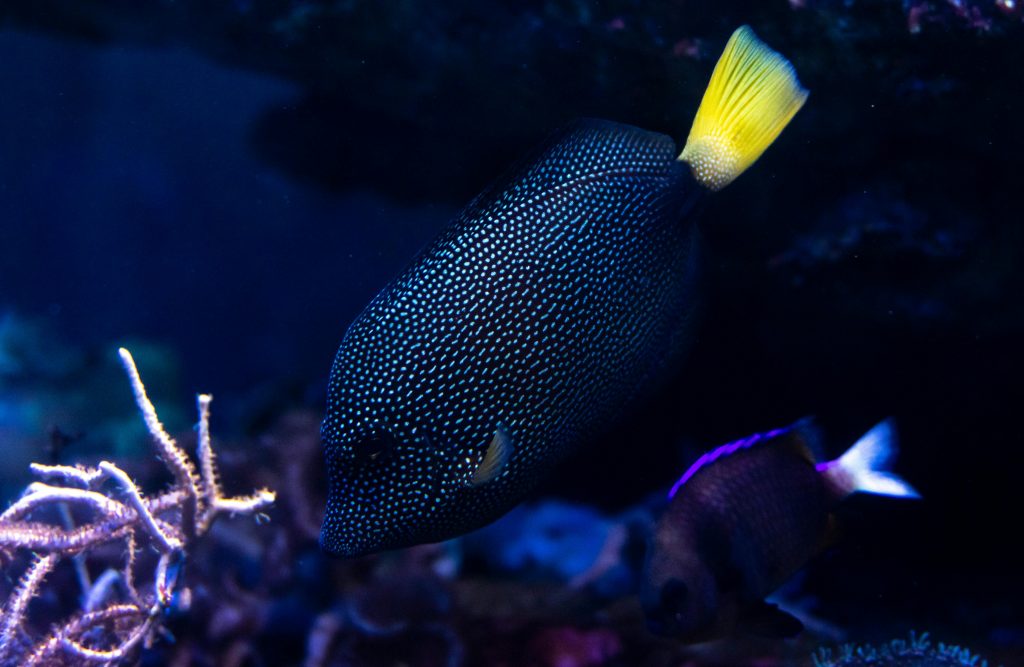
The Gemmatum Tang, also called Zebrasoma gemmatum, is one of the most striking surgeonfish in the hobby. Its black body and white spots make it unforgettable. It is also expensive, rare, and best suited for experienced reef keepers. Success depends on space, stable water, careful quarantine, and a strong feeding routine.
This guide covers the care, behavior, diet, and reef compatibility of the Gemmatum Tang. You will learn how large a tank it needs, what it eats, how aggressive it can be, and what problems hobbyists face most often. This fish is not impossible to keep, but it does demand planning. If you want a healthy specimen that settles in and thrives, you need to understand its natural behavior and long-term needs before buying one.
Gemmatum Tang Quick Care Facts
| Common name | Gemmatum Tang |
| Scientific name | Zebrasoma gemmatum |
| Family | Acanthuridae |
| Care level | Moderate to advanced |
| Temperament | Semi-aggressive |
| Adult size | Up to 8-9 inches |
| Minimum tank size | 180 gallons |
| Diet | Herbivore with omnivorous tendencies |
| Reef safe | Generally yes |
| Lighting | No special need beyond reef tank norms |
| Water flow | Moderate to strong |
| Temperature | 74-78°F |
| Salinity | 1.024-1.026 |
| pH | 8.1-8.4 |
The quick facts above give you the short version. The real challenge is not basic survival. The challenge is long-term stability. Gemmatum Tangs need room to swim, strong oxygen levels, and frequent plant-based feeding. They also need a peaceful introduction process. This species often arrives stressed from collection and shipping. That makes quarantine and observation especially important.
Natural Habitat
The Gemmatum Tang comes from the western Indian Ocean. It is most associated with Mauritius and nearby island regions. In the wild, it lives around coral-rich reefs and rocky slopes. It spends much of the day grazing algae from hard surfaces. It also uses reef structure for shelter and retreat.
This habitat explains many of its aquarium needs. The fish is built for constant movement. It wants open swimming lanes, but it also needs secure hiding places. A bare tank causes stress. A crowded tank also causes stress. In nature, these tangs move through areas with strong water movement and high oxygen. They are used to clean, stable seawater. Replicating that environment improves feeding response and lowers aggression. When hobbyists understand the fish’s natural setting, tank design becomes much easier. You are not just housing a rare fish. You are creating conditions that match a specialized reef grazer.
Aquarium Setup
A 180-gallon tank should be the minimum for an adult Gemmatum Tang. Larger is better. A 6-foot tank gives this fish the swimming length it needs. If you plan to keep other tangs, go even bigger. Tank width matters too. This species turns sharply and patrols rockwork throughout the day.
Build an aquascape with a balance of caves and open areas. Leave long channels in the front and center. Use stable rock structures that cannot shift. Add surfaces for natural algae growth. This fish will graze constantly between meals. Strong filtration is important. So is a reliable skimmer. Tangs produce waste and eat often. Keep ammonia and nitrite at zero. Keep nitrate controlled, ideally under 15 ppm in a reef tank. Stable alkalinity and pH help reduce stress. Temperature swings should be avoided. A mature system works best. Newly set up tanks usually lack the biofilm and stability that help surgeonfish settle in.
If you are still planning your display, read our reef tank setup guide. It covers equipment, cycling, and aquascaping basics.
Lighting Requirements
The Gemmatum Tang does not need species-specific lighting. It will do well under normal reef lighting. The key is consistency, not intensity. If the fish lives in a mixed reef or SPS tank, your coral lighting will usually be fine. This tang adapts well to bright displays as long as it has shaded retreat areas.
Very harsh lighting in a sparse aquascape can make a new specimen feel exposed. That often leads to hiding and delayed feeding. Use rock overhangs and caves to create visual comfort. A normal day and night schedule helps too. Avoid sudden changes in photo period after introduction. If the fish arrives stressed, dimmer lighting for the first day can help it settle. Once established, the Gemmatum Tang usually becomes bold and visible. Its white spotting looks best under balanced reef spectrum lighting. Good lighting also encourages algae and biofilm growth on rock, which supports natural grazing behavior.
Water Flow
Moderate to strong water flow is ideal. This species comes from active reef zones with steady movement. Good flow supports oxygen exchange and keeps waste suspended for filtration. It also helps mimic the fish’s natural environment. That said, flow should not be chaotic everywhere.
Create a mix of higher-energy areas and calmer pockets. The Gemmatum Tang will use both. It likes to cruise through stronger currents, then rest near rockwork. Dead spots should be avoided. Poor circulation can lower oxygen and allow detritus to build up. That can irritate tangs over time. Surface agitation is very important, especially in heavily stocked reef systems. If your tank runs warm, oxygen becomes even more critical. A healthy tang is active, alert, and always browsing. If it pants, hides constantly, or avoids open water, review flow, oxygen, and overall tank stress.
Feeding
Feeding is one of the most important parts of Gemmatum Tang care. This fish is primarily a grazer. It needs frequent access to vegetable matter. Dried nori should be offered daily. Clip it in more than one location if you keep multiple herbivores. Many specimens also accept spirulina flakes, herbivore pellets, frozen mysis, and quality frozen blends.
Feed at least two to three times per day. Smaller, frequent meals work better than one large feeding. Variety matters. A limited diet can lead to weight loss and poor immune function. Look for a full belly and active grazing between meals. If a new fish refuses prepared foods, start with attached nori and live rock access. Garlic additives may help trigger interest, but they are not a cure-all. Nutrition is closely tied to disease resistance in tangs. A fish that eats aggressively usually adapts faster. For more on herbivore nutrition, see our best food for reef fish guide and our how to feed tangs article.
Compatibility
The Gemmatum Tang is generally reef safe with corals. It does not usually nip at coral tissue. It also ignores most ornamental invertebrates. The main concern is aggression toward other fish, especially other tangs and fish with a similar body shape. Surgeonfish are territorial. Rare species are no exception.
This fish often does best with peaceful to moderately assertive tank mates. Avoid cramped stocking plans. Avoid adding it to a tank where an established tang already controls the entire rockscape. If mixing tangs, use a large tank and add fish carefully. Different genera often mix better than similar Zebrasoma species. Introduce with acclimation boxes when possible. Watch for tail slashing, chasing, and feeding intimidation. A healthy Gemmatum Tang should be confident, not constantly defensive. It can coexist with wrasses, anthias, clownfish, gobies, and many angelfish in large systems. Research each pairing first. Our reef fish compatibility chart can help you plan.
Step-by-Step Acclimation Guide
- Prepare a quarantine tank before the fish arrives.
- Match temperature and salinity carefully.
- Dim the lights during transfer.
- Use drip acclimation if shipping water quality is acceptable.
- Move the fish gently without adding bag water.
- Offer nori within the first day.
- Observe breathing, swimming, and body condition closely.
- Treat disease early if symptoms appear.
- Keep quarantine calm and stable for several weeks.
- Use an acclimation box before release into the display.
This process lowers stress and improves feeding response. Gemmatum Tangs are valuable fish. Rushing introduction is a costly mistake. Quarantine is especially important because tangs are prone to external parasites. A healthy start usually determines long-term success.
Propagation and Breeding
Gemmatum Tangs are not bred by home hobbyists in any routine way. Like many surgeonfish, they have a complex pelagic larval stage. Adults spawn in the water column. The larvae are delicate and difficult to rear. Commercial breakthroughs with some tang species have happened, but this species remains rare in captive-bred form.
For most aquarists, propagation is not a practical topic. The focus should be on ethical sourcing, quarantine, and long-term care. If captive-bred Gemmatum Tangs become more available in the future, they may adapt better to aquarium life and prepared foods. For now, assume your specimen is wild collected and plan accordingly.
Common Problems
Why is my Gemmatum Tang not eating?
Stress is the most common cause. Shipping, bullying, bright lighting, and poor acclimation all reduce appetite. Start with nori on a clip. Offer multiple food types. Check ammonia, pH, and salinity. Make sure tank mates are not intimidating the fish at feeding time. Newly imported tangs often need time, but they should not go many days without interest in food.
Why does it have white spots?
Remember that this species naturally has white body spotting. Look for changes beyond the normal pattern. Raised salt-like dots, flashing, and rapid breathing may indicate marine ich. Velvet can look finer and more severe. Quarantine and early treatment matter. Tangs are highly susceptible to parasite outbreaks. Read our marine ich treatment guide if symptoms appear.
Why is my Gemmatum Tang aggressive?
Territory is usually the issue. Small tanks increase conflict. Similar-shaped fish trigger aggression most often. Rearranging rockwork can help during introduction. So can an acclimation box. Feed generously during the settling period. In some cases, incompatible tank mates must be separated.
Why is it losing weight?
Weight loss points to poor diet, internal parasites, or chronic stress. Increase feeding frequency first. Add more algae-based foods. Observe feces and body shape. A pinched stomach is a warning sign. Review competition at feeding time. If the fish eats but still declines, investigate disease or parasite issues.
Frequently Asked Questions
How big does a Gemmatum Tang get?
Most reach around 8 to 9 inches in captivity. They need a large tank because they are active swimmers.
Is the Gemmatum Tang reef safe?
Yes, it is generally considered reef safe. It usually ignores corals and most invertebrates.
What is the minimum tank size for a Gemmatum Tang?
A 180-gallon tank is the practical minimum. Larger tanks are strongly recommended for long-term success.
Can a Gemmatum Tang live with other tangs?
Yes, but only with care. Use a large tank, smart stocking order, and close observation during introduction.
Why is the Gemmatum Tang so expensive?
It is rare in trade, collected from limited regions, and highly desired by serious reef hobbyists. Availability stays low, so prices remain high.
Final Thoughts
The Gemmatum Tang is a true showpiece fish. It combines rare beauty with classic tang behavior. It is reef safe in most systems, but it is not a casual purchase. You need space, mature filtration, strong quarantine habits, and a reliable feeding plan. If you can provide those things, this species can become one of the most impressive fish in a large reef aquarium. Take your time, buy a healthy specimen, and build the system around its long-term needs rather than its price tag alone.
Was this helpful?
Related Posts
Best Filtration Systems
Best Filtration Systems for a Healthy Saltwater Aquarium Choosing the best filtration system for your saltwater aquarium is…
 By
By
Clown Triggerfish (Balistoides Conspicillum)
Clown triggerfish are stunning but aggressive marine fish that need very large tanks, strong filtration, and careful tankmate…
[favorite_button]
My Bookmarks:
To see full list click here
[user_favorites user_id="" include_links="true" site_id="" post_types="" include_thumbnails="true" thumbnail_size="thumbnail" include_excerpt="false"]