

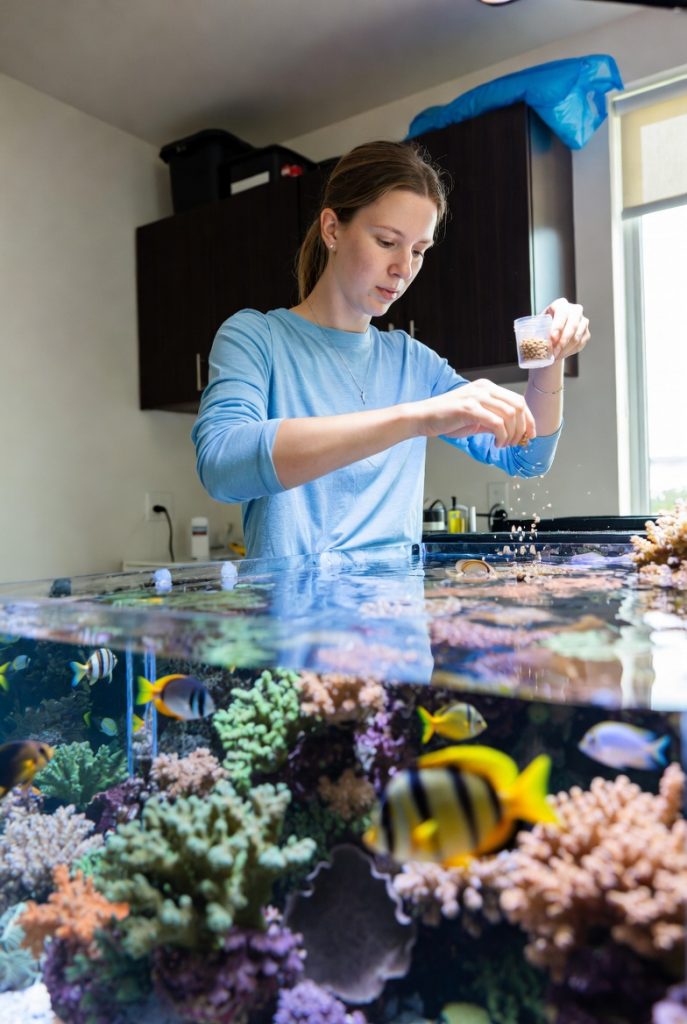
Getting a new saltwater fish to eat often comes down to reducing stress, offering the right foods, and matching your approach to the species. Most feeding problems have a cause. Once you identify it, even picky marine fish usually begin eating with a steady routine and a calm environment.
Many reef keepers panic when a fish refuses food. That reaction is understandable. Fish can decline quickly if the issue is ignored. The good news is that refusal to eat is common, especially after shipping, quarantine, or a move into a new display tank. In this guide, you will learn why marine fish stop eating, how to troubleshoot the most likely causes, and which feeding strategies work best for common reef species. You will also learn when to wait, when to intervene, and when a fish needs more serious treatment. A calm, methodical approach gives you the best chance of success.
Quick Reference Table
| Problem | Likely Cause | Best First Step |
|---|---|---|
| New fish ignores food | Shipping stress | Dim lights and wait 24 hours |
| Eats then spits food | Wrong food size or texture | Try smaller frozen foods |
| Only picks at rocks | Natural grazer behavior | Offer algae, pods, or live foods |
| Stopped eating suddenly | Water quality or aggression | Test water and observe tankmates |
| Breathing fast and not eating | Disease or ammonia stress | Check parameters and quarantine |
| Won’t eat prepared foods | Wild feeding habits | Start with live or enriched frozen food |
Why Marine Fish Stop Eating
Marine fish usually refuse food for a reason. Stress is the most common cause. Collection, shipping, acclimation, and new tankmates all raise stress levels. A fish that hid all day may simply need time. This is very common with wrasses, gobies, anthias, and angelfish.
Water quality is another major factor. Elevated ammonia, low oxygen, unstable salinity, or rapid temperature swings can shut down feeding fast. Fish often stop eating before they show obvious disease signs. That is why testing matters early.
Diet mismatch also causes problems. Some fish do not recognize pellets at first. Others need algae, sponge matter, or tiny moving prey. A mandarin dragonet will not respond like a clownfish. A kole tang will not feed like a hawkfish. Understanding the species matters.
Aggression can be easy to miss. A dominant fish may not attack constantly. It may simply stare, chase at feeding time, or block access to food. The shy fish then hides and slowly weakens.
Step-by-Step Guide to Get Fish Eating
1. Check the environment first
Test ammonia, nitrite, nitrate, pH, salinity, and temperature. Confirm strong surface movement. Make sure the fish is not gasping. Poor water quality must be corrected before feeding improves. If parameters are off, fix them slowly. Sudden swings create more stress.
2. Reduce stress
Dim the lights for a day or two. Limit traffic around the tank. Provide hiding places with rock, PVC, or caves. Do not chase the fish with a net. Do not overfeed the tank every hour. Calm conditions help fish settle faster.
3. Match the food to the fish
Offer foods that fit the fish’s natural feeding style. Try mysis shrimp for many carnivores. Use brine shrimp as a starter food if needed. Offer nori for tangs and rabbitfish. Try copepods or live baby brine for pod hunters. Use small particle foods for tiny mouths.
4. Start with frozen or live foods
Frozen foods often work better than pellets at first. Their scent disperses quickly. That can trigger a feeding response. Live blackworms, live brine, or copepods can be very effective for stubborn fish. Once the fish eats reliably, you can begin training it onto prepared foods.
5. Feed small amounts often
One large feeding can fail. Small feedings work better. Offer a tiny amount two to four times daily if possible. Remove leftovers. This keeps water cleaner and gives shy fish more chances to eat.
6. Observe the response closely
Does the fish approach the food? Does it chew and spit? Does another fish scare it away? These details matter. A fish that investigates food is often close to eating. A fish that spits food may need a softer or smaller option.
Best Foods for Picky Saltwater Fish
Different fish respond to different textures and scents. Frozen mysis is the most useful starting food for many species. It has good movement in the water. It also has a strong smell. Finely chopped clam, krill, or shrimp can help with larger carnivores and angelfish.
Enriched brine shrimp is less nutritious than mysis, but it often gets a response. That makes it useful as a transition food. Once the fish starts eating, mix in better foods. Over time, reduce the brine and increase more nutritious choices.
For herbivores, use dried nori on a clip. Red, green, and brown algae sheets all have value. Some tangs prefer one type over another. You can also use spirulina foods and quality herbivore pellets. Grazers often need constant access to vegetable matter.
For dragonets and some wrasses, live copepods may be essential. These fish often fail in sterile tanks. A mature refugium or pod population makes a huge difference. You can learn more in reef tank parameters, quarantine tank setup, best clean up crew for reef tank, and how to cycle a reef tank.
Species-Specific Feeding Tips
Clownfish usually adapt quickly. They often take pellets, flakes, and frozen foods within a day or two. If they refuse food, suspect stress or water quality first. Tangs often begin by grazing surfaces. Offer nori early. Do not expect them to rush pellets on day one.
Wrasses vary a lot. Many fairy and flasher wrasses accept frozen foods quickly. Leopard wrasses often need a mature sand bed and more time. Gobies and blennies can be shy. They may prefer food delivered near their perch or burrow.
Angelfish can be selective. Dwarf angels often pick at rock before accepting prepared foods. Sponge-based frozen foods may help. Butterflyfish are famous for feeding challenges. Some species adapt well. Others need specialized care and are poor beginner choices.
Mandarins and scooter dragonets are a special case. Many do not recognize frozen or dry foods at all. They need constant live prey unless already trained. Research the exact species before purchase. Prevention is easier than rescue.
Common Problems
New fish has not eaten for three days
This can still be normal, especially after shipping. Keep stress low. Offer a variety of frozen foods. Try feeding at different times. Watch for bullying. If the fish is breathing normally and looks alert, patience may be the best tool.
Fish eats but spits food out
Food may be too large, too tough, or unfamiliar. Try smaller mysis, roe, or finely chopped seafood. Soak dry foods first. Some fish sample food several times before swallowing consistently. Mouth injury and parasites are also possible if this continues.
Fish only eats live food
Use live food as a bridge, not a permanent crutch. Mix a small amount of frozen food with the live offering. Gradually increase the frozen ratio. Once accepted, begin introducing pellets. Move slowly. Sudden changes often reset progress.
Fish stopped eating after eating well
This is more concerning. Check water quality at once. Look for aggression, flashing, heavy breathing, white spots, or stringy waste. Internal parasites, ich, velvet, bacterial infection, and ammonia stress can all cause sudden refusal. A quarantine tank may be needed.
Fish is losing weight
A pinched belly means time is running short. Increase feeding opportunities. Use nutrient-dense frozen foods. Consider live foods. Separate the fish if competition is the issue. If weight loss continues despite eating, suspect internal parasites or chronic disease.
When to Use a Quarantine or Feeding Box
A separate feeding box or quarantine tank can help a lot. It removes competition. It also lets you monitor exactly what the fish eats. This is useful for shy wrasses, small angelfish, and fish harassed by established tankmates.
In quarantine, keep the setup simple. Use stable salinity, heat, aeration, and hiding places. Bare tanks are easy to clean, but they can feel exposed. PVC elbows help fish feel secure. For some species, a small container of sand may be useful. Always match this to the fish’s needs.
Do not medicate blindly. Some medications suppress appetite. Diagnose first when possible. If disease is likely, treatment may still be necessary. In that case, focus on oxygen, water quality, and easy foods during the process.
How to Train Fish Onto Prepared Foods
Training takes repetition. Start with the food the fish already accepts. Then mix in a small amount of the target food. For example, combine frozen mysis with pellets soaked in tank water. Feed when the fish is most active. Many fish learn by watching other fish eat.
Use consistent cues. Feed in the same area. Use the same baster or clip. Fish learn routines quickly. Once the fish strikes at food confidently, reduce the preferred food very slowly. Rushing this step causes setbacks.
High-quality pellets are worth the effort. They are convenient and balanced. Still, many reef fish do best on a varied diet. Even trained fish benefit from frozen foods, algae, and occasional fresh marine-based items.
Frequently Asked Questions
How long can a saltwater fish go without eating?
It depends on the species and condition. Healthy fish may last several days. Small or delicate species decline faster. Weight loss, rapid breathing, and hiding are warning signs.
Should I use garlic to get fish to eat?
Garlic may help trigger interest in some cases. It is not a cure. Use it as a short-term feeding aid, not a replacement for proper nutrition and diagnosis.
Is live brine shrimp a good long-term food?
No. It is useful as a starter food. It is not ideal as a staple unless enriched. Transition to more nutritious foods as soon as possible.
Why does my fish eat in quarantine but not in the display?
Competition and aggression are the usual causes. The display tank may also have stronger flow or more distractions. Observe feeding time carefully.
What is the best first food for a new marine fish?
Frozen mysis is the safest general starting point for many species. For herbivores, add nori. For pod hunters, live copepods may be necessary.
Final Tips for Success
The best way to get fish to eat is to stay calm and troubleshoot in order. Start with water quality. Reduce stress. Match the food to the species. Watch for aggression and disease. Then use small, frequent feedings with foods the fish can recognize. Most feeding issues improve when the environment is stable and the approach fits the fish. Patience matters, but so does close observation. In reef keeping, the details usually tell you what the fish needs next.
Was this helpful?
Related Posts
Best Filtration Systems
Best Filtration Systems for a Healthy Saltwater Aquarium Choosing the best filtration system for your saltwater aquarium is…
 By
By
Clown Triggerfish (Balistoides Conspicillum)
Clown triggerfish are stunning but aggressive marine fish that need very large tanks, strong filtration, and careful tankmate…
[favorite_button]
My Bookmarks:
To see full list click here
[user_favorites user_id="" include_links="true" site_id="" post_types="" include_thumbnails="true" thumbnail_size="thumbnail" include_excerpt="false"]