

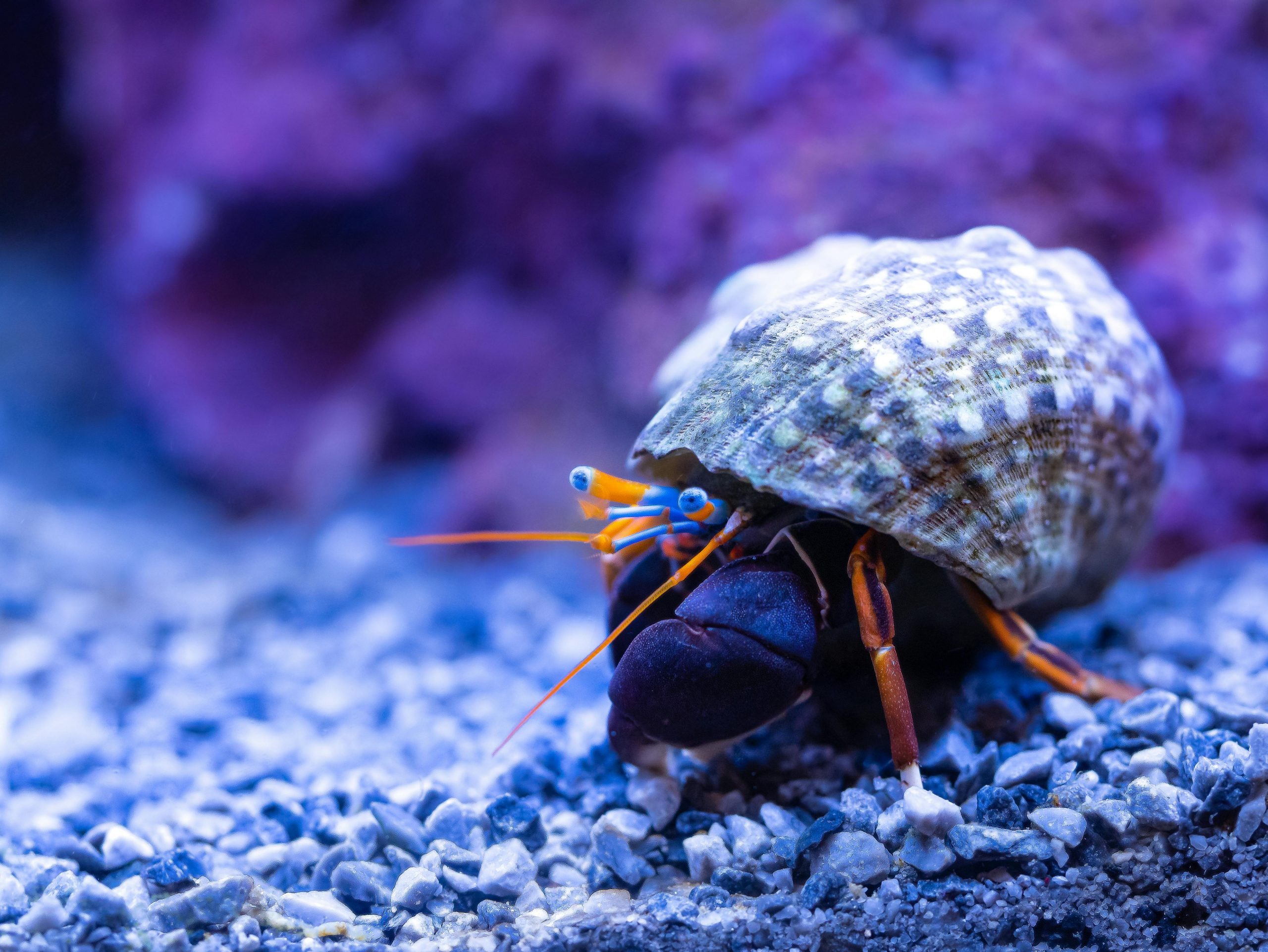
Hermit crabs are useful reef tank scavengers. They eat leftover food, film algae, and detritus. They also come with tradeoffs. Some species stay peaceful, while others attack snails, topple frags, or bother corals when food or shells run short.
This guide explains how hermit crabs fit into a reef aquarium. You will learn which species work best, how many to keep, what they eat, and how to prevent common problems. We will also cover tank setup, compatibility, molting, and simple troubleshooting so you can decide if hermit crabs belong in your cleanup crew.
Quick Reference Table
| Common name | Hermit crab |
| Role | Cleanup crew scavenger and algae grazer |
| Best tank size | 10 gallons and up, depending on species and stocking |
| Temperament | Usually semi-peaceful, but opportunistic |
| Diet | Detritus, leftover food, film algae, pellets, meaty foods |
| Reef safe | Usually with caution |
| Difficulty | Easy |
| Ideal salinity | 1.025 to 1.026 |
| Temperature | 76 to 78°F |
| Special need | Extra empty shells in several sizes |
What Is a Hermit Crab in Reef Keeping?
Hermit crabs are small marine scavengers that live in borrowed shells. Unlike true crabs, they do not have a hard shell over the full body. Their soft abdomen stays protected inside an empty snail shell. As they grow, they must move into larger shells.
In reef tanks, hermits are popular cleanup crew animals. They pick at algae, fish waste, uneaten food, and decaying matter. This helps reduce nutrient buildup in dead spots. They also add movement and personality to the tank.
Still, they are not perfect janitors. A hungry hermit may steal food from corals. A large one may bulldoze loose frags. Some will kill snails for shells. That is why species choice matters. Small reef-safe types usually perform best. Blue leg, scarlet, and dwarf zebra hermits are the most common options for mixed reefs.
Natural Habitat
Marine hermit crabs live in tropical and subtropical oceans worldwide. Many common aquarium species come from the Caribbean or Indo-Pacific. In nature, they inhabit shallow reefs, rubble zones, seagrass beds, and sandy flats. These areas provide algae, detritus, and empty shells.
Most species spend the day climbing rockwork and searching for edible scraps. They hide in crevices when threatened. They also compete with snails and other hermits for shells. This constant competition explains much of their behavior in aquariums.
Reef environments offer high oxygen, stable salinity, and plenty of hard surfaces. Hermits are adapted to active water movement and clean saltwater. They do poorly in tanks with unstable salinity, low oxygen, or heavy waste buildup. Mimicking their natural habitat means offering live rock, stable parameters, and spare shells scattered around the aquarium.
Best Hermit Crab Species for Reef Tanks
Not all hermit crabs behave the same way. Small species are usually safer in reef tanks. Large species become more destructive as they grow. They can move rock, disturb corals, and prey on snails more often.
Blue leg hermit crabs are common and inexpensive. They eat film algae and detritus well. They can be aggressive toward snails if shells are limited.
Scarlet reef hermit crabs are often the best beginner choice. They are usually calmer and less likely to attack snails. They also stay fairly small.
Dwarf zebra hermits are active grazers with bold striping. They can work well in mixed reefs when fed properly.
Avoid very large hermits in nano reefs. Halloween hermits are attractive, but they need more space and can become rough on tankmates. When in doubt, choose fewer small hermits instead of many mixed species. That lowers competition and limits shell fights.
Aquarium Setup
Hermit crabs do best in mature aquariums with stable parameters. A brand new tank often lacks enough natural food. Wait until the tank has some film algae and microfauna before adding them. Even then, do not overstock the cleanup crew.
Provide live rock, small caves, and secure coral placement. Hermits climb constantly. Loose frags will get pushed over. Glue frags well and keep rockwork stable. Sand is optional for most species, but a mixed rock and sand layout gives them more feeding areas.
Offer several empty shells in different shapes and sizes. This is one of the most important steps. Shell shortages increase aggression fast. Place extra shells in easy-to-find spots. Rinse them before use.
Tank size depends on species and stocking. A few dwarf hermits can live in a 10-gallon tank. Larger reefs are easier to manage because they provide more food and more territory. For broader cleanup crew planning, see reef tank clean up crew and reef tank setup.
Water Parameters and Stability
Hermit crabs are hardy, but they still need stable reef conditions. Sudden salinity swings are a common problem. Top off evaporation with fresh water daily or use an auto top off system. This matters even more in nano tanks.
Aim for salinity between 1.025 and 1.026. Keep temperature between 76 and 78°F. Maintain pH around 8.1 to 8.4. Ammonia and nitrite must stay at zero. Nitrate should stay low to moderate. Hermits tolerate nitrate better than many corals, but poor water quality still stresses them.
Calcium, alkalinity, and magnesium also matter. Hermits build and maintain hard exoskeletons. Major deficiencies can affect molting and overall health. Normal reef levels are usually enough. If your tank supports stony corals, it will usually support hermits well too. Learn more about stable chemistry in reef tank water parameters.
Lighting Requirements
Hermit crabs do not need special lighting. Their lighting needs depend on the reef tank, not the crab. They can live under soft coral lighting or intense SPS lighting if other conditions are stable. What matters more is access to shaded areas.
In bright tanks, hermits often spend part of the day under ledges or between rocks. This is normal behavior. They may become more active during lower light periods or after feeding. Strong lighting can also grow more film algae, which gives them extra grazing opportunities.
If you are setting up a reef around coral needs, choose lighting for the corals first. Hermits adapt well as long as they have hiding places. For a deeper look at reef lighting choices, visit reef tank lighting.
Water Flow
Moderate water flow works best for most hermit crabs. They come from active reef zones, but they still need calm spots to rest and feed. Very weak flow allows detritus to settle, which can hurt water quality. Very strong direct flow can flip small hermits or limit feeding access.
Create varied flow with powerheads aimed around the rockwork, not straight at one spot. This gives hermits access to both high-oxygen areas and sheltered zones. Good circulation also helps move leftover food into places where cleanup crew animals can find it.
If a hermit keeps falling from exposed rock, check pump placement. If debris always collects in one corner, improve circulation there. Balanced flow helps the whole cleanup crew work more efficiently.
Feeding
Many hobbyists assume hermit crabs can survive on leftovers alone. That is not always true. In clean, well-maintained tanks, natural food may be limited. Hungry hermits become more aggressive. They may attack snails, steal coral food, or pick at weak animals.
Feed small amounts several times each week. Offer sinking pellets, algae wafers, frozen mysis, brine shrimp, or tiny bits of seafood. Rotate foods for variety. Remove excess if uneaten. Target feeding is rarely needed, but dropping food near the rockwork helps shy hermits find it.
Do not rely on hair algae control alone. Hermits are better at film algae, scraps, and detritus than heavy nuisance algae. If your tank has a major algae issue, solve the nutrient problem first. Hermits are helpers, not a cure.
Compatibility
Hermit crabs are usually safe with reef fish, corals, and most invertebrates. Still, there are limits. They are opportunistic omnivores. If something is weak, dying, or easy to steal from, they may investigate quickly.
They generally mix well with clownfish, gobies, blennies, wrasses, and peaceful reef fish. Avoid housing them with predators that eat crustaceans. Hawkfish, large wrasses, puffers, triggers, and some dottybacks may kill them.
With corals, most issues involve irritation rather than active predation. Hermits may walk across fleshy LPS corals or grab food from polyps. Secure coral frags well. Keep hermits fed. Snails are the biggest concern. Shell competition causes many losses. Add extra shells and avoid crowding. If snail deaths continue, reduce hermit numbers.
How Many Hermit Crabs Should You Keep?
Beginners often add too many cleanup crew animals. Online packages are frequently oversized. A lightly stocked reef does not need dozens of hermits. Too many crabs create competition, starvation, and shell fights.
A simple starting point is one small hermit for every 5 to 10 gallons. Then adjust based on algae, feeding, and detritus levels. Some successful reef keepers skip hermits entirely and rely more on snails. Others keep only a few scarlet hermits for variety.
Start small and observe. If food disappears fast and shells are contested, you have too many. If detritus accumulates and algae spreads despite good husbandry, you may need a slightly larger crew. Build slowly. That approach is safer and cheaper.
Molting and Growth
Hermit crabs molt as they grow. During a molt, they shed their old exoskeleton and harden a new one. This process can make them look dead. Many hobbyists remove a shed shell by mistake. Do not do that too quickly.
A molting hermit may hide for days. It may stop eating and stay buried or tucked into rock crevices. This is normal. Leave it alone. Stable water quality is critical during this time. Avoid sudden salinity swings and aggressive tank maintenance.
After molting, hermits often eat parts of the old exoskeleton. This recycles minerals. Keep extra shells available because growth often triggers shell changes. If a hermit cannot find a suitable shell, stress and aggression increase fast.
Common Problems
Hermit crab killed a snail
This usually happens from shell competition, hunger, or overcrowding. Add more empty shells first. Feed the tank a bit more often. Reduce hermit numbers if losses continue. Small tanks show this problem more often.
Hermit crab is not moving
The crab may be molting, stressed, or dead. Check for a bad smell only if the shell is accessible. Do not force it out. Review salinity, temperature, and ammonia. Recent acclimation errors are a common cause of sudden inactivity.
Hermit crab keeps falling over
Strong direct flow, poor footing, or an oversized shell may be the cause. Adjust pump direction. Add more natural surfaces. Offer smaller shells if the current shell looks awkward or too heavy.
Hermit crab bothers corals
This often happens during feeding time. The crab wants the coral food. Feed hermits separately with sinking foods. Secure loose frags. If one individual stays disruptive, remove it and replace it with a calmer species.
Step-by-Step: Adding Hermit Crabs to a Reef Tank
1. Confirm the tank is mature. The tank should be cycled and stable. Some natural algae and detritus should be present.
2. Choose a reef-safe species. Start with scarlet or other small hermits. Avoid large aggressive species in nano tanks.
3. Buy extra shells. Add several clean shells in mixed sizes before the hermits arrive.
4. Acclimate slowly. Drip acclimation helps with salinity changes. Sudden shifts stress crustaceans badly.
5. Start with a small number. Observe for two weeks before adding more cleanup crew animals.
6. Feed lightly. Do not assume they can live on scraps forever. Supplement a few times each week.
7. Monitor behavior. Watch for shell fights, snail attacks, and coral irritation. Adjust stocking if needed.
Frequently Asked Questions
Are hermit crabs reef safe?
Usually, yes, but with caution. Small species are the safest. They may still attack snails or steal coral food if underfed.
Do hermit crabs eat algae?
Yes. They eat film algae and some soft nuisance algae. They are not the best solution for severe hair algae outbreaks.
Why do hermit crabs need empty shells?
They outgrow old shells as they molt. Without new shells, they may fight each other or kill snails for housing.
Can hermit crabs live with snails?
Yes, but success depends on food, space, and shell supply. Extra shells greatly improve snail safety.
Should every reef tank have hermit crabs?
No. Many reef tanks run well without them. They are optional cleanup crew members, not a requirement.
Hermit crabs can be excellent reef helpers when used carefully. Choose small species, avoid overstocking, and always provide extra shells. Feed them enough to reduce aggression. In the right setup, they add useful cleanup power and a lot of character to a reef aquarium.
Was this helpful?
Related Posts
Sohal Tang (Acanthurus Sohal)
Sohal Tang care centers on space, heavy feeding, and aggression control. Learn tank size, diet, compatibility, and common…
 By
By
Reef Safe Fish Guide
Learn which reef safe fish work best in coral tanks, plus species to avoid, compatibility tips, and beginner-friendly…
[favorite_button]
My Bookmarks:
To see full list click here
[user_favorites user_id="" include_links="true" site_id="" post_types="" include_thumbnails="true" thumbnail_size="thumbnail" include_excerpt="false"]