How To Frag And Mount Corals
Learning how to frag and mount corals is one of the most rewarding skills in the saltwater aquarium hobby. Done correctly, fragging helps you grow your reef, share pieces with friends, and reduce the impact on wild reefs. This guide walks you through the basic tools, techniques, and tips to safely frag and mount common corals in your home aquarium.
Tools And Prep For Coral Fragging
Before you make the first cut, set yourself up for success. A clean, organized workspace will keep both you and your corals safe.
- Fragging tools: Coral bone cutters, scalpel or razor blades, coral saw (for larger colonies), and tweezers.
- Mounting supplies: Ceramic frag plugs or small rubble rock, reef-safe super glue gel, and optional two-part epoxy.
- Safety gear: Nitrile gloves, protective eyewear, and a mask when working with zoanthids or palythoas.
- Support items: Iodine-based coral dip, small containers with tank water, and paper towels.
If you’re still dialing in your system basics, review your beginner saltwater tank setup first so your frags have a stable, mature environment to grow in.
Step-By-Step: How To Frag Corals
1. Choose The Right Coral And Spot
Start with hardy, fast-growing species such as zoanthids, green star polyps, and branching SPS or LPS like birdsnest, montipora, or hammer corals. Avoid stressed or recently shipped colonies; only frag healthy, well-expanded corals.
- Look for natural branches or edges that can be separated cleanly.
- Avoid cutting through the mouth of LPS polyps whenever possible.
- For encrusting corals, plan to remove a small section of the encrusted base or edge.
2. Make Clean, Confident Cuts
Fill a small container with display tank water and gently place the coral inside. Use bone cutters or a scalpel to make a quick, deliberate cut:
- Branching corals: Snip branches at a junction, leaving at least 1–2 inches per frag.
- Encrusting corals: Use a razor to lift and slice a small patch from the rock or tile.
- Zoas/palys: Cut the mat just under the polyps, never squeezing the polyp itself.
Place fresh frags into another container of clean tank water while you prepare to mount them.
How To Mount Coral Frags Securely
1. Prepare The Frag Plug Or Rock
Rinse ceramic plugs or rubble in saltwater to remove dust. Dry the mounting surface lightly with a paper towel so the glue adheres better.
2. Apply Glue And Place The Frag
Use a thick, gel-style reef-safe super glue. Apply a pea-sized blob to the plug, then gently press the frag base into the glue.
- Hold the frag in place for 10–20 seconds until the glue skins over.
- If needed, add a small ring of two-part epoxy around the base for extra support.
- Dip the mounted frag in tank water to help the glue cure before returning it to the display.
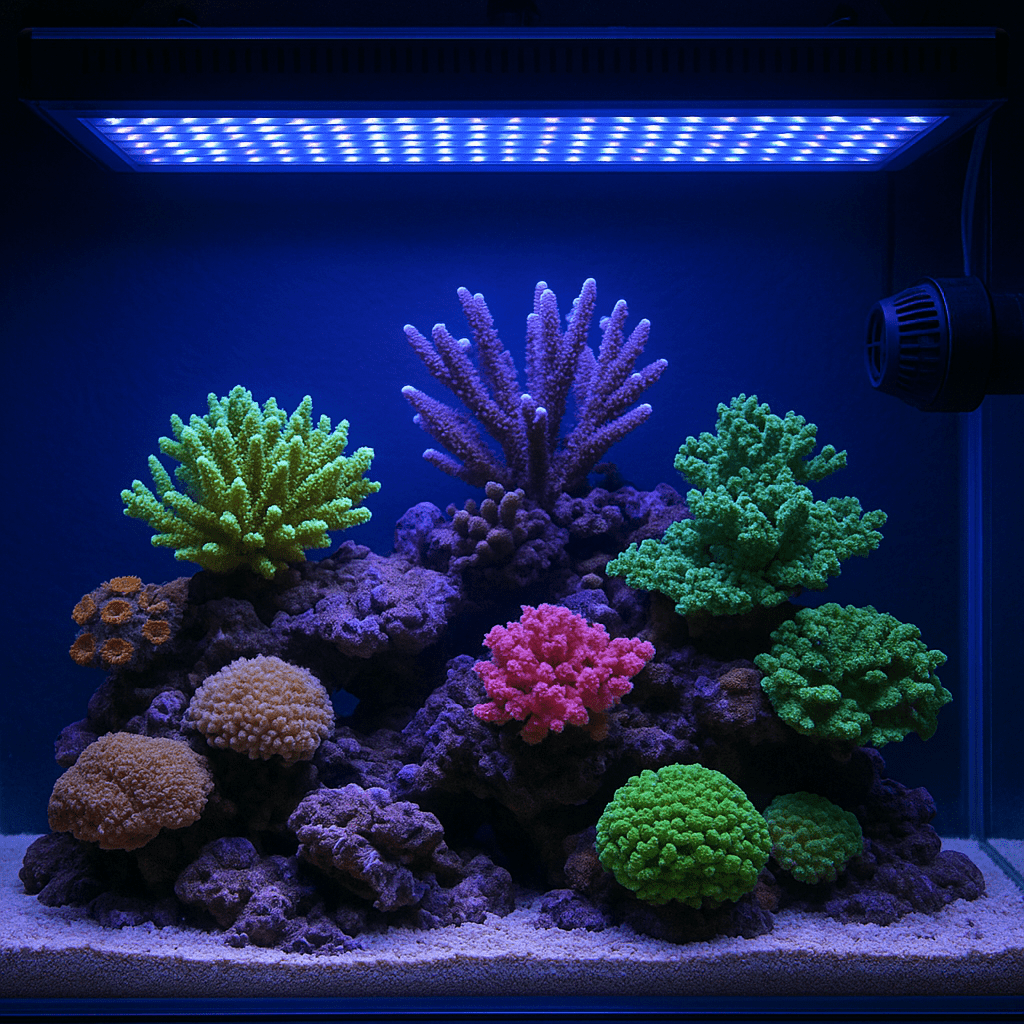
For more ideas on where to place your new frags, check out our guide to aquascaping live rock so you can plan growth and avoid future shading issues.
3. Placement, Flow, And Aftercare
Start new frags in slightly lower light and moderate flow compared to their parent colony, then gradually move them to the final location over 1–2 weeks.
- Dip frags in an iodine-based coral dip to reduce infection and pests.
- Watch for tissue recession, algae growth on the glue, or closed polyps.
- Keep nutrients stable; avoid big swings in alkalinity, calcium, or salinity.
Frag racks can help you acclimate several frags at once while you monitor their health and color.
Conclusion: Growing Your Reef Responsibly
Once you understand how to frag and mount corals, you can turn a single colony into a thriving collection, trade with other hobbyists, and even rescue struggling pieces by trimming away dead skeleton. Work slowly, use clean tools, and always prioritize coral health over making more frags. As your confidence grows, combine these techniques with proper coral care for beginners to build a colorful, sustainable reef you can be proud of.
Sources
- Borneman, E. H. Aquarium Corals: Selection, Husbandry, and Natural History. TFH Publications.
- Sprung, J. Corals: A Quick Reference Guide. Ricordea Publishing.
- Advanced Aquarist & Reef2Reef community articles and hobbyist fragging guides.
Was this helpful?
Related Posts
Protein Skimmer Reef Tank Guide
Learn how a protein skimmer works, how to size one, and how to tune it for a cleaner,…
 By
By
Reef Aquarium Water Parameters
Learn the ideal reef aquarium water parameters, safe ranges, and how to keep salinity, alkalinity, nutrients, and pH…