

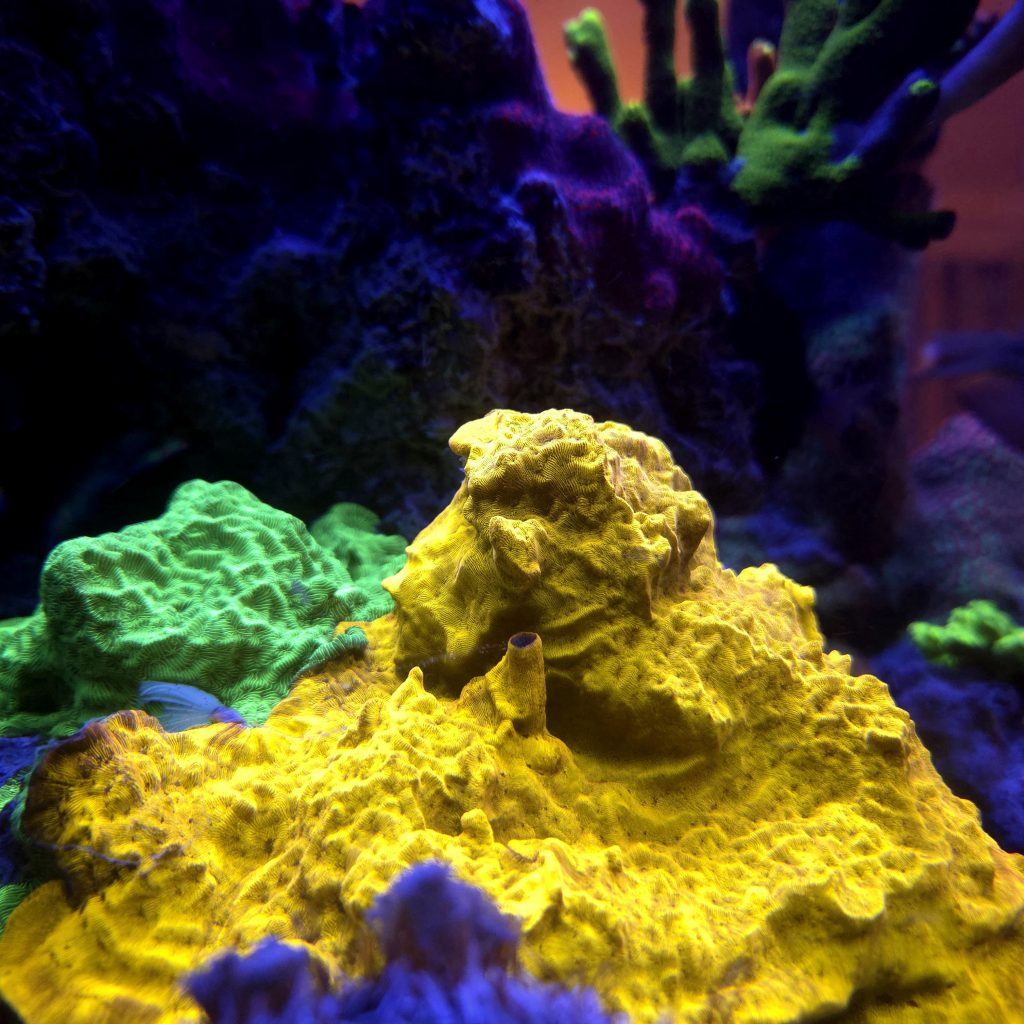
Leptoseris corals are beautiful, often underrated small polyp stony corals that thrive in lower light than many popular SPS. They reward stable reef systems with vivid color, thin layered growth, and a unique deepwater look. Success depends on gentle acclimation, moderate flow, and steady nutrients.
Many reef keepers first notice Leptoseris when building shaded zones or lower rock shelves. These corals can add texture and color where Acropora may struggle. They are also a smart option for hobbyists who want an SPS coral without extreme lighting demands. In this guide, you will learn how to care for Leptoseris corals, where to place them, what they need for growth, how to frag them, and how to solve common issues before they become serious.
Leptoseris Corals Care Quick Reference
| Care Level | Moderate |
| Coral Type | SPS |
| Lighting | Low to moderate |
| Water Flow | Moderate, indirect |
| Placement | Lower rockwork, shaded ledges, vertical faces |
| Temperature | 76–78°F |
| Salinity | 1.025–1.026 |
| Alkalinity | 8–9 dKH |
| Calcium | 400–450 ppm |
| Magnesium | 1250–1400 ppm |
| Nitrate | 2–15 ppm |
| Phosphate | 0.03–0.10 ppm |
| Feeding | Benefits from fine particulate foods |
| Aggression | Low, but give space |
Use this table as a starting point. Final placement should always depend on your tank’s light map, flow pattern, and nutrient stability.
What Are Leptoseris Corals?
Leptoseris are plating or encrusting SPS corals known for thin skeletons and striking fluorescence. Many hobbyists describe them as delicate looking, but they can be hardy once settled. Their growth form often follows rock contours. Some plate outward in layered shelves. Others hug vertical surfaces and create colorful living skins over stone.
Color varies by species and strain. You may see orange, green, yellow, red, blue, or multicolor patterns under reef lighting. Their appeal comes from both shape and contrast. They often glow strongly under blue spectrum light. This makes them popular in modern reef displays with overhangs and caves.
They are still SPS corals, so stability matters. Rapid swings in alkalinity, salinity, or temperature can cause tissue recession. Compared with many high-energy SPS, though, Leptoseris usually prefer less intense conditions. That makes them useful in mixed reefs and lower-light sections of mature tanks.
Natural Habitat
Leptoseris corals are found across the Indo-Pacific. They often occur on reef slopes, walls, and deeper zones with reduced light. In nature, many species live below the brightest shallow reef crest areas. This natural setting explains much of their aquarium behavior.
Water in these habitats is usually clear and stable. Flow is present, but not always violent. Light is filtered by depth and angle. Corals adapt by forming thin plates that maximize surface area. This helps them capture available light efficiently. It also explains why they can bleach if moved too quickly under strong LEDs.
Understanding this deepwater tendency helps with placement. Leptoseris often do best where PAR is moderate or even low by SPS standards. They also appreciate surfaces that mimic reef walls or shaded ledges. If you try to keep them like shallow-water Acropora, results are often poor.
Aquarium Setup
A mature reef tank is best for Leptoseris. Stability matters more than tank size alone. A nano reef can work if parameters stay steady. Larger systems are often easier because they resist sudden swings. Aim for at least a few months of established biological balance before adding one.
Place Leptoseris on lower rockwork, under overhangs, or on vertical surfaces. These spots usually provide softer light and diffused flow. Secure frags well. Their thin skeleton can crack if handled roughly. Cyanoacrylate gel works well for small frags. Epoxy can help on uneven rock.
Keep enough room around the colony for growth and maintenance. While Leptoseris are not highly aggressive, nearby corals can sting or shade them. Avoid placing them where sand can settle often. Fine sediment can irritate tissue and reduce polyp extension. Good rock stability is also important because accidental falls can damage the colony fast.
Lighting Requirements
Lighting is the most common care mistake with Leptoseris corals. Many hobbyists assume all SPS need intense light. Leptoseris often prefer much less. In many tanks, a PAR range of roughly 50 to 150 works well. Some strains tolerate more, but sudden exposure to high PAR can bleach them quickly.
Start low and acclimate slowly. If you buy a frag from a dim system, place it in a shaded area first. Raise light exposure only if color and tissue response stay strong. Signs of too much light include fading, washed-out tissue, and recession along the edges. Signs of too little light include dull color and slow growth, though slow growth alone is not always a problem.
Blue-heavy reef lighting often brings out the best fluorescence. Still, spectrum cannot replace proper intensity. Use a PAR meter if possible. It removes guesswork. For more help with placement and intensity, see our guides on reef tank lighting basics, PAR for corals, and how to acclimate new corals.
Water Flow
Leptoseris prefer moderate, indirect flow. Think steady movement, not direct blasting. Flow should keep detritus from settling on the colony. It should also deliver oxygen and nutrients across the tissue surface. A random pattern is usually better than a fixed narrow stream.
Too little flow can lead to debris buildup, algae around the edges, and reduced health. Too much direct flow can strip tissue or prevent normal extension. Watch the coral closely after placement. If tissue appears to ripple harshly or the colony stays irritated, redirect the pump. If debris settles often, increase broad flow nearby.
Gyre pumps, alternating wave modes, and crossflow patterns often work well in mixed reefs. The goal is balance. Leptoseris should receive enough movement to stay clean, but not enough to feel exposed. Lower shelves and side walls often naturally create this sweet spot.
Water Chemistry and Stability
Stable chemistry is essential for Leptoseris corals. Keep salinity at 1.025 to 1.026. Hold temperature near 76 to 78°F. Avoid daily swings. Alkalinity should remain consistent, ideally around 8 to 9 dKH. Calcium and magnesium should also stay in range to support skeletal growth.
Nutrients matter too. Ultra-low nutrient systems can cause pale color and weak growth. Leptoseris often look better with measurable nitrate and phosphate. A useful target is 2 to 15 ppm nitrate and 0.03 to 0.10 ppm phosphate. Sudden drops can stress the coral even if numbers still look acceptable on paper.
Test regularly. Dose carefully. Make changes slowly. If you run carbon, GFO, or other filtration aggressively, monitor the coral’s response. Leptoseris can react poorly to rapid chemistry shifts. If you want a strong foundation, review our articles on reef tank parameters and dosing alkalinity safely.
Feeding
Leptoseris rely heavily on photosynthesis, but feeding can still help. Fine particulate foods are best. Try reef roids, powdered plankton blends, rotifers, or broadcast coral foods with very small particles. Target feeding is possible, but broad gentle feeding often works better for thin-plated SPS.
Feed once or twice weekly in most systems. Turn off strong pumps briefly if needed. Do not overfeed. Excess food can raise nutrients and fuel algae. Watch for improved color and tissue fullness over time. Some tanks with healthy fish populations already provide enough suspended nutrition, so direct feeding may be optional.
Consistency matters more than volume. A small, regular feeding plan is safer than heavy occasional feeding. If your tank runs very clean, feeding may noticeably improve coloration. If nutrients already trend high, focus on stability first. Coral food cannot compensate for poor water quality.
Compatibility
Leptoseris are generally reef safe and peaceful in mixed coral systems. They do not have the long sweeper tentacles seen in some LPS. Still, they can lose battles with aggressive neighbors. Keep space between them and stinging corals like Euphyllia, Galaxea, or certain chalices.
Most reef-safe fish ignore Leptoseris. Problems usually come from coral nippers or fish that perch heavily on delicate colonies. Some angelfish and butterflyfish may pick at tissue. Certain crabs can irritate edges while climbing. Urchins can also dislodge frags if they are not attached securely.
Leptoseris often pair well with other lower-light corals. Good neighbors include many mushrooms, select zoanthids, and carefully placed LPS that do not extend far at night. Always account for future growth. A peaceful layout today can become crowded in six months.
Propagation and Fragging
When to Frag
Frag Leptoseris only when the colony is healthy and actively growing. Avoid fragging a stressed coral. Wait until color is stable and tissue is fully attached across the growth area. Newly imported frags should settle for several weeks first.
How to Frag Safely
Use bone cutters, coral shears, or a rotary tool for thicker bases. Their skeleton is thin, so work gently. Support the piece to prevent cracking through healthy tissue. Cut dead margins or outer edges when possible. Mount frags on plugs or small rubble with gel glue.
Aftercare
Place fresh frags in lower light and moderate flow. This reduces stress during healing. Watch closely for tissue recession around the cut. Stable alkalinity is especially important after fragging. Do not move the frag repeatedly. Healing is usually better when placement stays consistent.
Common Problems
Why Is My Leptoseris Bleaching?
The most likely cause is too much light too quickly. Move the coral to a lower PAR area. Reduce intensity if needed. Check alkalinity and temperature for swings. Bleaching can also follow aggressive nutrient reduction. Restore stability before making more changes.
Why Is Tissue Receding From the Edges?
Edge recession often points to stress from unstable alkalinity, physical damage, poor flow, or pest irritation. Inspect for sediment, algae, and nearby stings. Test alkalinity over several days. Many reef keepers miss daily swings. Correct the cause slowly, not all at once.
Why Has Growth Stopped?
Slow growth is normal for some Leptoseris, but complete stagnation can mean low nutrients, low calcium availability, weak placement, or chronic stress. Review PAR, nitrate, phosphate, and alkalinity stability. Slightly increased feeding can help if the system is very clean.
Why Is Algae Growing on the Colony?
Algae usually appears where tissue has already weakened. Improve flow, remove detritus, and stabilize water chemistry. Check for excess light and physical irritation. If algae covers dead skeleton only, the coral may recover around it if conditions improve fast enough.
Step-by-Step Placement Guide
First, inspect the frag for pests, damage, and loose tissue. Dip if appropriate for your system. Second, start the coral low in the tank or in a shaded area. Third, provide moderate indirect flow. Fourth, leave it alone for at least one to two weeks unless clear stress appears.
Fifth, monitor color daily under both blue and white light. Sixth, test alkalinity frequently during the first month. Seventh, adjust placement only in small steps. Move it slightly upward if color darkens excessively and growth stalls. Move it lower if it fades or bleaches. Eighth, feed lightly once settled. This simple process prevents most early losses.
Frequently Asked Questions
Are Leptoseris beginner friendly?
They are suitable for beginners with a stable tank. They are easier than some SPS, but still dislike swings.
Do Leptoseris need high light?
No. Most do better in low to moderate light. Too much light is a common mistake.
Can Leptoseris live in a nano reef?
Yes, if the nano reef is mature and stable. Parameter swings are the main risk in small tanks.
How fast do Leptoseris grow?
Growth is usually moderate to slow. Good stability and proper placement improve growth over time.
Should I target feed Leptoseris?
You can, but gentle broadcast feeding with fine foods is often simpler and just as effective.
Leptoseris corals can become standout pieces in a reef tank when their natural preferences are respected. Keep light lower than you think. Keep flow broad and moderate. Keep chemistry stable. With patience, these deepwater SPS can develop rich color, layered texture, and a look that sets your reef apart.
Was this helpful?
Related Posts
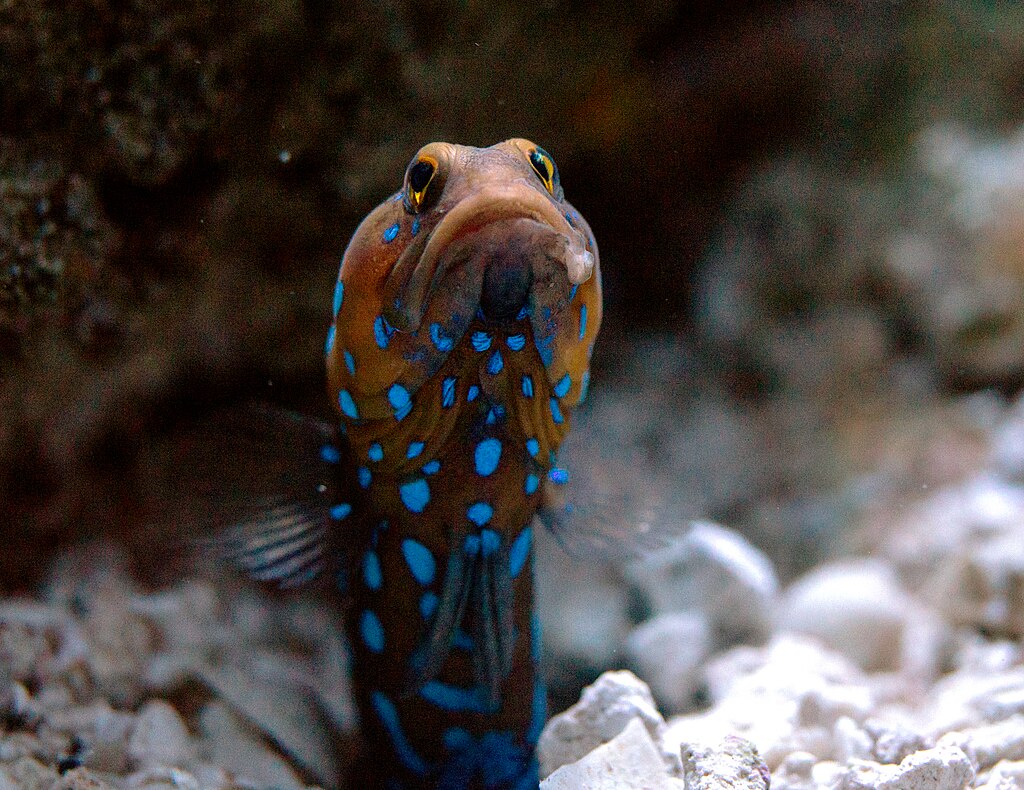
Blue Dot Jawfish (Opistognathus Rosenblatti)
Blue Dot Jawfish need cool water, deep sand, and a tight lid. Learn how to keep Opistognathus rosenblatti…
 By
By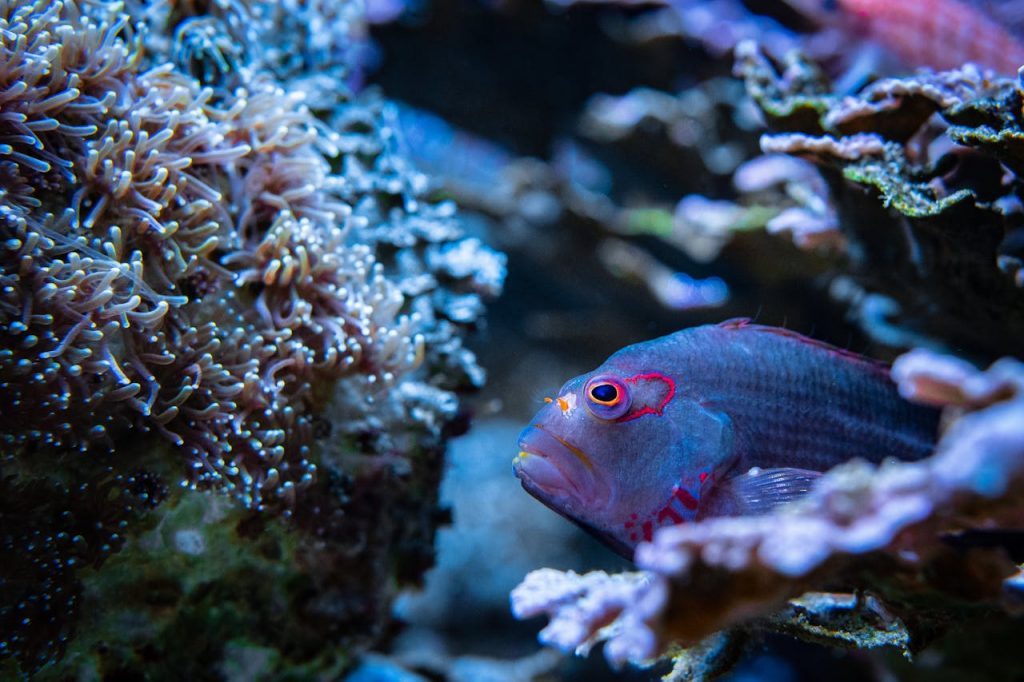
Arc Eye Hawkfish (Paracirrhites arcatus)
Arc Eye Hawkfish care is simple in a stable tank. Learn tank size, feeding, reef safety, and shrimp…
[favorite_button]
My Bookmarks:
To see full list click here
[user_favorites user_id="" include_links="true" site_id="" post_types="" include_thumbnails="true" thumbnail_size="thumbnail" include_excerpt="false"]