Proper live rock cycling builds the biological filter that keeps a reef tank stable. The goal is simple. You grow enough beneficial bacteria to process waste fast, without exposing fish or corals to dangerous ammonia and nitrite.
Many reef problems start with a rushed cycle. Cloudy water, algae blooms, stressed fish, and coral losses often trace back to immature rock. In this guide, you will learn how live rock cycling works, how long it usually takes, what to test, and how to tell when your tank is truly ready. We will also cover curing dry and live rock, common mistakes, and ways to speed the process without cutting corners.
Quick Reference Table
| Topic | Recommended Range or Action |
|---|---|
| Cycle length | Usually 3 to 6 weeks |
| Ammonia source | Pure ammonium chloride, fish food, or curing rock die-off |
| Target ammonia dose | About 1 to 2 ppm for fishless cycling |
| Ammonia goal | 0 ppm before livestock |
| Nitrite goal | 0 ppm before livestock |
| Nitrate after cycle | Present is normal, often 5 to 30 ppm |
| Temperature | 76 to 80°F |
| Salinity | 1.025 to 1.026 specific gravity |
| Flow | Moderate to strong, no dead spots |
| Lights during cycle | Low or off, unless curing true live rock with photosynthetic hitchhikers |
This table gives you the big picture. The details matter too. Stable salinity, heat, and oxygen help bacteria colonize rock much faster. Large swings slow the process and create confusion when test results seem inconsistent.
What Proper Live Rock Cycling Really Means
Live rock cycling is the establishment of nitrifying bacteria on rock surfaces. These bacteria convert toxic ammonia into nitrite. Then other bacteria convert nitrite into nitrate. This is the core of your reef tank’s biological filtration.
In older reef literature, hobbyists often relied on uncured live rock to start this process. Die-off from sponges, algae, worms, and other life produced ammonia naturally. Today, many hobbyists start with dry rock. That means they must add an ammonia source on purpose.
Proper cycling is not just waiting a few weeks. It means your rock can process a known amount of ammonia within about 24 hours. It also means ammonia and nitrite both test at zero before animals are added. A tank can look clear and still be unready. That is why testing matters more than appearance.
Good cycling also includes patience after the initial cycle. The tank may be biologically active, but still immature. Diatoms, film algae, and small nutrient swings are common in young systems. A completed cycle is the beginning, not the finish line.
Types of Rock and How They Affect the Cycle
Not all rock behaves the same. Dry rock is clean and pest-free, but sterile. It needs bacteria added and often takes longer to mature. It can also leach phosphate in some cases. That may fuel nuisance algae later.
Ocean-harvested live rock cycles faster because it already carries bacteria and microfauna. It may also include sponges, feather dusters, coralline algae, and pods. The tradeoff is possible die-off and unwanted hitchhikers. Mantis shrimp, aiptasia, and nuisance crabs can arrive this way.
Aquacultured live rock is often the best middle ground. It usually has strong biodiversity and lower environmental impact. It still needs inspection and often some curing, but it can jump-start tank stability better than sterile rock.
Many hobbyists now use a hybrid method. They build the aquascape with dry rock, then seed it with a small amount of quality live rock or bottled bacteria. This reduces pests while still improving cycle speed and biodiversity.
Step-by-Step Guide to Proper Live Rock Cycling
Start with saltwater mixed to 1.025 to 1.026 specific gravity. Heat the tank to 76 to 80°F. Add circulation pumps and a heater. Run your return pump if the system has a sump. Good oxygen levels are important for nitrifying bacteria.
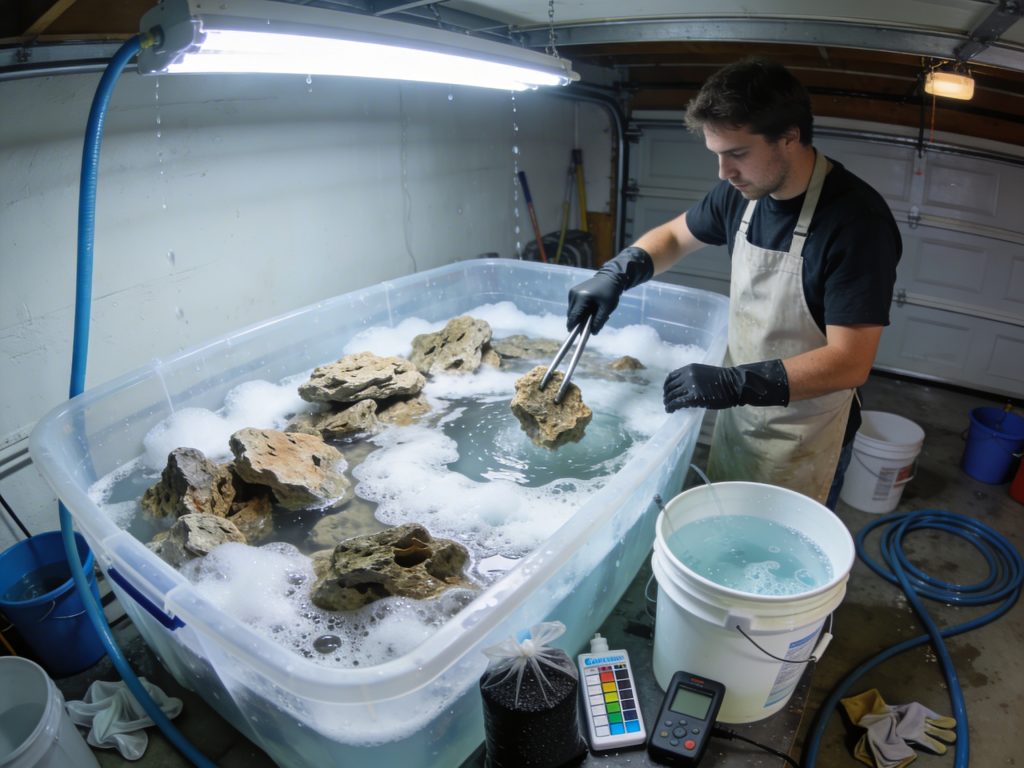
Place the rock in the aquarium or curing bin. If using dusty dry rock, rinse it first in saltwater or RO water. If using live rock with visible die-off, inspect and remove obvious decaying matter. This limits excessive ammonia spikes.
Add a bacteria source. Bottled bacteria can help. Established media from a healthy tank also works well. Then add an ammonia source. Pure ammonium chloride is easiest because you can dose it precisely. Aim for about 1 to 2 ppm ammonia.
Test ammonia, nitrite, and nitrate every few days. At first, ammonia rises and then falls. Nitrite rises next and later drops. Nitrate appears as the end product. When ammonia and nitrite both reach zero, redose ammonia to about 1 ppm. If the tank processes that dose to zero ammonia and zero nitrite within 24 hours, the cycle is functionally complete.
Perform a water change before adding livestock. This helps reduce nitrate and dissolved organics. Then add animals slowly. Start with a small bioload. Even a cycled tank can be overwhelmed by too many fish at once.
Curing Live Rock vs Cycling Live Rock
These terms are often mixed together, but they are not identical. Curing means allowing imported live rock to shed dead material safely. Cycling means building a stable population of nitrifying bacteria. Curing often causes cycling, but the goals are slightly different.
If your live rock smells strongly rotten, has black patches, or releases lots of debris, it should be cured first. A separate bin works well. Use heated saltwater, strong flow, and a protein skimmer if possible. Test ammonia often. Large water changes may be needed to keep conditions from becoming extreme.
If the rock is fresh, damp, and well-handled, curing may be minimal. In that case, the display tank can often serve as the curing and cycling system. Keep lights low to avoid nuisance algae while nutrients are high. Inspect for pests before the rock becomes hard to remove.
Dry rock does not need curing in the same way. It does benefit from rinsing and sometimes soaking. This helps remove dust and loose organics. Some reef keepers also acid wash or lanthanum treat certain rocks, but those methods require care and are not always necessary.
Aquarium Setup During the Cycle
Keep the setup simple and stable. Run heat, flow, and filtration. Mechanical filtration is optional but useful if the rock releases debris. A protein skimmer helps a lot with curing live rock. It removes dissolved waste before it breaks down further.
Most hobbyists should leave lights off during a fishless cycle. Light fuels algae, especially when nitrate and phosphate are available. The exception is premium live rock with coralline algae or photosynthetic hitchhikers you want to preserve. In that case, use a short and moderate light schedule.
Aquascape with long-term flow in mind. Avoid tight piles with dead zones. Bacteria need oxygenated water moving across the rock. Fish and corals will also benefit later. If sand is added at the start, expect some extra cloudiness and detritus trapping. Bare-bottom cycling is easier to clean, but either method works.
Do not add clean-up crew too early. Snails and hermits are often sold as “cycle helpers.” They do not fix ammonia. They can die in unstable tanks. Wait until ammonia and nitrite are zero.
Water Testing and How to Read the Results
Ammonia is your first priority. Any detectable ammonia is dangerous to livestock. During fishless cycling, ammonia should rise after dosing and then decline as bacteria multiply. Nitrite follows the same pattern but usually lags behind.
Nitrate confirms that the process is working. A nitrate reading alone does not prove the tank is fully cycled. You still need zero ammonia and zero nitrite after a test dose. pH also matters. Very low pH can slow bacterial activity. Keep pH in a normal reef range, usually around 7.8 to 8.3.
Use reliable test kits. Follow the instructions exactly. Many cycling mistakes come from bad testing technique. Expired reagents, poor lighting, and rushed timing all cause false readings. If results seem odd, test again and compare with a second kit if possible.
Do not chase tiny fluctuations every day. Look for trends. A stable downward trend in ammonia and nitrite matters more than one isolated result.
Common Problems
Why is my cycle taking so long?
The most common reasons are low temperature, low oxygen, weak bacteria seeding, or too much ammonia. Very high ammonia can actually slow bacterial growth. Keep the dose reasonable. Around 1 to 2 ppm is enough for most reef starts.
Why does my live rock smell bad?
Strong odor usually means die-off. Cure the rock with heat, flow, and water changes. Remove obvious dead sponges or trapped debris. A protein skimmer helps a lot here. Mild ocean smell is normal. Rotten sulfur smell is not.
Why do I have cloudy water?
Cloudiness can come from bacterial blooms, sand dust, or decaying organics. Improve flow and aeration. Use filter floss if debris is visible. If the cloud is bacterial, it often clears as the system stabilizes. Avoid adding livestock until parameters are confirmed safe.
Why am I getting algae before adding fish?
Nutrients from curing rock and extended lighting are common causes. Reduce the light schedule. Test phosphate and nitrate. Perform water changes if nutrients climb too high. Early diatoms are normal in new tanks and usually fade with time.
Can I cycle with fish?
You can, but you should not. Fish-in cycling exposes animals to toxic ammonia and nitrite. Fishless cycling is more humane and more controllable. It also lets you build bacteria before the first fish ever enters the tank.
How to Know When the Rock Is Truly Ready
The best test is performance, not time. Dose ammonia to about 1 ppm. Wait 24 hours. If ammonia reads zero and nitrite reads zero, the rock is ready for an initial livestock load. If either remains detectable, give it more time.
Ready rock also tends to smell clean, not rotten. Water should be clear. Surface slime should be minimal. You may see the first signs of life returning, such as pods, worms, or light coralline spotting if the system was seeded well.
Even then, add livestock slowly. Start with hardy fish or a small clean-up crew only after confirming zero ammonia and nitrite. Corals should wait until salinity, alkalinity, calcium, and nutrients are stable. A newly cycled tank can support life. A mature reef supports it much better.
Frequently Asked Questions
How long does proper live rock cycling take?
Most tanks take 3 to 6 weeks. Some finish faster with quality live rock and strong bacterial seeding. Dry rock setups often take longer to mature fully.
Should I run carbon during the cycle?
Carbon is optional. It can help with odor and dissolved organics during live rock curing. It does not replace water changes or proper testing.
Do bottled bacteria really work?
Many do help, especially when fresh and stored correctly. They are not magic. You still need an ammonia source, oxygen, and stable conditions.
Can I add corals right after the cycle?
You can add a few hardy corals later, but it is better to wait for more stability. Young tanks often swing in nutrients and alkalinity.
Is nitrate bad after cycling?
No. Nitrate is the expected end product of the cycle. High nitrate should be reduced before stocking heavily, but some nitrate is normal.
Final Tips for a Cleaner, Faster Start
Keep the process controlled. Use a measured ammonia source. Test consistently. Maintain heat, salinity, and strong flow. Avoid rushing fish into a tank that only “looks ready.” Proper live rock cycling rewards patience with a healthier reef later.
If you want to build on this foundation, read our guides on reef tank cycling guide, how to mix saltwater, reef tank water parameters, and best clean up crew for reef tank. Those articles will help you move from a cycled tank to a stable reef.
Was this helpful?
Related Posts
Peaceful Reef Fish Compatibility
Peaceful reef fish compatibility made simple. Learn tank size rules, safe stocking order, and quick fixes for bullying.
 By
By
Nuisance Algae Control Guide
Learn how to identify, remove, and prevent nuisance algae in reef tanks with practical nutrient control, maintenance, and…