

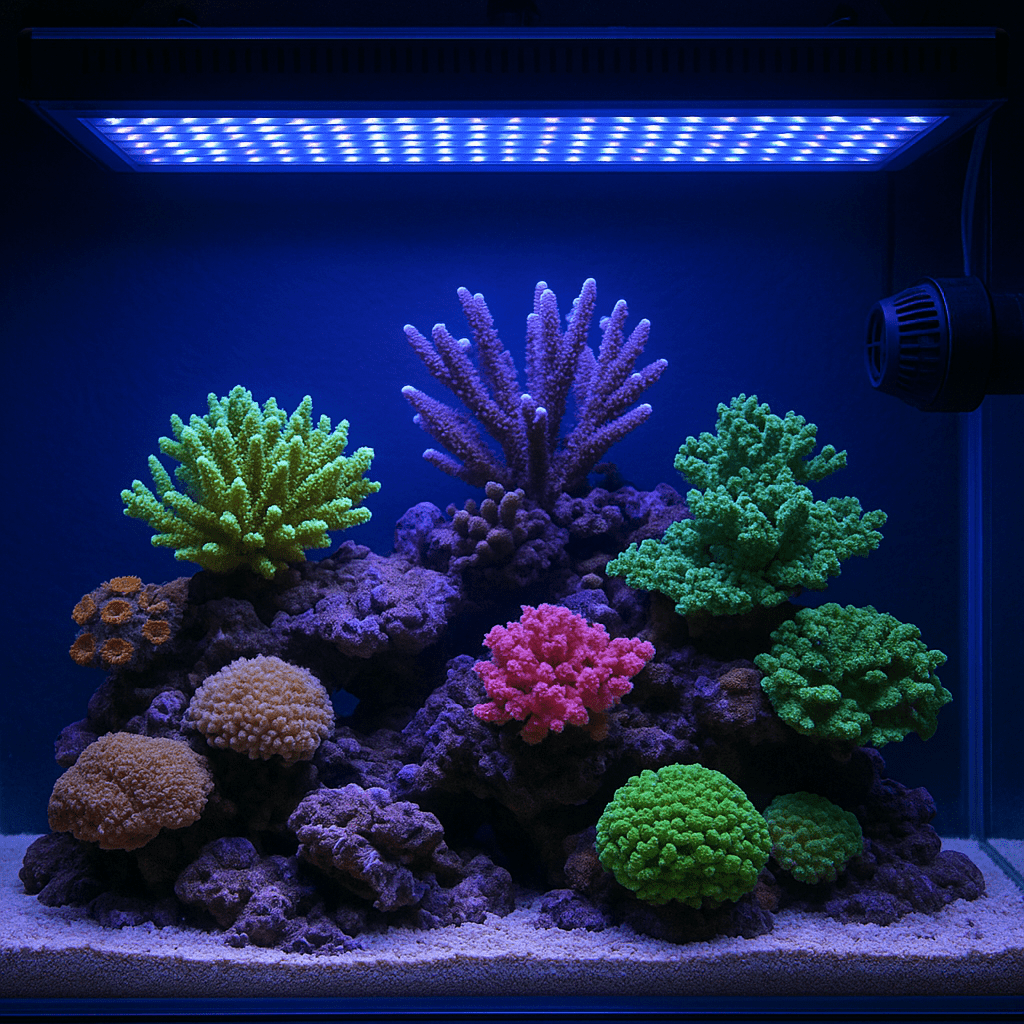
Marine ich and marine velvet are two of the most feared saltwater fish diseases. They look similar at first. They behave very differently in a reef tank. Ich usually moves slower. Velvet often kills fast. Knowing the difference can save your fish and prevent major losses.
Many hobbyists confuse these parasites during the first outbreak. That mistake leads to delayed treatment. It also leads to fish deaths that could have been prevented. In this guide, you will learn how to tell marine ich vs velvet apart, how each disease spreads, what symptoms to watch for, and the safest treatment options for reef keepers. You will also learn why quarantine matters so much and how to protect your display tank long term.
Quick Reference Table
| Disease | Cause | Visible Signs | Speed | Main Risk | Treatment |
|---|---|---|---|---|---|
| Marine Ich | Cryptocaryon irritans | Distinct white spots, flashing, scratching, mild breathing stress | Usually slower | Chronic stress and repeated reinfection | Copper, tank transfer method, fallow display |
| Marine Velvet | Amyloodinium ocellatum | Fine dusting, heavy breathing, lethargy, swimming into flow, rapid decline | Very fast | Sudden mass fish loss | Copper, emergency transfer, fallow display |
Use this table as a fast check. Still, diagnosis should never rely on one sign alone. Watch breathing, behavior, and disease speed together.
What Is Marine Ich?
Marine ich is caused by the protozoan parasite Cryptocaryon irritans. It is one of the most common fish diseases in marine aquariums. The classic sign is small white cyst-like spots on the body and fins. These spots often look like grains of salt. Fish may also scratch against rocks, hide more, or stop eating.
Ich has a life cycle with several stages. One stage lives on the fish. Another stage drops into the tank and reproduces. This matters because visible spots come and go. Many hobbyists think the fish is improving when the spots vanish. In reality, the parasite may simply be entering another stage. A few days later, the fish often looks worse again.
Ich can kill fish, but it often acts more slowly than velvet. That slower pace tricks many reef keepers into waiting too long. Early action gives you the best chance of success.
What Is Marine Velvet?
Marine velvet is caused by Amyloodinium ocellatum. It is one of the deadliest fish parasites in saltwater aquariums. Velvet often appears as a very fine yellow, tan, or white dusting. Under blue lights, it can be hard to see. Many fish never show obvious spots before they crash.
The biggest clue is breathing distress. Velvet attacks the gills aggressively. Fish may breathe fast, stay near pumps, face into strong flow, or gasp near the surface. They often become listless and stop eating. Some fish die within 24 to 72 hours after obvious symptoms appear.
Velvet spreads quickly in closed systems. It can wipe out nearly every fish in a display tank. That speed is what separates it from ich in many cases. If fish are dying fast and breathing hard, treat the situation like velvet until proven otherwise.
Marine Ich vs Velvet: Key Differences
The biggest difference is disease speed. Ich often develops over days to weeks. Velvet can overwhelm fish in a few days. That timeline matters. Fast decline usually points toward velvet.
The second major difference is spot appearance. Ich usually forms larger, distinct white dots. Velvet looks finer. It resembles dust or a matte coating. Sometimes the fish just looks dull instead of spotted.
The third difference is breathing. Velvet usually causes severe respiratory distress early. Ich can affect the gills too, but heavy breathing tends to be more dramatic with velvet. Fish with velvet often seek high flow because oxygen exchange becomes harder.
Behavior also helps. Fish with ich may still swim and eat during early stages. Fish with velvet often become lethargic, hide, clamp fins, and stop feeding fast. If several fish decline at once, suspect velvet. Ich often appears more unevenly across a population.
Natural Occurrence and How These Parasites Enter Aquariums
Both parasites occur in marine environments and in the aquarium trade. Most home outbreaks begin with a new fish. They can also enter on wet equipment, shared nets, store water, or unquarantined invertebrate shipments carrying contaminated water droplets.
Reef tanks create ideal conditions for spread. Fish live close together. Water is recirculated. Parasite stages can reproduce and search for hosts in a confined system. Stress makes things worse. Shipping stress, aggression, poor nutrition, and unstable water quality all reduce a fish’s ability to cope.
This is why healthy-looking fish still cause outbreaks. A fish may carry a light infection without obvious signs. Once added to a display, the parasite multiplies. A week later, several fish show symptoms. Prevention always beats treatment in a stocked reef tank.
How to Diagnose the Problem in a Reef Tank
Start with breathing rate. If fish are breathing hard, assume a serious gill issue. Velvet should move to the top of your list. Next, inspect the body under white light. Distinct salt-like dots suggest ich. Fine dust or a hazy sheen suggests velvet.
Then review the timeline. Did one fish show spots for a week, then others followed? That often fits ich. Did multiple fish stop eating and die within days? That strongly suggests velvet. Also check whether fish are flashing, hiding, or swimming into pump flow.
Microscopic confirmation is best, but most hobbyists do not have that option. In practice, many aquarists treat based on symptoms and speed. When in doubt, act quickly. Waiting for perfect certainty usually helps the parasite, not the fish.
Step-by-Step Treatment Plan
First, remove all fish from the display tank. This is essential. Reef-safe cures do not reliably eliminate ich or velvet. Garlic, herbal products, and cleaner shrimp will not solve an established outbreak.
Second, move fish into a hospital tank. Use bare bottom tanks, heaters, strong aeration, and simple hiding places like PVC elbows. Test ammonia daily. Add a seeded sponge filter if possible.
Third, begin proven treatment. Copper is the standard for both marine ich and velvet. Use a copper medication designed for marine fish. Follow the manufacturer’s therapeutic range exactly. Test copper with a reliable test kit. Too little fails. Too much harms fish.
Fourth, leave the display tank fallow. That means fishless. Without fish hosts, the parasites complete their life cycle and die out. For safety, many hobbyists run the display fallow for 76 days. Corals and invertebrates can remain in the tank.
Fifth, support the fish. Keep oxygen high. Offer easy foods once fish resume eating. Maintain stable salinity and temperature. Stress reduction matters during recovery.
Aquarium Setup for Quarantine and Hospital Tanks
Every reef keeper should have a basic quarantine setup ready. It does not need to be fancy. A 10 to 40 gallon tank works for many fish. Match the size to the species. Tangs and larger fish need more room.
Use a heater, thermometer, lid, and air stone. Add a sponge filter that has been seeded in your sump. Keep extra sponges on hand for this reason. Use PVC pieces for shelter. Avoid live rock in copper treatment tanks. Rock absorbs medication and makes dosing unstable.
Good hospital setup reduces treatment losses. Fish often die from poor water quality during treatment, not just from the parasite. Daily testing helps prevent that. Keep lighting dim. Sick fish handle lower stress better in subdued light.
Compatibility and Reef Tank Impact
Neither ich nor velvet infects corals, snails, shrimp, or crabs the way they infect fish. Still, reef tanks complicate treatment. Copper cannot be used in a display reef with corals and invertebrates. It is toxic to many non-fish animals and can contaminate porous surfaces.
Fish compatibility also matters during outbreaks. Aggressive tank mates increase stress. Stressed fish are more likely to show severe symptoms. Tangs, angelfish, and wrasses often react badly to parasite pressure if aggression is already present.
During quarantine, separate bullies if needed. Make sure timid fish can eat. Secondary bacterial infections may follow parasite damage, especially in fish with torn fins or skin lesions. Watch closely after treatment ends.
Common Problems
Why did the white spots disappear?
This confuses many hobbyists. The parasite likely entered another life stage. The fish is not cured. The next wave may be worse. Continue treatment and keep the display fallow.
My fish are breathing hard but I cannot see spots
That pattern strongly suggests velvet or gill involvement. Velvet often attacks the gills before heavy body spotting appears. Act fast. Increase aeration and move fish to treatment.
Can I treat the display tank instead?
Not safely in a reef system. Reef-safe remedies rarely eradicate these parasites. Effective treatment requires removing fish and leaving the display fishless.
Fish keep getting sick after treatment
This usually means treatment levels were not maintained, the display was not fallow long enough, or new fish were added without quarantine. Recheck your process from start to finish.
Prevention Tips That Actually Work
Quarantine every new fish. That is the single best defense. Observe new arrivals in a separate tank before they enter the display. Many experienced hobbyists also use prophylactic treatment during quarantine, especially for fish from mixed holding systems.
Never share nets or tools between quarantine and display tanks without disinfection. Avoid adding store water to your aquarium. Reduce stress with stable salinity, temperature, and strong nutrition. Healthy fish resist stress better, though they still can become infected.
If you want a full prevention plan, read our guides on quarantine procedures, fish acclimation, and reef tank stability: reef fish quarantine guide, how to acclimate saltwater fish, reef tank water parameters, and common saltwater fish diseases.
Frequently Asked Questions
Is marine velvet worse than ich?
Usually, yes. Velvet often kills faster and causes severe gill damage. It is an emergency.
Can fish survive ich without treatment?
Some fish may survive for a while, but the parasite remains in the tank. Outbreaks often return during stress.
Can cleaner shrimp cure marine ich or velvet?
No. Cleaner organisms may remove some mucus or dead tissue. They do not eradicate these parasites.
How long should a tank stay fallow?
Many reef keepers use 76 days for strong safety. That covers the parasite life cycle conservatively.
Can corals carry ich or velvet into a tank?
Corals are not infected hosts, but wet plugs, water, and attached surfaces can transfer parasite stages. Careful quarantine still helps.
Final Thoughts
Marine ich vs velvet is not just a naming issue. It changes how urgently you must act. Ich is serious. Velvet is often catastrophic. Watch breathing, body appearance, and disease speed. Remove fish fast. Treat in a hospital tank. Keep the display fallow. Most of all, build a quarantine habit before the next fish purchase. That simple step protects your reef more than any bottle on a store shelf.
Was this helpful?
Related Posts
Gold Spotted Rabbitfish (Siganus Punctatus)
Gold Spotted Rabbitfish care includes large tanks, heavy algae feeding, and caution with corals. Learn tank size, diet,…
 By
By
Sharknose Goby (Elacatinus evelynae)
Sharknose Goby care is simple in stable reef tanks. Learn feeding, tank setup, compatibility, and common problems for…
[favorite_button]
My Bookmarks:
To see full list click here
[user_favorites user_id="" include_links="true" site_id="" post_types="" include_thumbnails="true" thumbnail_size="thumbnail" include_excerpt="false"]